

3 months 1 day ago
It is the necessary, though very slow and gradual, consequence of a certain propensity in human nature which has in view no such extensive utility; the propensity to truck, barter, and exchange one thing for another.
▼
Source
source
Chapter II
1 month 2 weeks ago
The philosophy of the soul of my people appears to me as an expression of an inward tragedy analogous to the tragedy of the soul of Don Quixote, as the expression of conflict between what the world is as scientific reason shows it to be and what we wish that it might be, as our religious faith affirms it to be. And in this philosophy is to be found the explanation of what is usually said about us - namely, that we are fundamentally irreducible to Kultur - or in other words, that we refuse to submit to it. No, Don Quixote does not resign himself either to the world, or to science or logic, or to art or esthetics, or to morality or ethics.
2 months 3 weeks ago
The original scriptures of most religions are poetical and unsystematic. Theology, which generally takes the form of a reasoned commentary on the parables and aphorisms of the scriptures, tends to make its appearance at a later stage of religious history. The Bhagavad-Gita occupies an intermediate position between scripture and theology; for it combines the poetical qualities of the first with the clear-cut methodicalness of the second... one of the clearest and most comprehensive summaries of the Perennial Philosophy ever to have been made. Hence its enduring value, not only for Indians, but for all mankind.

2 months 3 weeks ago
The less somebody knows and understands himself the less great he is, however great may be his talent. For this reason our scientists are not great.
▼
Source
source
p. 51e

1 month 2 weeks ago
And, being assembled together with them, commanded them that they should not depart from Jerusalem, but wait for the promise of the Father, which, saith he, ye have heard of me. For John truly baptized with water; but ye shall be baptized with the Holy Ghost not many days hence.
▼
Source
source
1:4-5 (KJV)
3 months 4 weeks ago
But it is better perhaps to examine next the universal good, and to enquire in what sense the expression is used. Though such an investigation is likely to be difficult, because the persons who have introduced these ideas are our friends. Yet it will perhaps appear the best, and indeed the right course, at least for the preservation of truth, to do away with private feelings, especially as we are philosophers; for since both are dear to us, we are bound to prefer the truth.

2 months 3 weeks ago
For there's no rood has not a star above it; The cordial quality of pear or plum Ascends as gladly in a single tree, As in broad orchards resonant with bees; And every atom poises for itself, And for the whole.
▼
Source
source
Musketaquid, st. 5
3 weeks 2 days ago
They say cowardice is infectious; but then argument is, on the other hand, a great emboldener.
▼
Source
source
Ch. 4, The Sea Chest.
6 days ago
So what is the alternative to traditional anthropocentric ethics? Antispeciesism is not the claim that "All Animals Are Equal", or that all species are of equal value, or that a human or a pig is equivalent to a mosquito. Rather the antispeciesist claims that, other things being equal, equally strong interests should count equally. Experiences that are subjectively negative or positive in hedonic tone to the same degree must count for the same.
▼
Source
source
"The Antispeciesist Revolution", Institute for Ethics and Emerging Technologies, 26 Jul. 2013

3 months 1 day ago
Tis from the resemblance of the external actions of animals to those we ourselves perform, that we judge their internal likewise to resemble ours; and the same principle of reasoning, carry'd one step farther, will make us conclude that since our internal actions resemble each other, the causes, from which they are deriv'd, must also be resembling.
▼
Source
source
Part 3, Section 16
1 month 3 weeks ago
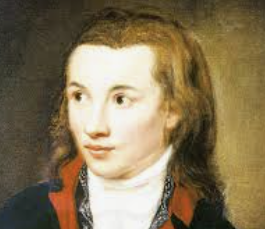
Our life is no dream, but it should and perhaps will become one.
▼
Source
source
Fragmente I, Magische Philosophie Variant: "Our life is no dream; but it ought to become one, and perhaps will." George MacDonald, Phantastes, epigraph to Chapter XXV

3 months 3 weeks ago
An observer studying the Solar system dispassionately, and finding himself capable of bringing the four giant planets to his notice, could reasonably say that the Solar system consisted of one star, four planets, and some traces of debris.
1 month 1 week ago
The custom of procuring abortions has reached such appalling proportions in America as to be beyond belief... So great is the misery of the working classes that seventeen abortions are committed in every one hundred pregnancies.
▼
Source
source
Mother Earth
1 month 2 weeks ago
These terrible sociologists, who are the astrologers and alchemists of our twentieth century.
▼
Source
source
Fanatical Skepticism
1 month 3 weeks ago
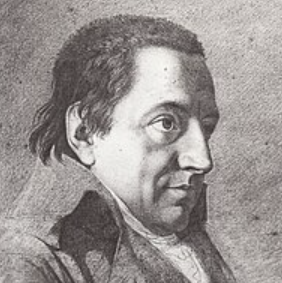
The "I" who speaks in this book is by no means the author. Rather, the author wishes that the reader may come to see himself in this "I": that the reader may not simply relate to what is said here as he would to history, but rather that while reading he will actually converse with himself, deliberate back and forth, deduce conclusions, make decisions like his representative in the book, and through his own work and reflection, purely out of his own resources, develop and build within himself the philosophical disposition that is presented to him in this book merely as a picture.
▼
Source
source
P. Preuss, trans. (1987), p. 2
1 week 6 days ago
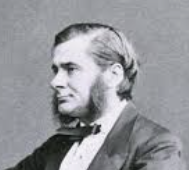
If the brutes have consciousness and no souls, then it is clear that, in them, consciousness is a direct function of material changes; while, if they possess immaterial subjects of consciousness, or souls, then, as consciousness is brought into existence only as the consequence of molecular motion of the brain, it follows that it is an indirect product of material changes. The soul stands related to the body as the bell of a clock to the works, and consciousness answers to the sound which the bell gives out when it is struck.
1 month 1 week ago
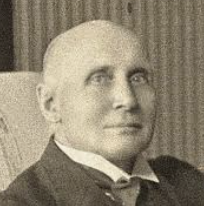
We cannot think first and act afterwards. From the moment of birth we are immersed in action, and can only fitfully guide it by taking thought.
▼
Source
source
Ch. 12: "Religion and Science", p. 261
1 month 1 week ago
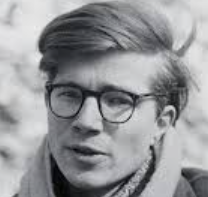
Imagine a book of unexplained mysteries written by a contemporary of Shakespeare. It might include the mystery of the falling stars that sweep through the sky foretelling disaster; the mystery of the Kraken, the giant sea devil with 50-foot tentacles; the mystery of monster bones, sometimes found in caves or on beaches. Such a book would be a curious mixture of truth and absurdity, fact and legend. We would all feel superior as we turned its pages and murmured: "Of course, they didn't know about comets and giant squids and dinosaurs." If this book should happen to find its way into the hands of our remote descendants, they may smile pityingly and say: "It's incredible to think that they knew nothing about epsilon fields or multiple psychic feedback or cross gravitational energies. They didn't even know about the ineluctability of time." But let us hope that such a descendant is in a charitable mood, and might add: "And yet they managed to ask a few of the right questions."
▼
Source
source
p. 142

2 months 3 weeks ago
Instead of insanity eliminating the crime according to the original meaning of article 64,every crime and even every offense now carries within it, as a legitimate suspicion, but also as a right that may be claimed, the hypothesis of insanity, in any case of anomaly. And the sentence that condemns or acquits is not simply a judgement of guily, a legal decision that lays down punishment; it bears within it an assessment of normality and a technical prescription for a possible normalization Today the judge- magistrate or juror0 certainly does more than 'judge'.
▼
Source
source
pp. 20-21
3 weeks 6 days ago
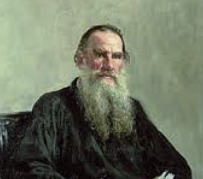
Having acknowledged the measure of the good to be pleasure, i.e., beauty, the European upper classes went back in their comprehension of art to the gross conception of the primitive Greeks which Plato had already condemned. And with this understanding of life, a theory of art was formulated.

2 months 4 weeks ago
Wherever one finds oneself inclined to bitterness, it is a sign of emotional failure: a larger heart, and a greater self-restraint, would put a calm autumnal sadness in the place of the instinctive outcry of pain.
▼
Source
source
The Collected Papers of Bertrand Russell: Contemplation and Action, 1902-1914, ed. Richard A. Rempel, Andrew Brink and Margaret Moran (Routledge, 1993
1 month 1 week ago
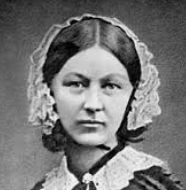
Give us back our suffering, we cry to Heaven in our hearts - suffering rather than indifferentism; for out of nothing comes nothing. But out of suffering may come the cure. Better have pain than paralysis! A hundred struggle and drown in the breakers. One discovers the new world. But rather, ten times rather, die in the surf, heralding the way to that new world, than stand idly on the shore!
2 months 4 weeks ago
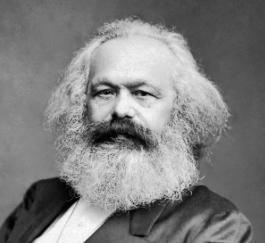
Everyone has a goal which appears to be great, at least to himself, and is great when deepest conviction, the innermost voice of the heart, pronounces it great. ... This voice, however, is easily drowned out, and what we thought to be inspiration may have been created by the fleeting moment and again perhaps destroyed by it. ... We must seriously ask ourselves, therefore, whether we are really inspired about a vocation, whether an inner voice approves of it, or whether the inspiration was a deception, whether that which we took as the Deity's calling to us was self-deceit. But how else could we recognize this except by searching for the source of our inspiration?
▼
Source
source
Writings of the Young Marx on Philosophy and Society, L. Easton, trans. (1967), p. 36
2 months 2 days ago
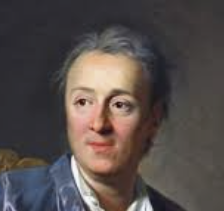
People praise virtue, but they hate it, they run away from it. It freezes you to death, and in this world you've got to keep your feet warm.
1 month 3 weeks ago
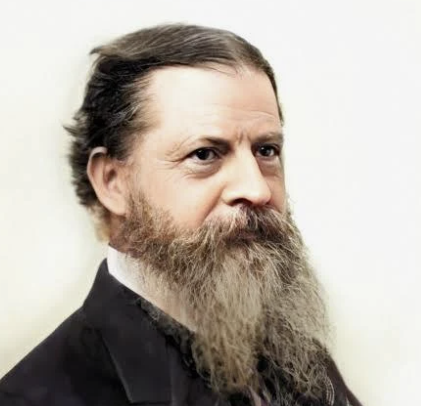
The first character of a general idea so resulting is that it is living feeling. A continuum of this feeling, infinitesimal in duration, but still embracing innumerable parts, and also, though infinitesimal, entirely unlimited, is immediately present. And in its absence of boundedness a vague possibility of more than is present is directly felt.
2 months 3 weeks ago
If a false thought is so much as expressed boldly and clearly, a great deal has already been gained.
▼
Source
source
p. 86e
1 month 3 weeks ago
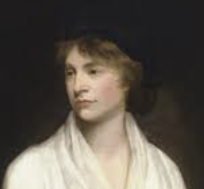
Nothing, I am sure, calls forth the faculties so much as the being obliged to struggle with the world; and this is not a woman's province in a married state. Her sphere of action is not large, and if she is not taught to look into her own heart, how trivial are her occupations and pursuits! What little arts engross and narrow her mind!
▼
Source
source
Thoughts on the Education of Daughters (1787), "Matrimony", p. 100
2 months 4 weeks ago
It is, of course, clear that a country with a large foreign population must endeavour, through its schools, to assimilate the children of immigrants. It is, however, unfortunate that a large part of this process should be effected by means of a somewhat blatant nationalism.
▼
Source
source
Ch. 10: Modern Homogeneity

2 months 4 weeks ago
The trade of governing has always been monopolized by the most ignorant and the most rascally individuals of mankind.
▼
Source
source
Earliest citation to Paine appears to be in "Freedom: A Journal of Anarchist Communism Vol. XXIV". Not found in any of his works.
1 day ago
Individuals have rights and there are things no person or group may do to them (without violating their rights). So strong and far-reaching are these rights that they raise the question of what, if anything, the state and its officials may do. How much room do individual rights leave for the state?
▼
Source
source
Preface, p. ix
1 month 4 weeks ago
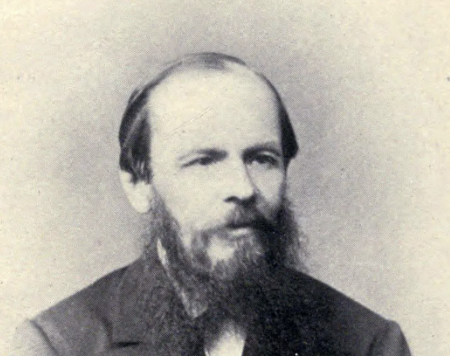
Even those who have renounced Christianity and attack it, in their inmost being still follow the Christian ideal, for hitherto neither their subtlety nor the ardor of their hearts has been able to create a higher ideal of man and of virtue than the ideal given by Christ.
2 months 3 weeks ago
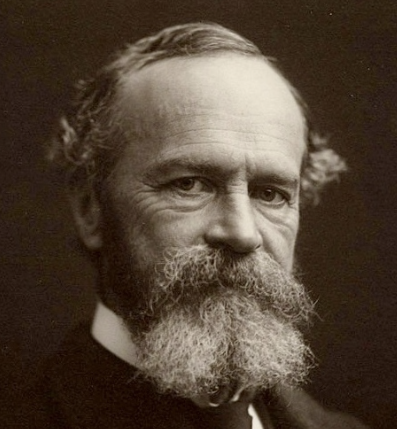
Alexander's career was piracy pure and simple, nothing but an orgy of power and plunder, made romantic by the character of the hero. There was no rational purpose in it, and the moment he died his generals and governors attacked one another.
2 months 3 weeks ago
Is it just I who cannot found a school, or can a philosopher never do so?
▼
Source
source
p. 69e
1 month 2 weeks ago
Jesus said to His disciples, "Compare me to someone and tell Me whom I am like." Simon Peter said to Him, "You are like a righteous angel." Matthew said to Him, "You are like a wise philosopher." Thomas said to Him, "Master, my mouth is wholly incapable of saying whom You are like." Jesus said, "I am not your master. Because you have drunk, you have become intoxicated by the bubbling spring which I have measured out." And He took him and withdrew and told him three things. When Thomas returned to his companions, they asked him, "What did Jesus say to you?" Thomas said to them, "If I tell you one of the things which he told me, you will pick up stones and throw them at me; a fire will come out of the stones and burn you up."
2 months 4 weeks ago
Noise is the most impertinent of all forms of interruption. It is not only an interruption, but also a disruption of thought.
▼
Source
source
"On Noise"
2 months 3 weeks ago
The effects of opposition are wonderful. There are men who rise refreshed on hearing of a threat, - men to whom a crisis which intimidates and paralyzes the majority - demanding, not the faculties of prudence and thrift, but comprehension, immovableness, the readiness of sacrifice - comes graceful and beloved as a bride!
▼
Source
source
p. 189
2 months 4 weeks ago
He was often, and much beyond reason, provoked by my failures in cases where success could not have been expected; but in the main his method was right, and it succeeded. I do not believe that any scientific teaching ever was more thorough, or better fitted for training the faculties, than the mode in which logic and political economy were taught to me by my father. Striving, even in an exaggerated degree, to call forth the activity of my faculties, by making me find out everything for myself, he gave his explanations not before, but after, I had felt the full force of the difficulties; and not only gave me an accurate knowledge of these two great subjects, as far as they were then understood, but made me a thinker on both.
▼
Source
source
(pp. 28-29)
1 month 3 weeks ago
Our psychology is ... a science of mere phenomena without any metaphysical implications. [It] Treats all metaphysical claims and assertions as mental phenomena, and regards them as statements about the mind and its structure.
▼
Source
source
Psychology and Religion: West and East (1958), p. 476, as cited in Psychotherapy East and West (1961), p. 14
1 month 2 weeks ago
The remembrance of forbidden fruit is the earliest thing in the memory of each of us, as it is in that of mankind.
▼
Source
source
Chapter I: Moral Obligation
2 months 4 weeks ago
The essence of the Liberal outlook lies not in what opinions are held, but in how they are held: instead of being held dogmatically, they are held tentatively, and with a consciousness that new evidence may at any moment lead to their abandonment.

3 weeks 2 days ago
The true wisdom is to be always seasonable, and to change with a good grace in changing circumstances. To love playthings well as a child, to lead an adventurous and honourable youth, and to settle when the time arrives, into a green and smiling age, is to be a good artist in life and deserve well of yourself and your neighbour.
▼
Source
source
Crabbed Age and Youth.

1 month 2 weeks ago
German idealism rescued philosophy from the attack of British empiricism, and the struggle between the two became not merely a clash of different philosophical school, but a struggle for philosophy as such.
▼
Source
source
P. 16

1 month 3 weeks ago
One would have to be as unenlightened as an angel or an idiot to imagine that the human escapade could turn out well.
3 weeks 4 days ago
I don't explain-I explore.

1 month 4 weeks ago
I decline the election. - It has ever been my rule through life, to observe a proportion between my efforts and my objects. I have never been remarkable for a bold, active, and sanguine pursuit of advantages that are personal to myself.
▼
Source
source
Speech at Bristol on declining the poll (9 September 1780), quoted in The Works of the Right Honourable Edmund Burke, Vol. II (1855), p. 170
2 months 4 weeks ago
Truly, if the preservation of all mankind, as much as in him lies, were every one's persuasion, as indeed it is every one's duty, and the true principle to regulate our religion, politicks and morality by, the world would be much quieter, and better natur'd than it is.
▼
Source
source
Sec. 116
1 month 3 weeks ago
As one of our Swiss friends put it: "Now every German tailor living in Japan, China, or Moscow feels that he has the German navy and all of Germany's power behind him. This proud consciousness sends him into an insane rapture: the German has finally lived to see the day when he can say with pride, relying on his own state, like an Englishman or an American, 'I am a German.' True, when the Englishman or American says 'I am an Englishman,' or 'I am an American,' he is saying 'I am a free man.' The German, however, is saying 'I am a slave, but my emperor is stronger than all other princes, and the German soldier who is strangling me will strangle all of you.'"
CivilSimian.com created by AxiomaticPanic, CivilSimian, Kalokagathia