
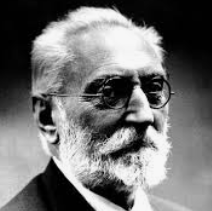
Miguel de Unamuno — The Philosopher of Tragic Life, Faith, and Inner Conflict (1864–1936)
Miguel de Unamuno was philosophy’s great agonist — a thinker who refused reconciliation, synthesis, or final peace. Where systems sought coherence, Unamuno insisted on conflict. Where reason promised clarity, he exposed despair. His philosophy begins not with knowledge or logic, but with the anguished human demand to live, to endure, and above all, not to die.
A Life Shaped by Crisis
Born in Bilbao during a period of political upheaval, Unamuno came of age in a Spain struggling with loss, decline, and spiritual exhaustion. The collapse of empire and the erosion of tradition formed the background against which his thought emerged.
He was trained as a philologist and classicist, deeply immersed in literature, history, and theology. Yet philosophy for Unamuno was never an academic discipline. It was a confession — a public exposure of private torment.
He lived philosophy as struggle, not as doctrine.
“I do not want to die — no, I neither want to die nor want to want to die.”
The Tragic Sense of Life
Unamuno’s central work, The Tragic Sense of Life, articulates his most famous insight: that human existence is defined by an irreconcilable conflict between reason and life.
Reason tells us we are finite, accidental, and doomed to extinction. Life, however, rebels. It demands meaning, permanence, and personal immortality.
Philosophy begins at the point where this contradiction is felt, not resolved.
“The struggle is life, and life is struggle.”
Faith Without Certainty
Unamuno rejected both dogmatic religion and confident atheism. He could not believe with assurance — yet he could not stop believing.
Faith, for him, was not assent to doctrines, but an act of will against despair. He described belief as a kind of creative self-deception — a necessary illusion sustained by love of life.
God, in Unamuno’s thought, is less a metaphysical being than a name for humanity’s refusal to accept annihilation.
“If nothingness awaits us, let us make it unjust.”
Against System and Abstraction
Unamuno despised philosophical systems. He believed they sacrificed living persons to abstract consistency.
Truth, he argued, is always personal. What matters is not whether an idea is logically airtight, but whether it sustains a concrete human life.
A philosophy that does not bleed is already dead.
“Those who believe they believe in God, but without passion in the heart, without anguish of mind, without uncertainty, without doubt, do not believe in the God of the living.”
Literature as Philosophy
Unamuno expressed his philosophy as much through novels, poems, and essays as through theoretical writing. His fictional characters wrestle openly with God, death, and the fear of meaninglessness.
He even blurred the boundary between author and character, staging confrontations between creator and creation. Fiction became a laboratory for existential inquiry.
Philosophy, for Unamuno, must speak in the voice of lived contradiction.
Politics, Exile, and Moral Courage
Unamuno’s commitment to intellectual integrity brought him into conflict with political authority. He opposed both reactionary traditionalism and authoritarian nationalism.
During the rise of Franco, he publicly denounced violence and fanaticism, famously declaring that victory achieved by hatred is spiritual defeat. The stand cost him his position and freedom.
Even in isolation, he refused silence.
Legacy — Philosophy That Refuses Consolation
Unamuno stands at the threshold of existentialism, influencing thinkers such as Camus and Sartre, while remaining fiercely independent of their systems.
His philosophy offers no peace, no final answer, no salvation guaranteed by reason. What it offers instead is honesty — the courage to live without reconciliation.
To think, for Unamuno, is to suffer consciously — and to refuse to surrender.
“Only the one who knows anguish can truly believe.”
CivilSimian.com created by AxiomaticPanic, CivilSimian, Kalokagathia