
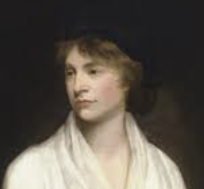
Mary Wollstonecraft — The Philosopher of Reason, Equality, and Women’s Freedom (1759–1797)
Mary Wollstonecraft was a revolutionary thinker in an age that barely allowed women to think in public at all. She did not argue for women’s dignity on the basis of sentiment, tradition, or divine favor, but on something far more radical: reason. If reason defines humanity, she insisted, then denying women education and autonomy was not natural order but cultivated injustice.
A Life Formed by Constraint and Defiance
Wollstonecraft was born into instability. Her father squandered the family’s resources and ruled the household through violence and drink. From an early age, she learned what dependence meant — and what it cost women who lacked legal and economic power.
She supported herself as a companion, governess, and schoolteacher, occupations that exposed the narrow expectations imposed on women. These experiences hardened her conviction: women were not inferior by nature, but made weak through systematic denial of education and independence.
“I do not wish women to have power over men; but over themselves.”
Enlightenment Without Exceptions
Wollstonecraft was a child of the Enlightenment — but an uncompromising one. While many Enlightenment thinkers spoke of universal reason, they quietly excluded women from its reach. Wollstonecraft called out this contradiction directly.
If virtue depends on reason, she argued, then women must be educated to cultivate it. A society that trains women only to please undermines morality itself, producing dependence instead of character.
“The mind will ever be unstable that has only prejudices to rest on.”
A Vindication of the Rights of Woman
Wollstonecraft’s most famous work, A Vindication of the Rights of Woman (1792), is neither a plea nor a manifesto of resentment. It is a philosophical argument. Women, she insists, are rational beings, and therefore moral agents entitled to the same cultivation of reason as men.
She attacked the culture of “feminine delicacy” — the idea that women should be ornamental, submissive, and emotionally fragile. Such ideals did not elevate women; they crippled them, rendering half of humanity unfit for genuine citizenship or friendship.
“Strengthen the female mind by enlarging it, and there will be an end to blind obedience.”
Love, Vulnerability, and Radical Honesty
Wollstonecraft’s life did not conform neatly to her ideals. She loved passionately, suffered abandonment, and endured public scandal for relationships outside marriage. Rather than discrediting her philosophy, these experiences deepened it.
She refused to pretend that reason eliminates vulnerability. Instead, she argued that genuine equality in love requires independence on both sides. Dependency, whether emotional or economic, corrodes respect and distorts affection.
“Taught from infancy that beauty is woman’s sceptre, the mind shapes itself to the body.”
Politics, Revolution, and Moral Courage
Wollstonecraft was not merely a theorist of private life. She supported the French Revolution in its early stages, defending republican ideals against inherited privilege and tyranny. Her politics emphasized education, virtue, and civic responsibility, not mob violence or blind ideology.
She believed political freedom without moral development was hollow — and that moral development was impossible while women were excluded from full participation in public life.
Legacy — The Foundation of Feminist Philosophy
Wollstonecraft died young, shortly after giving birth to her daughter, Mary Shelley. Her reputation suffered in the years after her death, as critics fixated on her personal life rather than the force of her ideas.
Yet her influence endures. She laid the philosophical groundwork for modern feminism, grounding equality not in special pleading but in universal principles of reason, virtue, and freedom. She remains a thinker who demands consistency — and exposes every society that claims liberty while denying it to half its members.
“Virtue can only flourish among equals.”
CivilSimian.com created by AxiomaticPanic, CivilSimian, Kalokagathia