
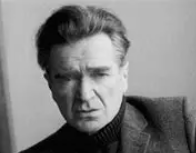
Emil Cioran — The Philosopher of Lucidity, Despair, and Unsparing Honesty (1911–1995)
Emil Cioran was philosophy’s great anatomist of despair — a thinker who treated hope as a seductive illusion and lucidity as a moral obligation. Writing in aphorisms sharpened to the edge of cruelty, Cioran explored suicide, faith, history, and identity not to offer solutions, but to strip existence of its consolations. His work does not heal. It clarifies.
A Youth in Extremes
Cioran was born in Romania, the son of an Orthodox priest, a background that would haunt his thinking for life. Early on, he was consumed by insomnia — a condition he later described as the true origin of his philosophy. Sleeplessness dissolved illusions, sharpened consciousness, and made existence unbearable yet irresistible.
As a young man, Cioran flirted with political extremism, briefly embracing nationalist fervor. He would later repudiate this period completely, regarding it as proof of how easily despair seeks false absolutes. Few thinkers were as merciless toward their own past errors.
“It is not worth the bother of killing yourself, since you always kill yourself too late.”
Exile and the Choice of Language
In the late 1930s, Cioran moved to Paris, where he would live the rest of his life in near anonymity. He made a decisive break: abandoning Romanian and adopting French as his literary language. This was not merely practical — it was ascetic.
Writing in French forced discipline. Excess emotion had to be cut away. What remained was clarity, compressed into sentences that wound rather than persuade. Style, for Cioran, was an ethical act: one must not lie, even aesthetically.
“One does not inhabit a country; one inhabits a language.”
Philosophy Against Consolation
Cioran rejected systems. He distrusted progress, redemption, and any philosophy that promised meaning. For him, metaphysics was often disguised self-soothing.
His preferred form — the aphorism — mirrors his worldview. Truth arrives in flashes, not structures. To build a system is already to lie about the fragility of insight.
“We have lost, being born, as much as we shall lose dying.”
Suicide, Freedom, and the Paradox of Survival
Few thinkers wrote as openly about suicide as Cioran. Yet paradoxically, the idea of suicide functioned for him not as a conclusion, but as a liberation. Knowing one could exit at any time made endurance possible.
Suicide was the ultimate freedom — and precisely because it remained possible, life could be tolerated. This tension runs through all his work: the refusal of hope, coupled with a stubborn attachment to existence.
“It is not that suicide is forbidden, but that it is useless.”
God, Faith, and the Ruins of Belief
Cioran never escaped theology. He circled God obsessively — not as a believer, but as a deserter who could not forget the battlefield. His writing is saturated with negative theology: God as absence, silence, unbearable perfection.
He admired mystics for their intensity, not their conclusions. Faith fascinated him precisely because he could not sustain it. God remained the most beautiful impossibility.
“God is the sickness we imagine ourselves cured of because He does not exist.”
History, Progress, and the Comedy of Catastrophe
Cioran viewed history as a sequence of delusions punctuated by atrocities. Progress was merely optimism armed with statistics. Revolutions did not redeem humanity — they revealed its appetite for cruelty.
His rejection of utopian thinking was absolute. Any vision of collective salvation inevitably justified violence. Better despair than murder.
Legacy — Lucidity Without Illusions
Cioran occupies a strange place in philosophy. He founded no school, proposed no method, offered no hope. Yet his readers return to him not to wallow, but to breathe more freely.
By refusing consolation, he granted dignity to suffering. By rejecting meaning, he preserved honesty. Cioran’s legacy is not despair, but lucidity — the courage to look at existence without anesthesia.
“It is not worth the trouble of seeking meaning in things, but it is worth knowing that there is none.”
CivilSimian.com created by AxiomaticPanic, CivilSimian, Kalokagathia