

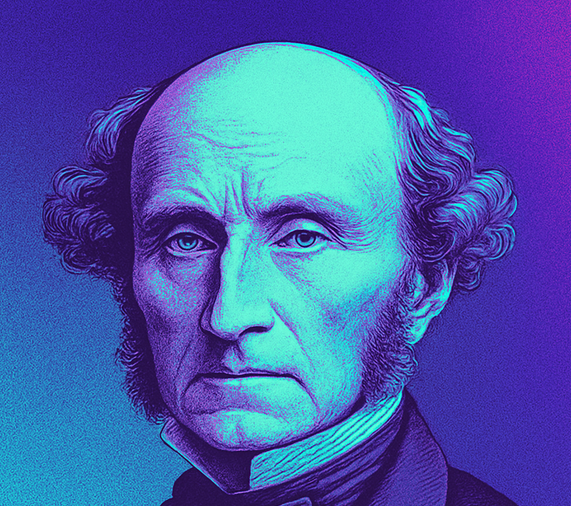
2 months 4 weeks ago
The only purpose for which power can be rightfully exercised over any member of a civilized community, against his will, is to prevent harm to others. His own good, either physical or moral, is not a sufficient warrant.
▼
Source
source
Ch. 1: Introductory
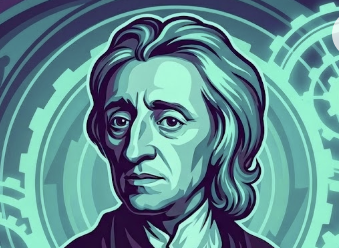
2 months 4 weeks ago
The next thing is by gentle degrees to accustom children to those things they are too much afraid of. But here great caution is to be used, that you do not make too much haste, nor attempt this cure too early, for fear lest you increase the mischief instead of remedying it.
▼
Source
source
Sec. 115
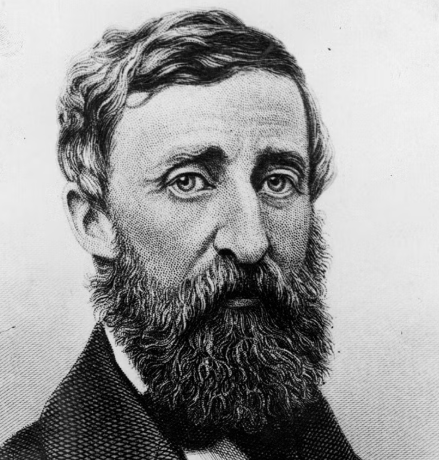
2 months 4 weeks ago
Let us not underrate the value of a fact; it will one day flower in a truth.
▼
Source
source
"Natural History of Massachusetts". The Dial (July 1842) p. 39
1 week 6 days ago
Social progress means a checking of the cosmic process at every step and the substitution for it of another, which may be called the ethical process; the end of which is not the survival of those who may happen to be the fittest, in respect of the whole of the conditions which obtain, but of those who are ethically the best.
2 months 3 weeks ago
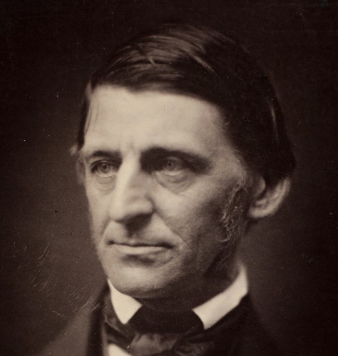
Our age is retrospective. It builds the sepulchres of the fathers. It writes biographies, histories, and criticism. The foregoing generation beheld God and nature face to face; we, through their eyes. Why should not we also enjoy an original relation to the universe. Why should not we have a poetry and philosophy of insight and not of tradition, and a religion by revelation to us, and not the history of theirs?
▼
Source
source
Introduction

3 months 5 days ago
In particular, at this point also urge governing authorities and parents to rule well and to send their children to school. Point out how they are obliged to do so and what a damnable sin they commit if they do not, for thereby, as the worst enemies of God and humanity, they overthrow and lay waste both the kingdom of God and the kingdom of the world. Explain very clearly what kind of horrible damage they do when they do not help to train children as pastors, preachers, civil servants, etc., and tell them that God will punish them dreadfully for this. For in our day and age it is necessary to preach about these things. The extent to which parents and governing authorities are now sinning in these matters defies description. The devil, too, intends to do something horrible in all this.
▼
Source
source
Foreword to the small catechismus, as quoted in the Preface, The Book of Concord: The Confessions of the Evangelical Lutheran Church (2000) by Robert Kolb and Timothy J. Wengert, p. 19
3 months 1 day ago
He who seeks equality between unequals seeks an absurdity.
▼
Source
source
Ch. 9, Of Aristocracy, Continuation
2 months 3 weeks ago
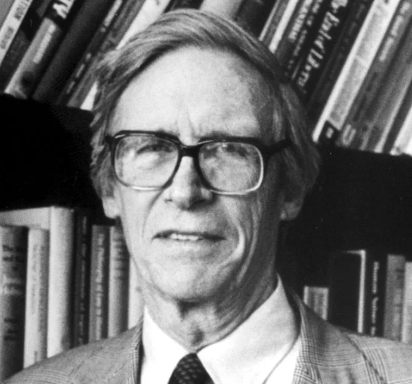
Essentially the fault lies in the fact that the democratic political process is at best regulated rivalry; it does not even in theory have the desirable properties that price theory ascribes to truly competitive markets.
▼
Source
source
Chapter IV, Section 36, p. 226

1 month 1 week ago
One cannot ignore half of life for the purposes of science, and then claim that the results of science give a full and adequate picture of the meaning of life. All discussions of 'life' which begin with a description of man's place on a speck of matter in space, in an endless evolutionary scale, are bound to be half-measures, because they leave out most of the experiences which are important to use as human beings.
▼
Source
source
p. 309
3 months 1 day ago
The tolls for the maintenance of a high road, cannot with any safety be made the property of private persons.
▼
Source
source
Chapter I, Part III, Article I, p. 786 (See also.. Public-private partnerships).
3 months 1 day ago
The violence and injustice of the rulers of mankind is an ancient evil, for which, I am afraid, the nature of human affairs can scarce admit a remedy.
▼
Source
source
Chapter III, Part II, p. 531.
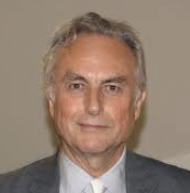
3 weeks 2 days ago
No doubt some of your cousins and great-uncles died in childhood, but not a single one of your ancestors did. Ancestors just don't die young!
▼
Source
source
Ch. 3. Immortal Coils
2 months 4 weeks ago
Some old poet's grand imagination is imposed on us as adamantine everlasting truth, and God's own word! Pythagoras says, truly enough, "A true assertion respecting God, is an assertion of God"; but we may well doubt if there is any example of this in literature.
3 months 1 day ago
It is unjust that the whole of society should contribute towards an expence of which the benefit is confined to a part of the society.
▼
Source
source
Chapter I, Part IV, Conclusion, p. 881.
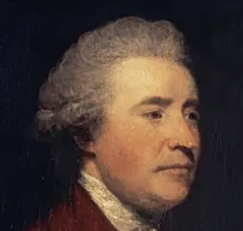
1 month 4 weeks ago
Nothing made a happy slave, but a degraded man. In proportion as the mind grew callous to its degradation, and all sense of manly pride was lost, the slave felt comfort. In fact, he was no longer a man. If he were to define a man, he would say with Shakspeare,"Man is a being, holding large discourse,Looking before and after."A slave was incapable of either looking before or after.
▼
Source
source
Speech in the House of Commons (12 May 1789), quoted in The Parliamentary History of England, From the Earliest Period to the Year 1803, Vol. XXVIII (1816), column 71
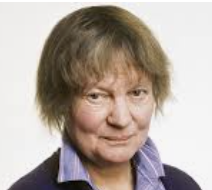
1 month 2 weeks ago
Whit Meynell was a sociologist; he had got into an intellectual muddle early on in life and never managed to get out.
▼
Source
source
The Philosopher's Pupil (1983) p. 165.
3 months 1 day ago
Fear is in almost all cases a wretched instrument of government, and ought in particular never to be employed against any order of men who have the smallest pretensions to independency.
▼
Source
source
Chapter I, Part III, p. 862.

1 month 3 weeks ago
The fact that life has no meaning is a reason to live - moreover, the only one.

3 months 4 weeks ago
How absurd men are! They never use the liberties they have, they demand those they do not have. They have freedom of thought, they demand freedom of speech. Either/Or Part I, Swenson Translation p. 19 Variations include: People demand freedom of speech to make up for the freedom of thought, which they avoid. People demand freedom of speech as a compensation for the freedom of thought which they seldom use.
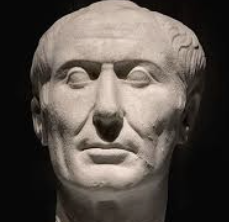
3 weeks 4 days ago
Society in shipwreck is a comfort to all.
▼
Source
source
Maxim 144
2 months 4 weeks ago
Capacity for the nobler feelings is in most natures a very tender plant, easily killed, not only by hostile influences, but by the mere want of sustenance; and in the majority of young persons it speedily dies away if the occupations to which their position in life has devoted them, and the society into which it has thrown them, are not favourable to keeping that higher capacity in existence.
▼
Source
source
Ch. 2
3 months 1 week ago
There is another form of temptation, more complex in its peril. It originates in an appetite for knowledge. From this malady of curiosity are all those strange sights exhibited in the theatre. Hence do we proceed to search out the secret powers of nature (which is beside our end), which to know profits not, and wherein men desire nothing but to know.
▼
Source
source
X, 35
1 month 3 weeks ago
Third, consider the insistency of an idea. The insistency of a past idea with reference to the present is a quantity which is less, the further back that past idea is, and rises to infinity as the past idea is brought up into coincidence with the present.
3 months 5 days ago
A wise man never loses anything, if he has himself.
▼
Source
source
Ch. 38. Of Solitude, tr. Cotton, rev. W. Hazlitt, 1842
1 month 1 week ago
Fertilisation of the soul is the reason for the necessity of art.
▼
Source
source
Ch. 13: "Requisites for Social Progress", p. 283
3 months 1 day ago
Heaven and Hell suppose two distinct species of men, the good and the bad; but the greatest part of mankind float betwixt vice and virtue. -- Were one to go round the world with an intention of giving a good supper to the righteous, and a sound drubbing to the wicked, he would frequently be embarrassed in his choice, and would find that the merits and the demerits of most men and women scarcely amount to the value of either.
▼
Source
source
Essay on the Immortality of the Soul
1 month 2 weeks ago
Thou hast said: nevertheless I say unto you, Hereafter shall ye see the Son of man sitting on the right hand of power, and coming in the clouds of heaven.
▼
Source
source
26:64 (KJV) Said to Caiaphas, the high priest.
1 month 1 week ago
No member of a crew is praised for the rugged individuality of his rowing.
▼
Source
source
"Harvard: The Future," The Atlantic Monthly, September 1936
1 month 2 weeks ago
Hereby it is manifest, that during the time men live without a common Power to keep them all in awe, they are in that conditions called Warre; and such a warre, as is of every man, against every man.
▼
Source
source
The First Part, Chapter 13, p. 62
2 months 4 weeks ago
The past treatment of Africans must naturally fill them with abhorrence of Christians; lead them to think our religion would make them more inhuman savages, if they embraced it; thus the gain of that trade has been pursued in opposition to the Redeemer's cause, and the happiness of men: Are we not, therefore, bound in duty to him and to them to repair these injuries, as far as possible, by taking some proper measures to instruct, not only the slaves here, but the Africans in their own countries? Primitive Christians laboured always to spread their Divine Religion; and this is equally our duty while there is an Heathen nation: But what singular obligations are we under to these injured people!
1 month 2 weeks ago
Ether is, in effect, a merely hypothetical entity, valuable only in so far as it explains that which by means of it we endeavor to explain - light, electricity, or universal gravitation - and only so far as these facts cannot be explained in any other way. In like manner the idea of God is also an hypothesis, valuable only in so far as it enables us to explain that which by means of it we endeavor to explain - the essence and existence of the Universe - and only so long as these cannot be explained in any other way. And since in reality we explain the Universe neither better nor worse with this idea than without it, the idea of God, the supreme petitio principii, is valueless.
1 month 1 week ago
The life of Berdyaev spans the momentous events of the first half of the twentieth century in Europe. He was no ivory tower philosopher but was intimately affected by these events throughout his life and drew his inspirations from them regarding the nature of the human condition. His writings bear the imprint of the catastrophic situations within which he was destined to live.
▼
Source
source
Richard Schain, in In Love with Eternity : Philosophical Essays and Fragments (2005), Ch. 7 : Nikolai Alexandrovich Berdyaev - A Champion of the Spirit, p. 43
3 months 1 day ago
This avidity alone, of acquiring goods and possessions for ourselves and our nearest friends, is insatiable, perpetual, universal, and directly destructive of society.
▼
Source
source
Part 2, Section 2
1 month 3 weeks ago
A regret understood by no one: the regret to be a pessimist. It's not easy to be on the wrong foot with life
2 months 3 weeks ago
There are moments of sentimental and mystical experience. . . that carry an enormous sense of inner authority and illumination with them when they come. But they come seldom, and they do not come to everyone; and the rest of life makes either no connection with them, or tends to contradict them more than it confirms them. Some persons follow more the voice of the moment in these cases, some prefer to be guided by the average results. Hence the sad discordancy of so many of the spiritual judgments of human beings; a discordancy which will be brought home to us acutely enough before these lectures end.
▼
Source
source
Lecture I, "Religion and Neurology"
1 month 3 weeks ago
What place do we occupy in the "universe"? A point, if that! Why reproach ourselves when we are evidently so insignificant? Once we make this observation, we grow calm at once: henceforth, no more bother, no more frenzy, metaphysical or otherwise. And then that point dilates, swells, substitutes itself for space. And everything begins all over again.

2 months 3 weeks ago
When all is said and done, we are in the end absolutely dependent on the universe; and into sacrifices and surrenders of some sort, deliberately looked at and accepted, we are drawn and pressed as into our only permanent positions of repose. Now in those states of mind which fall short of religion, the surrender is submitted to as an imposition of necessity, and the sacrifice is undergone at the very best without complaint. In the religious life, on the contrary, surrender and sacrifice are positively espoused: even unnecessary givings-up are added in order that the happiness may increase. Religion thus makes easy and felicitous what in any case is necessary; and if it be the only agency that can accomplish this result, its vital importance as a human faculty stands vindicated beyond dispute. It becomes an essential organ of our life, performing a function which no other portion of our nature can so successfully fulfill.
▼
Source
source
Lecture II, "Circumscription of the Topic"
3 months 5 days ago
Arts and sciences are not cast in a mould, but are formed and perfected by degrees, by often handling and polishing, as bears leisurely lick their cubs into form.
▼
Source
source
Book II, Ch. 12. Apology for Raimond Sebond
3 months 5 days ago
The Clergy is the greatest hindrance to faith.
▼
Source
source
58
1 month 4 weeks ago
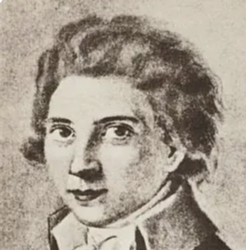
Where there is politics or economics, there is no morality.
▼
Source
source
"Selected Ideas (1799-1800)", Dialogue on Poetry and Literary Aphorisms, Ernst Behler and Roman Struc, trans. (1968) #101
3 weeks 4 days ago
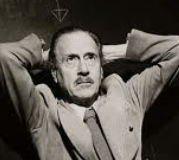
Manuscript culture is conversational if only because the writer and his audience are physically related by the form of publication as performance.
▼
Source
source
(p. 96)

2 months 3 weeks ago
The real discovery is the one which enables me to stop doing philosophy when I want to. The one that gives philosophy peace, so that it is no longer tormented by questions which bring itself into question.
▼
Source
source
§ 133
1 month 2 weeks ago
We must needs believe in the other life, in the eternal life beyond the grave. ...And we must needs believe in that other life, perhaps, in order that we may deserve it, in order that we may obtain it, for it may be that he neither deserves it nor will obtain it who does not passionately desire it above reason and, if need be, against reason.
2 months 4 weeks ago
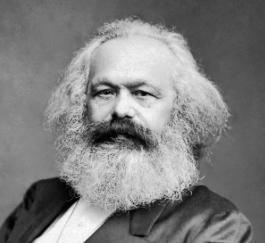
A great deal of capital, which appears to-day in the United States without any certificate of birth, was yesterday, in England, the capitalised blood of children.
▼
Source
source
Vol. I, Ch. 31, pg. 829.
2 months 4 weeks ago
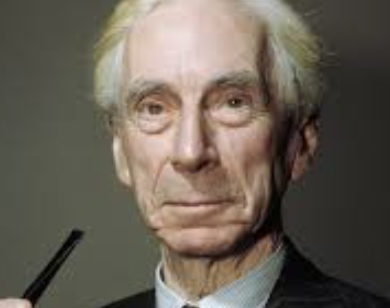
The fact that all Mathematics is Symbolic Logic is one of the greatest discoveries of our age; and when this fact has been established, the remainder of the principles of mathematics consists in the analysis of Symbolic Logic itself.
▼
Source
source
Principles of Mathematics (1903), Ch. I: Definition of Pure Mathematics, p. 5
1 month 3 weeks ago
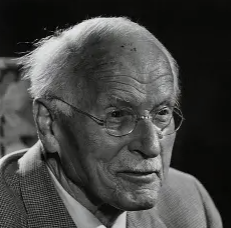
Man needs difficulties; they are necessary for health.
▼
Source
source
The Transcendent Function ("Die Transzendente Funktion") (1916) Volume 8: Structure & Dynamics of the Psyche, The Collected Works of C. G. Jung
2 months 2 days ago
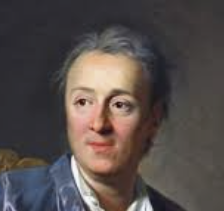
Pithy sentences are like sharp nails which force truth upon our memory.
▼
Source
source
As quoted in A Dictionary of Thoughts : Being a Cyclopedia of Laconic Quotations (1908) by Tryon Edwards, p. 338
3 months 1 week ago
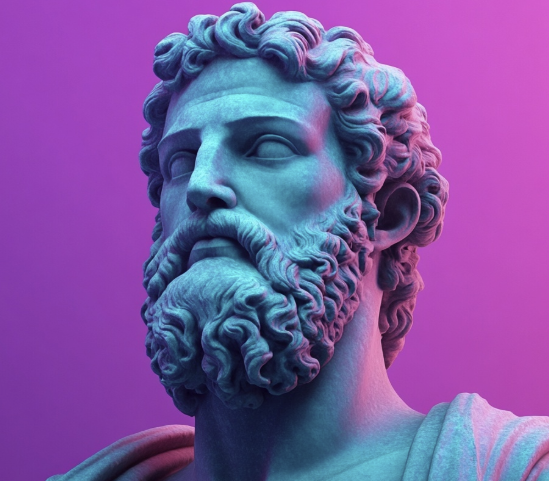
Some things are in our control and others not. Things in our control are opinion, pursuit, desire, aversion, and, in a word, whatever are our own actions. Things not in our control are body, property, reputation, command, and, in one word, whatever are not our own actions.
▼
Source
source
(1).
CivilSimian.com created by AxiomaticPanic, CivilSimian, Kalokagathia