

1 month 3 weeks ago
A finite interval of time generally contains an innumerable series of feelings; and when these become welded together in association the result is a general idea.
1 week 6 days ago
The known is finite, the unknown infinite; intellectually we stand on an islet in the midst of an illimitable ocean of inexplicability. Our business in every generation is to reclaim a little more land, to add something to the extent and the solidity of our possessions.
1 month 6 days ago
We distinguish diagrammatic from sentential paper-and-pencil representations of information by developing alternative models of information-processing systems that are informationally equivalent and that can be characterized as sentential or diagrammatic. Sentential representations are sequential, like the propositions in a text. Diagrammatic representations are indexed by location in a plane. Diagrammatic representations also typically display information that is only implicit in sentential representations and that therefore has to be computed, sometimes at great cost, to make it explicit for use. We then contrast the computational efficiency of these representations for solving several.illustrative problems in mathematics and physics.
▼
Source
source
p. 65
3 weeks 4 days ago
Faced with information overload, we have no alternative but pattern-recognition.
▼
Source
source
(p. 132)
2 months 3 weeks ago
Scientific Method... [is] even less existent than some other non-existent subjects.
3 weeks 6 days ago
What is now happening to the people of the East as of the West is like what happens to every individual when he passes from childhood to adolescence and from youth to manhood. He loses what had hitherto guided his life and lives without direction, not having found a new standard suitable to his age, and so he invents all sorts of occupations, cares, distractions, and stupefactions to divert his attention from the misery and senselessness of his life. Such a condition may last a long time.
▼
Source
source
VI
1 month 2 weeks ago
Imminent seems the collapse of that which for millennium has constituted man's universe. The new world which has arisen as an apparatus for supply of the necessaries of life compels everything and everyone to serve it. It annihilates whatever it has no place for person seems to be going undergoing absorption into that which is nothing more than a means to an end, into that which is devoid of purpose of significance.
3 months 2 weeks ago
Natural justice is a symbol or expression of usefulness, to prevent one person from harming or being harmed by another.

2 months 2 weeks ago
The covetous man is ever in want.
▼
Source
source
Book I, epistle ii, line 56
1 month 2 weeks ago
There are in our minds in solution a vast number of emotional attitudes, feelings ready to be re-excited when the proper stimulus arrives, and more than anything else it is these forms, this residue of experience, which, fuller and richer than in the mind if the ordinary man, constitute the artist's capital. What is called the magic of the artist resides in his ability to transfer these values from one field of experience to another, to attach them to objects of our common life, and by his imaginative insight make these objects poignant and momentous. Not colors, not sense qualities as such, are either matter or form, but these qualities as thoroughly imbued, impregnated, with transferred value. And then they are either matter or form according to the direction of our interest.
▼
Source
source
p. 123
3 months ago
The method of the science not being practiced much nowadays, except what logic prescribes to all sciences generally, that fitted for the peculiar nature of metaphysics being simply ignored, it is no wonder that those who everlastingly turn the Sisyphean stone of this inquiry do not seem so far to have made much progress. Though here I neither can nor will expatiate upon so important and extensive a subject, I shall briefly shadow forth what constitutes no despicable part of this method, namely, the infection between sensuous and intellectual cognition, not only as creeping in on those incautious in the application of principles, but even producing spurious principles under the appearance of axioms.
2 months 3 weeks ago
Properly understood, then, the desire to act justly derives in part from the desire to express most fully what we are or can be, namely free and equal rational beings with the liberty to choose.
▼
Source
source
Chapter IV, Section 40, p. 256
3 months 1 week ago
As the soul is the life of the body, so God is the life of the soul. As therefore the body perishes when the soul leaves it, so the soul dies when God departs from it.
▼
Source
source
p. 277

2 months 4 weeks ago
It strikes everyone in beginning to form an acquaintance with the treasures of Indian literature, that a land so rich in intellectual products and those of the profoundest order of thought..."
▼
Source
source
quoted in De Riencourt, Amaury The Soul of India Harper & Brothers Publishers New York 1960 p. 301
1 month 2 weeks ago
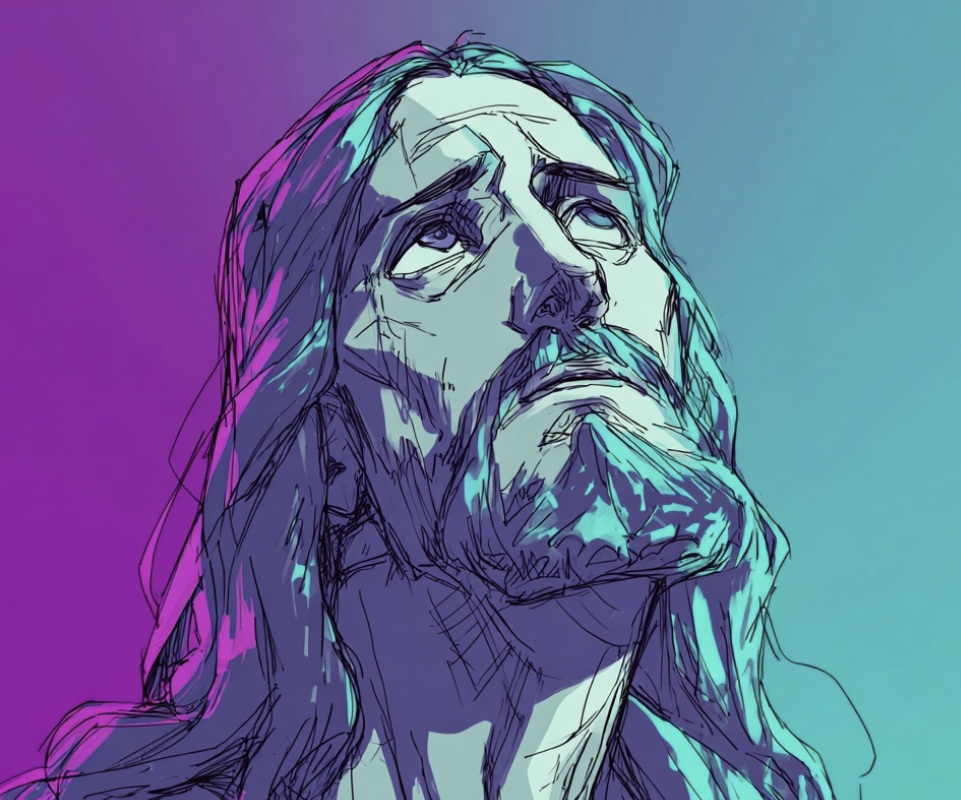
Another parable put he forth unto them, saying, The kingdom of heaven is likened unto a man which sowed good seed in his field: But while men slept, his enemy came and sowed tares among the wheat, and went his way. But when the blade was sprung up, and brought forth fruit, then appeared the tares also. So the servants of the householder came and said unto him, Sir, didst not thou sow good seed in thy field? from whence then hath it tares? He said unto them, An enemy hath done this. The servants said unto him, Wilt thou then that we go and gather them up? But he said, Nay; lest while ye gather up the tares, ye root up also the wheat with them. Let both grow together until the harvest: and in the time of harvest I will say to the reapers, Gather ye together first the tares, and bind them in bundles to burn them: but gather the wheat into my barn.
▼
Source
source
13:24-30 (KJV)
1 month 3 weeks ago
Death is the most blessed dream.
▼
Source
source
Act II.
2 months 4 weeks ago
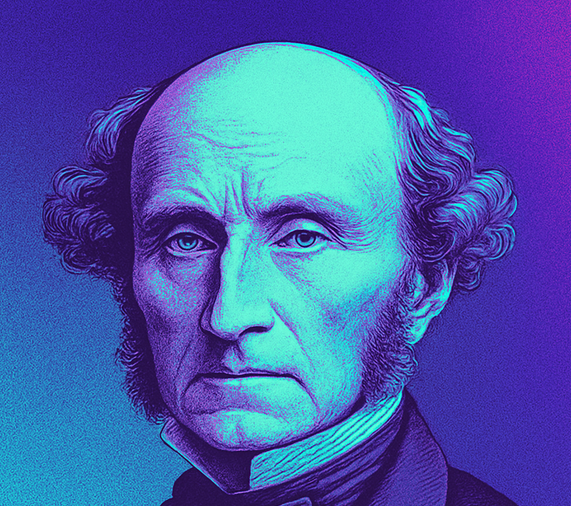
In this frame of mind it occurred to me to put the question directly to myself: "Suppose that all your objects in life were realized; that all the changes in institutions and opinions which you are looking forward to, could be completely effected at this very instant: would this be a great joy and happiness to you?" And an irrepressible self-consciousness distinctly answered, "No!" At this my heart sank within me: the whole foundation on which my life was constructed fell down. All my happiness was to have been found in the continual pursuit of this end. The end had ceased to charm, and how could there ever again be any interest in the means? I seemed to have nothing left to live for.
▼
Source
source
(pp. 133-134)
1 week 3 days ago
The supreme accomplishment is to blur the line between work and play.
▼
Source
source
In Ellen J. Langer (ed.) Mindfulness (Merloyd Lawrence Books, 1989) p. 133

4 months ago
One will rarely err if extreme actions be ascribed to vanity, ordinary actions to habit, and mean actions to fear.

2 months 3 weeks ago
God can make good use of all that happens, but the loss is real.
2 months 2 weeks ago
Neither art nor wisdom may be attained without learning.
2 months 3 weeks ago
My dear Wormwood, I note what you say about guiding your patient's reading and taking care that he sees a good deal of his materialist friend. But are you not being a trifle naive? It sounds as if you suppose that argument was the way to keep him out of the enemy's clutches. That might have been so if he had lived a few centuries earlier.
▼
Source
source
Letter I
1 month ago
The sense in which an automatic door "understands instructions" from its photoelectric cell is not at all the sense in which I understand English.
1 month 1 week ago
Asceticism is the trifling of an enthusiast with his power, a puerile coquetting with his selfishness or his vanity, in the absence of any sufficiently great object to employ the first or overcome the last.
▼
Source
source
Letter (5 September 1857), quoted in The Life of Florence Nightingale (1913) by Edward Tyas Cook, p. 369
2 months 3 weeks ago
With despair, true optimism begins: the optimism of the man who expects nothing, who knows he has no rights and nothing coming to him, who rejoices in counting on himself alone and in acting alone for the good of all.
1 month 1 day ago
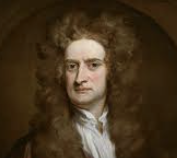
I do not know what I may appear to the world, but to myself I seem to have been only like a boy playing on the sea-shore, and diverting myself in now and then finding a smoother pebble or a prettier shell than ordinary, whilst the great ocean of truth lay all undiscovered before me.
▼
Source
source
Memoirs of the Life, Writings, and Discoveries of Sir Isaac Newton (1855) by Sir David Brewster (Volume II. Ch. 27).
2 months 4 weeks ago
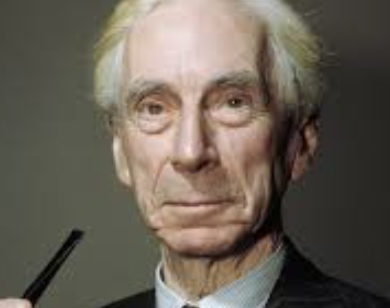
Instinctively we divide mankind into friends and foes - friends, towards whom we have the morality of co-operation; foes, towards whom we have that of competition. But this division is constantly changing; at one moment a man hates his business competitor, at another, when both are threatened by Socialism or by an external enemy, he suddenly begins to view him as a brother. Always when we pass beyond the limits of the family it is the external enemy which supplies the cohesive force. In times of safety we can afford to hate our neighbour, but in times of danger we must love him.
▼
Source
source
Authority and the Individual, 1949
3 weeks 4 days ago
Until writing was invented, we lived in acoustic space: boundless, directionless, horizonless, the dark of the mind, the world of emotion, primordial intuition, terror. Speech is a social chart of this bog.
▼
Source
source
(p. 13)
2 months 4 weeks ago
The world would be a happier place than it is if acquisitiveness were always stronger than rivalry. But in fact, a great many men will cheerfully face impoverishment if they can thereby secure complete ruin for their rivals. Hence the present level of taxation. Vanity is a motive of immense potency. Anyone who has much to do with children knows how they are constantly performing some antic, and saying "Look at me." "Look at me" is one of the most fundamental desires of the human heart. It can take innumerable forms, from buffoonery to the pursuit of posthumous fame.

1 month 2 weeks ago
The higher culture of the West-whose moral, aesthetic, and intellectual values industrial society still professes-was a pre-technological culture in a functional as well as chronological sense. Its validity was derived from the experience of a world which no longer exists and which cannot be recaptured because it is in a strict sense invalidated by technological society. Moreover, it remained to a large degree a feudal culture, even when the bourgeois period gave it some of its most lasting formulations. It was feudal not only because of its confinement to privileged minorities, not only because of its inherent romantic element (which will be discussed presently), but also because its authentic works expressed a conscious, methodical alienation from the entire sphere of business and industry, and from its calculable and profitable order.
▼
Source
source
p. 58

3 months 3 weeks ago
I do not have much liking for the too famous existential philosophy, and, to tell the truth, I think its conclusions false.

3 months 6 days ago
As to the people; in all these countries the greater part of the people certainly detest war, and most devoutly wish for peace. A very few of them, indeed, whose unnatural happiness depends upon the public misery, may wish for war; but be it yours to decide, whether it is equitable or not, that the unprincipled selfishness of such wretches should have more weight than the anxious wishes of all good men united.
1 month 2 weeks ago
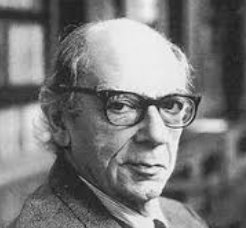
If, as I believe, the ends of men are many, and not all of them are in principle compatible with each other, then the possibility of conflict - and of tragedy - can never wholly be eliminated from human life, either personal or social. The necessity of choosing between absolute claims is then an inescapable characteristic of the human condition. This gives its value to freedom as Acton conceived of it - as an end in itself, and not as a temporary need, arising out of our confused notions and irrational and disordered lives, a predicament which a panacea could one day put right.
1 month ago
Well, what does "good" mean anyway...? As Wittgenstein suggested, "good," like "game," has a family of meanings. Prominent among them is this one: "meets the criteria or standards of assessment or evaluation."
▼
Source
source
P. 152.
2 months 4 weeks ago
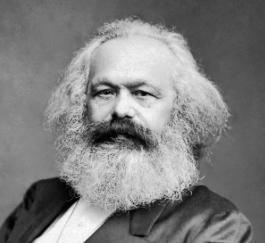
Every one knows that there are no real forests in England. The deer in the parks of the great are demurely domestic cattle, fat as London alderman.
▼
Source
source
Vol. I, Ch. 27, pg. 803.
1 month 2 weeks ago
The animating purpose of James was, on the other hand, primarily moral and artistic. It is expressed in his phrase, "block universe," employed as a term of adverse criticism. Mechanism and idealism were abhorrent to him because they both hold to a closed universe in which there is no room for novelty and adventure. Both sacrifice individuality and all the values, moral and aesthetic, which hang upon individuality; for according to absolute idealism, as to mechanistic materialism, the individual is simply a part determined by the whole of which he is a part. Only a philosophy of pluralism, of genuine indetermination, and of change which is real and intrinsic gives significance to individuality. It alone justifies struggle in creative activity and gives opportunity for the emergence of the genuinely new.
2 months 4 weeks ago
An irrational fear should never be simply let alone, but should be gradually overcome by familiarity with its fainter forms.
▼
Source
source
On Education, Especially in Early Childhood (1926), Ch. 4: Fear

4 days ago
The idea of a law of progress, or of an all but irresistible tendency to general improvement, is then merely a superstition, one of the tents of the modernist pseudo-religion of humanism. Even if such a law or tendency existed and were demonstrable, the liberal faith in progress would for Santayana be pernicious. For it leads to a corrupt habit of mind in which things are valued, not for their present excellence or perfection, but instrumentally, as leading to something better; and it insinuates into thought and feeling a sort of historical theodicy, in which past evil is justified as a means to present or future good. The idea of progress embodies a kind of time-worship (to adopt an expression used by Wyndham Lewis) in which the particularities of our world are seen and valued, not in themselves, but for what they might perhaps become, thereby leaving us destitute of the sense of the present and, at the same time, of the perspective of eternity.
▼
Source
source
'Santayana's Alternative' (p.67-8)
3 months 1 week ago
Mahomet established a religion by putting his enemies to death; Jesus Christ, by commanding his followers to lay down their own lives.
▼
Source
source
Thoughts on Religion and Philosophy (W. Collins, 1838), Ch. XVI, p. 202
3 months ago
It is precisely in knowing its limits that philosophy consists.
▼
Source
source
A 727, B 755

2 months 3 weeks ago
This is the moment when it becomes clear that the images of madness are nothing but dream and error, and that if the unfortunate sufferer who is blinded by them invokes them, it is the better to disappear with them into the annihilation for which they are destined.
▼
Source
source
Part Two: 2. The Transcendence of Delirium
1 month 1 week ago
The Americans have always been more open to my ideas. In fact, I could earn a living in America just by lecturing. One of my brightest audiences, incidentally, were the prisoners in a Philadelphia gaol - brighter than my students at university.
▼
Source
source
Interview with Paul Newman in Abraxas Unbound #7
3 months 1 week ago
Several particular maxims... are as powerful, although false, in carrying away belief, as those the most true.

1 week 6 days ago
Is Man so different from any of these Apes that he must form an order by himself? Or does he differ less from them than they differ from one another, and hence must take his place in the same order with them?
▼
Source
source
Ch.2, p. 86
3 months 5 days ago
Physicians have this advantage: the sun lights their success and the earth covers their failures.
▼
Source
source
Ch. 37
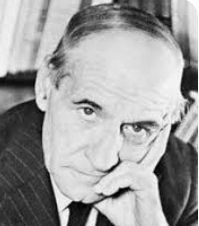
1 month 2 weeks ago
The form most contradictory to human life that can appear among the human species is the "self-satisfied man."
▼
Source
source
Chapter XI: The Self-Satisfied Age

3 months 4 weeks ago
Where is the boundary for the single individual in his concrete existence between what is lack of will and what is lack of ability; what is indolence and earthly selfishness and what is the limitation of finitude? For an existing person, when is the period of preparation over, when this question will not arise again in all its initial, troubled severity; when is the time in existence that is indeed a preparation? Let all the dialecticians convene-they will not be able to decide this for a particular individual in concreto.
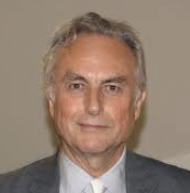
3 weeks 2 days ago
Just because science can't in practice explain things like the love that motivates a poet to write a sonnet, that doesn't mean that religion can. It's a simple and logical fallacy to say, 'If science can't do something, therefore religion can'.
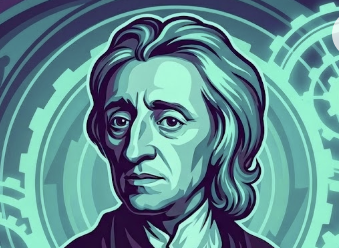
2 months 4 weeks ago
That which parents should take care of... is to distinguish between the wants of fancy, and those of nature.
▼
Source
source
Sec. 107
CivilSimian.com created by AxiomaticPanic, CivilSimian, Kalokagathia