

2 months 4 weeks ago
The fault of the utilitarian doctrine is that it mistakes impersonality for impartiality.
▼
Source
source
Chapter III, Section 30, pg. 190
1 month 1 week ago
Be wary of passing the judgment: obscure. To find something obscure poses no difficulty: elephants and poodles find many things obscure.
▼
Source
source
E 36
1 month 3 weeks ago
The woman is increasingly aware that love alone can give her full stature, just as the man begins to discern that spirit alone can endow his life with its highest meaning. Fundamentally, therefore, both seek a psychic relation to the other, because love needs the spirit, and the spirit love, for their fulfillment.
▼
Source
source
p. 185
3 months ago
Take the question whether other people exist. ...It is plain that it makes for happiness to believe that they exist - for even the greatest misanthropist would not wish to be deprived of the objects of his hate. Hence the belief that other people exist is, pragmatically, a true belief. But if I am troubled by solipsism, the discovery that a belief in the existence of others is 'true' in the pragmatist's sense is not enough to allay my sense of loneliness: the perception that I should profit by rejecting solipsism is not alone sufficient to make me reject it. For what I desire is not that the belief in solipsism should be false in the pragmatic sense, but that other people should in fact exist. And with the pragmatist's meaning of truth, these two do not necessarily go together. The belief in solipsism might be false even if I were the only person or thing in the universe.
▼
Source
source
"William James's Conception of Truth" , published in Philosophical Essays, London, 1910
3 months 2 weeks ago
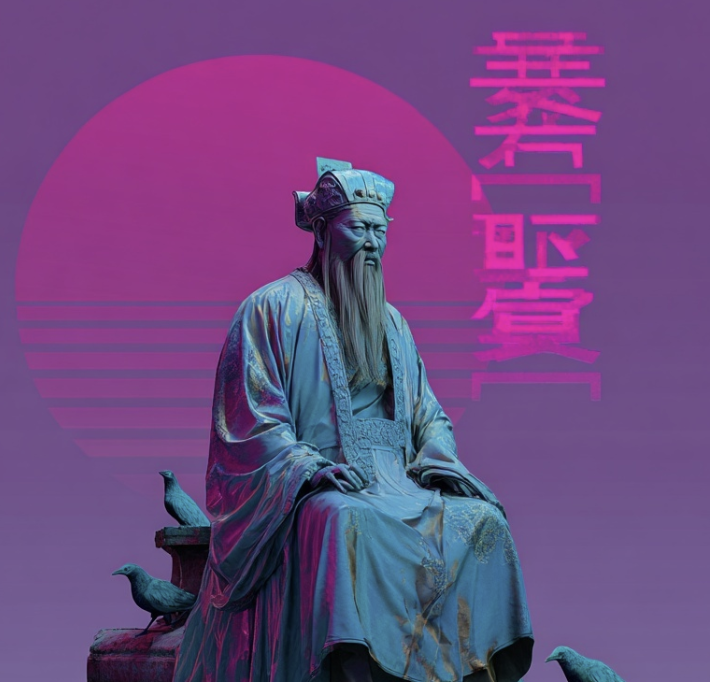
Being in humaneness is good. If we select other goodness and thus are far apart from humaneness, how can we be the wise? The opening phrase of this chapter after which the chapter is named in Chinese.
3 months 2 days ago
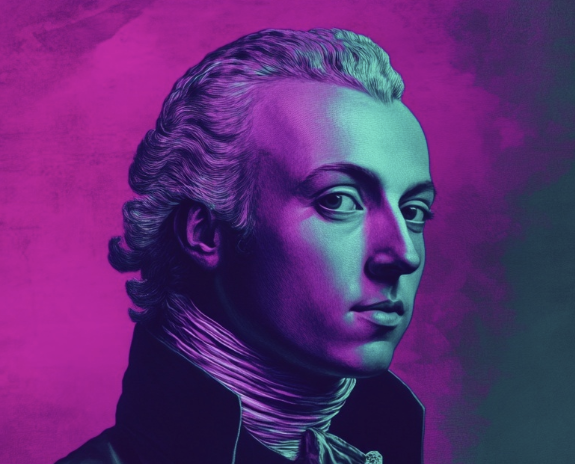
The death of dogma is the birth of morality.
▼
Source
source
As quoted in Faith Or Fact (1897) by Henry Moorehouse Taber, p. 86
1 month 2 weeks ago
There is something between the gross specialised values of the mere practical man, and the thin specialised values of the mere scholar. Both types have missed something; and if you add together the two sets of values, you do not obtain the missing elements.
▼
Source
source
Ch. 13: "Requisites for Social Progress", p. 279
1 month 3 weeks ago
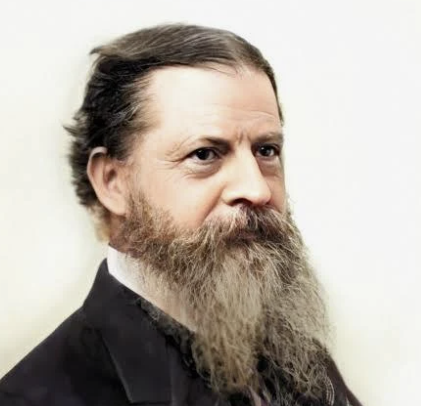
May some future student go over this ground again, and have the leisure to give his results to the world.

2 months 1 week ago
No one entrusts a secret to a drunken man; but one will entrust a secret to a good man; therefore, the good man will not get drunk.
▼
Source
source
As quoted in Epistulae morales ad Lucilium by Seneca, Epistle LXXXIII (trans. R. M. Gummere)
2 months 4 weeks ago
Being happy involves both a certain achievement in action and a rational assurance about the outcome.
▼
Source
source
Chapter IX, Section 83, p. 549

2 months 1 week ago
Envy has been, is, and shall be, the destruction of many. What is there, that Envy hath not defamed, or Malice left undefiled? Truly, no good thing.
2 months 4 weeks ago
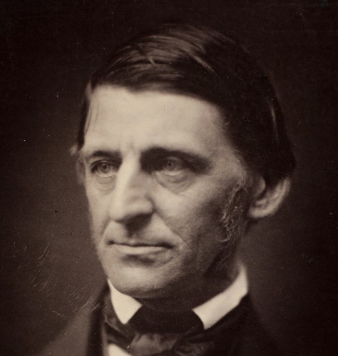
Wealth begins in a tight roof that keeps the rain and wind out; in a good pump that yields you plenty of sweet water; in two suits of clothes, so to change your dress when you are wet; in dry sticks to burn; in a good double-wick lamp; and three meals; in a horse, or a locomotive, to cross the land; in a boat to cross the sea; in tools to work with; in books to read; and so, in giving, on all sides, by tolls and auxiliaries, the greatest possible extension to our powers, as if it added feet, and hands, and eyes, and blood, length to the day, and knowledge, and good-will.Wealth begins with these articles of necessity.
▼
Source
source
Wealth
3 months ago
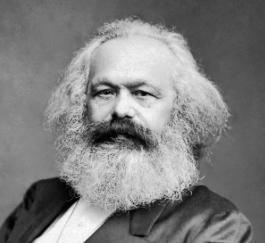
In every stock-jobbing swindle everyone knows that some time or other the crash must come, but every one hopes that it may fall on the head of his neighbour, after he himself has caught the shower of gold and placed it in safety.
▼
Source
source
Vol. I, Ch. 10, Section 5, pg. 296.
1 month 3 weeks ago
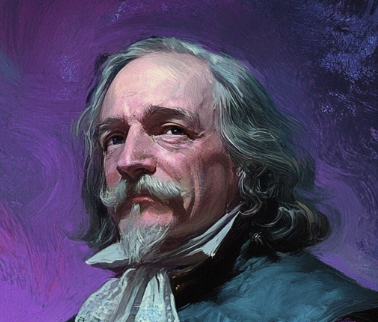
And because the condition of Man, (as hath been declared in the precedent Chapter) is a condition of Warre of every one against everyone; in which case every one is governed by his own Reason; and there is nothing he can make use of, that may not be a help unto him, in preserving his life against his enemyes; It followeth, that in such a condition, every man has a Right to every thing; even to one anothers body.
▼
Source
source
The First Part, Chapter 14, p. 64
2 months 4 weeks ago
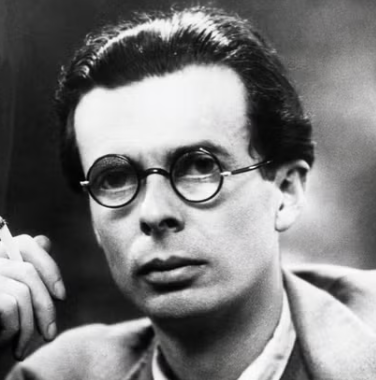
And, oddly enough, even at times when the current style permitted a treatment of the less epileptic aspects of religion, no fully adequate rendering of the contemplative life was ever achieved in the plasdc arts of Christendom. The peace that passes all understanding was often sung and spoken; it was hardly ever painted or carved. Thus, in the writings of St. Bernard, of Albertus Magnus, of Eckhart and Tauler and Ruysbroeck one may find passages that express very clearly the nature and significance of mystical contemplation. But the saints who figure in medieval painting and sculpture tell us next to nothing about this anticipation of the beatific vision. There are no equivalents of those Far Eastern Buddhas and Bodhisattvas who incarnate, in stone and paint, the experience of ultimate reality.

1 month 3 weeks ago
Only optimists commit suicide, the optimists who can no longer be . . . optimists. The others, having no reason to live, why should they have any to die?
3 months ago
From the winter of 1821, when I first read Bentham, and especially from the commencement of the Westminster Review, I had what might truly be called an object in life; to be a reformer of the world. My conception of my own happiness was entirely identified with this object. The personal sympathies I wished for were those of fellow labourers in this enterprise. I endeavoured to pick up as many flowers as I could by the way; but as a serious and permanent personal satisfaction to rest upon, my whole reliance was placed on this...
▼
Source
source
(p. 132)

3 months 3 weeks ago
For it is the chief characteristic of the religion of science, that it works, and that such curses as that of Aporat's are really deadly.
4 months ago
While both are dear, Piety requires us to honor truth above our friends.
1 month 2 weeks ago
The form most contradictory to human life that can appear among the human species is the "self-satisfied man."
▼
Source
source
Chapter XI: The Self-Satisfied Age

1 month 1 week ago
These are the visionary, mystical moments, when a man 'completes his partial mind'. His everyday conscious self is only a small part of the mind, like the final crescent of the moon. In moments of crisis, the full moon suddenly appears.
▼
Source
source
p. 156

1 month 3 weeks ago
Many, and I think the determining, constitutive facts remain outside the reach of the operational concept. And by virtue of this limitation-this methodological injunction against transitive concepts which might show the facts in their true light and call them by their true name-the descriptive analysis of the facts blocks the apprehension of facts and becomes an element of the ideology that sustains the facts. Proclaiming the existing social reality as its own norm, this sociology fortifies in the individuals the "faithless faith" in the reality whose victims they are.
▼
Source
source
p. 119
4 weeks 1 day ago
And so the arbitrary union of three incommensurate, mutually disconnected concepts became the basis of a bewildering theory... [by which] one of the lowest renderings of art, art for mere pleasure - against which all of the master teachers warned - was idealized as the ultimate in art.
3 months 2 weeks ago
A true friend will partake of the wants and sorrows of his friend, as if they were his own; if he be in want, he will relieve him; if he be in prison, he will visit him; if he be sick, he will come to him; nay-situations may occur, in which he would not scruple to die for him. It cannot then be doubted, that friendship is one of the most useful means of procuring a secure, tranquil, and happy life.
3 months 2 weeks ago
Since it is Reason which shapes and regulates all other things, it ought not itself to be left in disorder.
▼
Source
source
Book I, ch. 17, 1.

1 month 3 weeks ago
The victor and the one who keeps My works to the end: I will give him authority over the nations and He will shepherd them with an iron scepter; He will shatter them like pottery just as I have received this from My Father.
2 months 2 weeks ago
When he was wounded with an arrow in the ankle, and many ran to him that were wont to call him a god, he said smiling, "That is blood, as you see, and not, as Homer saith, 'such humour as distils from blessed gods.'"
▼
Source
source
43 Alexander
2 months ago
So to be patriots as not to forget we are gentlemen.

2 months 4 weeks ago
Friends are not primarily absorbed in each other. It is when we are doing things together that friendship springs up - painting, sailing ships, praying, philosophizing, fighting shoulder to shoulder. Friends look in the same direction. Lovers look at each other - that is, in opposite directions. To transfer bodily all that belongs to one relationship into the other is blundering.
1 month 3 weeks ago
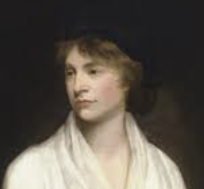
The more I see of the world, the more I am convinced that civilisation is a blessing not sufficiently estimated by those who have not traced its progress; for it not only refines our enjoyments, but produces a variety which enables us to retain the primitive delicacy of our sensations. Without the aid of the imagination all the pleasures of the senses must sink into grossness, unless continual novelty serve as a substitute for the imagination, which, being impossible, it was to this weariness, I suppose, that Solomon alluded when he declared that there was nothing new under the sun!
▼
Source
source
Letter 2
2 months 2 weeks ago
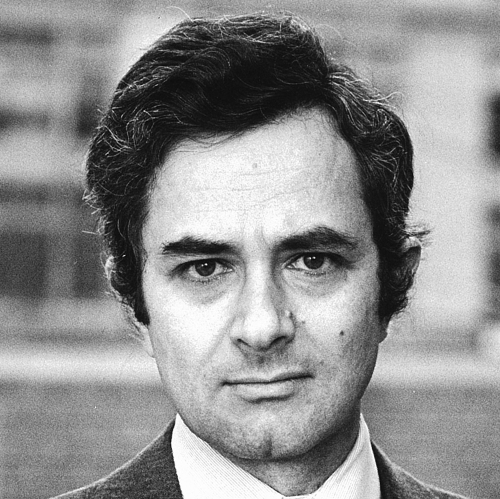
Even if I could by gradual degrees be transformed into a bat, nothing in my present constitution enables me to imagine what the experiences of such a future stage of myself thus metamorphosed would be like. The best evidence would come from the experience of bats, if we only knew what they were like.
▼
Source
source
p. 169.
3 months 3 days ago
Mercy to the guilty is cruelty to the innocent.
▼
Source
source
Section II, Chap. III.
2 months 4 weeks ago
Leave this hypocritical prating about the masses. Masses are rude, lame, unmade, pernicious in their demands and influence, and need not to be flattered, but to be schooled. I wish not to concede anything to them, but to tame, drill, divide, and break them up, and draw individuals out of them.
▼
Source
source
Considerations by the Way
3 months ago
In capitalist society however where social reason always asserts itself only post festum great disturbances may and must constantly occur.
▼
Source
source
Vol. II, Ch. XVI, p. 319.

1 month 4 weeks ago
Peace to the shacks! War on the palaces!
1 week 6 days ago
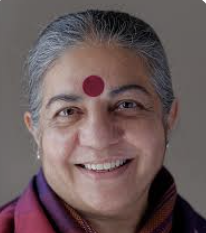
When Bill Gates pours money into Africa for feeding the poor in Africa and preventing famine, he's pushing the failed Green Revolution, he's pushing chemicals, pushing GMOs, pushing patterns.
▼
Source
source
On Bill Gate's philanthropic activities, from "Bill Gates is continuing the work of Monsanto, Vandana Shiva tells France24" France24
3 months 2 weeks ago
When one cultivates to the utmost the principles of his nature, and exercises them on the principle of reciprocity, he is not far from the path. What you do not like when done to yourself, do not do to others.
1 month 3 weeks ago
Verily I say unto you, If ye have faith, and doubt not, ye shall not only do this which is done to the fig tree, but also if ye shall say unto this mountain, Be thou removed, and be thou cast into the sea; it shall be done.
1 month 2 weeks ago
Man does not exercise his thought because he finds it amusing, but because, obliged as he is to live immersed in the world and to force his way among things, he finds himself under the necessity of organizing his psychic activities, which are not very different from those of the anthropoid, in the form of thought - which is what the animal does not do.
▼
Source
source
p. 28
2 months 4 weeks ago
The virtues of society are the vices of the saints.
▼
Source
source
Circles
3 months 3 weeks ago
Where any answer is possible, all answers are meaningless.
3 months ago
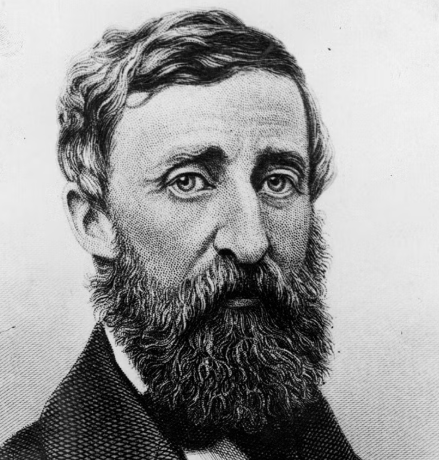
You ask particularly after my health. I suppose that I have not many months to live; but, of course, I know nothing about it. I may add that I am enjoying existence as much as ever, and regret nothing.
▼
Source
source
Last letter, to Myron Benton, March 31, 1862
1 month 3 weeks ago
The terrifying experience and obsession of death, when preserved in consciousness, becomes ruinous. If you talk about death, you save part of yourself. But at the same time, something of your real self dies, because objectified meanings lose the actuality they have in consciousness.
1 month 4 weeks ago
Every pleasure raises the tide of life; every pain lowers the tide of life.
▼
Source
source
Ch. 6, The Biological View

1 month 1 week ago
When we have undermined the patriotic lie, we shall have cleared the path for that great structure wherein all nationalities shall be united into a universal brotherhood, - a truly FREE SOCIETY.

2 months 4 days ago
By and large the literature of a democracy will never exhibit the order, regularity, skill, and art characteristic of aristocratic literature; formal qualities will be neglected or actually despised. The style will often be strange, incorrect, overburdened, and loose, and almost always strong and bold. Writers will be more anxious to work quickly than to perfect details. Short works will be commoner than long books, wit than erudition, imagination than depth. There will be a rude and untutored vigor of thought with great variety and singular fecundity. Authors will strive to astonish more than to please, and to stir passions rather than to charm taste.
▼
Source
source
Book One, Chapter XIII.
1 month 2 weeks ago
The petit-bourgeois is a man unable to imagine the Other. If he comes face to face with him, he blinds himself, ignores and denies him, or else transforms him into himself.
▼
Source
source
p. 151
3 weeks 6 days ago
The unformulated message of an assembly of news items from every quarter of the globe is that the world today is one city. All war is civil war. All suffering is our own.
▼
Source
source
p. 291
1 month 3 weeks ago
Sadness makes you God's prisoner.
1 month 3 weeks ago
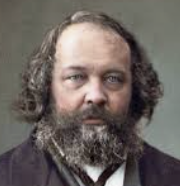
We must make a very precise distinction between the official and consequently dictatorial prerogatives of society organized as a state, and of the natural influence and action of the members of a non-official, non-artificial society.
CivilSimian.com created by AxiomaticPanic, CivilSimian, Kalokagathia