

3 months ago
The degree of one's emotion varies inversely with one's knowledge of the facts - the less you know the hotter you get.
▼
Source
source
Attributed to Russell in Distilled Wisdom (1964) by Alfred Armand Montapert, p. 145
2 weeks 4 days ago
It seems that the creative faculty, and the critical faculty, cannot exist together in their highest perfection.
▼
Source
source
p. 186

3 months 2 days ago
It is too difficult to think nobly when one thinks only of earning a living.
▼
Source
source
Variant translation: It is too difficult to think nobly when one only thinks to get a living.

3 months 1 day ago
As much in vain, perhaps, will they search ancient history for examples of the modern Slave-Trade. Too many nations enslaved the prisoners they took in war. But to go to nations with whom there is no war, who have no way provoked, without farther design of conquest, purely to catch inoffensive people, like wild beasts, for slaves, is an hight of outrage against Humanity and Justice, that seems left by Heathen nations to be practised by pretended Christians. How shameful are all attempts to colour and excuse it!

1 month 3 weeks ago
We had nothing to say to one another, and while I was manufacturing my phrases I felt that earth was falling through space and that I was falling with it at a speed that made me dizzy.
1 month 3 weeks ago
The secret is that only that which can destroy itself is truly alive.
▼
Source
source
Psychology and Alchemy
3 months 2 weeks ago
He that in his studies wholly applies himself to labour and exercise, and neglects meditation, loses his time, and he that only applies himself to meditation, and neglects labour and exercise, only wanders and loses himself.
3 months ago
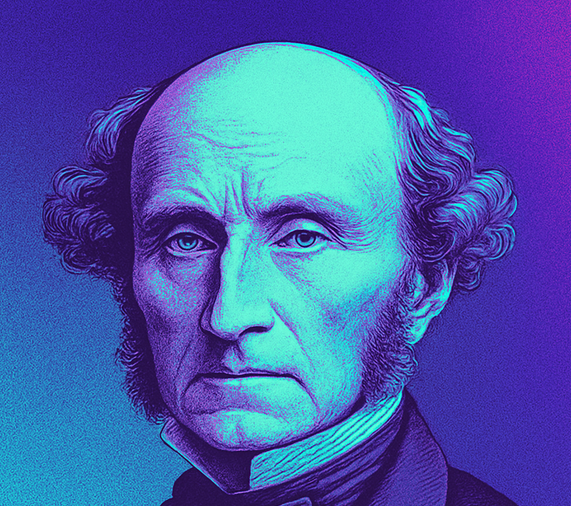
Whenever the general disposition of the people is such, that each individual regards those only of his interests which are selfish, and does not dwell on, or concern himself for, his share of the general interest, in such a state of things, good government is impossible.
▼
Source
source
Ch. II: The Criterion of a Good Form of Government (p. 167)
2 months 4 weeks ago
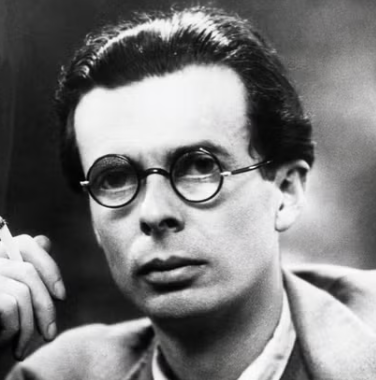
In the old dramas it was love that had to be sacrificed to painful duty. In the modern instance the sacrifice is at the shrine of what William James called "the Bitch Goddess, Success." Love is to be abandoned for the stern pursuit of newspaper notoriety and dollars.
▼
Source
source
"Silence is Golden," p. 61

6 days ago
Tyranny offers relief from the burden of sanity and a licence to enact forbidden impulses of hatred and violence. By acting on these impulses and releasing them in their subjects tyrants give people a kind of happiness, which as individuals they may be incapable of achieving.
▼
Source
source
An Old Chaos: What a Tyrant Can Do For You (p. 57)
3 months 2 days ago
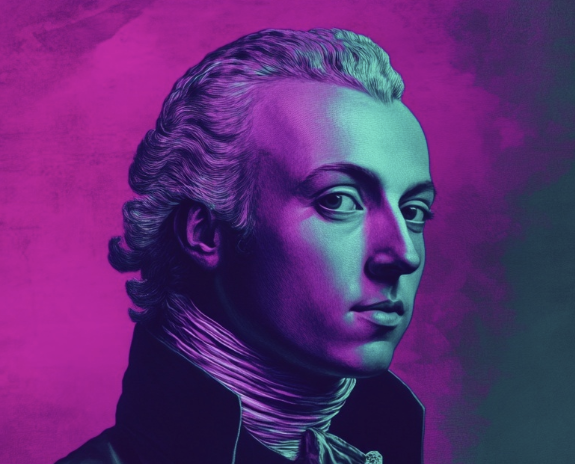
A spurious axiom of the first class is: Whatever is, is somewhere and sometime.
1 month 3 weeks ago
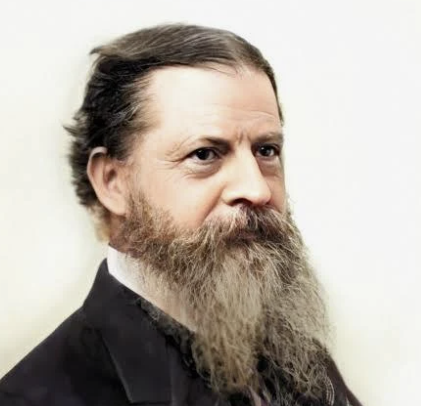
Let me now try to gather up all these odds and ends of commentary and restate the law of mind, in a unitary way.
3 months 3 weeks ago
Art is the activity that exalts and denies simultaneously. "No artist tolerates reality," says Nietzsche.
1 month 2 weeks ago
I approach the presentation of Kierkegaard with some trepidation. Next to Nietzsche, or rather, prior to Nietzsche, I consider him to be the most important thinker of our post-Kantian age. With Goethe and Hegel, an epoch had reached its conclusion, and our prevalent way of thinking - that is, the positivistic, natural-scientific one - cannot really be considered as philosophy.
▼
Source
source
The Great Philosophers
3 months 3 days ago
A free man thinks of death least of all things; and his wisdom is a meditation not of death but of life.
▼
Source
source
Part IV, Prop. LXVII
1 month 3 weeks ago
Only the idiot is equipped to breathe.
3 months 3 days ago
My opinion concerning God differs widely from that which is ordinarily defended by modern Christians. For I hold that God is of all things the cause immanent, as the phrase is, not transient. I say that all things are in God and move in God, thus agreeing with Paul, and, perhaps, with all the ancient philosophers, though the phraseology may be different ; I will even venture to affirm that I agree with all the ancient Hebrews, in so far as one may judge from their traditions, though these are in many ways corrupted. The supposition of some, that I endeavour to prove in the Tractatus Theologico-Politicus the unity of God and Nature (meaning by the latter a certain mass or corporeal matter), is wholly erroneous. As regards miracles, I am of opinion that the revelation of God can only be established by the wisdom of the doctrine, not by miracles, or in other words by ignorance.
▼
Source
source
Letter 21 (73) to Henry Oldenburg , November
3 months ago
All students of man and society who possess that first requisite for so difficult a study, a due sense of its difficulties, are aware that the besetting danger is not so much of embracing falsehood for true, as of mistaking part of the truth for the whole.
▼
Source
source
"Coleridge". London and Westminster Review., March 1840
1 month 1 week ago
To understand God's thoughts we must study statistics, for these are the measure of His purpose.
▼
Source
source
As quoted in Chance Rules : An Informal Guide to Probability, Risk, and Statistics (1999) by Brian Everitt, p. 137
2 months 4 weeks ago
Men are what their mothers made them.
▼
Source
source
Fate
3 weeks 6 days ago
Either be silent or say something better than silence.
▼
Source
source
Maxim 960
1 month 3 weeks ago
Till mankind be satisfied with the naked statement of what they really perceive, till they confess virtue to be then most illustrious, when she more disdains the aid of ornament, they will never arrive at that manly justice of sentiment at which they seem destined one day to arrive. By his scheme of naked virtue will be every day a gainer; every succeeding observer willl more fully do her justice, while vice, deprived of that varnish with which she delighted to glow her actions of that gaudy exhibition which may be made alike by every pretender will speedily sink into unheeded contempt.
▼
Source
source
Book V, Chapter 12, "Of Titles"

2 months 3 weeks ago
You won't - I really believe - get too much out of reading it. Because you won't understand it; the content will seem strange to you. In reality, it isn't strange to you, for the point is ethical. I once wanted to give a few words in the foreword which now actually are not in it, which, however, I'll write to you now because they might be a key for you: I wanted to write that my work consists of two parts: of the one which is here, and of everything which I have not written. And precisely this second part is the important one.
▼
Source
source
On his Tractatus Logico-Philosophicus, in a letter to Ludwig von Ficker (1919), published in Wittgenstein : Sources and Perspectives (1979) by C. Grant Luckhard
2 months 3 weeks ago
At the end of reasons comes persuasion.
2 months 4 days ago
Morals are in all countries the result of legislation and government; they are not African or Asian or European: they are good or bad.


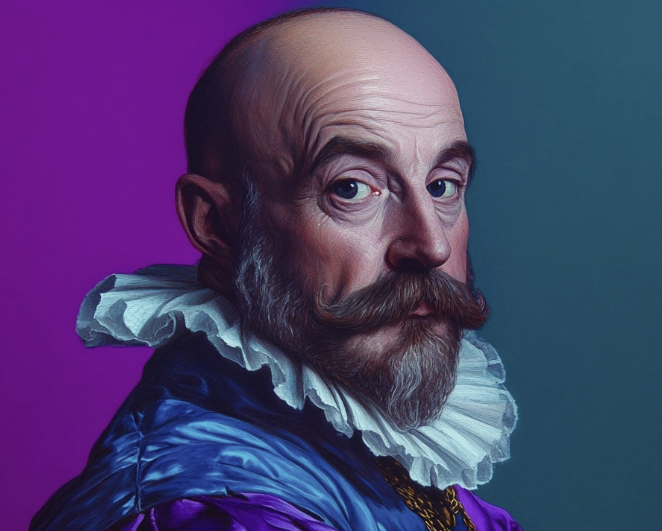
3 months 1 week ago
The world is but a perpetual see-saw.
1 month 2 weeks ago
Logic chases truth up the tree of grammar.
▼
Source
source
Philosophy of Logic

7 months 5 days ago
What is really disturbing about The Name of the Rose, however, is the underlying belief in the liberating, anti-totalitarain force of laughter, of ironic distance. Our thesis here is almost the exact opposite of the underlying premise of Eco's novel: in contemporary socities, democratic or totalitarian, that cynical distance, laughter, irony, are so to speak, part of the game. The ruling ideology is not meant to be taken seriously or literally. Perhaps the greatest danger for totalitarianism is people who take ideology seriously.
1 month 3 weeks ago
No moral system can rest solely on authority.
▼
Source
source
Humanist Outlook (1968), p. 4.
4 weeks 1 day ago
The workmen's revolution, with the terrors of destruction and murder, not only threatens us, but we have already been living upon its verge during the last thirty years, and it is only by various cunning devices that we have been postponing the crisis... The hatred and contempt of the oppressed people are increasing, and the physical and moral strength of the richer classes are decreasing: the deceit which supports all this is wearing out, and the rich classes have nothing wherewith to comfort themselves.
▼
Source
source
What is to be Done (1899) p. 262
2 months 3 weeks ago
The aim of philosophy is to erect a wall at the point where language stops anyway.
▼
Source
source
Ch. 9 : Philosophy, p. 187
7 months 5 days ago
When we observe a thing, we see too much in it, we fall under the spell of the wealth of empirical detail which prevents us from clearly perceiving the notional determination which forms the core of the thing. The problem is thus not that of how to grasp the multiplicity of determinations, but rather to abstract from them, how to constrain our gaze and teach it to grasp only the notional determinism.
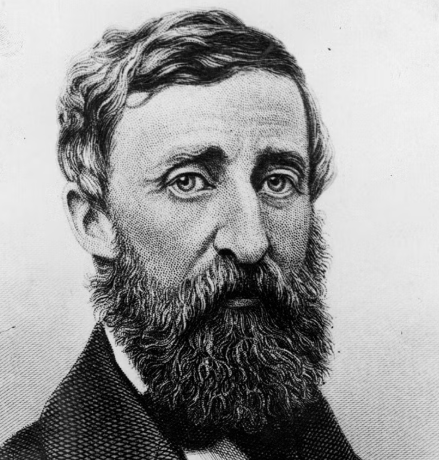
3 months ago
Even the death of Friends will inspire us as much as their lives. They will leave consolation to the mourners, as the rich leave money to defray the expenses of their funerals, and their memories will be incrusted over with sublime and pleasing thoughts, as monuments of other men are overgrown with moss; for our Friends have no place in the graveyard.
1 month 2 weeks ago
Although the formulations of science now offer the most advanced knowledge of nature, men continue to use obsolete forms of thought long discarded by scientific theory. In so far as these obsolete forms are superfluous for science, the fact that they persist violated the principle of the economy of thought, that characteristic trait of the bourgeois temper.
▼
Source
source
p. 133.


2 months 3 weeks ago
The interpretation of a case is corroborated only by the successful continuation of a self-formative process, that is by the completion of self-reflection, and not in any unmistakable way by what the patient says or how he behaves.
▼
Source
source
p. 266
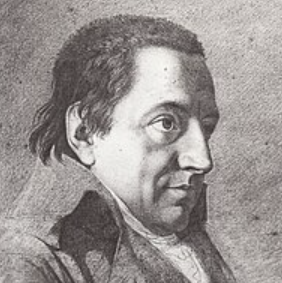
1 month 4 weeks ago
True Religion does not manifest itself outwardly, and impels man to no course of external conduct which he would not otherwise have adopted, but that it only completes his true In ward Being and Dignity. It is neither an Action, nor an incentive to Action, but a Thought:-it is LIGHT, and the One True Light, which bears within it all Life and all the forms of Life, and pervades their innermost substance. Once arisen, this Light flows on spontaneously forever, spreading itself forth without term or limit;-and it is as idle to bid it shine, as it would be to address such a command to the material sun when it stands in the noon-day heavens. It does this without our bidding; and if it shine not, then has it not arisen. At its uprising, Darkness, and the brood of spectres and phantasms which are born of Darkness, vanish of themselves.
▼
Source
source
p. 264
1 month 2 weeks ago
Notwithstanding their attacks on the basic conception of rationalism, on synthetic a priori judgments, that is, material propositions that cannot be contradicted by any experience, the empiricist posits the forms of being as constant.
▼
Source
source
p. 146.
2 months 4 days ago
When one compares the talents one has with those of a Leibniz, one is tempted to throw away one's books and go die quietly in the dark of some forgotten corner.
▼
Source
source
Oeuvres complètes, vol. 7, p. 678
3 months ago
It is amusing to hear the modern Christian telling you how mild and rationalistic Christianity really is and ignoring the fact that all its mildness and rationalism is due to the teaching of men who in their own day were persecuted by all orthodox Christians.
▼
Source
source
"Sources of Intolerance"
1 month 4 weeks ago
Each citizen of a state promises, in the original compact, that he will promote, as far as lies in his power, all the conditions of the possibility of the state ; hence, also, the condition just mentioned. This he can best do by educating children who may grow up to realize various ends of reason. The state has the right to make this education of children a condition of the state-compact, and thus education becomes an external, legal obligation, which the parents owe to the state.
▼
Source
source
P. 459
3 months 3 days ago
An evil may be real, tho' its cause has no relation to us: It may be real, without being peculiar: It may be real, without shewing itself to others: It may be real, without being constant: And it may be real, without falling under the general rules. Such evils as these will not fail to render us miserable, tho' they have little tendency to diminish pride: And perhaps the most real and the most solid evils of life will be found of this nature.
▼
Source
source
Part 1, Section 6
3 months ago
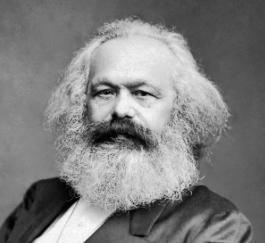
Money appears as measure (in Homer, e.g. oxen) earlier than as medium of exchange,because in barter each commodity is still its own medium of exchange. But it cannot be its own or its own standard of comparison.
▼
Source
source
Notebook I, The Chapter on Money, p. 93.
2 months 4 weeks ago
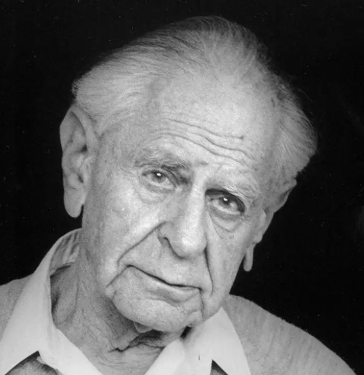
Philosophers should consider the fact that the greatest happiness principle can easily be made an excuse for a benevolent dictatorship. We should replace it by a more modest and more realistic principle - the principle that the fight against avoidable misery should be a recognized aim of public policy, while the increase of happiness should be left, in the main, to private initiative.
▼
Source
source
As quoted in 1,001 Pearls of Wisdom (2006) by David Ross
2 months 3 weeks ago
The idea that in order to get clear about the meaning of a general term one had to find the common element in all its applications has shackled philosophical investigation; for it has not only led to no result, but also made the philosopher dismiss as irrelevant the concrete cases, which alone could have helped him understand the usage of the general term.
▼
Source
source
p. 19
2 months 4 days ago
Gaiety - a quality of ordinary men. Genius always presupposes some disorder in the machine.
▼
Source
source
"Diseases"
2 months 4 weeks ago
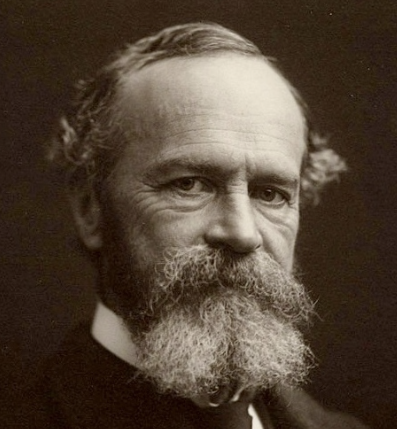
History is a bath of blood.
2 months 4 weeks ago
We have nothing to do but to receive, resting absolutely upon the merit, power, and love of our Redeemer.
▼
Source
source
Reported in Dictionary of Burning Words of Brilliant Writers (1895) edited by Josiah Hotchkiss Gilbert, p. 225
1 month 3 weeks ago
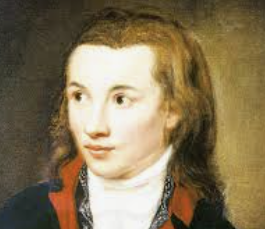
It depends only on the weakness of our organs and of our self-excitement (Selbstberuhrung), that we do not see ourselves in a Fairy-world. All Fabulous Tales (Mahrchen) are merely dreams of that home world, which is everywhere and nowhere. The higher powers in us, which one day as Genies, shall fulfil our will, are, for the present, Muses, which refresh us on our toilsome course with sweet remembrances.
CivilSimian.com created by AxiomaticPanic, CivilSimian, Kalokagathia