

3 months ago
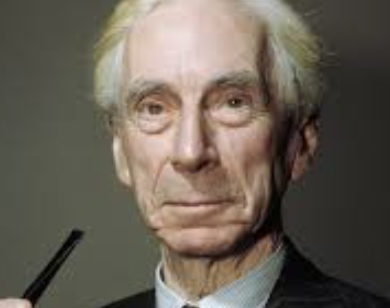
There is one very serious defect to my mind in Christ's moral character, and that is that He believed in hell. I do not myself feel that any person who is really profoundly humane can believe in everlasting punishment.
▼
Source
source
"The Moral Problem"
2 months 4 weeks ago
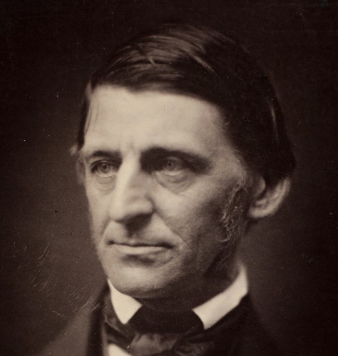
Olympian bards who sung Divine ideas below, Which always find us young And always keep us so.
▼
Source
source
Ode to Beauty, st. 2
3 months 3 days ago
The man who esteems himself as he ought, and no more than he ought, seldom fails to obtain from other people all the esteem that he himself thinks due. He desires no more than is due to him, and he rests upon it with complete satisfaction.
▼
Source
source
Section III.
4 months ago
Since... nature is a principle of motion and mutation... it is necessary that we should not be ignorant of what motion is... But motion appears to belong to things continuous; and the infinite first presents itself to the view in that which is continuous. ...Frequently ...those who define the continuous, employ the nature or the infinite, as if that which is divisible to infinity is continuous.
3 months ago
In some lyceums they tell me that they have voted to exclude the subject of religion. But how do I know what their religion is, and when I am near to or far from it? I have walked into such an arena and done my best to make a clean breast of what religion I have experienced, and the audience never suspected what I was about.
▼
Source
source
p. 490
2 months 4 weeks ago
Let us now consider whether justice requires the toleration of the intolerant, and if so under what conditions. There are a variety of situations in which this question arises. Some political parties in democratic states hold doctrines that commit them to suppress the constitutional liberties whenever they have the power. Again, there are those who reject intellectual freedom but who nevertheless hold positions in the university. It may appear that toleration in these cases is inconsistent with the principles of justice, or at any rate not required by them.
▼
Source
source
p. 216
1 month 3 weeks ago
"I exist" does not follow from "there is a thought now." The fact that a thought occurs at a given moment does not entail that any other thought has occurred at any other moment, still less that there has occurred a series of thoughts sufficient to constitute a single self. As Hume conclusively showed, no one event intrinsically points to any other. We infer the existence of events which we are not actually observing, with the help of general principle. But these principles must be obtained inductively. By mere deduction from what is immediately given we cannot advance a single step beyond. And, consequently, any attempt to base a deductive system on propositions which describe what is immediately given is bound to be a failure.
▼
Source
source
p. 47.
4 weeks 1 day ago
It is often better for a person to recognize a sin than to do a good deed. Recognizing a sin makes a person humble. Doing a good deed often can feed a person's pride.
▼
Source
source
p. 108

2 months 4 weeks ago
"Then those people are right who say that Heaven and Hell are only states of mind?" "Hush," he said sternly. "Do not blaspheme. Hell is a state of mind - ye never said a truer word. And every state of mind, left to itself, every shutting up of the creature within the dungeon of its own mind - is, in the end, Hell. But Heaven is not a state of mind. Heaven is reality itself. All that is fully real is Heavenly."
▼
Source
source
Ch. 9
1 month 4 weeks ago
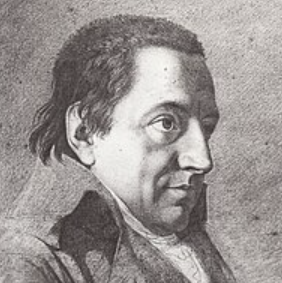
The fundamental maxim of those who stand at the head of this Age, and therefore the principle of the Age, is this,-to accept nothing as really existing or obligatory, but that which they can understand and clearly comprehend. With regard to this fundamental principle, as we have now declared and adopted it without farther definition or limitation, this third Age is precisely similar to that which is to follow it, the fourth, or age of Reason as Science,-and by virtue of this similarity prepares the way for it. Before the tribunal of Science, too, nothing is accepted but the Conceivable. Only in the application of the principle there is this difference between the two Ages,-that the third, which we shall shortly name that of Empty Freedom, makes its fixed and previously acquired conceptions the measure of existence; while the fourth-that of Science-on the contrary, makes existence the measure, not of its acquired, but of its desiderated beliefs.
▼
Source
source
p. 19
2 months 4 weeks ago
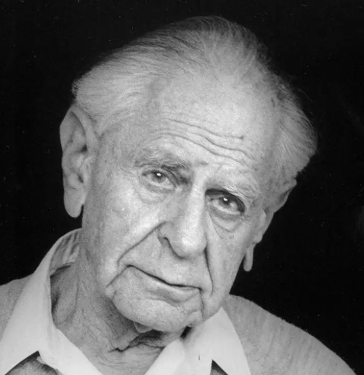
We must plan for freedom, and not only for security, if for no other reason than that only freedom can make security secure.
▼
Source
source
Vol. 2, Ch. 21 "An Evaluation of the Prophecy"

3 months 2 weeks ago
Never trust her at any time, when the calm sea shows her false alluring smile.
▼
Source
source
Book II, lines 557-559 (tr. Rouse)
1 month 3 weeks ago
Self-pity is not as sterile as we suppose. Once we feel its mere onset, we assume a thinker's attitude, and come to think of it, we come to think!
3 months ago
There is an artist imprisoned in each one of us. Let him loose to spread joy everywhere.
▼
Source
source
Last Essay: "1967"

3 weeks ago
While the intellectual space does contain universal ideas, definitions, those definitions are detailed a posteriori. Truth corresponds with reality at a minimum.
7 months 5 days ago
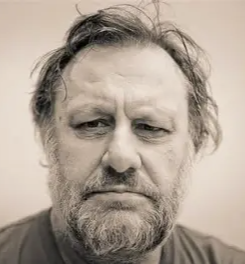
First, [the bourgeoisie] must recognize his own impotence, his incapacity to believe in a sense of history, even if his reason leans towards the truth, the passions and prejudices produced by his class position, prevent him from accepting it. So he should not exert himself with proving the truth of the historical mission of the working class; rather, he should learn to subdue his petty bourgeois passions and prejudices. He should take lessons from those who were once as important as he is now but are ready to risk all for the revolutionary Cause.
3 months ago
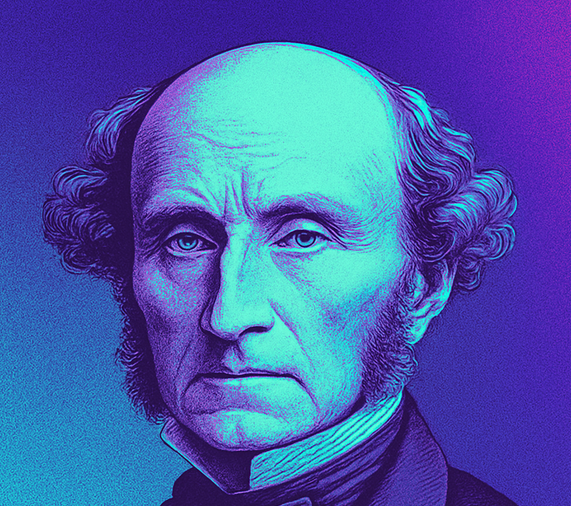
To think that because those who wield power in society wield in the end that of government, therefore it is of no use to attempt to influence the constitution of the government by acting on opinion, is to forget that opinion is itself one of the greatest active social forces. One person with a belief is a social power equal to ninety-nine who have only interests.
▼
Source
source
Ch. I: To What Extent Forms of Government Are a Matter of Choice (p. 155)
3 months 2 weeks ago
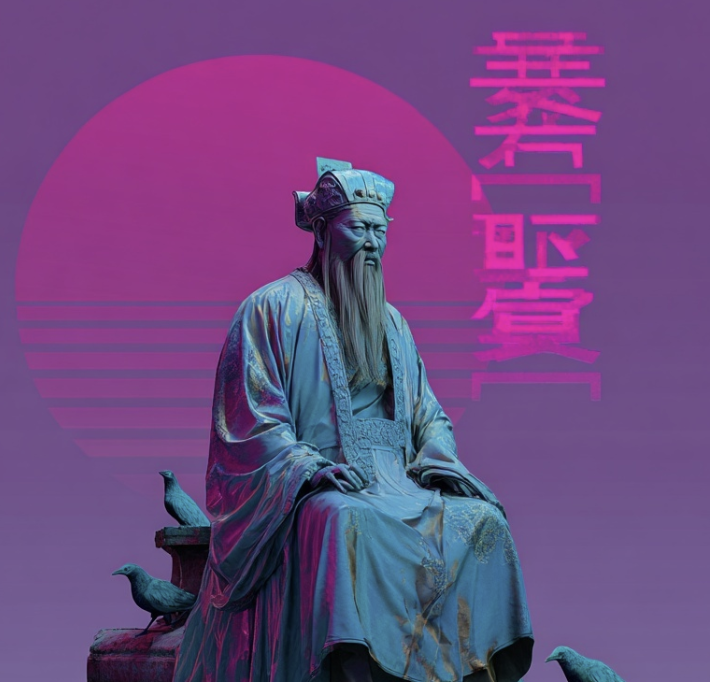
To entire sincerity there belongs ceaselessness. Not ceasing, it continues long. Continuing long, it evidences itself. Evidencing itself, it reaches far. Reaching far, it becomes large and substantial. Large and substantial, it becomes high and brilliant. Large and substantial; this is how it contains all things. High and brilliant; this is how it overspreads all things. Reaching far and continuing long; this is how it perfects all things. So large and substantial, the individual possessing it is the co-equal of Earth. So high and brilliant, it makes him the co-equal of Heaven. So far-reaching and long-continuing, it makes him infinite. Such being its nature, without any display, it becomes manifested; without any movement, it produces changes; and without any effort, it accomplishes its ends.
3 months 2 weeks ago
But there is nothing sweeter than to dwell in towers that rise On high, serene and fortified with teachings of the wise, From which you may peer down upon the others as they stray This way and that, seeking the path of life, losing their way: The skirmishing of wits, the scramble for renown, the fight, Each striving harder than the next, and struggling day and night, To climb atop a heap of riches and lay claim to might.
▼
Source
source
Book II, lines 7-13 (tr. Stallings)
1 month 1 week ago
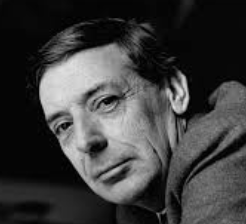
There continue to be complex debates about what Nietzsche understood truth to be. Quite certainly, he did not think, in pragmatist spirit, that beliefs are true if they serve our interests or welfare: we have just seen some of his repeated denials of this idea. The more recently fashionable view is that he was the first of the deniers, thinking that there is no such thing as truth, or that truth is what anyone thinks it is, or that it is a boring category that we can do without. This is also wrong, and more deeply so. Nietzsche did not think that the ideal of truthfulness went into retirement when its metaphysical origins were discovered, and he did not suppose, either, that truthfulness could be detached from a concern for the truth. Truthfulness as an ideal retains its power, and so far from his seeing truth as dispensable or malleable, his main question is how it can be made bearable.
▼
Source
source
p. 16

1 month 1 week ago
Obviously, Anarchism, or any other social theory, making man a conscious social unit, will act as a leaven for rebellion.
1 month 4 weeks ago
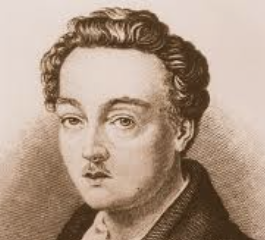
A good man with a good conscience doesn't walk so fast.
▼
Source
source
Scene X.
2 months ago
It is an advantage to all narrow wisdom and narrow morals that their maxims have a plausible air; and, on a cursory view, appear equal to first principles. They are light and portable. They are as current as copper coin; and about as valuable. They serve equally the first capacities and the lowest; and they are, at least, as useful to the worst men as to the best. Of this stamp is the cant of not man, but measures; a sort of charm by which many people get loose from every honourable engagement.
3 months 1 day ago
The only fence against the world is a thorough knowledge of it, into which a young gentleman should be enter'd by degrees, as he can bear it; and the earlier the better, so he be in safe and skillful hands to guide him.
▼
Source
source
Sec. 94
1 month 3 weeks ago
Profound skepticism is favorable to conventions, because it doubts that the criticism of conventions is any truer than they are.
▼
Source
source
"On My Friendly Critics"
3 months 1 week ago
For Christ is Joy and Sweetness to a broken heart. Christ is a Lover of poor sinners, and such a Lover that He gave Himself for us. Now if this is true, and it is true, then are we never justified by our own righteousness.
▼
Source
source
Chapter 3, verse 20
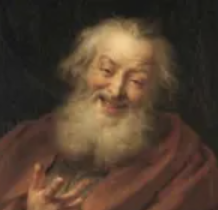
2 months 2 weeks ago
Disease of the home and of the life comes about in the same way as that of the body.
▼
Source
source
Freeman (1948), p. 170 Variant: Disease occurs in a household, or in a life, just as it does in a body.
2 months ago
You talk of Paine with more respect than he deserves: He is utterly incapable of comprehending his subject. He has not even a moderate portion of learning of any kind. He has learnd the instrumental part of literature, a style, and a method of disposing his ideas, without having ever made a previous preparation of Study or thinking-for the use of it. ... [Paine] possesses nothing more than what a man whose audacity makes him careless of logical consequences, and his total want of honour and morality makes indifferent as to political consequences, may very easily write. They indeed who seriously write upon a principle of levelling ought to be answerd by the Magistrate-and not by the Speculatist.
▼
Source
source
Letter to William Cusac Smith (22 July 1791), quoted in Alfred Cobban and Robert A. Smith (eds.), The Correspondence of Edmund Burke, Volume VI: July 1789-December 1791 (1967), pp. 303-304
1 month 3 weeks ago
Everything is nothing, including the consciousness of nothing.
3 months 3 days ago
...the competition of the poor takes away from the reward of the rich.
▼
Source
source
Chapter X, Part II, p. 154.
3 months ago
The people who are regarded as moral luminaries are those who forego ordinary pleasures themselves and find compensation in interfering with the pleasures of others.
▼
Source
source
Ch. 8: Eastern and Western Ideals of Happiness
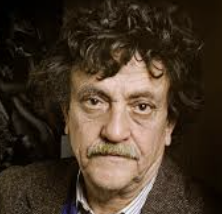
1 month 1 day ago
All these people talk so eloquently about getting back to good old-fashioned values. Well, as an old poop I can remember back to when we had those old-fashioned values, and I say let's get back to the good old-fashioned First Amendment of the good old-fashioned Constitution of the United States-and to hell with the censors! Give me knowledge or give me death!
▼
Source
source
As quoted in "An Interview with Kurt Vonnegut, Jr., Carey Horwitz, Library Journal, Apr. 15, 1973: 1131
1 month 4 weeks ago
My immediate consciousness, my absolute perception, cannot go beyond myself, - I have immediate knowledge only of myself, whatever I know further I know only by reasoning, in the same manner in which I have come to those conclusions concerning the original powers of Nature, which certainly do not lie within the circle of my perceptions. I, however, - that which I call myself, - am not the man-forming power of Nature, but only one of its manifestations ; and only of this manifestation am I conscious, not of that power, whose existence I have only discovered from the necessity of explaining my own.
▼
Source
source
Jane Sinnett, trans 1846 p. 13

2 months 1 week ago
Those alone are dear to Divinity who are hostile to injustice.
▼
Source
source
Pythagorean Ethical Sentences From Stobæus
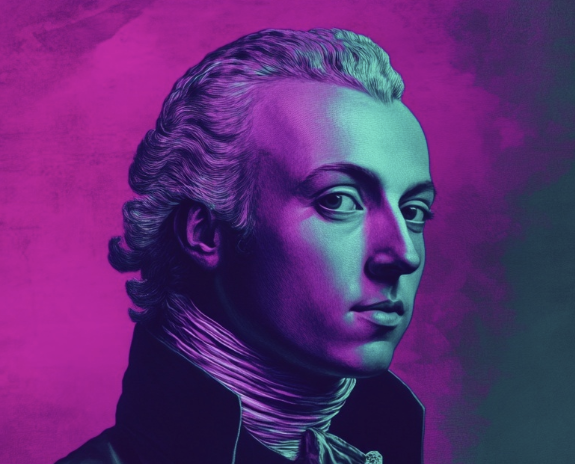
3 months 2 days ago
Collectively, the more civilized men are, the more they are actors. They assume the appearance of attachment, of esteem for others, of modesty, and of disinterestedness, without ever deceiving anyone, because everyone understands that nothing sincere is meant. Persons are familiar with this, and it is even a good thing that this is so in this world, for when men play these roles, virtues are gradually established, whose appearance had up until now only been affected. These virtues ultimately will become part of the actor's disposition. To deceive the deceiver in ourselves, or the tendency to deceive, is a fresh return to obedience.
▼
Source
source
Kant, Immanuel (1996), page 37
2 months 4 weeks ago
Of course, he who has put forth his total strength in fit actions, has the richest return of wisdom.
▼
Source
source
par. 28

6 days ago
Instead of enabling humans to improve their lot, science degrades the natural environment in which humans must live. Instead of enabling death to be overcome, it produces ever more powerful technologies of mass destruction. None of this is the fault of science; what it shows is that science is not sorcery. The growth of knowledge enlarges what humans can do. It cannot reprieve them from being what they are.
▼
Source
source
Sweet Morality (p. 235)
3 months 1 week ago
Even from their infancy we frame them to the sports of love: their instruction, behavior, attire, grace, learning and all their words azimuth only at love, respects only affection. Their nurses and their keepers imprint no other thing in them.
3 months 2 weeks ago
The first-beginnings of things cannot be seen by the eyes.
▼
Source
source
Book I, line 268 (tr. Munro)
3 months 1 week ago
We believe that the very beginning and end of salvation, and the sum of Christianity, consists of faith in Christ, who by His blood alone, and not by any works of ours, has put away sin, and destroyed the power of death.
▼
Source
source
p. 224
1 month 3 weeks ago
Notwithstanding I have a few things against thee, because thou sufferest that woman Jezebel, which calleth herself a prophetess, to teach and to seduce my servants to commit fornication, and to eat things sacrificed unto idols. And I gave her space to repent of her fornication; and she repented not. Behold, I will cast her into a bed, and them that commit adultery with her into great tribulation, except they repent of their deeds. And I will kill her children with death; and all the churches shall know that I am he which searcheth the reins and hearts: and I will give unto every one of you according to your works.
▼
Source
source
Revelation

4 months ago
What, exactly, have the errors of exegesis and philosophy done in order to confuse Christianity, and how have they confused Christianity? Quite briefly and categorically, they have simply forced back the sphere of paradox-religion into the sphere of aesthetics, and in consequence have succeeded in brings Christian terminology to such a pass that terms which, so long as they remain within their sphere, are qualitative categories, can be put to almost any use as clever expressions.
1 month 2 weeks ago
There is a certain kind of morality which is even more alien to good and evil than amorality is.
▼
Source
source
"The responsibility of writers," p. 169

2 months 3 weeks ago
Why in the world shouldn't they have regarded with awe and reverence that act by which the human race is perpetuated. Not every religion has to have St. Augustine's attitude to sex. Why even in our culture marriages are celebrated in a church, everyone present knows what is going to happen that night, but that doesn't prevent it being a religious ceremony.
▼
Source
source
Intentionality, and Romanticism (1997) by Richard Thomas Eldridge, p. 130
4 weeks 1 day ago
If there may be doubts for men and for a childless woman as to the way to, fulfil the will of God, for a mother that path is firmly and clearly defined, and if she fulfils it humbly with a simple heart she stands on the highest point of perfection a human being can attain, and becomes for all a model of that complete performance of God's will which all desire. Only a mother can before her death tranquilly say to Him who sent her into this world, and Whom she has served by bearing and bringing up children whom she has loved more than herself - only she having served Him in the way appointed to her can say with tranquillity, Now lettest Thou Thy servant depart in peace. And that is the highest perfection to which, as to the highest good, men aspire.
2 months 2 weeks ago
Philosophers get attention only when they appear to be doing something sinister-corrupting the youth, undermining the foundations of civilization, sneering at all we hold dear. The rest of the time everybody assumes that they are hard at work somewhere down in the sub-basement, keeping those foundations in good repair. Nobody much cares what brand of intellectual duct tape is being used.
▼
Source
source
"Philosophical Convictions." The Nation, June 14, 2004.
3 months 2 days ago
Human reason has this peculiar fate that in one species of its knowledge it is burdened by questions which, as prescribed by the very nature of reason itself, it is not able to ignore, but which, as transcending all its powers, it is also not able to answer.
▼
Source
source
Preface, A vii
2 months 4 weeks ago
Why did it occur to anyone to believe in only one God? And conversely why did it ever occur to anyone to believe in many gods? To both these questions we must return the same answer: Because that is how the human mind happens to work. For the human mind is both diverse and simple, simultaneously many and one. We have an immediate perception of our own diversity and of that of the outside world. And at the same time we have immediate perceptions of our own oneness.
▼
Source
source
"One and Many," p. 12
1 month 1 week ago
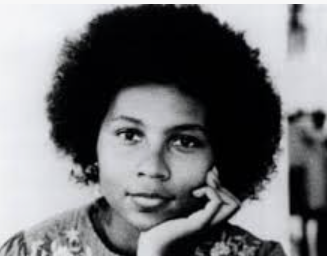
There will be no mass-based feminist movement as long as feminist ideas are understood only by a well-educated few.
3 weeks 6 days ago
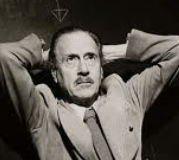
The new media are not bridges between man and nature - they are nature...The new media are not ways of relating us to the old world; they are the real world and they reshape what remains of the old world at will.
▼
Source
source
Media as the New Nature, 1969, p. 14
CivilSimian.com created by AxiomaticPanic, CivilSimian, Kalokagathia