

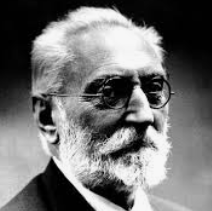
1 month 1 week ago
Warmth, warmth, more warmth! for we are dying of cold and not of darkness. It is not the night that kills, but the frost.
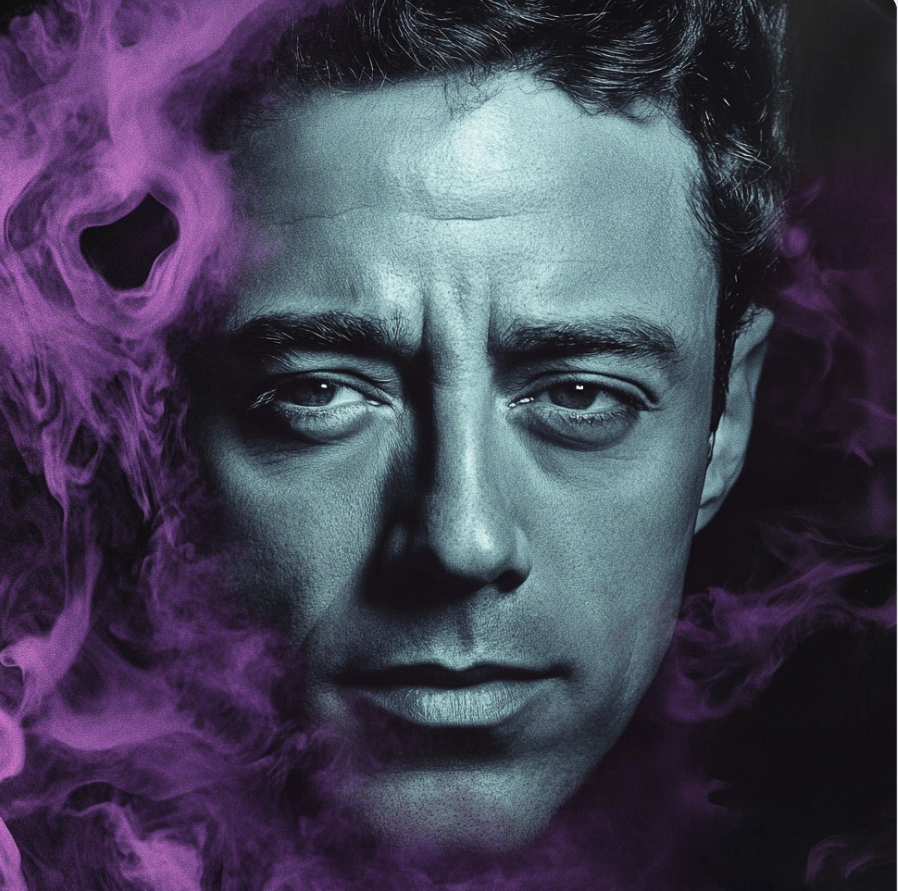
3 months 3 weeks ago
The important thing isn't the soundness or otherwise of the argument, but for it to make you think.
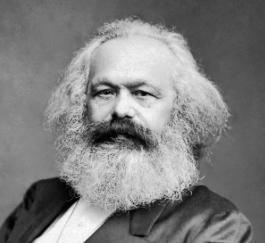
2 months 3 weeks ago
Supply and demand constantly determine the prices of commodities; never balance, or only coincidentally; but the cost of production, for its part, determines the oscillations of supply and demand.
▼
Source
source
Notebook I, The Chapter on Money, p. 58.
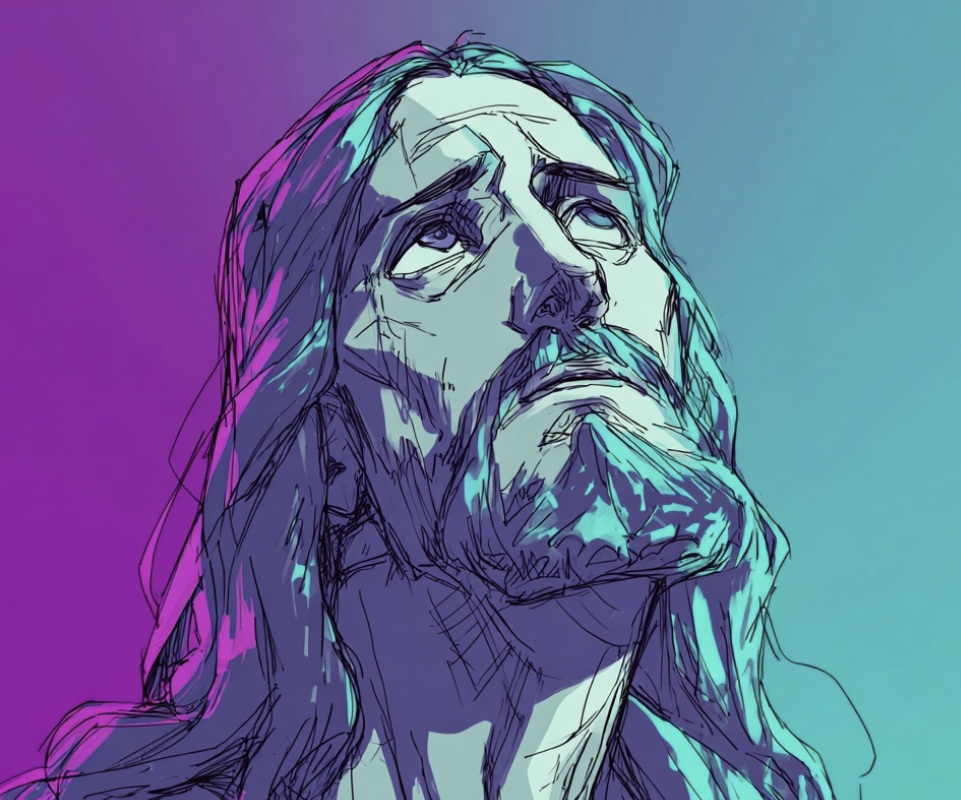
1 month 2 weeks ago
Simon Peter said to Him, "Let Mary leave us, for women are not worthy of Life." Jesus said, "I myself shall lead her in order to make her male, so that she too may become a living spirit resembling you males. For every woman who will make herself male will enter the Kingdom of Heaven."
3 months 1 week ago
Some things are in our control and others not. Things in our control are opinion, pursuit, desire, aversion, and, in a word, whatever are our own actions. Things not in our control are body, property, reputation, command, and, in one word, whatever are not our own actions.
▼
Source
source
(1).
3 weeks ago
If we want to postulate a deity capable of engineering all the organized complexity in the world, either instantaneously or by guiding evolution, that deity must have been vastly complex in the first place. The creationist, whether a naive Bible-thumper or an educated bishop, simply postulates an already existing being of prodigious intelligence and complexity. If we are going to allow ourselves the luxury of postulating organized complexity without offering an explanation, we might as well make a job of it and simply postulate the existence of life as we know it!
▼
Source
source
Chapter 11 "Doomed Rivals" (p. 316)
2 months 4 weeks ago
In vain, therefore, should we pretend to determine any single event, or infer any cause or effect, without the assistance of observation and experience.
▼
Source
source
§ 4.11
1 month 4 weeks ago
To attempt the destruction of our passions is the height of folly. What a noble aim is that of the zealot who tortures himself like a madman in order to desire nothing, love nothing, feel nothing, and who, if he succeeded, would end up a complete monster!
▼
Source
source
Ch. 5, as quoted in Selected Writings (1966) edited by Lester G. Crocker
3 months 3 days ago
It is not the pleasure of curiosity, nor the quiet of resolution, nor the raising of the spirit, nor victory of wit, nor faculty of speech that are the true ends of knowledge, but it is a restitution and reinvesting, in great part, of man to the sovereignty and power, for whensoever he shall be able to call the creatures by their true names, he shall again command them.
▼
Source
source
Valerius Terminus: Of the Interpretation of Nature (ca. 1603), in Works, Vol. I, p. 83; The Works of Francis Bacon (1819), Vol. 2, p. 133

2 months 1 day ago
The proximity between the counterfeit and the good coin does not make the good coin counterfeit nor the counterfeit good. In the same way the proximity between truth and falsehood does not make truth falsehood nor falsehood truth.
▼
Source
source
III. The Classes of Seekers, p. 33.
1 month 1 week ago
The politician being interviewed clearly takes a great deal of trouble to imagine an ending to his sentence: and if he stopped short? His entire policy would be jeopardized!
▼
Source
source
Sentence, in The Pleasure of the Text
2 months 3 weeks ago
The hidden significance of these fables which is sometimes thought to have been detected, the ethics running parallel to the poetry and history, are not so remarkable as the readiness with which they may be made to express a variety of truths. As if they were the skeletons of still older and more universal truths than any whose flesh and blood they are for the time made to wear. It is like striving to make the sun, or the wind, or the sea symbols to signify exclusively the particular thoughts of our day. But what signifies it? In the mythus a superhuman intelligence uses the unconscious thoughts and dreams of men as its hieroglyphics to address men unborn. In the history of the human mind, these glowing and ruddy fables precede the noonday thoughts of men, as Aurora the sun's rays. The matutine intellect of the poet, keeping in advance of the glare of philosophy, always dwells in this auroral atmosphere.
3 weeks 3 days ago
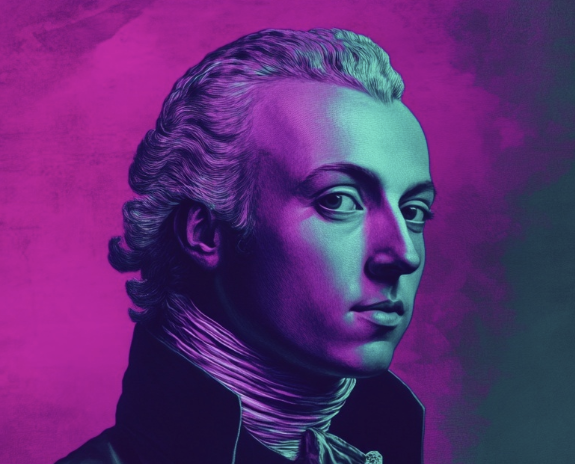
At the approach of danger there are always two voices that speak with equal force in the heart of man: one very reasonably tells the man to consider the nature of the danger and the means of avoiding it; the other even more reasonable says that it is too painful and harassing to think of the danger, since it is not a man's power to provide for everything and escape from the general march of events; and that it is therefore better to turn aside from the painful subject till it has come, and to think of what is pleasant. In solitude a man generally yields to the first voice; in society to the second.
▼
Source
source
Bk. X, ch. 17
2 months 3 weeks ago
In the natural state no concept of God can arise, and the false one which one makes for himself is harmful. Hence the theory of natural religion can be true only where there is no science; therefore it cannot bind all men together.
▼
Source
source
Part III : Selection on Education from Kant's other Writings, Ch. I Pedagogical Fragments, # 60
3 weeks ago
We don't need fossils - the case for evolution is watertight without them; so it is paradoxical to use gaps in the fossil record as though they were evidence against evolution.
▼
Source
source
The Greatest Show on Earth: The Evidence for Evolution (2009) (p. 164)
1 month 2 weeks ago
I have compassion on the multitude, because they continue with me now three days, and have nothing to eat: and I will not send them away fasting, lest they faint in the way.
▼
Source
source
15:32 (KJV)
1 month 1 week ago
You have to study a great deal to know a little.
▼
Source
source
I
2 months 3 weeks ago
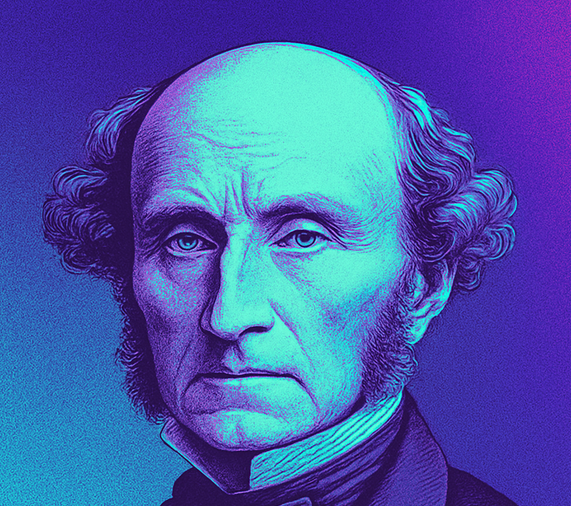
It is not to be supposed that she was, or that any one, at the age at which I first saw her, could be, all that she afterwards became. Least of all could this be true of her, with whom self-improvement, progress in the highest and in all senses, was a law of her nature; a necessity equally from the ardour with which she sought it, and from the spontaneous tendency of faculties which could not receive an impression or an experience without making it the source or the occasion of an accession of wisdom. Up to the time when I first saw her, her rich and powerful nature had chiefly unfolded itself according to the received type of feminine genius. To her outer circle she was a beauty and a wit, with an air of natural distinction, felt by all who approached her: to the inner, a woman of deep and strong feeling, of penetrating and intuitive intelligence, and of an eminently meditative and poetic nature.
▼
Source
source
(p. 185)
3 months 1 week ago
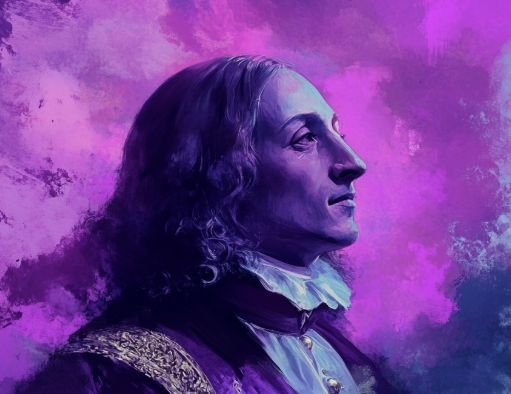
When I consider the short duration of my life, swallowed up in the eternity before and after, the small space which I fill, or even can see, engulfed in the infinite immensity of spaces whereof I know nothing, and which know nothing of me, I am terrified, and wonder that I am here rather than there, for there is no reason why here rather than there, or now rather than then. Who has set me here? By whose order and design have this place and time been destined for me? It is not well to be too much at liberty. It is not well to have all we want.How many kingdoms know nothing of us! The eternal silence of these infinite spaces alarms me.
▼
Source
source
"The Misery of Man Without God": "Man's Disproportion," The Thoughts of Blaise Pascal translated from the Text of M. Auguste Molinier Tr. C. Kegan Paul, 1885
3 months 1 week ago
Wonderful is the depth of Thy oracles, whose surface is before us, inviting the little ones; and yet wonderful is the depth, O my God, wonderful is the depth. It is awe to look into it; and awe of honour, and a tremor of love. The enemies thereof I hate vehemently. Oh, if Thou wouldest slay them with Thy two-edged sword, that they be not its enemies! For thus do I love, that they should be slain unto themselves that they may live unto Thee.
▼
Source
source
XII, 14
2 months 4 weeks ago
How can you worship leeks and onions? we shall suppose a SORBONNIST to say to a priest of SAIS. If we worship them, replies the latter; at least, we do not, at the same time, eat them. But what strange object of adoration are cats and monkeys? says the learned doctor. They are at least as good as the relics or rotten bones of martyrs, answers his no less learned antagonist. Are you not mad, insists the Catholic, to cut one another's throat about the preference of a cabbage or a cucumber? Yes, says the pagan; I allow it, if you will confess, that those are still madder, who fight about the preference among volumes of sophistry, ten thousand of which are not equal in value to one cabbage or cucumber.
▼
Source
source
Part XII - With regard to doubt or conviction
2 months 3 weeks ago
Obey the voice at eve obeyed at prime.
▼
Source
source
Terminus
2 months 3 weeks ago
Farewell to the monsters, farewell to the saints. Farewell to pride. All that is left is men.
▼
Source
source
Act 10, sc. 4

2 months ago
Be substantially great in thyself, and more than thou appearest unto others.
▼
Source
source
Part I, Section XIX

2 months 2 weeks ago
But let there be no misunderstanding: it is not that a real man, the object of knowledge, philosophical reflection or technological intervention, has been substituted for the soul, the illusion of theologians. The man described for us, whom we are invited to free, is already in himself the effect of a subjection more profound than himself. A 'soul' inhabits him and brings him to existence, which is itself a factor in the mastery that power exercises over the body. The soul is the effect and instrument of a political anatomy; the soul is the prison of the body.
1 month 3 weeks ago
The End of the Life of Mankind on Earth is this,-that in this Life they may order all their relations with FREEDOM according to REASON.
▼
Source
source
p. 5
2 months 3 weeks ago
It is, of course, clear that a country with a large foreign population must endeavour, through its schools, to assimilate the children of immigrants. It is, however, unfortunate that a large part of this process should be effected by means of a somewhat blatant nationalism.
▼
Source
source
Ch. 10: Modern Homogeneity
1 month 3 weeks ago
It is of great importance to observe that the character of every man is, in some degree, formed by his profession. A man of sense may only have a cast of countenance that wears off as you trace his individuality, whist the weak, common man has scarcely ever any character, but what belongs to the body; at least, all his opinions have been so steeped in the vat consecrated by authority, that the faint spirit which the grape of his own vine yields, cannot be distinguished.
▼
Source
source
Ch. 1

3 months 3 weeks ago
When a war breaks out, people say: "It's too stupid; it can't last long." But though the war may well be "too stupid," that doesn't prevent its lasting. Stupidity has a knack of getting its way; as we should see if we were not always so much wrapped up in ourselves.
2 months 3 weeks ago
I owed a magnificent day to the Bhagavad Gita. It was the first of books; it was as if an empire spoke to us, nothing small or unworthy, but large, serene, consistent, the voice of an old intelligence which in another age and climate had pondered and thus disposed of the same questions which exercise us.
▼
Source
source
October 1, 1848
3 months 2 days ago
Good sense is, of all things among men, the most equally distributed; for every one thinks himself so abundantly provided with it, that those even who are the most difficult to satisfy in everything else, do not usually desire a larger measure of this quality than they already possess.

2 months 3 weeks ago
Opinion considers the opposition of what is true and false quite rigid, and, confronted with a philosophical system, it expects agreement or contradiction. And in an explanation of such a system, opinion still expects to find one or the other.
▼
Source
source
Preface, § 2
1 month 3 weeks ago
Each individual imagines that he can exist, live, think, and act for himself, and believes that he himself is the thinking principle of his thoughts; whereas in truth he is but a single ray of the ONE universal and necessary Thought.
▼
Source
source
p. 21
3 months 3 weeks ago
Then we understand that rebellion cannot exist without a strange form of love. Those who find no rest in God or in history are condemned to live for those who, like themselves, cannot live; in fact, for the humiliated.

2 months 1 day ago
Those wise men knew God to be in things, and Divinity to be latent in Nature, working and glowing differently in different subjects and succeeding through diverse physical forms, in certain arrangements, in making them participants in her, I say, in her being, in her life and intellect.
▼
Source
source
As translated by Arthur Imerti
3 weeks ago
Ignorance, to a scientist, is an itch that begs to be pleasurably scratched. Ignorance, if you are a theologian, is something to be washed away by shamelessly making something up.
▼
Source
source
The Intellectual and Moral Courage of Atheism

1 month 2 weeks ago
If death is as horrible as is claimed, how is it that after the passage of a certain period of time we consider happy any being, friend or enemy, who has ceased to live?

3 months 3 weeks ago
I have never worked as hard as now. I go for a brief walk in the morning. Then I come home and sit in my room without interruption until about three o'clock. My eyes can barely see. Then with my walking stick in hand I sneak off to the restaurant, but am so weak that I believe that if somebody were to call out my name, I would keel over and die. Then I go home and begin again. In my indolence during the past months I had pumped up a veritable shower bath, and now I have pulled the string and the ideas are cascading down upon me: healthy, happy, merry, gay, blessed children born with ease and yet all of them with the birthmark of my personality.
3 months 2 weeks ago
If the people have no faith in their rulers, there is no standing for the state.
1 month 1 week ago
The pathos of it all is that the America which is to be protected by a huge military force is not the America of the people, but that of the privileged class; the class which robs and exploits the masses, and controls their lives from the cradle to the grave. No less pathetic is it that so few people realize that preparedness never leads to peace, but that it is indeed the road to universal slaughter.
2 months 3 weeks ago
The suppression of liberty is always likely to be irrational.
▼
Source
source
Chapter IV, Section 33, p. 210
1 month 3 weeks ago
Custom reconciles us to every thing.
▼
Source
source
Part IV Section XVIII
1 month 1 week ago
Do you think that God will punish them for not practicing a religion which he did not reveal to them?
▼
Source
source
No. 35. (Usbek writing to Gemchid)
1 month 3 weeks ago
Revolution is like the daughters of Pelias: it cuts humanity to pieces in order to rejuvenate it.
▼
Source
source
Act II.
3 months 3 weeks ago
It's funny the respectable names you can give to superstition.
1 week ago
Religion holds the solution to all problems of human relationship, whether they are between parents and children or nation and nation. Sooner or later, man has always had to decide whether he worships his own power or the power of God. When threats force him to look at the limitations of his human power, he's often ready to seek his spiritual one. What we need is patience and awe of God's plan in human history!
▼
Source
source
In Quote: The Weekly Digest, vol. 38, no. 19 (8 November 1959) p. 13

2 months 3 weeks ago
"I wish I had never been born," she said. "What are we born for?" "For infinite happiness," said the Spirit. "You can step out into it at any moment..."
▼
Source
source
Ch. 8
2 weeks 3 days ago
As a scholar [Allan Bloom] intends to enlighten us, and as a writer he has learned from Aristophanes and other models that enlightenment should also be enjoyable. To me, this is not the book of a professor, but that of a thinker who is willing to take the risks more frequently taken by writers. It is risky in a book of ideas to speak in one's own voice, but it reminds us that the sources of the truest truths are inevitably profoundly personal. ... Academics, even those describing themselves as existentialists, very seldom offer themselves publicly and frankly as individuals, as persons.
▼
Source
source
p. 12
2 months 3 weeks ago
There must be a seed of every good thing in the character of men, otherwise no one can bring it out. Lacking that, analogous motives, honor, etc., are substituted. Parents are in the habit of looking out for the inclinations, for the talents and dexterity, perhaps for the disposition of their children, and not at all for their heart or character.
▼
Source
source
Part III : Selection on Education from Kant's other Writings, Ch. I Pedagogical Fragments, # 13
CivilSimian.com created by AxiomaticPanic, CivilSimian, Kalokagathia