

1 month 2 weeks ago
The healthy man does not torture others-generally it is the tortured who turn into torturers.
▼
Source
source
In Du, May 1941

3 months 3 weeks ago
Nature flies from the infinite, for the infinite is unending or imperfect, and Nature ever seeks an end.

1 month 6 days ago
The child shows its individual tendencies in its plays, in its questions, in its association with people and things. But it has to struggle with everlasting external interference in its world of thought and emotion. It must not express itself in harmony with its nature, with its growing personality. It must become a thing, an object. Its questions are met with narrow, conventional, ridiculous replies, mostly based on falsehoods; and, when, with large, wondering, innocent eyes, it wishes to behold the wonders of the world, those about it quickly lock the windows and doors, and keep the delicate human plant in a hothouse atmosphere, where it can neither breathe nor grow freely.
2 months 3 weeks ago
A commodity appears, at first sight, a very trivial thing, and easily understood.Its analysis shows that it is, in reality, a very queer thing, abounding in metaphysical subtleties and theological niceties.
▼
Source
source
Vol. I, Ch. 1, Section 4, pg. 81.
3 weeks ago
World War III is a guerrilla information war with no division between military and civilian participation.
▼
Source
source
(p.66)
1 month 3 weeks ago
I assert, that the ancient Whigs held doctrines, totally different from those I have last mentioned. I assert, that the foundations laid down by the Commons, on the trial of Doctor Sacheverel, for justifying the revolution of 1688, are the very same laid down in Mr. Burke's Reflections; that is to say,-a breach of the original contract, implied and expressed in the constitution of this country, as a scheme of government fundamentally and inviolably fixed in King, Lords, and Commons.-That the fundamental subversion of this antient constitution, by one of its parts, having been attempted, and in effect accomplished, justified the Revolution. That it was justified only upon the necessity of the case; as the only means left for the recovery of that antient constitution, formed by the original contract of the British state; as well as for the future preservation of the same government. These are, the points to be proved.
▼
Source
source
p. 411
3 weeks 2 days ago
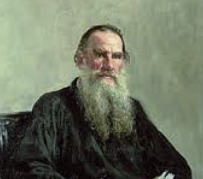
One is ashamed to say how little is needed for all men to be delivered from those calamities which now oppress them; it is only needful not to lie.
▼
Source
source
Ch. 17
1 month 2 weeks ago
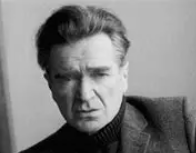
I would like to go mad on one condition, namely, that I would become a happy madman, lively and always in a good mood, without any troubles and obsessions, laughing senselessly from morning to night.
3 weeks ago
The metropolis today is a classroom; the ads are its teachers. The traditional classroom is an obsolete detention home, a feudal dungeon.
▼
Source
source
(p. 12)
3 months 3 weeks ago
A friend is one soul abiding in two bodies. p. 188; also reported in various sources as:Friendship is a single soul dwelling in two bodies. A true friend is one soul in two bodies. Love is composed of a single soul inhabiting two bodies. What is a friend? A single soul dwelling in two bodies.
2 months 3 weeks ago
Life is a task to be done. It is a fine thing to say defunctus est; it means that the man has done his task.
▼
Source
source
"On the Sufferings of the World"

2 months ago
If you believe in the future life and, instead of preparing for it, sell it in order to buy this world, then that is folly! You do not normally sell two things for one; how can you give up an endless life for a limited number of days.
▼
Source
source
IV. The True Nature of Prophecy and the Compelling Need of All Creation for it, p. 67.
2 months 3 weeks ago
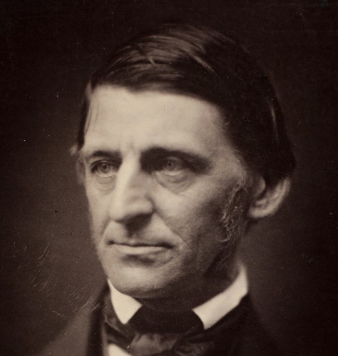
Science does not know its debt to imagination.
▼
Source
source
Poetry and Imagination

3 months 1 week ago
If names be not correct, language is not in accordance with the truth of things. Paraphrased as a chinese proverb stating "The beginning of wisdom is to call things by their proper name."

2 months 5 days ago
There is no word or action but has its echo in Eternity. Thought is an Idea in transit, which when once released, never can be lured back, nor the spoken word recalled. Nor ever can the overt act be erased All that thou thinkest, sayest, or doest bears perpetual record of itself, enduring for Eternity.
▼
Source
source
As quoted in Pythagoron: The Religious, Moral, and Ethical Teachings of Pythagoras (1947) by Hobart Huson, p. 99
1 month 4 weeks ago
Jacques said that his master said that everything good or evil we encounter here below was written on high.
▼
Source
source
Prologue
2 months 3 weeks ago
A religious creed differs from a scientific theory in claiming to embody eternal and absolutely certain truth, whereas science is always tentative, expecting that modification in its present theories will sooner or later be found necessary, and aware that its method is one which is logically incapable of arriving at a complete and final demonstration.
▼
Source
source
Religion and Science (1935), Ch. I: Ground of Conflict

2 months 3 weeks ago
To this I answer: That force is to be opposed to nothing, but to unjust and unlawful force. Whoever makes any opposition in any other case, draws on himself a just condemnation, both from God and man...
▼
Source
source
Second Treatise of Government, Ch. XVIII, sec. 204
1 month 2 weeks ago
Man must be free of it all, of his bad conscience and of the bad salvation from this conscience in order to become in truth the way. Now, he no longer promises others the fulfillment of his duties, but promises himself the fulfillment of man.
▼
Source
source
p. 178

2 months 2 weeks ago
Philosophy is like trying to open a safe with a combination lock: each little adjustment of the dials seems to achieve nothing, only when everything is in place does the door open.
▼
Source
source
Philosophical Occasions 1912-1951 (1993) edited by James Carl Klagge and Alfred Nordmann
1 month 1 week ago
It is obvious that many women have appropriated feminism to serve their own ends, especially those white women who have been at the forefront of the movement; but rather than resigning myself to this appropriation I choose to re-appropriate the term "feminism," to focus on the fact that to be "feminist" in any authentic sense of the term is to want for all people, female and male, liberation from sexist role patterns, domination, and oppression.

1 month 4 weeks ago
You may set the Negro free, but you cannot make him otherwise than an alien to the European. Nor is this all we scarcely acknowledge the common features of humanity in this stranger whom slavery has brought among us. His physiognomy is to our eyes hideous, his understanding weak, his tastes low; and we are almost inclined to look upon him as a being intermediate between man and the brutes.
▼
Source
source
Chapter XVIII.
3 months 1 day ago
In this present that God has made us, there is nothing unworthy our care; we stand accountable for it even to a hair; and is it not a commission to man, to conduct man according to his condition; 'tis express, plain, and the very principal one, and the Creator has seriously and strictly prescribed it to us. Authority has power only to work in regard to matters of common judgment, and is of more weight in a foreign language; therefore let us again charge at it in this place.
▼
Source
source
Ch. 13
2 months 3 weeks ago
Long discourses, and philosophical readings, at best, amaze and confound, but do not instruct children. When I say, therefore, that they must be treated as rational creatures, I mean that you must make them sensible, by the mildness of your carriage, and in the composure even in the correction of them, that what you do is reasonable in you, and useful and necessary for them; and that it is not out of caprichio, passion or fancy, that you command or forbid them any thing.
▼
Source
source
Sec. 81


1 month 2 weeks ago
What am I, other than a chance in the infinite probabilities of not having been!
1 month 2 weeks ago
For the first time in the revolutionary movement of 1848, for the first time since 1793, a nation surrounded by superior counter-revolutionary forces dares to counter the cowardly counter-revolutionary fury by revolutionary passion, the terreur blanche by the terreur rouge. For the first time after a long period we meet with a truly revolutionary figure, a man who in the name of his people dares to accept the challenge of a desperate struggle, who for his nation is Danton and Carnot in one person - Lajos Kossuth.
▼
Source
source
The Magyar Struggle in Neue Rheinische Zeitung (13 January 1849).
1 month 3 weeks ago
This education, therefore, results at the very outset in knowledge which transcends all experience, which is abstract, absolute, and strictly universal, and which includes within itself beforehand all subsequently possible experience. On the other hand, the old education was concerned, as a rule, only with the actual qualities of things as they are and as they should be believed and rioted, without anyone being able to assign a reason for them. It aimed, therefore, at purely passive reception by means of the power of memory, which was completely at the service of things. It was, therefore, impossible to have any idea of the mind as an independent original principle of things themselves.
▼
Source
source
General Nature of New Eduction p. 28
1 month 2 weeks ago
I am enraptured by Hindu philosophy, whose essential endeavor is to surmount the self; and everything I do, everything I think is only myself and the selfs humiliations.

3 months 3 weeks ago
How then to enforce peace? Not by reason, certainly, nor by education. If a man could not look at the fact of peace and the fact of war and choose the former in preference to the latter, what additional argument could persuade him? What could be more eloquent as a condemnation of war than war itself? What tremendous feat of dialectic could carry with it a tenth the power of a single gutted ship with its ghastly cargo?
2 months 3 weeks ago
The tolls for the maintenance of a high road, cannot with any safety be made the property of private persons.
▼
Source
source
Chapter I, Part III, Article I, p. 786 (See also.. Public-private partnerships).
1 month 2 weeks ago
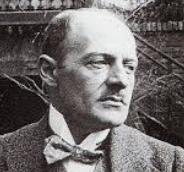
When we are told, in the same tone, that these people will be rewarded in "heaven" for their distress, and that "heaven" is the exact reverse of the earthly order ("the first shall be last"), we distinctly feel how the ressentiment-laden man transfers to God the vengeance he himself cannot wreak on the great. In this way, he can satisfy his revenge at least in imagination, with the aid of an other-worldly mechanism of rewards and punishments.
▼
Source
source
L. Coser, trans. (1961), p. 97
1 month 6 days ago
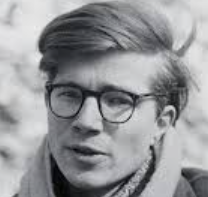
And in a flash I understood the meaning of sex. It is a craving for the mingling of consciousness, whose symbol is the mingling of bodies. Every time a man and a woman slake their thirst in the strange waters of the other's identity, they glimpse the immensity of their freedom.
▼
Source
source
p. 252

3 months 2 days ago
There is nothing I congratulate myself on more heartily than on never having joined a sect.
▼
Source
source
As quoted in Thomas More and Erasmus (1965) by Ernest Edwin Reynolds, p. 248 [citation needed]
2 months 2 weeks ago
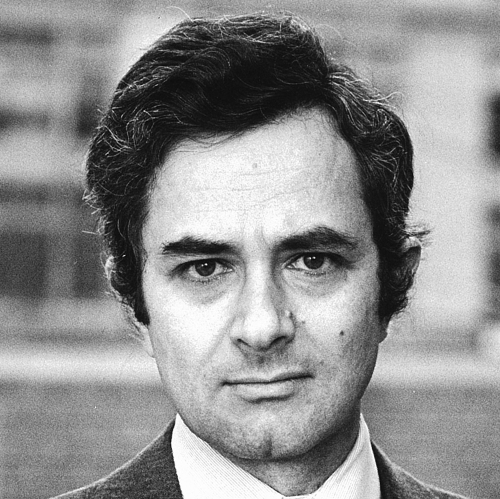
With regard to the rather common general distinction between good and bad sex ..., bad sex is generally better than none at all. This should not be controversial: it seems to hold for other important matters, like food, music, literature, and society. In the end, one must choose from among the available alternatives, whether their availability depends on the environment or on one's own constitution. And the alternatives have to be fairly grim before it becomes rational to opt for nothing.
▼
Source
source
"Sexual Perversion" (1969), p. 52.
1 month 2 weeks ago
I believe in the salvation of humanity, in the future of cyanide . . .

2 months 3 weeks ago
I remembered the way out suggested by a great princess when told that the peasants had no bread: "Well, let them eat cake".
▼
Source
source
This passage contains a statement Qu'ils mangent de la brioche that has usually come to be attributed to Marie Antoinette; this was written in 1766, when Marie Antoinette was 10
1 month 1 week ago
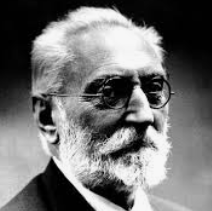
The only way to give finality to the world is to give it consciousness. For where there is no consciousness there is no finality, finality presupposing a purpose. And... faith in God is based simply upon the vital need of giving finality to existence, of making it answer to a purpose. We need God, not in order to understand the why, but in order to feel and sustain the ultimate wherefore, to give a meaning to the Universe.
2 months 3 weeks ago
For nature beats in perfect tune, And rounds with rhyme her every rune, Whether she work in land or sea, Or hide underground her alchemy. Thou canst not wave thy staff in air, Or dip thy paddle in the lake, But it carves the bow of beauty there, And the ripples in rhymes the oar forsake.
▼
Source
source
Wood-notes, no. II, st. 7
2 months 3 weeks ago
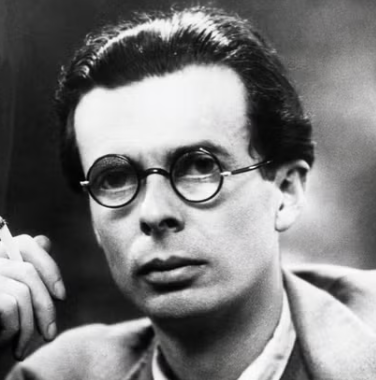
History teaches us that war is not inevitable. Once again, it is for us to choose whether we use war or some other method of settling the ordinary and unavoidable conflicts between groups of men.
▼
Source
source
What Are You Going To Do About It? , The case for constructive peace, 1936
2 months 3 weeks ago
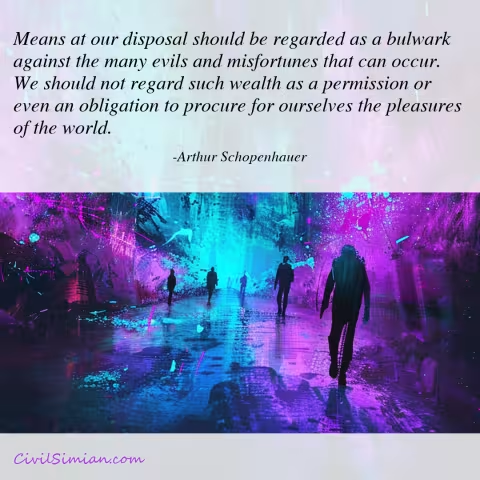
And O! how the mind is here washed clean of all its early ingrafted Jewish superstition ! It is the most profitable and elevating reading which is possible in the world. It has been the solace of my life, and will be the solace of my death.
▼
Source
source
About the Upanishads. Arthur Schopenhauer, quoted in Europe Looks At India by Mukherhi, D.P.
2 months 3 weeks ago
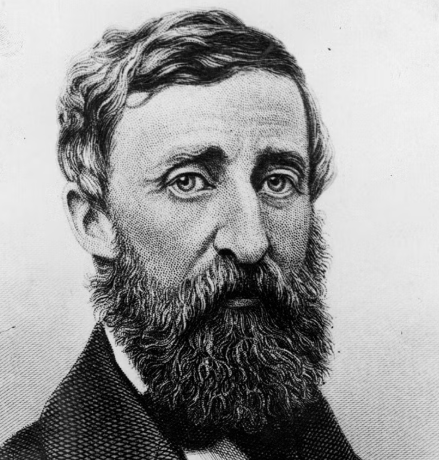
If a thousand [citizens] were not to pay their tax-bills this year, that would not be a violent and bloody measure, as it would be to pay them, and enable the State to commit violence and shed innocent blood. This is, in fact, the definition of a peaceable revolution, if any such is possible.

3 weeks 4 days ago
Nonviolence is an ideal that cannot always be fully honored in the practice. To the degree that those who practice nonviolent resistance put their body in the way of an external power, they make physical contact, presenting a force against force in the process. Nonviolence does not imply the absence of force or of aggression. It is, as it were, an ethical stylization of embodiment, replete with gestures and modes of non-action, ways of becoming an obstacle, of using the solidity of the body and its proprioceptive object field to block or derail a further exercise of violence.
▼
Source
source
p. 22
1 month 2 weeks ago
There is no original truth, only original error.
▼
Source
source
A Retrospective Glance at the Lifework of a Master of Books
1 month 3 weeks ago
I have never yet seen any plan which has not been mended by the observation of those who were much inferior in understanding to the person who took the lead in the business.
3 weeks ago
The invention of printing did away with anonymity, fostering ideas of literary fame and the habit of considering intellectual effort as private property.
▼
Source
source
(p. 122)

2 months 3 weeks ago
Where there is friendship, there is our natural soil.
▼
Source
source
Letter to Nicolas-Claude Thieriot, 1734

2 months 1 week ago
An evil and foolish and intemperate and irreligious life should not be called a bad life, but rather, dying long drawn out.
1 month 1 week ago
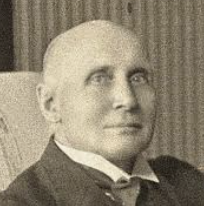
There remains the final reflection, how shallow, puny, and imperfect are efforts to sound the depths in the nature of things. In philosophical discussion, the merest hint of dogmatic certainty as to finality of statement is an exhibition of folly.
▼
Source
source
Preface, p. 16 (Corrected Edition)
CivilSimian.com created by AxiomaticPanic, CivilSimian, Kalokagathia