

3 months 1 week ago
When we see men of worth, we should think of equaling them; when we see men of a contrary character, we should turn inwards and examine ourselves.

2 months 3 weeks ago
I was your luxury. For nineteen years I have been put in your man's world and was forbidden to touch anything and you made me think that all was going very well and that I did not have to worry about anything but putting flowers in vases. Why did you lie to me? Why did you keep me ignorant, if it was to admit to me one day that this world is cracking and that you are all powerless and to make me choose between a suicide and a murder?
▼
Source
source
Jessica to Hugo, Act 5, sc. 2
1 month 1 day ago
In summary, then, the set theoretic 'needs' of physics are surprisingly similar to the set theoretic needs of pure logic. Both disciplines need some set theory to function at all. Both disciplines can 'live' - but live badly - on the meager diet of only predicative sets. Both can live extremely happily on the rich diet of impredicative sets. Insofar, then, as the indispensability of quantification over sets is any argument for their existence - and we will discuss why it is in the next section - we may say that it is a strong argument for the existence of at least predicative sets, and a pretty strong, but not as strong, argument for the existence of impredicative sets.
▼
Source
source
Philosophy of Logic
3 weeks 2 days ago
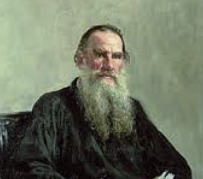
In the upper, rich, more educated classes of European society doubt arose as to the truth of that understanding of life which was expressed by Church Christianity. When, after the Crusades and the maximum development of papal power and its abuses, people of the rich classes became acquainted with the wisdom of the classics and saw, on the one hand, the reasonable lucidity of the teachings of the ancient sages, and on the other hand, the incompatibility of the Church doctrine with the teaching of Christ, they found it impossible to continue to believe the Church teaching.
1 month 3 weeks ago
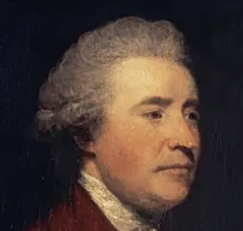
We must not always judge of the generality of the opinion by the noise of the acclamation.
▼
Source
source
No. 1
3 weeks ago
Blast Sputnik for closing terrestrial nature in a man-made environment that transfers the evolutionary process from biology to technology.
▼
Source
source
(p. 85)
1 month 2 weeks ago
Subjective reason ... is inclined to abandon the fight with religion by setting up two different brackets, one for science and philosophy, and one for institutionalized mythology, thus recognizing both of them. For the philosophy of objective reason there is no such way out. Since it hold to the concept of objective truth, it must take a positive or a negative stand with regard to the content of established religion.
▼
Source
source
p. 12.
1 week 2 days ago
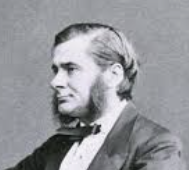
I really have no claim to rank myself among fatalistic, materialistic, or atheistic philosophers. Not among fatalists, for I take the conception of necessity to have a logical, and not a physical foundation; not among materialists, for I am utterly incapable of conceiving the existence of matter if there is no mind in which to picture that existence; not among atheists, for the problem of the ultimate cause of existence is one which seems to me to be hopelessly out of reach of my poor powers. Of all the senseless babble I have ever had occasion to read, the demonstrations of these philosophers who undertake to tell us all about the nature of God would be the worst, if they were not surpassed by the still greater absurdities of the philosophers who try to prove that there is no God.
3 months 1 week ago
By faithfulness we are collected and wound up into unity within ourselves, whereas we had been scattered abroad in multiplicity.
▼
Source
source
As quoted in Footprints in Time : Fulfilling God's Destiny for Your Life (2007) by Jeff O'Leary, p. 223
2 months 3 weeks ago
To eat is to appropriate by destruction.
▼
Source
source
Part 3: Being-For-Others

1 week ago
We share this planet, our home, with millions of species. Justice and sustainability both demand that we do not use more resources than we need. Restraint in resource use and living within nature's limits are preconditions for social justice. The commons are where justice and sustainability converge, where ecology and equity meet. The survival of pastures and forests as community property, or of a common good like a stable ecosystem, is only possible with social organizations with checks and controls on the use of resources built into their principles. The breakdown of a community, with the associated erosion of concepts of joint ownership and responsibility, can trigger the degradation of common resources.
▼
Source
source
(p.50)
3 months 3 weeks ago
It is the mark of an educated man to look for precision in each class of things just so far as the nature of the subject admits; it is evidently equally foolish to accept probable reasoning from a mathematician and to demand from a rhetorician scientific proofs.
1 month 3 days ago
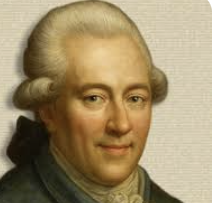
Once the good man was dead, one wore his hat and another his sword as he had worn them, a third had himself barbered as he had, a fourth walked as he did, but the honest man that he was - nobody any longer wanted to be that.
▼
Source
source
C 36
1 month 2 weeks ago
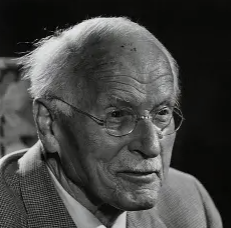
The discussion of the sexual problem is only a somewhat crude prelude to a far deeper question, and that is the question of the psychological relationship between the sexes. In comparison with this the other pales into insignificance, and with it we enter the real domain of woman. Woman's psychology is founded on the principle of Eros, the great binder and loosener, whereas from ancient times the ruling principle ascribed to man is Logos.
▼
Source
source
P.254
3 months 1 week ago
The superior man accords with the course of the Mean. Though he may be all unknown, unregarded by the world, he feels no regret. It is only the sage who is able for this.

2 months 5 days ago
Place is the greatest thing, as it contains all things.
▼
Source
source
As quoted in Diogenes Laërtius, The Lives and Opinions of Eminent Philosophers, I, 35
2 months 3 weeks ago
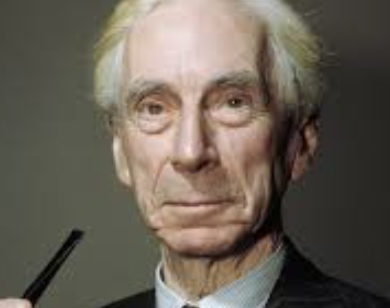
Thank you for your letter and for the enclosure which I return herewith. I have been wondering whether there is any means of preventing the confusion between you and me, and I half-thought that we might write a joint letter to The Times in the following terms: Sir, To prevent the continuation of confusions which frequently occur, we beg to state that neither of us is the other. Do you think this would be a good plan?
▼
Source
source
Letter to Lord Russell of Liverpool, February 18, 1959
1 week 5 days ago
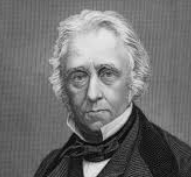
Free trade, one of the greatest blessings which a government can confer on a people, is in almost every country unpopular.
▼
Source
source
p. 161

2 months 2 weeks ago
This market way of life promotes addictions to stimulation and obsessions with comfort and convenience.
▼
Source
source
(p29)
2 months 3 weeks ago
The law of causality, I believe, like much that passes muster among philosophers, is a relic of a bygone age, surviving, like the monarchy, only because it is erroneously supposed to do no harm.
▼
Source
source
Ch. 9: On the Notion of Cause

3 months 2 weeks ago
Those who need myths are indeed poor. Here the gods serve as beds or resting places as the day races across the sky.
1 month 3 days ago
What I do not like about our definitions of genius is that there is in them nothing of the day of judgment, nothing of resounding through eternity and nothing of the footsteps of the Almighty.
▼
Source
source
E 92
3 months 3 weeks ago
By 1204, the only place where the entire body of Greek learning existed, still intact, was Constantinople. As a result of the crusaders' conquest, however, Constantinople was ruthlessly pillaged and destroyed and almost all the great treasures of ancient Greek learning were lost forever. It is because of that sack, for instance, that we have only seven plays left out of the better than one hundred written by Sophocles. The tragedy of 1204 can never be undone and for all of time, only bits and pieces of the marvelous Greek world can be known to us.
1 month 2 weeks ago
All metaphysical theories are inconclusively vulnerable to positivist attack.
▼
Source
source
Ch. 9, p. 127
1 month 3 weeks ago
We are near awakening when we dream that we dream.

Just now
It is because human needs are contradictory that no human life can be perfect. That does not mean that human life is imperfect. It means that the idea of perfection has no meaning.
▼
Source
source
'Modus Vivendi' (p.29)
2 months 3 weeks ago
It must not be supposed that this conflict is, on the part of the Teuton, aggressive in substance, whatever it may be in form. In substance it is defensive, the attempt to preserve Central Europe for a type of civilisation indubitably higher and of more value to mankind than that of any Slav State. The existence of the Russian menace on the Eastern border is, quite legitimately, a nightmare to Germany.
▼
Source
source
War: The Offspring of Fear (1914), quoted in Ray Monk, Bertrand Russell: The Spirit of Solitude, 1872-1921 (1996), p. 373
1 month 3 weeks ago
Though I myself am an atheist, I openly profess religion in the sense just mentioned, that is, a nature religion. I hate the idealism that wrenches man out of nature; I am not ashamed of my dependency on nature; I openly confess that the workings of nature affect not only my surface, my skin, my body, but also my core, my innermost being, that the air I breathe in bright weather has a salutary effect not only on my lungs but also on my mind, that the light of the sun illumines not only my eyes but also my spirit and my heart. And I do not, like a Christian, believe that such dependency is contrary to my true being or hope to be delivered from it. I know further that I am a finite moral being, that I shall one day cease to be. But I find this very natural and am therefore perfectly reconciled to the thought.
▼
Source
source
Lecture V, R. Manheim, trans. (1967), pp. 35-36

2 months 3 weeks ago
The camera is as subjective as we are.
▼
Source
source
An Outline of Philosophy Ch.15 The Nature of our Knowledge of Physics, 1927
2 months 1 week ago
A life without a holiday is like a long journey without an inn to rest at.
3 months 1 week ago
You can live, provided you live; that is, you can live for ever, provided you live a good life.
▼
Source
source
229H:3:2
2 weeks 5 days ago
I'm not clever enough to be a physicist. When asked about why he chose to become a biologist.
▼
Source
source
UR Samtiden - Verklighetens magi 27 October 2012.
3 months 1 day ago
I am further of opinion that it would be better for us to have [no laws] at all than to have them in so prodigious numbers as we have.
▼
Source
source
Book III, Ch. 13. Of Experience
1 month 2 weeks ago
The great problems of life - sexuality, of course, among others - are always related to the primordial images of the collective unconscious. These images are really balancing or compensating factors which correspond with the problems life presents in actuality. This is not to be marvelled at, since these images are deposits representing the accumulated experience of thousands of years of struggle for adaptation and existence.
▼
Source
source
Ch. 5, p. 271
3 months 1 day ago
Habit is a second nature.
▼
Source
source
Book III, Ch. 10

2 months 1 week ago
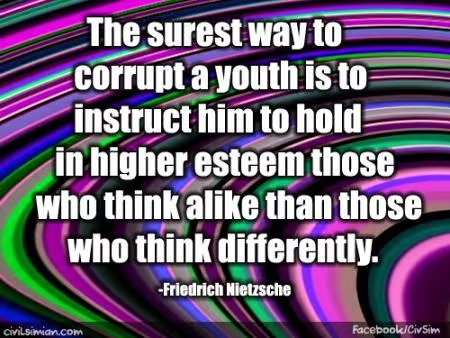
Force without wisdom falls of its own weight.

3 months 3 weeks ago
All that exists that can be denied deserves to be denied; and being truthful means: to believe in an existence that can in no way be denied and which is itself true and without falsehood.
2 months 3 weeks ago
The foundation of irreligious criticism is: Man makes religion, religion does not make man.
2 months 3 weeks ago
It is only when we think abstractly that we have such a high opinion of man. Of men in the concrete, most of us think the vast majority very bad. Civilized states spend more than half their revenue on killing each other's citizens. Consider the long history of the activities inspired by moral fervour: human sacrifices, persecutions of heretics, witch-hunts, pogroms leading up to wholesale extermination by poison gases ... Are these abominations, and the ethical doctrines by which they are prompted, really evidence of an intelligent Creator? And can we really wish that the men who practised them should live for ever? The world in which we live can be understood as a result of muddle and accident; but if it is the outcome of a deliberate purpose, the purpose must have been that of a fiend. For my part, I find accident a less painful and more plausible hypothesis.
▼
Source
source
Essay Do We Survive Death?, 1936
3 months 1 week ago
He who created you without you will not justify you without you.
▼
Source
source
169
2 months 3 weeks ago
It goes without saying that the normal durability of fixed capital is calculated on the supposition that all the conditions under which it can perform its functions normally during that time are fulfilled, just as we assume, in placing a mans life at 30 years on the average,that he will wash himself.
▼
Source
source
Volume II, Ch. VIII, p. 176-177.
2 months 3 weeks ago
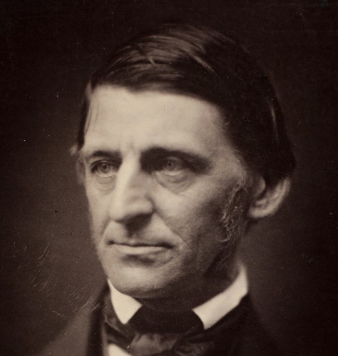
Thou animated torrid-zone.
▼
Source
source
To the Humble Bee, st. 1
1 month 1 day ago
Probability fractions arise from our knowledge and from our ignorance.
▼
Source
source
Chapter 14, Equipossibility, p. 132.
3 months 1 day ago
He who would teach men to die would teach them to live.
▼
Source
source
Ch. 20. Of the Force of Imagination (tr. Donald M. Frame)

1 month 2 weeks ago
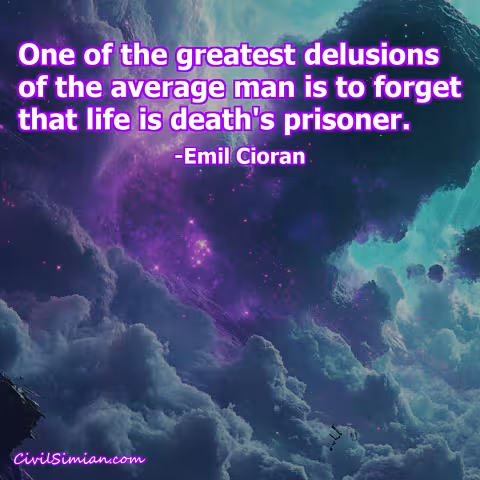
Not to be born is undoubtedly the best plan of all. Unfortunately, it is within no one's reach.
CivilSimian.com created by AxiomaticPanic, CivilSimian, Kalokagathia