

6 months 4 weeks ago
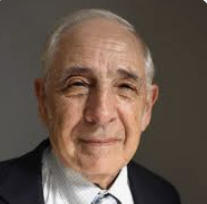
I have only one real message in this lecture, and that is: consciousness is a biological phenomenon, like photosynthesis, digestion, mitosis-you know all the biological phenomena-and once you accept that, most, if not all about the hard problems of consciousness simply evaporate.
4 months 3 weeks ago
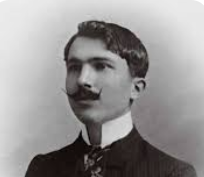
Behind all appearances, I divine a struggling essence. I want to merge with it. I feel that behind appearances this struggling essence is also striving to merge with my heart. But the body stands between us and separates us. The mind stands between us and separates us.
6 months 3 weeks ago
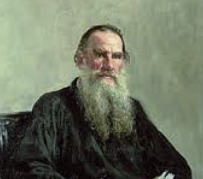
There can be only one permanent revolution - a moral one; the regeneration of the inner man. How is this revolution to take place? Nobody knows how it will take place in humanity, but every man feels it clearly in himself. And yet in our world everybody thinks of changing humanity, and nobody thinks of changing himself.
▼
Source
source
"Three Methods Of Reform" in Pamphlets : Translated from the Russian (1900) as translated by Aylmer Maude, p. 29

8 months 2 weeks ago
Let hopes and sorrows, fears and angers be, and think each day that dawns the last you'll see; For so the hour that greets you unforeseen, will bring with it enjoyment twice as keen.
▼
Source
source
Book I, epistle iv, line 12 (translated by John Conington)


7 months 2 weeks ago
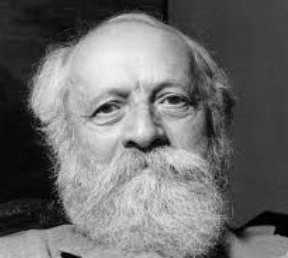
Some would deny any legitimate use of the word God because it has been misused so much. Certainly it is the most burdened of all human words. Precisely for that reason it is the most imperishable and unavoidable. And how much weight has all erroneous talk about God's nature and works (although there never has been nor can be any such talk that is not erroneous) compared with the one truth that all men who have addressed God really meant him? For whoever pronounces the word God and really means Thou, addresses, no matter what his delusion, the true Thou of his life that cannot be restricted by any other and to whom he stands in a relationship that includes all others.
5 months 1 week ago
To have faith is to trust yourself to the water. When you swim you don't grab hold of the water, because if you do you will sink and drown. Instead you relax, and float.
▼
Source
source
The Essence of Alan Watts
9 months 3 weeks ago
Scientists have pushed back the horizon of time from the biblical 6,000 years to 4,600,000,000 years for the age of Earth a 760,000-fold increase.
8 months 2 weeks ago
Life's short span forbids us to enter on far reaching hopes.
▼
Source
source
Book I, ode iv, line 15
7 months 3 weeks ago
Poetry heals the wounds inflicted by reason.
▼
Source
source
As quoted in Quote, Unquote (1989) by Jonathan Williams, p. 136
7 months 1 week ago
The fundamental tenet of Steiner's teaching is that if we take the trouble to recognize the independent existence of the inner worlds of thought, and keep the mind turned in that direction, we shall soon become increasingly conscious of their reality. We are not, as Sartre believed, stranded in the universe of matter like a whale on a beach. That inner world is our natural home. Moreover, once we grasp this truth, we can also recognize that we ourselves possess an "essential ego," a "true self," a fundamental identity that goes far beyond our usual feeble sense of being "me."
▼
Source
source
p. 26
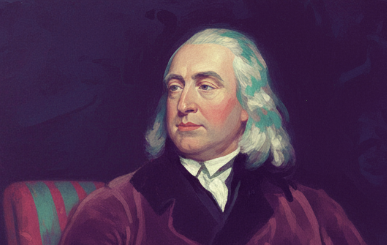
8 months 4 weeks ago
I am at heart more of a United-States-man than an Englishman.
▼
Source
source
Letter to Andrew Jackson (14 June 1830), quoted in Correspondence of Andrew Jackson, Volume 4, ed. David Maydole Matteson (1929), p. 146
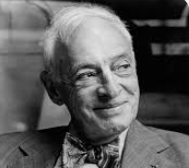
6 months 2 weeks ago
In the greatest confusion there is still an open channel to the soul. It may be difficult to find because by midlife it is overgrown, and some of the wildest thickets that surround it grow out of what we describe as our education. But the channel is always there, and it is our business to keep it open, to have access to the deepest part of ourselves.
▼
Source
source
Foreword to The Closing of the American Mind by Allan Bloom
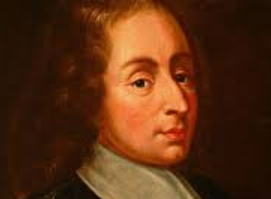
9 months 1 week ago
There are hardly any truths upon which we always remain agreed, and still fewer objects of pleasure which we do not change every hour, I do not know whether there is a means of giving fixed rules for adapting discourse to the inconstancy of our caprices.
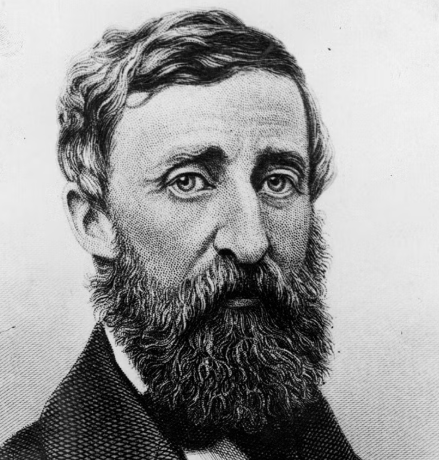
8 months 3 weeks ago
Enthusiasm is supernatural serenity.
▼
Source
source
Pearls of Thought (1881) p. 74

8 months 2 weeks ago
But what is lawful for all extends across wide-ruling aether and, without cease, through endless sunshine.
▼
Source
source
fr. 135, as quoted in Aristotle's Rhetoric, 1373 b16
5 months 2 weeks ago
Bukharin, like Lenin, regarded the system of basing economic life on mass terror not as a transient necessity but as a permanent principle of socialist organization. He did not shrink from justifying all means of coercion and held, like Trotsky at the same period, that the new system called essentially for the militarization of labour - i.e. the use of police and military force to compel the whole population to work in such places and conditions as the state might arbitrarily decree. Indeed, once the market is abolished there is no longer any free sale of labour or competition between workers, and police coercion is therefore the only means of allocating "human resources". If hired labour is eliminated, only compulsory labour remains. In other words, socialism - as conceived by both Trotsky and Bukharin at this time - is a permanent, nation-wide labour camp.
▼
Source
source
(pg. 28-9)
4 months 3 weeks ago
The rights of men to the use of land are not joint rights: they are equal rights. Were there only one man on earth, he would have a right to the use of the whole earth or any part of the earth. When there is more than one man on earth, the right to the use of land that any one of them would have, were he alone, is not abrogated: it is only limited. The right of each to the use of land is still a direct, original right, which he holds of himself, and not by the gift or consent of the others; but it has become limited by the similar rights of the others, and is therefore an equal right.
▼
Source
source
Part I : Declaration, Ch. III : "Social Statics" - The Right of Property
7 months 2 weeks ago
When we are told, in the same tone, that these people will be rewarded in "heaven" for their distress, and that "heaven" is the exact reverse of the earthly order ("the first shall be last"), we distinctly feel how the ressentiment-laden man transfers to God the vengeance he himself cannot wreak on the great. In this way, he can satisfy his revenge at least in imagination, with the aid of an other-worldly mechanism of rewards and punishments.
▼
Source
source
L. Coser, trans. (1961), p. 97
8 months 3 weeks ago
A man contains all that is needful to his government within himself. He is made a law unto himself. All real good or evil that can befal him must be from himself. He only can do himself any good or any harm. Nothing can be given to him or can taken from him but always there is a compensation.. There is a correspondence between the human soul and everything that exists in the world; more properly, everything that is known to man. Instead of studying things without the principles of them, all may be penetrated unto with him. Every act puts the agent in a new position. The purpose of life seems to be to acquaint a man with himself. He is not to live the future as described to him but to live the real future to the real present. The highest revelation is that God is in every man.
▼
Source
source
September 8, 1833
5 months 4 days ago
To accomplish anything whatsoever one must have standards. None have yet accomplished anything without them.
▼
Source
source
Book 1; On the necessity of standards
9 months 1 week ago
What is it, in your opinion, to be a great nobleman? It is to be master of several objects that men covet, and thus to be able to satisfy the wants and the desires of many. It is these wants and these desires that attract them towards you, and that make them submit to you: were it not for these, they would not even look at you; but they hope, by these services... to obtain from you some part of the good which they desire, and of which they see that you have the disposal.
7 months 2 weeks ago
The present contains nothing more than the past, and what is found in the effect was already in the cause.
▼
Source
source
Creative Evolution (1907), Chapter I, as translated by Arthur Mitchell (1911), p. 14.; italicized in the original.
7 months 2 weeks ago
This fighting-shy of every obligation partly explains the phenomenon, half ridiculous, half disgraceful, Of the setting-up in our days of the platform of "youth" as youth. ... In comic fashion people call themselves "young," because they have heard that youth has more rights than obligations, since it can put off the fulfilment of these latter to the Greek Kalends of maturity. ...[T]he astounding thing at present is that these take it as an effective right precisely in order to claim for themselves all those other rights which only belong to the man who has already done something.
▼
Source
source
Chapter XV: We Arrive At The Real Question
7 months 4 days ago
In closing, I can only apologize for not having given any positive account of either mathematical truth or mathematical necessity. I can only say that I have not given such an account because I think that the search for such an account is a fundamental mistake. It is not that there is nothing special about mathematics; it is that, in my opinion, the investigation of mathematics must presuppose and not seek to account for the truth of mathematics. But this is the beginning of another paper and not the end of this one.
▼
Source
source
"Truth and necessity in mathematics"
7 months 1 week ago
Culture is an instrument wielded by professors to manufacture professors, who, when their turn comes, will manufacture professors.
▼
Source
source
The Need for Roots, part 2: Uprootedness, chapter 1: Uprootedness in the Towns

4 months 3 weeks ago
You have your brush, you have your colours, you paint paradise, then, in you go.
▼
Source
source
As quoted in Journal of Modern Literature Vol. 2, No. 2, Nikos Kazantzakis
8 months 4 weeks ago
We are all a sort of camelions, that still take a tincture from things near us; nor is it to be wonder'd at in children, who better understand what they see than what they hear.
▼
Source
source
Sec. 67
8 months 3 weeks ago
Life has no meaning a priori ... It is up to you to give it a meaning, and value is nothing but the meaning that you choose.
▼
Source
source
p. 58
4 months 3 weeks ago
The true foundation of republican government is the equal right of every citizen, in his person and property, and in their management. Try by this, as a tally, every provision of our constitution, and see if it hangs directly on the will of the people. Reduce your legislature to a convenient number for full, but orderly discussion. Let every man who fights or pays, exercise his just and equal right in their election.
4 months 3 weeks ago
The ultimate most holy form of theory is action. Not to look on passively while the spark leaps from generation to generation, but to leap and to burn with it!
9 months 5 days ago
Anyone who actually admires money as the most precious thing in life, and rests his security on it to the extent of believing that as long as he possesses it he will be happy, has fashioned too many false gods for himself. Too many people put money in the place of Christ, as if it alone has the key to their happiness or unhappiness.
▼
Source
source
p. 100
7 months 3 weeks ago
One principle, that I believe is wanting in you, and all our too fervent and impetuous reformers, is the thought, that almost every institution or form of society is good in its place, and in the period of time to which it belongs. How many beautiful and admirable effects grew out of Popery and the monastic institutions, in the period, when they were in their genuine health and vigour! To them we owe almost all our logic and our literature. What excellent effects do we reap, even at this day, from the feudal system and from chivalry! In this point of view, nothing can, perhaps, be more worthy of our applause than the English constitution.
▼
Source
source
Letter to Percy Bysshe Shelley (4 March 1812), quoted in Thomas Jefferson Hogg, The Life of Percy Bysshe Shelley, Vol. II (1858), p. 86
9 months 3 weeks ago
In order to cease being a doubtful case, one has to cease being, that's all.
7 months 3 weeks ago
We are all secularised anarchists today.
7 months 3 weeks ago
Maybe suffering has no more justification than life.
5 months 1 week ago
I propose to value them according to their character, and not according to their duties. Each man acquires his character for himself, but accident assigns his duties.
8 months 3 weeks ago
If anything is certain, it is that I myself am not a Marxist.
▼
Source
source
Marx quoted and translated by Engels (in an 1882 letter to Eduard Bernstein) about the peculiar Marxism which arose in France 1882.
8 months 3 weeks ago
His business is here, it is here that he is despised and vilified, it is here that he must carry out his undertaking.
▼
Source
source
p. 67
6 months 3 weeks ago
Vanity dies hard; in some obstinate cases it outlives the man.
▼
Source
source
Prince Otto, reported in Bartlett's Familiar Quotations, 10th ed. (1919).
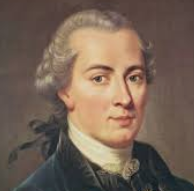
8 months 4 weeks ago
Morality is not properly the doctrine of how we may make ourselves happy, but how we may make ourselves worthy of happiness.
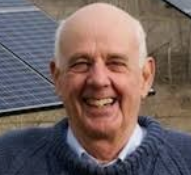
4 months 3 weeks ago
Rats and roaches live by competition under the laws of supply and demand; it is the privilege of human beings to live under the laws of justice and mercy.
▼
Source
source
Economy and Pleasure
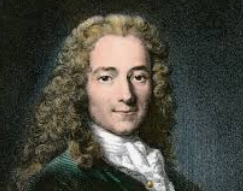
8 months 4 weeks ago
A company of solemn tyrants is impervious to all seductions.
▼
Source
source
"Tyranny", 1764
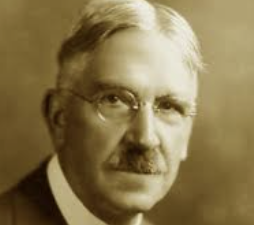
7 months 2 weeks ago
To regiment artists, to make them servants of some particular cause does violence to the very springs of artistic creation. But it does more than that. It betrays the very cause of a better future it would serve, for in its subjugation of the individuality of the artist it annihilates the source of that which is genuinely new. Where the regimentation is successful, it would cause the future to be but a rearrangement of the past.
CivilSimian.com created by AxiomaticPanic, CivilSimian, Kalokagathia