

9 months 3 weeks ago
Law could never, by determining exactly what is noblest and must just for one and all, enjoin upon them that which is best; for the differences of men and of actions and the fact that nothing, I may say, in human life is ever at rest, forbid any science whatsoever to promulgate any simple rule for everything and for all time. So, that which is persistently simple is inapplicable to things which are never simple.

7 months 1 week ago
We should desire neither the immortality nor the death of any human being, whoever he may be, with whom we have to do.
▼
Source
source
p. 260
7 months 4 days ago
If reason is both transcendent and immanent, then philosophy, as culture-bound reflection and argument about eternal questions, is both in time and eternity. We don't have an Archimedean point; we always speak the language of a time and place; but the rightness and wrongness of what we say is not just for a time and a place.
▼
Source
source
Why reason can't be naturalized
7 months 3 weeks ago
Deny them this participation of freedom, and you break that sole bond, which originally made, and must still preserve the unity of the empire.
7 months 3 weeks ago
Bad laws are the worst sort of tyranny.
▼
Source
source
Speech at Bristol Previous to the Election (6 September 1780), quoted in The Works of the Right Honourable Edmund Burke, Vol. II (1855), p. 148
7 months 3 weeks ago
Opinion is ultimately determined by the feelings, and not by the intellect.
▼
Source
source
Pt. IV, Ch. 30 : General Considerations
7 months 4 days ago
Now, moral philosophers generally prefer to talk about virtues, or about (specific) duties, rights, and so on, rather than about moral images of the world. There are obvious reasons for this; nevertheless, I think that it is a mistake, and that Kant is profoundly right. What we require in moral philosophy is, first and foremost, a moral image of the world, or rather--since, here again, I am more of a pluralist than Kant--a number of complementary moral images of the world.
▼
Source
source
Lecture III: Equality and Our Moral Image of the World

5 months 2 weeks ago
Mencius went to see King Huei of Liang. The king said, "Venerable sir, since you have not counted it far to come here, a distance of a thousand li, may I presume that you are provided with counsels to profit my kingdom?" Mencius replied, "Why must your Majesty use that word "profit"? What I am provided with, are counsels to benevolence and righteousness, and these are my only topics.
▼
Source
source
Book 1, part 1, as translated by James Legge in The Life and Works of Mencius (1875), p. 124

9 months 3 weeks ago
I wouldn't give an astrologer the time of day.

9 months 2 weeks ago
What! You would convict me from my own words, and bring against me what I had said or written elsewhere. You may act in that manner with those who dispute by established rules. We live from hand to mouth, and say anything that strikes our mind with probability, so that we are the only people who are really at liberty.
▼
Source
source
Book 5 Section 11

6 months 1 week ago
The way out of this violent cycle is to deepen democracy-to bring decisions that directly affect people's lives as close as possible to where people are and to where they can take responsibility.

6 months 1 week ago
No collection of facts is ever complete, because the Universe is without bounds. And no synthesis or interpretation is ever final, because there are always fresh facts to be found after the first collection has been provisionally arranged.
▼
Source
source
Vol. 1
8 months 3 weeks ago
The South may keep her pine-apples, and we will be content with our strawberries, which are, as it were, pine-apples with "going a-strawberrying" stirred into them, infinitely enhancing their flavor.
8 months 3 weeks ago
I knew a parson who frightened his congregation terribly by telling them that the second coming was very imminent indeed, but they were much consoled when they found that he was planting trees in his garden.
▼
Source
source
"Defects in Christ's Teaching"
8 months 3 weeks ago
Animals come when their names are called. Just like human beings.
▼
Source
source
p. 67e

8 months 2 weeks ago
The core of ethics runs deep in our species and is common to human beings everywhere. It survives the most appalling hardships and the most ruthless attempts to deprive human beings of their humanity. Nevertheless, some people resist the idea that his core has a biological basis which we have inherited from our pre-human ancestors.
▼
Source
source
Chapter 2, The Biological Basis Of Ethics, p. 27
6 months 1 week ago
The sceptics end in the infidelity which asserts the problem to be insoluble, or in the atheism which denies the existence of any orderly progress and governance of things: the men of genius propound solutions which grow into systems of Theology or of Philosophy, or veiled in musical language which suggests more than it asserts, take the shape of the Poetry of an epoch.
▼
Source
source
Ch.2, p. 72
8 months 3 weeks ago
The French bourgeois doesn't dislike shit, provided it is served up to him at the right time.
▼
Source
source
Book 2, "To Succeed in Being All, Strive to be Nothing in Anything"
6 months 3 weeks ago
Casting my perils before swains.

8 months 3 weeks ago
Mr. Sensible learned only catchwords from them. He could talk like Epicurus of spare diet, but he was a glutton. He had from Montaigne the language of friendship, but no friend.
▼
Source
source
Pilgrim's Regress 176

7 months 1 week ago
I also am other than what I imagine myself to be. To know this is forgiveness.
▼
Source
source
p. 200
8 months 3 weeks ago
Each man is a hero and an oracle to somebody.
▼
Source
source
Quotation and Originality

4 months 3 weeks ago
That we are overdone with banking institutions which have banished the precious metals and substituted a more fluctuating and unsafe medium, that these have withdrawn capital from useful improvements and employments to nourish idleness, that the wars of the world have swollen our commerce beyond the wholesome limits of exchanging our own productions for our own wants, and that, for the emolument of a small proportion of our society who prefer these demoralizing pursuits to labors useful to the whole, the peace of the whole is endangered and all our present difficulties produced, are evils more easily to be deplored than remedied.
▼
Source
source
Letter to Abbe Salimankis, 1810. ME 12:379
5 months 1 week ago
We often want one thing and pray for another, not telling the truth even to the gods.
▼
Source
source
Line 2.

4 months 3 weeks ago
I had rather be shut up in a very modest cottage with my books, my family and a few old friends, dining on simple bacon, and letting the world roll on as it liked, than to occupy the most splendid post, which any human power can give.
▼
Source
source
Letter to Alexander Donald
8 months 3 weeks ago
Among human beings, the subjection of women is much more complete at a certain level of civilization than it is among savages. And the subjection is always reinforced by morality.
▼
Source
source
Ch. 15: Power and moral codes

6 months 4 weeks ago
I am much more open about categories of gender, and my feminism has been about women's safety from violence, increased literacy, decreased poverty and more equality. I was never against the category of men. "As a Jew, I was taught it was ethically imperative to speak up" in Haaretz.
▼
Source
source
24-Feb-10
8 months 3 weeks ago
I saw the Emperor-this world-soul-riding out of the city on reconnaissance. It is indeed a wonderful sensation to see such an individual, who, concentrated here at a single point, astride a horse, reaches out over the world and masters it.
▼
Source
source
Hegel to Niethammer, October 13, 1806, in Hegel: the Letters (1998) translated by Clark Butler and Christiane Seiler, p. 114. Hegel: the Letters
9 months 4 weeks ago
All that exists that can be denied deserves to be denied; and being truthful means: to believe in an existence that can in no way be denied and which is itself true and without falsehood.

8 months 3 weeks ago
Kant's philosophy shifts for the first time the whole of modern thought and being (Desein) into the clarity and transparency of the foundation (Begrundung). This determines every attitude toward knowledge since then, as well as the bounds (Abgrenzungen) and appraisals of the sciences in the nineteenth century up to the present time. Therein Kant towers so far above all who precede and follow that even those who reject him or go beyond him still remain entirely dependent upon him.
▼
Source
source
p. 55-56

6 months 1 week ago
The wave of the future is coming and there is no fighting it.
▼
Source
source
The Wave of the Future
5 months 1 week ago
Indian thought has greatly attracted me since in my youth I first became acquainted with it through reading the works of Arthur Schopenhauer. From the very beginning I was convinced that all thought is really concerned with the great problem of how man can attain to spiritual union with infinite Being. My attention was drawn to Indian thought because it is busied with this problem and because by its nature it is mysticism. What I liked about it also was that Indian ethics are concerned with the behaviour of man to all living beings and not merely with his attitude to his fellow-man and to human society.
▼
Source
source
Preface, p. vi

9 months 2 weeks ago
It must be said that charity can, in no way, exist along with mortal sin.
▼
Source
source
Disputed Questions: On Charity, c. 1270
7 months 2 weeks ago
But to manipulate men, to propel them towards goals which you - the social reformer - see, but they may not, is to deny their human essence, to treat them as objects without wills of their own, and therefore to degrade them.


4 months 3 weeks ago
We hear only ourselves.

6 months 5 days ago
Many city-dwellers have a romanticized conception of the living world. From another perspective, some "conservation biologists" favour e.g. "Pleistocene rewilding". By contrast, I think any truly compassionate person should be horrified at the terrible suffering of Nature "red in tooth and claw". Why not aim for a cruelty-free world instead?
▼
Source
source
"Interview with Pensata Animal", Pensata Animal, 25 Oct. 2009
7 months 6 days ago
It is hardly to be believed how spiritual reflections when mixed with a little physics can hold people's attention and give them a livelier idea of God than do the often ill-applied examples of his wrath.
▼
Source
source
A 11

8 months 1 week ago
Friends are as companions on a journey, who ought to aid each other to persevere in the road to a happier life.
▼
Source
source
As quoted in Gems of Thought: Being a Collection of More Than a Thousand Choice Selections
7 months 3 weeks ago
It looks to me to be narrow and pedantic to apply the ordinary ideas of criminal justice to this great public contest. I do not know the method of drawing up an indictment against a whole people.

8 months 4 weeks ago
Percepts and phenomena which precedes the logical use of the intellect is called appearance, while the reflex knowledge originating from several appearances compared by the intellect is called experience.
4 months 3 weeks ago
It is not right to vex ourselves at things, For they care not about it.
▼
Source
source
VII, 38
8 months 4 weeks ago
A philosophical attempt to work out a universal history according to a natural plan directed to achieving the civic union of the human race must be regarded as possible and, indeed, as contributing to this end of Nature.
▼
Source
source
Ninth Thesis
8 months 3 weeks ago
You always hear people say that philosophy makes no progress and that the same philosophical problems which were already preoccupying the Greeks are still troubling us today. But people who say that do not understand the reason why it has to be so. The reason is that our language has remained the same and always introduces us to the same questions. ... I read: "philosophers are no nearer to the meaning of 'Reality' than Plato got,...". What a strange situation. How extraordinary that Plato could have got even as far as he did! Or that we could not get any further! Was it because Plato was so extremely clever?
▼
Source
source
p. 15e
8 months 4 weeks ago
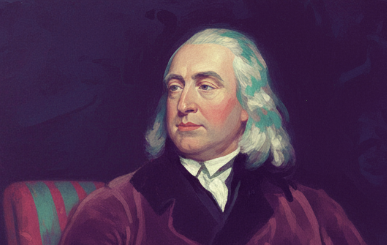
Want keeps pace with dignity. Destitute of the lawful means of supporting his rank, his dignity presents a motive for malversation, and his power furnishes the means.
▼
Source
source
The Rationale of Reward, 1811

8 months 3 weeks ago
A sovereign shows himself to be a tyrant if he disregards his honest advisors, or punishes them for what they have said.

7 months 1 week ago
The main problem for the average reader -- particularly of The Great Beast -- is that Crowley seems such an intolerable show-off that it is hard to believe anything he says.
▼
Source
source
p. 73
CivilSimian.com created by AxiomaticPanic, CivilSimian, Kalokagathia