
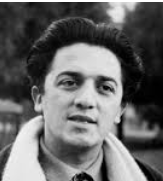
Federico Fellini — The Dreamer of Cinema, Memory, and Spectacle (1920–1993)
Federico Fellini was the magician of modern cinema — a filmmaker who transformed film from storytelling medium into a theater of memory, fantasy, and inner life. Where others sought realism, Fellini pursued truth through dreams, exaggeration, and imagination. His films insist that reality is never merely what happens, but what consciousness makes of it.
From Cartoonist to Cinematic Visionary
Born in Rimini, Italy, Fellini began his artistic life drawing caricatures and writing comic sketches. This early training shaped his entire cinematic style. His films are populated with grotesques, clowns, saints, aristocrats, dreamers, and frauds — figures drawn as if by a pen that refuses realism in favor of exaggeration.
He entered film through screenwriting and collaborated with Italian neorealist directors, yet he quickly moved beyond neorealism’s documentary style. Fellini did not abandon reality; he reinvented it.
“I am a born liar. For me, the most real thing is imagination.”
Cinema as Dream
Fellini believed film should resemble dreaming rather than reporting. His narratives often drift, dissolve, and circle back on themselves, mirroring the logic of memory and fantasy instead of linear plot.
In works such as La Dolce Vita and 8½, reality blends seamlessly with hallucination, confession, and spectacle. The result is not confusion, but revelation: life is already strange, and art merely shows us how strange it is.
To watch Fellini is to enter a mind thinking aloud in images.
“A different language is a different vision of life.”
Autobiography as Art
Fellini repeatedly returned to his own memories — childhood, Catholic ritual, provincial life, erotic fascination, artistic anxiety — transforming personal recollection into mythic imagery.
His films are not literal autobiography. They are emotional autobiography: the inner weather of a life rendered visible.
In Fellini’s world, truth is not accuracy. Truth is intensity.
“Nothing is more honest than a dream.”
The Carnival of Humanity
Fellini’s cinema is filled with processions, circuses, parades, and crowds. He saw human society as a carnival — comic, tragic, vulgar, sacred, ridiculous, and sublime all at once.
Rather than judging his characters, he observed them with affectionate irony. His films suggest that absurdity is not a flaw in humanity; it is its essence.
Laughter and melancholy, spectacle and intimacy, fantasy and confession — all coexist without contradiction.
“Life is a combination of magic and pasta.”
Influence on World Cinema
Fellini reshaped the language of film. Directors across continents adopted his visual boldness, psychological openness, and willingness to blur fiction and reality.
His name became an adjective — “Felliniesque” — used to describe imagery that is extravagant, surreal, and dreamlike. Few artists alter their medium so deeply that their style becomes a category of perception.
Legacy — The Artist as Visionary
Fellini showed that cinema is not merely a tool for telling stories, but a way of thinking. Through moving images, he explored memory, identity, desire, and illusion.
His work reminds us that imagination is not an escape from reality. It is one of reality’s deepest dimensions.
To watch a Fellini film is to see the world as if it were dreaming itself.
“There is no end. There is no beginning. There is only the infinite passion of life.”
CivilSimian.com created by AxiomaticPanic, CivilSimian, Kalokagathia