

8 months 2 weeks ago
We should infer in the case of a beautiful dwelling-place that it was built for its owners and not for mice; we ought, therefore, in the same way to regard the universe as the dwelling-place of the gods.
▼
Source
source
As quoted in De Natura Deorum by Cicero, iii. 10.
8 months 2 weeks ago
The pleasure is only for a little moment, and it [passes] like a dream, and a man at the end thereof finds death through knowing it.
▼
Source
source
Maxim no. 18. Translated by Sir E. A. Wallis Budge, Teaching Of Amenem Apt Son Of Kanekht (London: Martin Hopkinson and Company Ltd, 1924) p. 58
5 months 3 weeks ago
Reality and history, however, are not dialectical, and no idealist rhetorical gymnastics can make them conform to the dialect.
▼
Source
source
131
9 months 1 week ago
O pitiable minds of men, O blind intelligences! In what gloom of life, in how great perils is passed all your poor span of time! not to see that all nature barks for is this, that pain be removed away out of the body, and that the mind, kept away from care and fear, enjoy a feeling of delight!
▼
Source
source
Book II, lines 14-19 (tr. Rouse)
9 months 4 days ago
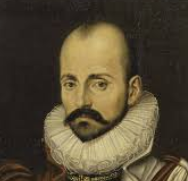
Amongst so many borrowed things, I am glad if I can steal one, disguising and altering it for some new service.
▼
Source
source
Book III, Ch. 12. Of Physiognomy
7 months 6 days ago
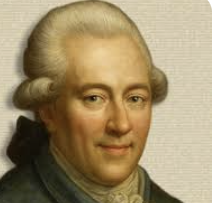
It is almost impossible to bear the torch of truth through a crowd without singeing somebody's beard.
▼
Source
source
4 Variant translations: It is almost impossible to carry the torch of wisdom through a crowd without singeing someone's beard. It is virtually impossible to carry the torch of truth through a crowd, without singeing someone's beard
8 months 3 weeks ago
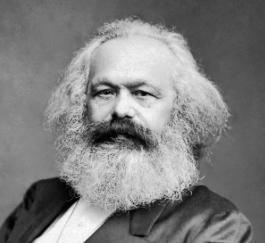
If conquest constitutes a natural right on the part of the few, the many have only to gather sufficient strength in order to acquire the natural right of reconquering what has been taken from them.
▼
Source
source
The Abolition of Landed Property Letter to Robert Applegarth, 3 December 1869

7 months 3 weeks ago
In order to conceive, and to steep ourselves in, unreality, we must have it constantly present to our minds. The day we feel it, see it, everything becomes unreal, except that unreality which alone makes existence tolerable.
4 months 3 weeks ago
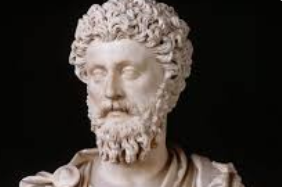
He would be the finer gentleman that should leave the world without having tasted of lying or pretence of any sort, or of wantonness or conceit.
▼
Source
source
IX, 2
7 months 3 weeks ago
What is Europe really but a sterile trunk which owes everything to oriental grafts?
▼
Source
source
Letter of 18 December 1806 to Windischmann, quoted by Rene Gerard, L'Orient et la pensée romantique allemande, Paris 1963,, p. 213. quoted in Poliakov, L. (1974).
8 months 3 weeks ago
Commoners are weightless. But he was a royal bon vivant who, no matter what, always weighed 125 kilos. I would be very surprised if he didn't have a few pounds left.
▼
Source
source
A soldier in Argos, speaking of the dead King Agamemnon, Act 2
4 months 3 weeks ago
You may break your heart, but men will still go on as before.
▼
Source
source
VIII, 4
9 months 4 days ago
Lend yourself to others, but give yourself to yourself.
▼
Source
source
Ch. 10. Of Managing the Will
8 months 3 weeks ago
If the ability to tell right from wrong should turn out to have anything to do with the ability to think, then we must be able to "demand" its exercise from every sane person, no matter how erudite or ignorant, intelligent or stupid, he may happen to be. Kant-in this respect almost alone among the philosophers-was much bothered by the common opinion that philosophy is only for the few, precisely because of its moral implications.
▼
Source
source
p. 13
7 months 1 week ago
The Text is plural. Which is not simply to say that it has several meanings, but that it accomplishes the very plural of meaning: an irreducible (and not merely an acceptable) plural. The Text is not a co-existence of meanings but a passage, an overcrossing; thus it answers not to an interpretation, even a liberal one, but to an explosion, a dissemination.
▼
Source
source
Proposition 4
9 months 4 days ago
Faith is a living, bold trust in God's grace, so certain of God's favor that it would risk death a thousand times trusting in it. Such confidence and knowledge of God's grace makes you happy, joyful and bold in your relationship to God and all creatures. The Holy Spirit makes this happen through faith. Because of it, you freely, willingly and joyfully do good to everyone, serve everyone, suffer all kinds of things, love and praise the God who has shown you such grace.
▼
Source
source
An Introduction to St. Paul's Letter to the Romans fromDr. Martin Luthers Vermischte Deutsche Schriften. Johann K. Irmischer, ed. Vol. 63(Erlangen: Heyder and Zimmer, 1854), pp. 124-125. (EA 63:124-125)
8 months 1 week ago
A prating barber asked Archelaus how he would be trimmed. He answered, "In silence."
▼
Source
source
33 Archelaus
8 months 3 weeks ago
To fear love is to fear life, and those who fear life are already three parts dead.
5 months 1 week ago
The startling truth is that our best efforts for civil rights, international peace, population control, conservation of natural resources, and assistance to the starving of the earth-urgent as they are-will destroy rather than help if made in the [current] spirit. For, as things stand, we have nothing to give. If our own riches and our own way of life are not enjoyed here, they will not be enjoyed anywhere else. Certainly they will supply the immediate jolt of energy and hope that methedrine, and similar drugs, give in extreme fatigue. But peace can be made only by those who are peaceful, and love can be shown only by those who love. No work of love will flourish out of guilt, fear, or hollowness of heart, just as no valid plans for the future can be made by those who have no capacity for living now.
▼
Source
source
p. 83
9 months 3 weeks ago
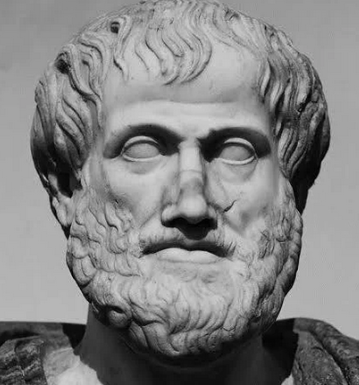
.... In a word, acts of any kind produce habits or characters of the same kind. Hence we ought to make sure that our acts are of a certain kind; for the resulting character varies as they vary. It makes no small difference, therefore, whether a man be trained in his youth up in this way or that, but a great difference, or rather all the difference.
9 months 2 weeks ago
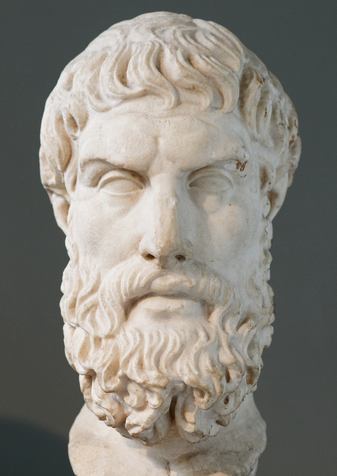
Temperance is that discreet regulation of the desires and passions, by which we are enabled to enjoy pleasures without suffering any consequent inconvenience. They who maintain such a constant self-command, as never to be enticed by the prospect of present indulgence, to do that which will be productive of evil, obtain the truest pleasure by declining pleasure.
4 months 3 weeks ago
Louisiana, as ceded by France to the United States, is made a part of the United States; its white inhabitants shall be citizens, and stand, as to their rights and obligations, on the same footing with other citizens of the United States, in analogous situations.
▼
Source
source
Draft of proposed Amendment to the Constitution by Jefferson, who thought an amendment would be necessary to authorize the Louisiana Purchase to be incorporated into the United States
7 months 2 weeks ago
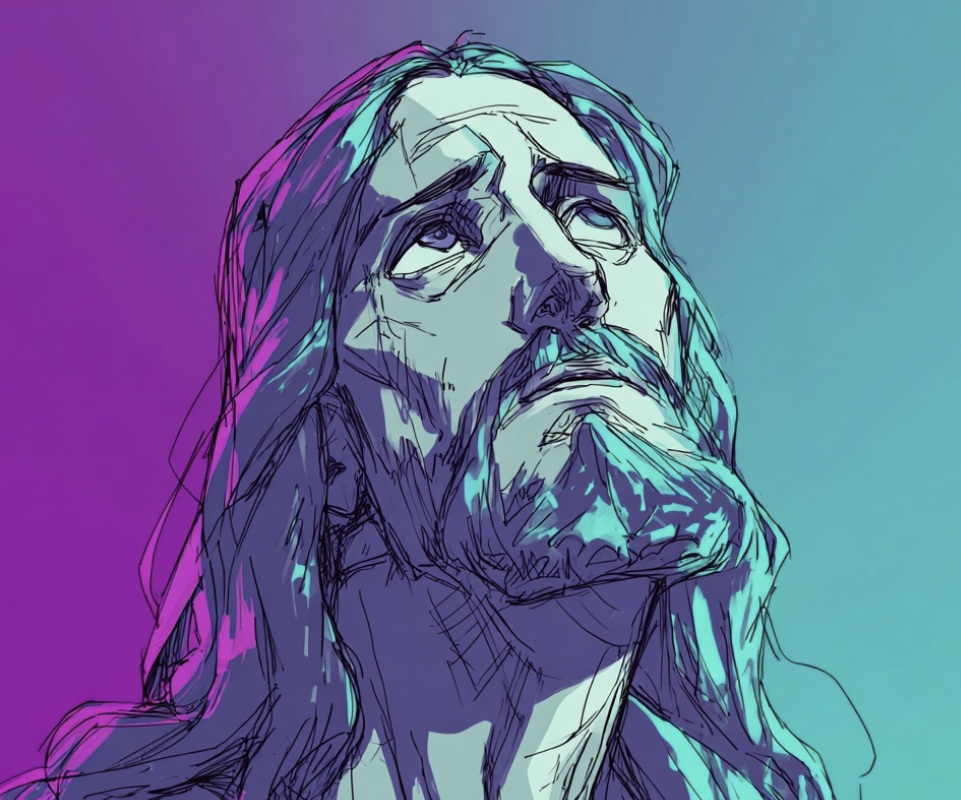
All ye shall be offended because of me this night: for it is written, I will smite the shepherd, and the sheep of the flock shall be scattered abroad. But after I am risen again, I will go before you into Galilee.
▼
Source
source
26:31-32 (KJV)

9 months 1 week ago
You called and cried out loud and shattered my deafness. You were radiant and resplendent, you put to flight my blindness. You were fragrant, and I drew in my breath and now pant after you. I tasted you, and I feel but hunger and thirst for you. You touched me, and I am set on fire to attain the peace which is yours.
7 months 3 weeks ago
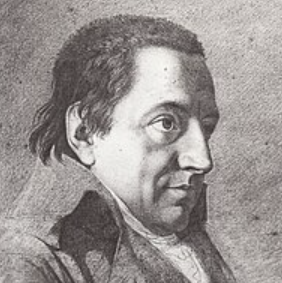
Has woman the same rights in the state which man has? This question may appear ridiculous to many. For if the only ground of all legal rights is reason and freedom, how can a distinction exist between two sexes which possess both the same reason and the same freedom. Nevertheless, it seems that, so long as men have lived, this has been differently held, and the female sex seems not to have been placed on a par with the male sex in the exercise of its rights. Such a universal sentiment must have a ground, to discover which was never a more urgent problem than in our days.
▼
Source
source
P. 439

8 months 2 weeks ago
Repentance for one's evil deeds is the safeguard of life.

5 months 1 week ago
God, our Father, has given us the life and the art of healing to protect and maintain it.
4 months 3 weeks ago
Just as without the monad there is in general no composition of anything, so also without it there is no knowledge of anything whatsoever, since it is a pure light, most authoritative over everything in general, and it is sun-like and ruling, so that in each of these respects it resembles God, and especially because it has the power of making things cohere and combine, even when they are composed of many ingredients and are very different from one another, just as he made this universe harmonious and unified out of things which are likewise opposed.
▼
Source
source
On the Monad
8 months 3 weeks ago
All traditional logic habitually assumes that precise symbols are being employed. It is therefore not applicable to this terrestial life but only to an imagined celestial existence... logic takes us nearer to heaven than other studies.
▼
Source
source
Vagueness', first published in The Australasian Journal of Psychology and Philosophy, 1 June, 1923
7 months 3 weeks ago
Why don't I commit suicide? Because I am as sick of death as I am of life.
8 months 3 weeks ago
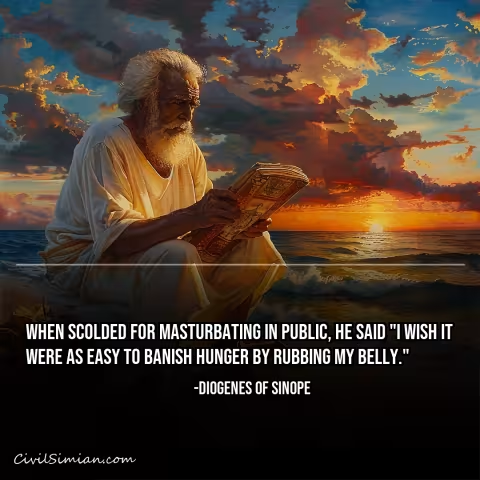
"Everything is both a trap and a display; the secret reality of the object is what the Other makes of it."

9 months 3 weeks ago
It is absurd to hold that a man ought to be ashamed of being unable to defend himself with his limbs but not of being unable to defend himself with reason when the use of reason is more distinctive of a human being than the use of his limbs.
8 months 3 weeks ago
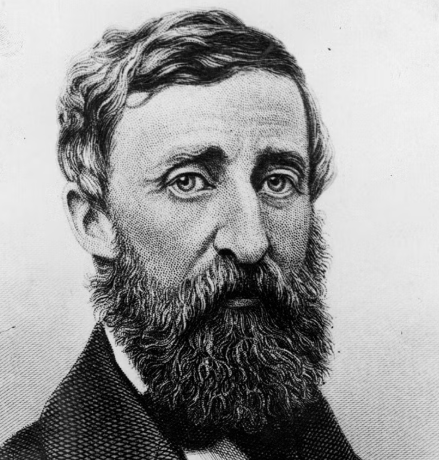
In the Catholic Church, especially, they go into chancery, make a clean confession, give up all, and think to start again. Thus men will lie on their backs, talking about the fall of man, and never make an effort to get up.
▼
Source
source
p. 487
9 months 4 weeks ago
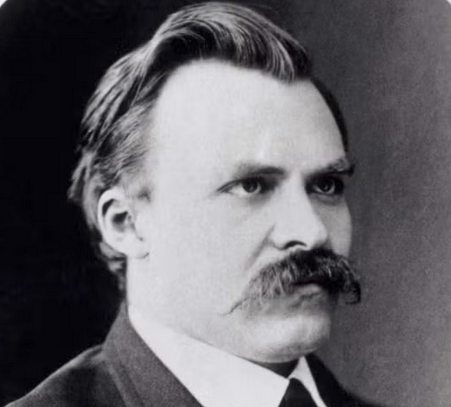
Style ought to prove that one believes in an idea; not only that one thinks it but also feels it.
5 months 1 week ago
Things that were hard to bear are sweet to remember.
▼
Source
source
lines 656-657;
9 months 1 week ago
Again and again our foe, religion, has given birth to deeds sinful and unholy.
▼
Source
source
Book I, lines 82-83 (tr. C. Bailey)
7 months 1 week ago
If the individual realizes his self by spontaneous activity and thus relates himself to the world, he ceases to be an isolated atom; he and the world become part of one structuralized whole; he has his rightful place, and thereby his doubt concerning himself and the meaning of life disappears. This doubt sprang from his separateness and from the thwarting of life; when he can live, neither compulsively nor automatically but spontaneously, the doubt disappears. He is aware of himself as an active and creative individual and recognizes that there is only one meaning of life: the act of living itself.
▼
Source
source
Ch. 7, p. 262-3
7 months 1 week ago
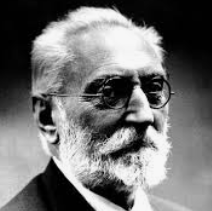
I hope, reader, that some time while our tragedy is still playing, in some interval between acts, we shall meet again. And we shall recognize one another. And forgive me if I have troubled you more than was needful and inevitable, more than I intended to do when I took up my pen proposing to distract you from your distractions. And may God deny you peace, but give you glory!
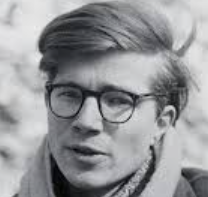
7 months 1 week ago
The Diary of Vaslav Nijinjsky reaches a limit of sincerity beyond any of the documents that we have referred to on this study. There are other modern works that express the same sense that civilized life is a form of living death; notably the poetry of T. S. Eliot and the novels of Franz Kafka; but there is an element of prophetic denunciation in both, the attitude of healthy men rebuking their sick neighbors. We possess no other record of the Outsider's problems that was written by a man about to be defeated and permanently smashed by those problems.
▼
Source
source
p. 115
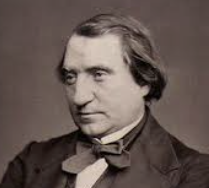
5 months 3 weeks ago
Colonization on a grand scale is a political necessity of absolutely the first order. A nation that does not colonize is irrevocably vowed to socialism, to war between rich and poor. The conquest of a nation of inferior race by a superior race, which establishes itself as the ruler, has nothing shocking about it.
▼
Source
source
92-93
8 months 3 weeks ago
A new moral outlook is called for in which submission to the powers of nature is replaced by respect for what is best in man. It is where this respect is lacking that scientific technique is dangerous.
▼
Source
source
Attributed to Russell at the end of Isaac Asimov's short story Franchise with no specific source given.
8 months 3 weeks ago
Generally speaking there is no irreducible taste or inclination. They all represent a certain appropriative choice of being. It is up to existential psychoanalysis to compare and classify them. Ontology abandons us here; it has merely enabled us to determine the ultimate ends of human reality, its fundamental possibilities, and the value which haunts it.
5 months 3 weeks ago
Today we have arrived at a point when the three principles [of modern resistance: 1. measure of efficacy, 2. the form of political and military organization correspond to the current forms of economic and social production, 3. democracy and freedom] coincide. The distributed network structure provides the model for an absolutely democratic organization that corresponds to the dominant forms of economic and social production and is also the most powerful weapon against the ruling power structure.
▼
Source
source
88
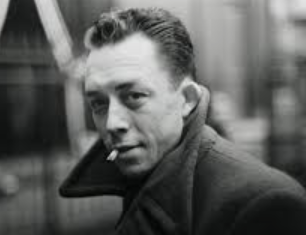
9 months 3 weeks ago
Artistic creation is a demand for unity and a rejection of the world.
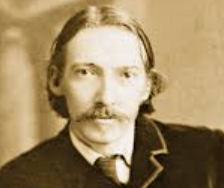
6 months 3 weeks ago
Though the coming of the day is still the most inspiriting, yet day's departure, also, and the return of night refresh, renew, and quiet us; and in the pastures of the dusk we stand, like cattle, exulting in the absence of the load.
▼
Source
source
Toils And Pleasures.
8 months 4 weeks ago
The animals are much more content with mere existence than we are; the plants are wholly so; and man is so according to how dull and insensitive he is. The animal's life consequently contains less suffering but also less pleasure than the human's, the direct reason being that on the one hand it is free from care and anxiety and the torments that attend them, but on the other is without hope and therefore has no share in that anticipation of a happy future which, together with the enchanting products of the imagination which accompany it, is the source of most of our greatest joys and pleasures. The animal lacks both anxiety and hope because its consciousness is restricted to what is clearly evident and thus to the present moment: the animal is the present incarnate.
▼
Source
source
Vol. 2 "On the Suffering of the World" as translated in Essays and Aphorisms (1970), as translated by R. J. Hollingdale
7 months 2 weeks ago
You do not attain to knowledge by remaining on the shore and watching the foaming waves, you must make the venture and cast yourself in, you must swim, alert and with all your force, even if a moment comes when you think you are losing consciousness; in this way, and in no other, do you reach anthropological insight.
▼
Source
source
p. 148

7 months 3 weeks ago
Circumstances (which with some gentlemen pass for nothing) give in reality to every political principle its distinguishing colour, and discriminating effect. The circumstances are what render every civil and political scheme beneficial or noxious to mankind.
8 months 1 day ago
Impenetrable in their dissimulation, cruel in their vengeance, tenacious in their purposes, unscrupulous as to their methods, animated by profound and hidden hatred for the tyranny of man - it is as though there exists among them an ever-present conspiracy toward domination, a sort of alliance like that subsisting among the priests of every country.
▼
Source
source
"On Women" (1772), as translated in Selected Writings (1966) edited by Lester G. Crocker
CivilSimian.com created by AxiomaticPanic, CivilSimian, Kalokagathia