

4 months 3 weeks ago
The greatest service which can be rendered any country is to add an useful plant to its culture; especially, a bread grain; next in value to bread is oil.
▼
Source
source
Thomas Jefferson, In Memoir, Correspondence, and Miscellanies from the Papers of T. Jefferson (1829), Vol. 1, 144
5 months 1 week ago
We do not "come into" this world; we come out of it, as leaves from a tree. As the ocean "waves," the universe "peoples." Every individual is an expression of the whole realm of nature, a unique action of the total universe. This fact is rarely, if ever, experienced by most individuals. Even those who know it to be true in theory do not sense or feel it, but continue to be aware of themselves as isolated "egos" inside bags of skin.
▼
Source
source
Inside Information
8 months 3 weeks ago
The Chinese are a great nation, incapable of permanent suppression by foreigners. They will not consent to adopt our vices in order to acquire military strength; but they are willing to adopt our virtues in order to advance in wisdom. I think they are the only people in the world who quite genuinely believe that wisdom is more precious than rubies. That is why the West regards them as uncivilized.
▼
Source
source
The Problem of China (1922), Ch. XIII: Higher education in China
8 months 2 weeks ago
In speaking of the move from subjective to objective characterization, I wish to remain noncommittal about the existence of an endpoint, the completely objective intrinsic nature of the thing, which one might or might not be able to reach. It may be more accurate to think of objectivity as a direction in which the understanding can travel. And in understanding a phenomenon like lightning, it is legitimate to go as far away as one can from a strictly human viewpoint.But in the case of experience, on the other hand, the connexion with a particular point of view seems much closer. It is difficult to understand what could be meant by the objective character of an experience, apart from the particular point of view from which its subject apprehends it. After all, what would be left of what it was like to be a bat if one removed the viewpoint of the bat?
▼
Source
source
p. 173.

8 months 2 weeks ago
Thou shouldst not become presumptuous through great connections and race; for in the end thy trust is on thine own deeds.
▼
Source
source
(p. 60)
4 months 3 weeks ago
I can control my thoughts as necessary; then how can I be troubled?
▼
Source
source
(Hays translation) VII, 2

8 months 3 weeks ago
It is simply no good trying to keep any thrill: that is the very worst thing you can do. Let the thrill go-let it die away-go on through that period of death into the quieter interest and happiness that follow-and you will find you are living in a world of new thrills all the time. But if you decide to make thrills your regular diet and try to prolong them artificially, they will all get weaker and weaker, and fewer and fewer, and you will be a bored, disillusioned old man for the rest of your life. It is because so few people understand this that you find many middle-aged men and women maundering about their lost youth, at the very age when new horizons ought to be appearing and new doors opening all round them. It is much better fun to learn to swim than to go on endlessly (and hopelessly) trying to get back the feeling you had when you first went paddling as a small boy.
▼
Source
source
Book III, Chapter 6, "Christian Marriage"
9 months 3 weeks ago
To become sober is: to come to oneself in self-knowledge and before God as nothing before him, yet infinitely, unconditionally engaged.
5 months 1 week ago
Show me that the good in life does not depend upon life's length, but upon the use we make of it; also, that it is possible, or rather usual, for a man who has lived long to have lived too little. Say to me when I lie down to sleep: "You may not wake again!" And when I have waked: "You may not go to sleep again!" Say to me when I go forth from my house: "You may not return!" And when I return: "You may never go forth again!"
7 months 3 weeks ago
And having looked to Government for bread, on the very first scarcity they will turn and bite the hand that fed them.



4 months 3 weeks ago
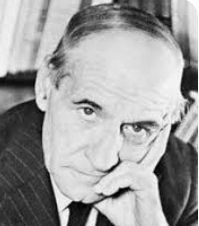
We have lived by the assumption that what was good for us would be good for the world. ... We have been wrong. We must change our lives, so that it will be possible to live by the contrary assumption that what is good for the world will be good for us. . . We must recover the sense of the majesty of the creation and the ability to be worshipful in its presence. For it is only on the condition of humility and reverence before the world that our species will be able to remain in it.
▼
Source
source
"A Native Hill"
7 months 2 weeks ago
Whether he be an original or a plagiarist, man is the novelist of himself.
▼
Source
source
"Man has no nature"

7 months 1 week ago
In order to obey God, one must receive his commands. How did it happen that I received them in adolescence, while I was professing atheism? To believe that the desire for good is always fulfilled - that is faith, and whoever has it is not an atheist.
▼
Source
source
Last Notebook (1942) p. 137
9 months 5 days ago
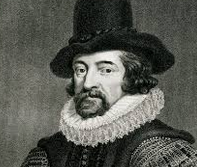
He that defers his charity 'till he is dead, is (if a man weighs it rightly) rather liberal of another man's, than of his own.
▼
Source
source
Ornamenta Rationalia, [§55]
6 months 3 weeks ago
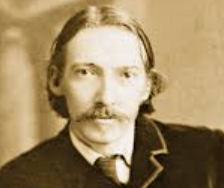
All who have meant good work with their whole hearts, have done good work, although they may die before they have the time to sign it. Every heart that has beat strong and cheerfully has left a hopeful impulse behind it in the world, and bettered the tradition of mankind. And even if death catch people, like an open pitfall, and in mid-career, laying out vast projects, and planning monstrous foundations, flushed with hope, and their mouths full of boastful language, they should be at once tripped up and silenced: is there not something brave and spirited in such a termination? and does not life go down with a better grace, foaming in full body over a precipice, than miserably straggling to an end in sandy deltas?
▼
Source
source
316
5 months 1 week ago
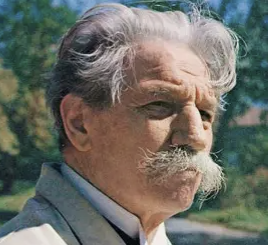
Only when an ideal of peace is born in the minds of the peoples will the institutions set up to maintain this peace effectively fulfill the function expected of them.
7 months 1 week ago
Religion in so far as it is a source of consolation is a hindrance to true faith; and in this sense atheism is a purification. I have to be an atheist with that part of myself which is not made for God. Among those in whom the supernatural part of themselves has not been awakened, the atheists are right and the believers wrong.
▼
Source
source
"Faiths of Meditation; Contemplation of the divine" as translated in The Simone Weil Reader (1957) edited by George A. Panichas, p. 417
8 months 4 weeks ago
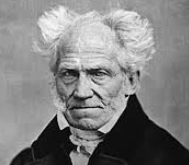
National character is only another name for the particular form which the littleness, perversity and baseness of mankind take in every country. Every nation mocks at other nations, and all are right. Variant translation: Every nation criticizes every other one - and they are all correct.
▼
Source
source
As quoted by Wolfgang Pauli in a letter to Abraham Pais (17 August 1950) published in The Genius of Science (2000) by Abraham Pais, p. 242
9 months 4 weeks ago
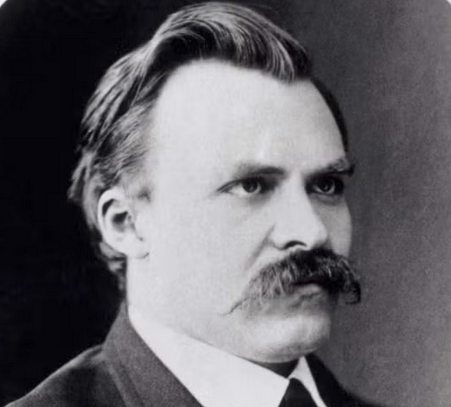
That immense framework and planking of concepts to which the needy man clings his whole life long in order to preserve himself is nothing but a scaffolding and toy for the most audacious feats of the liberated intellect. And when it smashes this framework to pieces, throws it into confusion, and puts it back together in an ironic fashion, pairing the most alien things and separating the closest, it is demonstrating that it has no need of these makeshifts of indigence and that it will now be guided by intuitions rather than by concepts. There is no regular path which leads from these intuitions into the land of ghostly schemata, the land of abstractions. There exists no word for these intuitions; when man sees them he grows dumb, or else he speaks only in forbidden metaphors and in unheard of combinations of concepts. He does this so that by shattering and mocking the old conceptual barriers he may at least correspond creatively to the impression of the powerful present intuition.
8 months 3 weeks ago
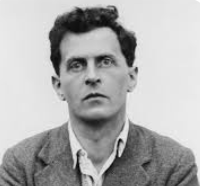
It's only by thinking even more crazily than philosophers do that you can solve their problems.
▼
Source
source
p. 75e
8 months 3 weeks ago
There have been men before ... who got so interested in proving the existence of God that they came to care nothing for God himself... as if the good Lord had nothing to do but to exist. There have been some who were so preoccupied with spreading Christianity that they never gave a thought to Christ.
▼
Source
source
Ch. 9
8 months 3 weeks ago
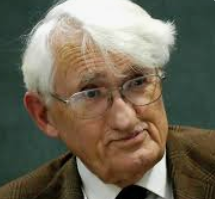
All affected can accept the consequences and the side effects that [the norm's] general observance can be anticipated to have for the satisfaction of everyone's interests, and the consequences are preferred to those of known alternative possibilities for regulation.
▼
Source
source
p. 65
7 months 3 weeks ago
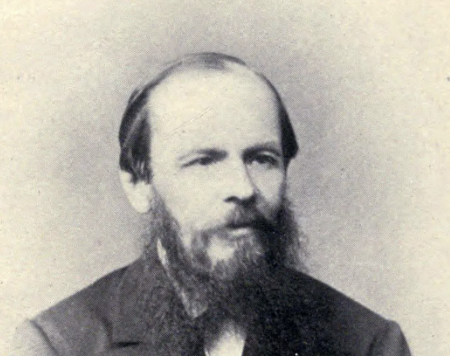
If they drive God from the earth, we shall shelter Him underground.
8 months 3 weeks ago
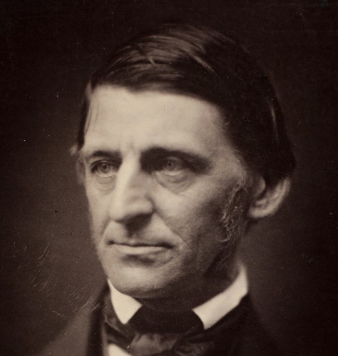
His imperial muse tosses the creation like a bauble from hand to hand to embody any capricious thought that is uppermost in her mind. The remotest spaces of nature are visited, and the farthest sundered things are brought together by a subtle spiritual connection.
▼
Source
source
p. 237
5 months 1 week ago
I am of course confident that I will fulfil my tasks as a writer in all circumstances - from my grave even more successfully and more irrefutably than in my lifetime. No one can bar the road to truth, and to advance its cause I am prepared to accept even death. But may it be that repeated lessons will finally teach us not to stop the writer's pen during his lifetime? At no time has this ennobled our history.
▼
Source
source
Open letter to the Fourth Soviet Writers' Congress (16 May 1967); as translated in Solzhenitsyn: A Documentary Record (1970) edited by Leopold Labedz
4 months 3 weeks ago
The monopoly of a single bank is certainly an evil. The multiplication of them was intended to cure it; but it multiplied an influence of the same character with the first, and completed the supplanting the precious metals by a paper circulation. Between such parties the less we meddle the better.
▼
Source
source
Letter to Albert Gallatin, 1802. ME 10:323

8 months 2 weeks ago
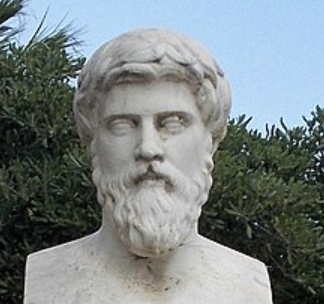
Valour, however unfortunate, commands great respect even from enemies: but the Romans despise cowardice, even though it be prosperous.
▼
Source
source
Aemilius Paulus 26 (Tr. Stewart and Long)

9 months 4 days ago
Saturninus said, "Comrades, you have lost a good captain to make him an ill general."
▼
Source
source
Book III, Ch. 9. Of Vanity

8 months 4 weeks ago
All wars are accordingly so many attempts (not in the intention of man, but in the intention of Nature) to establish new relations among states, and through the destruction or at least the dismemberment of all of them to create new political bodies, which, again, either internally or externally, cannot maintain themselves and which must thus suffer like revolutions; until finally, through the best possible civic constitution and common agreement and legislation in external affairs, a state is created which, like a civic commonwealth, can maintain itself automatically.
▼
Source
source
Seventh Thesis
4 months 3 weeks ago
Look round at the courses of the stars, as if thou wert going along with them; and constantly consider the changes of the elements into one another; for such thoughts purge away the filth of the terrene life.
▼
Source
source
VII, 47
8 months 3 weeks ago
Revolutions never go backwards.
▼
Source
source
p. 214
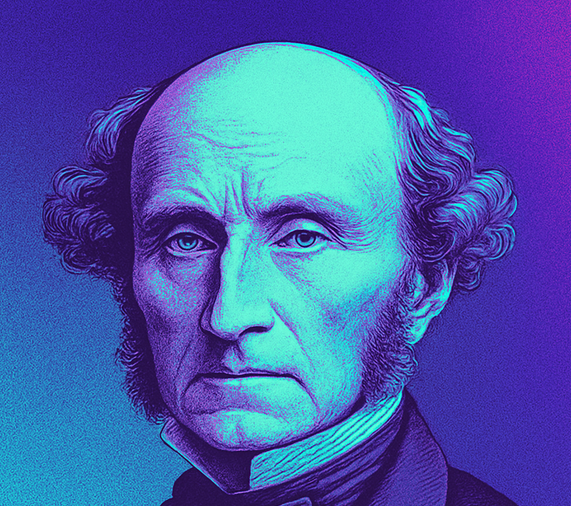
8 months 3 weeks ago
Human beings have faculties more elevated than the animal appetites, and when once made conscious of them, do not regard anything as happiness which does not include their gratification. I do not, indeed, consider the Epicureans to have been by any means faultless in drawing out their scheme of consequences from the utilitarian principle. To do this in any sufficient manner, many Stoic, as well as Christian elements require to be included. But there is no known Epicurean theory of life which does not assign to the pleasures of the intellect, of the feelings and imagination, and of the moral sentiments, a much higher value as pleasures than to those of mere sensation.
▼
Source
source
Ch. 2
7 months 1 week ago
The issue over there being classes seems more a question of convenient conceptual scheme; the issue over there being centaurs, or brick houses on Elm Street, seems more a question of fact. But I have been urging that this difference is only one of degree, and that it turns upon our vaguely pragmatic inclination to adjust one strand of the fabric of science rather than another in accommodating some particular recalcitrant experience. Conservatism figures in such choices, and so does the quest for simplicity.
▼
Source
source
"Two Dogmas of Empiricism"
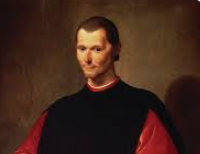
9 months 4 days ago
The end of the republic is to enervate and to weaken all other bodies so as to increase its own body.
▼
Source
source
Book 2, Ch. 3 (translation by Mansfield and Tarcov)
8 months 3 weeks ago
"Everything is already there in...." How does it come about that [an] arrow points? Doesn't it seem to carry in it something besides itself? - "No, not the dead line on paper; only the psychical thing, the meaning, can do that." - That is both true and false. The arrow points only in the application that a living being makes of it.
▼
Source
source
§ 454

6 months 3 days ago
Hayek watched the interwar collapse with horror, as Keynes did, and shared many of Keynes's liberal values. What he failed to understand is that these values cannot be renewed by applying any formula or doctrine, or by trying to construct an ideal liberal regime in which freedom is insulated from the contingencies of politics.
8 months 3 weeks ago
What do I know about God and the purpose of life? I know that this world exists. That I am placed in it like my eye in its visual field. That something about it is problematic, which we call its meaning. This meaning does not lie in it but outside of it. That life is the world. That my will penetrates the world. That my will is good or evil. Therefore that good and evil are somehow connected with the meaning of the world. The meaning of life, i.e. the meaning of the world, we can call God. And connect with this the comparison of God to a father. To pray is to think about the meaning of life.
▼
Source
source
Journal entry (11 June 1916), p. 72e and 73e
7 months 2 weeks ago
Prosperity, both for individuals and for states, means possessions; and possessions mean burdens and harness and slavery; and slavery for the mind, too, because it is not only the rich man's time that is pre-empted, but his affections, his judgement, and the range of his thoughts.
▼
Source
source
"The Irony of Liberalism"

7 months 3 weeks ago
The premonition of madness is complicated by the fear of lucidity in madness, the fear of the moments of return and reunion, when the intuition of disaster is so painful that it almost provokes a greater madness. One would welcome chaos if one were not afraid of lights in it.

8 months 4 weeks ago
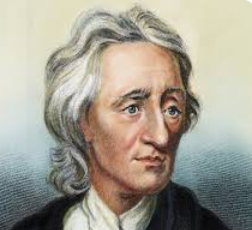
You shall find, that there cannot be a greater spur to the attaining what you would have the eldest learn, and know himself, than to set him upon teaching it his younger brothers and sisters.
▼
Source
source
Sec. 119
9 months 3 weeks ago
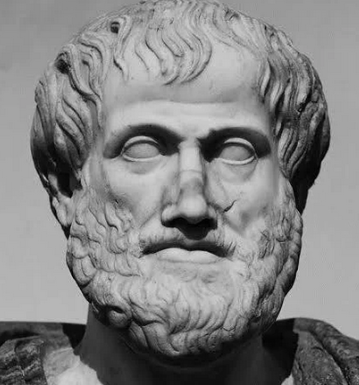
For legislators make the citizens good by forming habits in them, and this is the wish of every legislator, and those who do not effect it miss their mark, and it is in this that a good constitution differs from a bad one.
4 months 3 weeks ago
All this world, all this rich, endless flow of appearances is not a deception, a multicolored phantasmagoria of our mirroring mind. Nor is it absolute reality which lives and evolves freely, independent of our mind's power. It is not the resplendent robe which arrays the mystic body of God. Nor the obscurely translucent partition between man and mystery. All this world that we see, hear, and touch is that accessible to the human senses, a condensation of the two enormous powers of the Universe permeated with all of God.

8 months 3 weeks ago
The relation of feeling toward art and its bringing-forth can be one of production or one of reception and enjoyment.
▼
Source
source
p. 78
8 months 3 weeks ago
All sources of energy upon which industry depends are wasted when they are employed; and industry is expending them at a continually increasing rate. Already coal has been largely replaced by oil, and oil is being used up so fast that East and West alike conceive it necessary to their own prosperity to destroy the industry of the other. And what is true of oil is equally true of other natural resources. Every day, many square miles of forest are turned into newspaper, but there is no known process by which newspaper can be turned into forest. You will say that this need not worry us, since newspapers will be replaced by radio, but radio requires electricity, electricity requires power, and power depends upon raw materials.
▼
Source
source
Part I: Man and Nature, Ch. 4: The Limits of Human Power, p. 30

4 months 3 weeks ago
The priests have so disfigured the simple religion of Jesus that no one who reads the sophistications they have engrafted on it, from the jargon of Plato, of Aristotle & other mystics, would conceive these could have been fathered on the sublime preacher of the sermon on the mount.
▼
Source
source
Letter to Benjamin Waterhouse (13 October 1815). Published in The Works of Thomas Jefferson in Twelve Volumes, Federal Edition, Paul Leicester Ford, ed., New York: G. P. Putnam's Sons, 1904, Vol. 11, p. 492
8 months 4 weeks ago
Though the Earth, and all inferior Creatures be common to all Men, yet every Man has a Property in his own Person. Thus no Body has any Right to but himself.
▼
Source
source
Second Treatise of Government, Ch. V, sec. 27
CivilSimian.com created by AxiomaticPanic, CivilSimian, Kalokagathia