
Well, the states have to maintain justice...


Ivan Ilych saw that he was dying, and he was in continual despair. In the depth of his heart he knew he was dying, but not only was he not accustomed to the thought, he simply did not and could not grasp it. The syllogism he had learnt from Kiesewetter's Logic: "Caius is a man, men are mortal, therefore Caius is mortal," had always seemed to him correct as applied to Caius, but certainly not as applied to himself. That Caius - man in the abstract - was mortal, was perfectly correct, but he was not Caius, not an abstract man, but a creature quite, quite separate from all others.
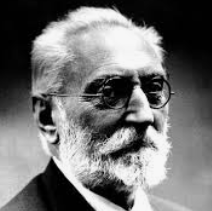
Knowledge is employed in the service of the necessity of life and primarily in the service of the instinct of personal preservation. The necessity and this instinct have created in man the organs of knowledge and given them such capacity as they possess. Man sees, hears, touches, tastes and smells that which it is necessary for him to see, hear, touch, taste and smell in order to preserve his life. The decay or loss of any of these senses increases the risks with which his life is environed, and if it increases them less in the state of society in which we are actually living, the reason is that some see, hear, touch, taste and smell for others. A blind man, by himself and without a guide, could not live long. Society is an additional sense; it is the true common sense.
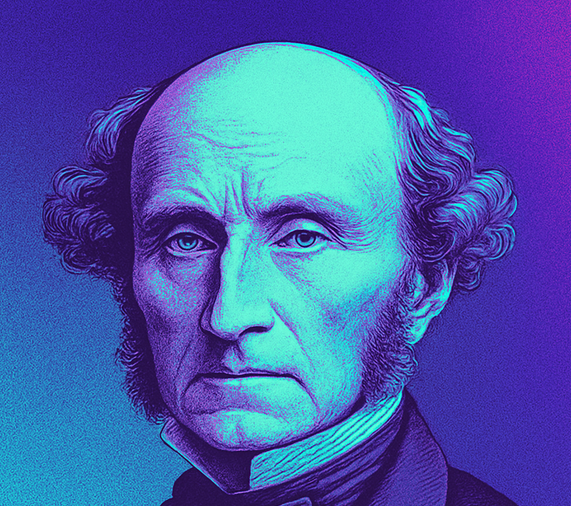
All those to whom I looked up, were of opinion that the pleasure of sympathy with human beings, and the feelings which made the good of others, and especially of mankind on a large scale, the object of existence, were the greatest and surest sources of happiness. Of the truth of this I was convinced, but to know that a feeling would make me happy if I had it, did not give me the feeling.
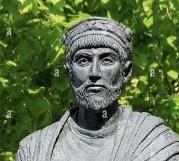
I make known unto thee how He hath provided for the bodily health of us all, by having produced Æsculapius, the Preserver of the universe; and how he hath communicated to us virtue of every kind, by sending down Aphrodite in company with Athene for our guardian; having made it all but a law that no one should use copulation except for the end of generating his like. For this reason truly, according to his revolutions and seasons, do the various vegetable and animal races feel themselves stirred towards the generation of their kind. What need is there to magnify the glory of his rays, and of his light? A night without moon, and without stars, how terrible is it! Let anyone reflect on this, in order that he may estimate how great a blessing is the light we derive from the Sun!
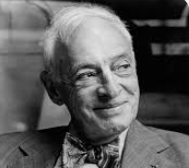
There is only one way to defeat the enemy, and that is to write as well as one can. The best argument is an undeniably good book.
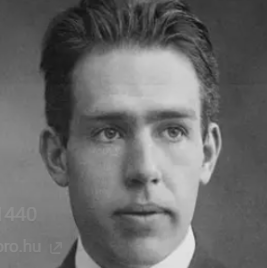
I go into the Upanishads to ask questions.
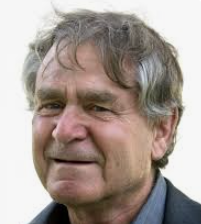
Pascal is called the founder of modern probability theory. He earns this title not only for the familiar correspondence with Fermat on games of chance, but also for his conception of decision theory, and because he was an instrument in the demolition of probabilism, a doctrine which would have precluded rational probability theory.
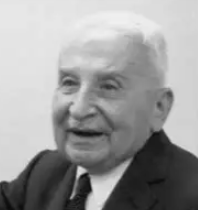
...racial hatred is not a natural phenomenon innate in man. It is the product of ideologies. But even if such a thing as a natural and inborn hatred between various races existed, it would not render social cooperation futile and would not invalidate Ricardo's theory of association. Social cooperation has nothing to do with personal love or with a general commandment to love one another. People do not cooperate under the division of labor because they love or should love one another. They cooperate because this best serves their own interests. Neither love nor charity nor any other sympathetic sentiments but rightly understood selfishness is what originally impelled man to adjust himself to the requirements of society, to respect the rights and freedoms of his fellow men and to substitute peaceful collaboration for enmity and conflict.
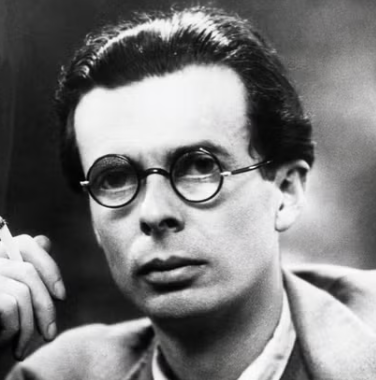
...this Jewish doctrine of the primacy of economic values has found the widest acceptance and been most whole-heartedly acted upon. From America it has begun to infect the rest of the world. We may be pardoned for wishing that the Jews had remained not forty, but four thousand years in their repulsive wilderness.

Man cannot do without beauty, and this is what our era pretends to want to disregard. It steels itself to attain the absolute and authority; it wants to transfigure the world before having exhausted it, to set it to rights before having understood it. Whatever it may say, our era is deserting this world.

A great myth is relevant as long as the predicament of humanity lasts; as long as humanity lasts. It will always work, on those who can receive it, the same catharsis.
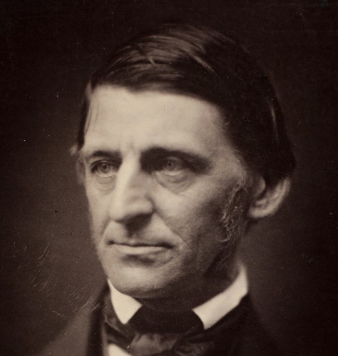
Daughters of Time, the hypocritic Days, Muffled and dumb like barefoot dervishes, And marching single in an endless file, Bring diadems and fagots in their hands.
No furniture so charming as books.
To his dog, every man is Napoleon; hence the constant popularity of dogs.
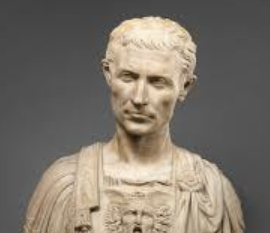
I will begin to speak when I am not going to say what were better left unsaid.
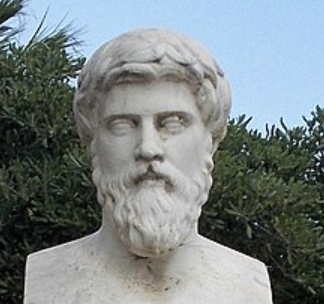
There were two brothers called Both and Either; perceiving Either was a good, understanding, busy fellow, and Both a silly fellow and good for little, Philip said, "Either is both, and Both is neither."
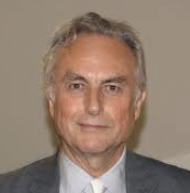
The remedy for loneliness is human fellowship, the warmth of real, live, flesh-and-blood companions and loved-ones; not prating in a vacuum to an imaginary friend for whose existence there is no vestige of serious evidence. Even an AI robot is better than that. At least ChatGPT exists, really talks back at you, will actually hold a friendly conversation. But talk to the imaginary friend which is God (Allah, Virgin Mary, Lord Krishna, Thor, Zeus, Mithras, name yours) and the only reply you'll get is conjured within your own imagination. You'll be talking to yourself, which is really rather sad, and hardly an antidote to loneliness. No Satisfying Alternative to Religion? Try Reality.
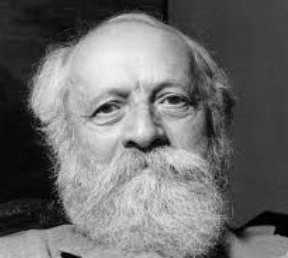
When we rise out of [the night] into the new life and there begin to receive the signs, what can we know of that which - of him who gives them to us? Only what we experience from time to time from the signs themselves. If we name the speaker of this speech God, then it is always the God of a moment, a moment God.

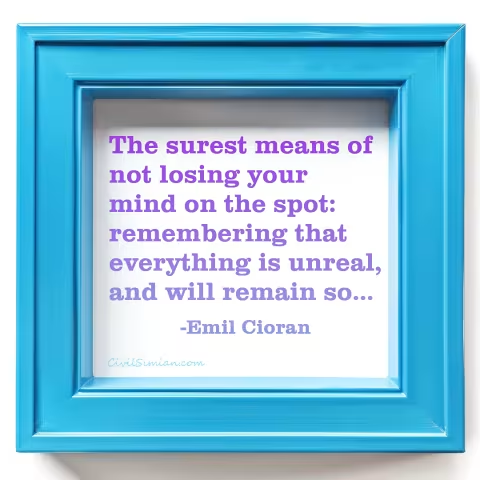
What anxiety when one is not sure of one's doubts or wonders: are these actually doubts?
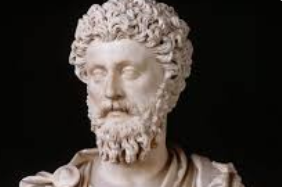
Because most of what we say and do is not essential. If you can eliminate it, you'll have more time, and more tranquillity. Ask yourself at every moment, "Is this necessary?" But we need to eliminate unnecessary assumptions as well. To eliminate the unnecessary actions that follow.
Outside of that single fatality of death, everything, joy or happiness, is liberty.
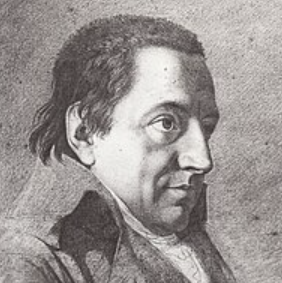
When one rational being affects another rational being as mere matter, then the lower sense of that being is also affected, it is true, and is so affected necessarily and altogether independently of the freedom of that being, (as the lower sense is indeed always affected;) but it is not to be assumed that this affection was in the intention of the person who produced it. His intention was merely to attain his purpose, to express his conception in matter, and he never took into consideration whether that matter would feel it or not. Hence, the reciprocal influence of rational beings upon each other, as such, always occurs by means of the higher sense; for only the higher sense is one which cannot be affected without having been presupposed. Our criterion of this reciprocal influence remains, therefore, correct.
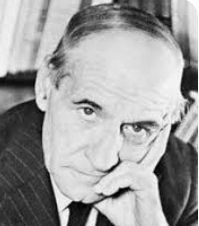
The history of the Roman Empire is also the history of the uprising of the Empire of the Masses, who absorb and annul the directing minorities and put themselves in their place. Then, also, is produced the phenomenon of agglomeration, of "the full." For that reason, as Spengler has very well observed, it was necessary, just as in our day, to construct enormous buildings. The epoch of the masses is the epoch of the colossal.
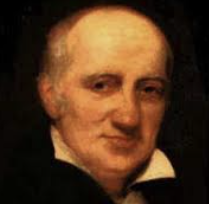
Till mankind be satisfied with the naked statement of what they really perceive, till they confess virtue to be then most illustrious, when she more disdains the aid of ornament, they will never arrive at that manly justice of sentiment at which they seem destined one day to arrive. By his scheme of naked virtue will be every day a gainer; every succeeding observer willl more fully do her justice, while vice, deprived of that varnish with which she delighted to glow her actions of that gaudy exhibition which may be made alike by every pretender will speedily sink into unheeded contempt.
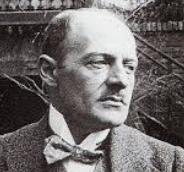
The precepts "Love your enemies, do good to them which hate you, bless them that curse you" ... are born from the Gospel's profound spirit of individualism, which refuses to let one's own actions and conduct depend in any way on somebody else's acts. The Christian refuses to let his acts be mere reactions-such conduct would lower him to the level of his enemy. The act is to grow organically from the person, "as the fruit from the tree." ... What the Gospel demands is not a reaction which is the reverse of the natural reaction, as if it said: "Because he strikes you on the cheek, tend the other"-but a rejection of all reactive activity, of any participation in common and average ways of acting and standards of judgment.

The process begins with the individual woman's acceptance that American women, without exception, are socialized to be racist, classist and sexist, in varying degrees, and that labeling ourselves feminists does not change the fact that we must consciously work to rid ourselves of the legacy of negative socialization.
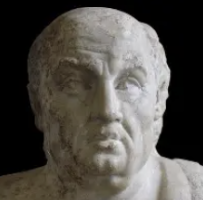
It is a rough road that leads to the heights of greatness.
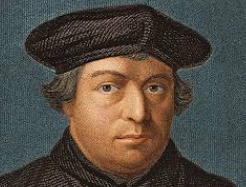
She is rightly called not only the mother of the man, but also the Mother of God ... It is certain that Mary is the Mother of the real and true God.
Death,-a stopping of impressions through the senses, and of the pulling of the cords of motion, and of the ways of thought, and of service to the flesh.
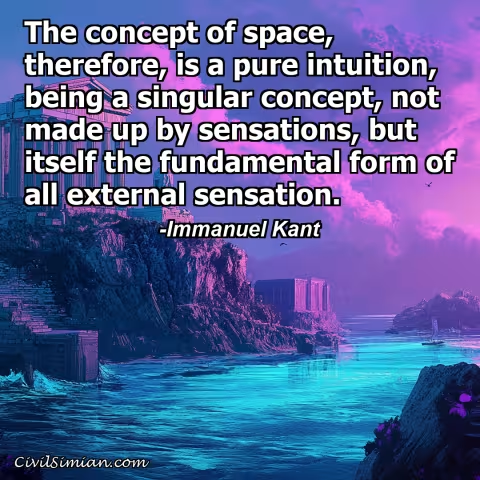
Time, subjectively, is the conscious sequence of perceptions.

The Austrians are a highly civilised race, half-surrounded by Slavs in a relatively backward state of culture. ... Servia, a country so barbaric that a man can secure the throne by instigating the assassination of his predecessor, is engaged constantly in fermenting the racial discontent of men of the same race who are Austrian subjects.
McDonald: Now a lot of people find great comfort from religion. Not everybody is as you are - well-favored, handsome, wealthy, with a good job, happy family life. I mean, your life is good - not everybody's life is good, and religion brings them comfort.Dawkins: There are all sorts of things that would be comforting. I expect an injection of morphine would be comforting - it might be more comforting, for all I know. But to say that something is comforting is not to say that it's true.
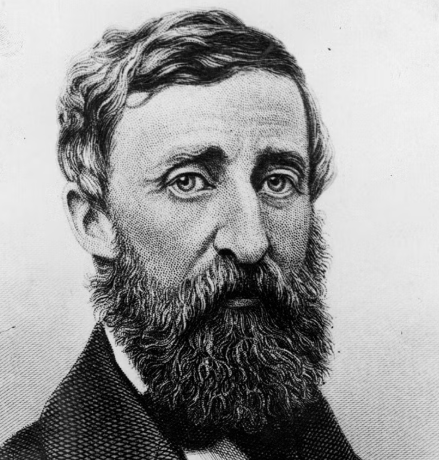
If you are describing any occurrence... make two or more distinct reports at different times... We discriminate at first only a few features, and we need to reconsider our experience from many points of view and in various moods in order to perceive the whole.
Every philosophical, ethical, and political idea-its lifeline connecting it with its historical origins having been severed-has a tendency to become the nucleus of a new mythology, and this is one of the reasons why the advance of enlightenment tends at certain points to revert to superstition and paranoia. The majority principle ... has become the sovereign force to which thought must cater. It is a new god, not in the sense in which the heralds of the great revolutions conceived it, namely, as a power of resistance to existing injustice, but as a power of resistance to anything that does not conform.
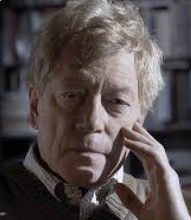
The idea that the citizen owes loyalty to a country, a territory, a jurisdiction and all those who reside within it - the root assumption of democratic politics, and one that depends upon the nation as its moral foundation - that idea has no place in the minds and hearts of many who now call themselves citizens of European states.
The plebeian must expect to find himself neglected and despised in proportion as he is remiss in cultivation the objects of esteem; the lord will always be surrounded with sycophants and slaves. The lord therefore has no motive to industry and exertion; no stimulus to rouse him from the lethargic 'oblivious pool', out of which every human intellect originally arose.
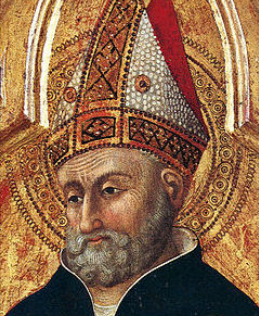
If there is something more excellent than the truth, then that is God; if not, then truth itself is God.
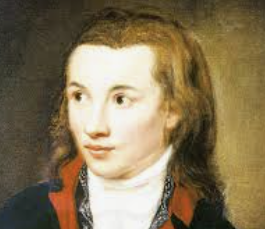
Everywhere we seek the Absolute, and always we find only things.
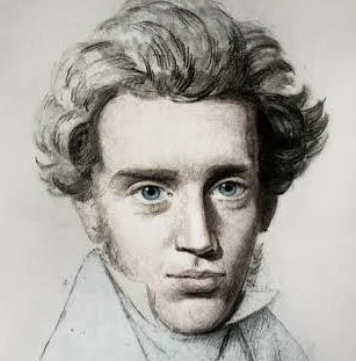
Once in his early youth a man allowed himself to be so far carried away in an overwrought irresponsible state as to visit a prostitute. It is all forgotten. Now he wants to get married. Then anxiety stirs. He is tortured day and night with the thought that he might possibly be a father, that somewhere in the world there could be a created being who owed his life to him. He cannot share his secret with anyone; he does not even have any reliable knowledge of the fact. –For this reason the incident must have involved a prostitute and taken place in the wantonness of youth; had it been a little infatuated or an actual seduction, it would be hard to imagine that he could know nothing about it, but now this this very ignorance is the basis of his agitated torment. On the other hand, precisely because of the rashness of the whole affair, his misgivings do not really start until he actually falls in love.
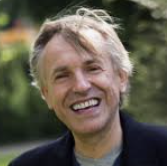
I predict we will abolish suffering throughout the living world. Our descendants will be animated by gradients of genetically pre-programmed well-being that are orders of magnitude richer than today's peak experiences.
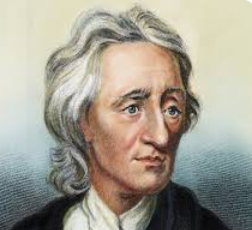
Mark what 'tis his mind aims at in the question, and not what words he expresses it in: and when you have informed and satisfied him in that, you shall see how his thoughts will enlarge themselves, and how by fit answers he may be led on farther than perhaps you could have imagine. For knowledge is grateful to the understanding, as light to the eyes.
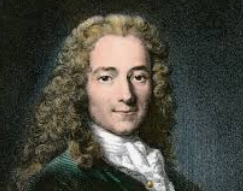
Faith consists in believing what reason cannot.
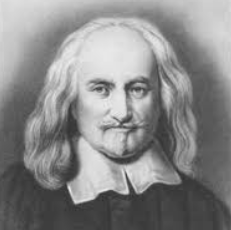
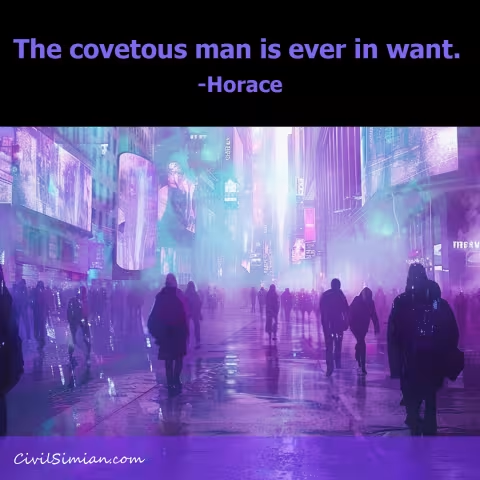
By MANNERS, I mean not here Decency of behaviour; as how one man should salute another, or how a man should wash his mouth, or pick his teeth before company, and such other points of the Small Morals; But those qualities of mankind that concern their living together in Peace and Unity. To which end we are to consider that the Felicity of this life consisteth not in the repose of a mind satisfied. For there is no such Finis ultimus (utmost aim) nor Summum Bonum (greatest good) as is spoken of in the books of the old Moral Philosophers. Nor can a man any more live whose desires are at an end than he whose Senses and Imaginations are at a stand.
CivilSimian.com created by AxiomaticPanic, CivilSimian, Kalokagathia