

8 months 3 weeks ago
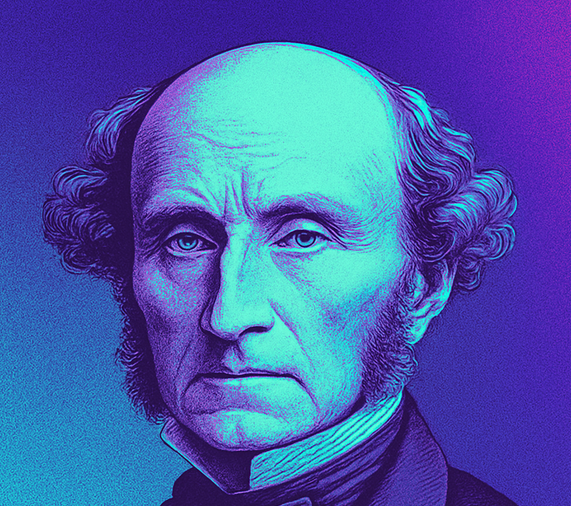
Persons of genius, it is true, are, and are always likely to be, a small minority; but in order to have them, it is necessary to preserve the soil in which they grow. Genius can only breathe freely in an atmosphere of freedom.
▼
Source
source
Ch. III: Of Individuality, As One of the Elements of Well-Being
9 months 3 weeks ago
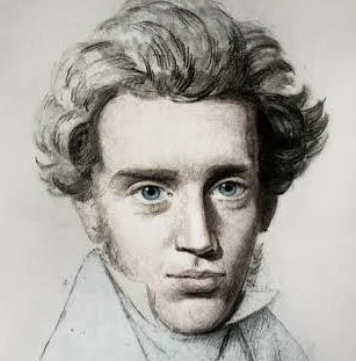
It is true that in the confessional it is the pastor who preaches; but the true preacher is still the secret-sharer in your inner being. The pastor can preach only in vague generalities; the preacher in your inner being is just the opposite; he speaks simply and solely about you, to you, and within you.
9 months 4 days ago
There is no more lovely, friendly and charming relationship, communion or company than a good marriage.
▼
Source
source
292
7 months 6 days ago
When an acquaintance goes by I often step back from my window, not so much to spare him the effort of acknowledging me as to spare myself the embarrassment of seeing that he has not done so.
▼
Source
source
F 155
8 months 3 weeks ago
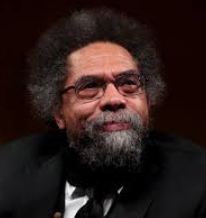
I remind young people everywhere I go, one of the worst things the older generation did was to tell them for twenty-five years "Be successful, be successful, be successful" as opposed to "Be great, be great, be great". There's a qualitative difference.
▼
Source
source
Speech in San Francisco: Democracy Matters
8 months 3 weeks ago
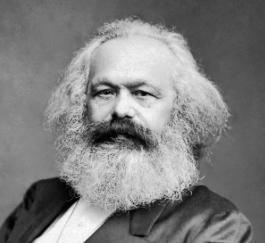
No production without a need. But consumption reproduces the need.
▼
Source
source
Introduction, p. 12.
6 months 1 week ago
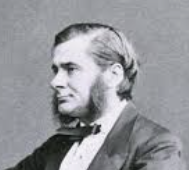
It cannot be doubted, I think, that Mr. Darwin has satisfactorily proved that what he terms selection, or selective modification, must occur, and does occur, in nature; and he has also proved to superfluity that such selection is competent to produce forms as distinct, structurally, as some genera even are. If the animated world presented us with none but structural differences, I should have no hesitation in saying that Mr. Darwin has demonstrated the existence of a true physical cause, amply competent to account for the origin of living species, and of man among the rest.
▼
Source
source
Ch.2, p. 126
7 months 2 weeks ago
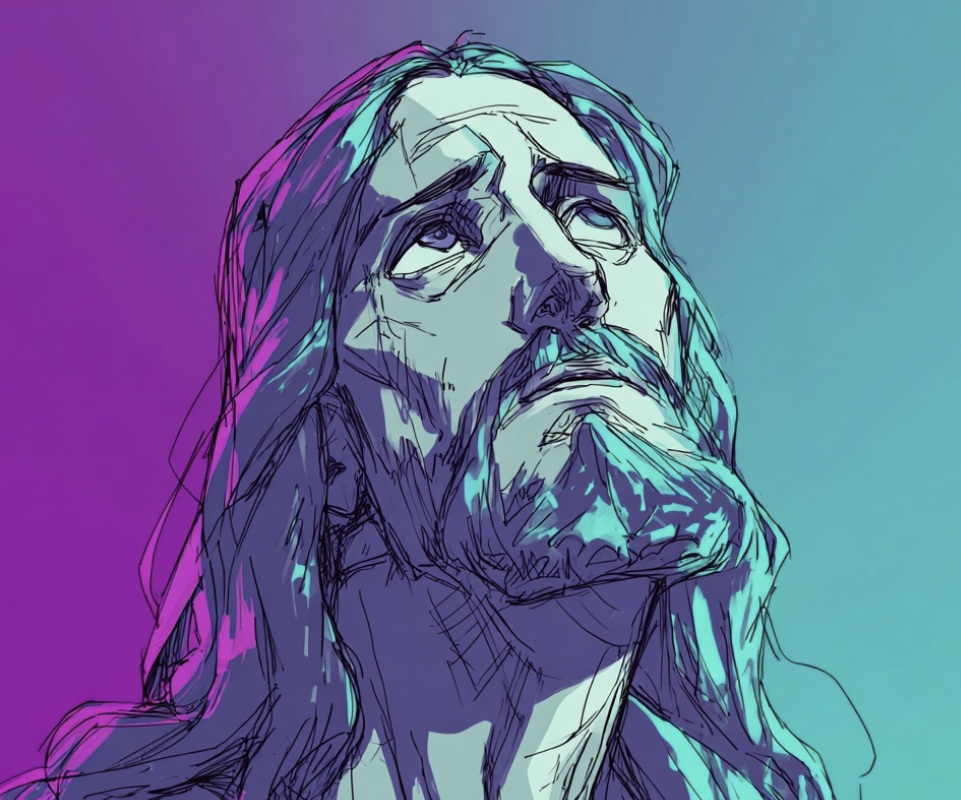
Verily I say unto you, I have not found so great faith, no, not in Israel. And I say unto you, That many shall come from the east and west, and shall sit down with Abraham, and Isaac, and Jacob, in the kingdom of heaven. But the children of the kingdom shall be cast out into outer darkness: there shall be weeping and gnashing of teeth.
▼
Source
source
8:10-12 (KJV) Said about the officer.


8 months 3 weeks ago
Explore, and explore, and explore. Be neither chided nor flattered out of your position of perpetual inquiry. Neither dogmatise yourself, nor accept another's dogmatism. Why should you renounce your right to traverse the star-lit deserts of truth, for the premature comforts of an acre, house, and barn? Truth also has its roof, and bed, and board. Make yourself necessary to the world, and mankind will give you bread, and if not store of it, yet such as shall not take away your property in all men's possessions, in all men's affections, in art, in nature, and in hope.
8 months 3 weeks ago
It is high time that Communists should openly, in the face of the whole world, publish their views, their aims, their tendencies, and meet this nursery tale of the spectre of Communism with a Manifesto of the party itself.
▼
Source
source
Preamble, paragraph 3.
7 months 2 weeks ago
The concept of guilt is found most powerfully developed even in the most primitive communal forms which we know: ... the man is guilty who violates one of the original laws which dominate the society and which are mostly derived from a divine founder; the boy who is accepted into the tribal community and learns its laws, which bind him thenceforth, learns to promise; this promise is often given under the sign of death, which is symbolically carried out on the boy, with a symbolical rebirth.
▼
Source
source
p. 178
7 months 3 weeks ago
To enrich God, man must become poor; that God may be all, man must be nothing.

9 months 1 week ago
Thus he had a double thought: the one by which he acted as king, the other by which he recognized his true state, and that it was accident alone that had placed him in his present condition.
8 months 3 weeks ago
So we do sometimes think because it has been found to pay.
▼
Source
source
§ 470
8 months 4 weeks ago
The problem of establishing a perfect civic constitution is dependent upon the problem of a lawful external relation among states and cannot be solved without a solution of the latter problem.
▼
Source
source
Seventh Thesis

4 months 3 weeks ago
There is nothing but violence in the universe; but we are spoiled by a modern philosophy that tells us all is good, whereas evil has tainted everything, and in a very real sense, all is evil, since nothing is in its place.
▼
Source
source
Chapter III, p. 31

8 months 3 weeks ago
Change is one thing, progress is another.
8 months 3 weeks ago
Science can only be comprehended epistemologically, which means as one category of possible knowledge, as long as knowledge is not equated either effusively with the absolute knowledge of a great philosophy or blindly with scientistic self-understanding of the actual business of research.
▼
Source
source
p. 4
8 months 3 weeks ago
You get tragedy where the tree, instead of bending, breaks.

8 months 4 weeks ago
The thirst after happiness is never extinguished in the heart of man.
▼
Source
source
IX
8 months 2 weeks ago
Philosophy makes progress not by becoming more rigorous but by becoming more imaginative.
▼
Source
source
Introduction to Truth and Progress: Philosophical Papers, Volume 3 (1998).

7 months 3 weeks ago
Independence I have long considered as the grand blessing of life, the basis of every virtue; and independence I will ever secure by contracting my wants, though I were to live on a barren heath.
▼
Source
source
Dedication
5 months 2 weeks ago
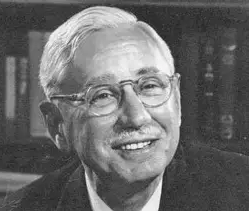
Let us ask the Gods not for possessions, but for things to do; happiness is in making things rather than consuming them.
▼
Source
source
Ch. 2 : On Youth

7 months 2 weeks ago
Hegel's philosophy was an integral part of the culture which authoritarianism had to overcome. It is therefore no accident that the National Socialist assault on Hegel begins with the repudiation of his political theory.
▼
Source
source
P. 411
9 months 2 weeks ago
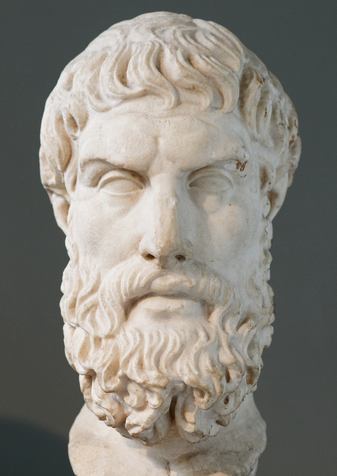
Of our desires some are natural and necessary, others are natural but not necessary; and others are neither natural nor necessary, but are due to groundless opinion.
4 months 3 weeks ago
What if someone despises me? Let me see to it. But I will see to it that I won't be found doing or saying anything contemptible. What if someone hates me? Let me see to that. But I will see to it that I'm kind and good-natured to all, and prepared to show even the hater where they went wrong. Not in a critical way, or to show off my patience, but genuinely and usefully.
▼
Source
source
XI. 13:179
5 months 4 days ago
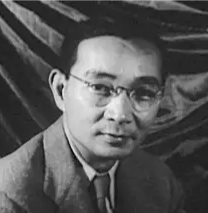
The wise man reads both books and life itself.
▼
Source
source
p. 388
8 months 3 weeks ago
It is easy to see that the existing generation are conspiring with a beneficence, which, in its working for coming generations, sacrifices the passing one, which infatuates the most selfish men to act against their private interest for the public welfare. We build railroads, we know not for what or for whom; but one thing is certain, that we who build will receive the very smallest share of benefit. Benefit will accrue; they are essential to the country, but that will be felt not until we are no longer countrymen. We do the like in all matters: - 'Man's heart the Almighty to the Future setBy secret and inviolable springs.'

7 months 2 weeks ago
Perhaps when distant people on other planets pick up some wave-length of ours all they hear is a continuous scream.
▼
Source
source
The Message to the Planet (1989) p. 509.

8 months 3 weeks ago
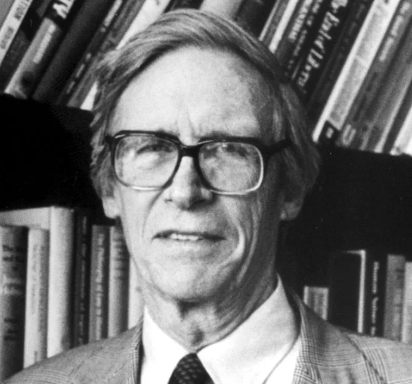
In justice as fairness society is interpreted as a cooperative venture for mutual advantage.
▼
Source
source
Chapter II, Section 14, pg. 84
8 months 3 weeks ago
Mystery is delightful, but unscientific, since it depends upon ignorance.
▼
Source
source
The Analysis of Mind (1921), Lecture I: Recent Criticisms of "Consciousness"

7 months 1 week ago
Depression is a narcissistic malady.
7 months 3 weeks ago
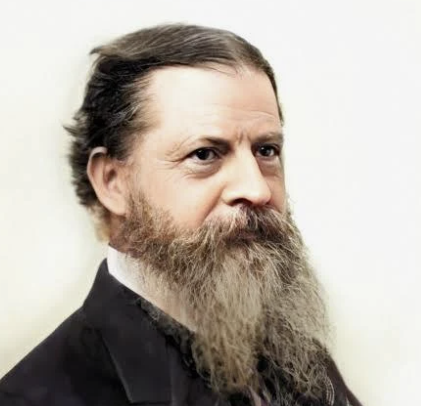
To suppose universal laws of nature capable of being apprehended by the mind and yet having no reason for their special forms, but standing inexplicable and irrational, is hardly a justifiable position. Uniformities are precisely the sort of facts that need to be accounted for. That a pitched coin should sometimes turn up heads and sometimes tails calls for no particular explanation; but if it shows heads every time, we wish to know how this result has been brought about. Law is par excellence the thing that wants a reason.

7 months 1 week ago
the impressionable mind of the child realizes early enough that the lives of their parents are in contradiction to the ideas they represent; that, like the good Christian who fervently prays on Sunday, yet continues to break the Lord's commands the rest of the week, the radical parent arraigns God, priesthood, church, government, domestic authority, yet continues to adjust himself to the condition he abhors.
9 months 1 week ago
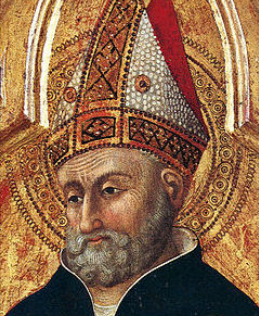
Christ is not valued at all unless He be valued above all.
▼
Source
source
p. 395
6 months 2 weeks ago
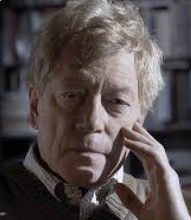
Conservatism is itself a modernism, and in this lies the secret of its success.
▼
Source
source
"Eliot and Conservatism" (p. 194)
7 months 3 weeks ago
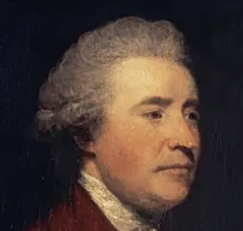
For my part for one, though I make no doubt of preferring the antient Course, or almost any other to this vile chimera, and sick mans dream of Government yet I could not actively, or with a good heart, and clear conscience, go to the establishment of a monarchical despotism in the place of this system of Anarchy.
▼
Source
source
Letter to Richard Burke (26 September 1791), quoted in Alfred Cobban and Robert A. Smith (eds.), The Correspondence of Edmund Burke, Volume VI: July 1789-December 1791 (1967), p. 414
6 months 5 days ago
After Hegel, philosophy confronts the possibility of its own death, and in some sense has to do so if it is to remain the most fundamental kind of thinking.
▼
Source
source
Chapter 4, Philosophy As Writing: The Case Of Hegel, p. 88
6 months 1 week ago
If the hypothesis of evolution is true, living matter must have arisen from non-living matter; for by the hypothesis the condition of the globe was at one time such, that living matter could not have existed in it, life being entirely incompatible with the gaseous state.
▼
Source
source
In the Encyclopaedia Britannica, Ninth edition, (1876) Vol. III, "Biology", p. 689. Also quoted in Joseph Cook (1878), Biology, with Preludes on Current Events, Houghton, Osgood, p. 39
4 months 3 weeks ago
It is necessary that every man be surpassingly temperate. That person would most of all be a man of this sort if he were superior to money, which is what corrupts all men, and if, without caring about his life, he bestowed his pains on things that are just and pursued virtue.
▼
Source
source
p. 149
7 months 2 weeks ago
Ideas, aspirations, and objectives that, by their content, transcend the established universe of discourse and action are either repelled or reduced to terms of this universe.
▼
Source
source
p. 12
5 months 1 week ago
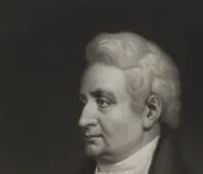
It is the safest to be moderately base - to be flexible in shame, and to be always ready for what is generous, good, and just, when anything is to be gained by virtue.
▼
Source
source
"Catholics", published in The Edinburgh Review (1827). See The Works of the Rev. Sydney Smith. 2. 1859. p. 134.
9 months 3 weeks ago
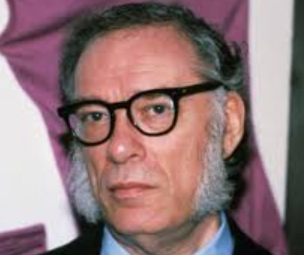
Trantor could win even such a war, but perhaps not without paying a price that would make victory only a pleasanter name for defeat.

5 months 5 days ago
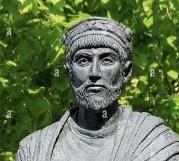
Nature loves to hide her secrets, and she does not suffer the hidden truth about the essential nature of the gods to be flung in naked words to the ears of the profane...
▼
Source
source
Oration to the Cynic Heracleios
7 months 3 weeks ago
A modest man is steady, an humble man timid, and a vain one presumptuous.
▼
Source
source
Ch. 7

5 months 2 weeks ago
"Detect quacks"? Yes do, for Heaven's sake; but know withal the men that are to be trusted! Till we know that, what is all our knowledge; how shall we even so much as "detect"? For the vulpine sharpness, which considers itself to be knowledge, and "detects" in that fashion, is far mistaken. Dupes indeed are many: but, of all dupes, there is none so fatally situated as he who lives in undue terror of being duped.
CivilSimian.com created by AxiomaticPanic, CivilSimian, Kalokagathia