


2 months 3 weeks ago
If there were only one religion in England there would be danger of despotism, if there were two they would cut each other's throats, but there are thirty, and they live in peace and happiness.
▼
Source
source
Letters on England, letter 6, "On the Presbyterians" Trans. Leonard Tancock (Harmondsworth, England: Penguin Books, 1980): p. 41, published first in English in 1733.

2 months 3 weeks ago
Whatever bitterness and hate may be found in the movements which we are to examine, it is not bitterness or hate, but love, that is their mainspring. It is difficult not to hate those who torture the objects of our love. Though difficult, it is not impossible; but it requires a breadth of outlook and a comprehensiveness of understanding which are not easy to preserve amid a desperate contest. If ultimate wisdom has not always been preserved by Socialists and Anarchists, they have not differed in this from their opponents; and in the source of their inspiration they have shown themselves superior to those who acquiesce ignorantly or supinely in the injustices and oppressions by which the existing system is preserved.
▼
Source
source
Introduction, p. 10.
2 months 3 weeks ago
Every true thinker for himself is so far like a monarch; he is absolute, and recognises nobody above him. His judgments, like the decrees of a monarch, spring from his own sovereign power and proceed directly from himself. He takes as little notice of authority as a monarch does of a command; nothing is valid unless he has himself authorised it. On the other hand, those of vulgar minds, who are swayed by all kinds of current opinions, authorities, and prejudices, are like the people which in silence obey the law and commands.
▼
Source
source
"Thinking for Oneself," H. Dirks, trans.

1 month 2 weeks ago
Philosophy: impersonal anxiety; refuge among anemic ideas.

2 months 4 weeks ago
Like rowers, who advance backward.
▼
Source
source
Book III, Ch. 1. Of Profit and Honesty
2 months 3 weeks ago
As if our birth had at first sundered things, and we had been thrust up through into nature like a wedge, and not till the wound heals and the scar disappears, do we begin to discover where we are, and that nature is one and continuous everywhere.
2 months 1 week ago
Philosophy makes progress not by becoming more rigorous but by becoming more imaginative.
▼
Source
source
Introduction to Truth and Progress: Philosophical Papers, Volume 3 (1998).
1 month 2 weeks ago
We should, out of decency, choose for ourselves the moment to disappear.

2 months 2 weeks ago
The aim of philosophy is to erect a wall at the point where language stops anyway.
▼
Source
source
Ch. 9 : Philosophy, p. 187

2 months 3 weeks ago
What would become of history, had we not a dependence on the veracity of the historian, according to the experience, what we have had of mankind?
▼
Source
source
§ 8.18
1 month 1 day ago
Man is a masterpiece of creation if for no other reason than that, all the weight of evidence for determinism notwithstanding, he believes he has free will.
▼
Source
source
J 249
2 months 3 weeks ago
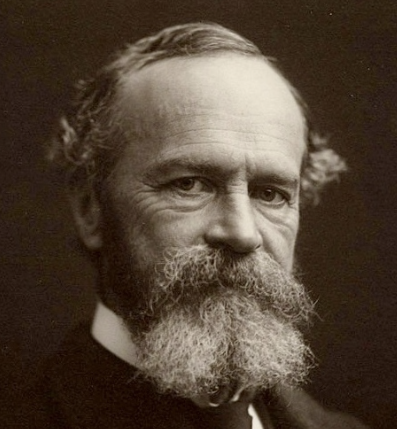
To plead the organic causation of a religious state of mind, then, in refutation of its claim to possess superior spiritual value, is quite illogical and arbitrary, unless one have already worked out in advance some psycho-physical theory connecting spiritual values in general with determinate sorts of physiological change. Otherwise none of our thoughts and feelings, not even our scientific doctrines, not even our dis-beliefs, could retain any value as revelations of the truth, for every one of them without exception flows from the state of their possessor's body at the time.
▼
Source
source
Lecture I, "Religion and Neurology"
1 month 2 weeks ago
The historical approach, with its aim of detecting how things began and arriving from these origins at a knowledge of their nature, is certainly perfectly legitimate; but it also has its limitations. If everything were in continual flux, and nothing maintained itself fixed for all time, there would no longer be any possibility of getting to know about the world, and everything would be plunged into confusion.
▼
Source
source
Translation J. L. Austin (Oxford, 1950) as quoted by Stephen Toulmin, Human Understanding: The Collective Use and Evolution of Concepts (1972) Vol. 1, p. 55.
1 month 1 week ago
In so far as words are not used obviously to calculate technically relevant probabilities or for other practical purposes, ... they are in danger of being suspect as sales talk of some kind.
▼
Source
source
p. 22.
2 weeks 3 days ago
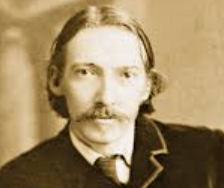
Vanity dies hard; in some obstinate cases it outlives the man.
▼
Source
source
Prince Otto, reported in Bartlett's Familiar Quotations, 10th ed. (1919).
1 month 2 weeks ago
In theory, it matters little to me whether I live as whether I die; in practice, I am lacerated by every anxiety which opens an abyss between life and death.

1 month 3 weeks ago
There's a bit of testicle at the bottom of our most sublime feelings and our purest tenderness.
▼
Source
source
Letter to Étienne Noël Damilaville
2 weeks 3 days ago
Like computer viruses, successful mind viruses will tend to be hard for their victims to detect. If you are the victim of one, the chances are that you won't know it, and may even vigorously deny it. Accepting that a virus might be difficult to detect in your own mind, what tell-tale signs might you look out for? I shall answer by imaging how a medical textbook might describe the typical symptoms of a sufferer (arbitrarily assumed to be male).

1 month 2 weeks ago
Nothing proves that we are more than nothing.

2 months 2 weeks ago
In an ever-changing, incomprehensible world the masses had reached the point where they would, at the same time, believe everything and nothing, think that everything was possible and that nothing was true. [...] under such conditions, one could make people believe the most fantastic statements one day, and trust that if the next day they were given irrefutable proof of their falsehood, they would take refuge in cynicism; instead of deserting the leaders who had lied to them, they would protest that they had known all along that the statement was a lie and would admire the leaders for their superior tactical cleverness.
2 months 4 weeks ago
Tis the sharpness of our mind that gives the edge to our pains and pleasures.
▼
Source
source
Book I, Ch. 14
2 months 2 weeks ago
Man's urge for change and his need for stability have always balanced and checked each other, and our current vocabulary, which distinguishes between two factions, the progressives and the conservatives, indicates a state of affairs in which this balance has been thrown out of order. No civilization - the man-made artifact to house successive generations - would ever have been possible without a framework of stability, to provide the wherein for the flux of change. Foremost among the stabilizing factors, more enduring than customs, manners and traditions, are the legal systems that regulate our life in the world and our daily affairs with each other.
▼
Source
source
"Civil Disobedience"
2 weeks 5 days ago
Technologies themselves, regardless of content, produce a hemispheric bias in the users.
▼
Source
source
p. 71
1 month 2 weeks ago
The slave is sold once and for all; the proletarian must sell himself daily and hourly. The individual slave, property of one master, is assured an existence, however miserable it may be, because of the master's interest. The individual proletarian, property as it were of the entire bourgeois class which buys his labor only when someone has need of it, has no secure existence. This existence is assured only to the class as a whole.
2 months 2 weeks ago
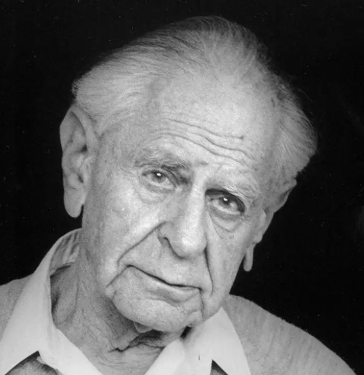
As for Adler, I was much impressed by a personal experience. Once, in 1919, I reported to him a case which to me did not seem particularly Adlerian, but which he found no difficulty in analyzing in terms of his theory of inferiority feelings, although he had not even seen the child. Slightly shocked, I asked him how he could be so sure. "Because of my thousandfold experience," he replied; whereupon I could not help saying: "And with this new case, I suppose, your experience has become thousand-and-one-fold."

2 months 3 weeks ago
Let me give two cautions. 1) The one is, that you keep them to the practice of what you would have grow into a habit with them, by kind words, and gentle admonitions, rather as minding them of what they forget, than by harsh rebukes and chiding, as if they were wilfully guilty. 2) Another thing you are to take care of, is, not to endeavour to settle too many habits at once, lest by variety you confound them, and so perfect none. When constant custom has made any one thing easy and natural to 'em, and they practice it without reflection, you may then go on to another.
▼
Source
source
Sec. 66

3 months 1 week ago
When I, who conduct this inquiry, love something, then three things are found: I, what I love, and the love itself. There are, therefore three things: the lover, the beloved and the love.
▼
Source
source
(Cambridge: 2002), Book 9, Chapter 2, Section 2, p. 26
2 months 4 weeks ago
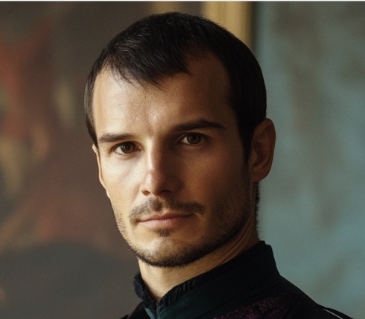
Fear of evil is greater than the evil itself.
▼
Source
source
Act III, scene xi

1 week 5 days ago
Any ethics that needs religion is bad ethics, and any religion that tries to do so is bad religion. Of course, there are plenty of both around.
1 month 2 weeks ago
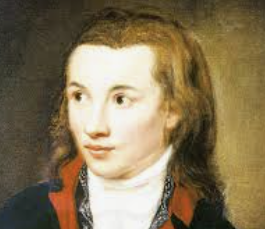
We are on a mission: we are called to the cultivation of the earth.
▼
Source
source
Fragment No. 32
2 months 3 weeks ago
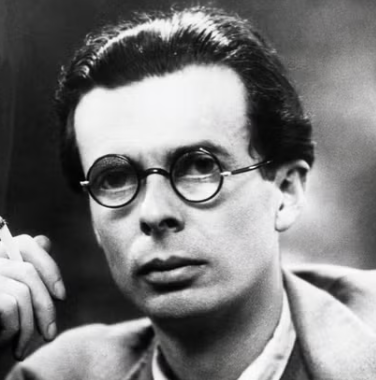
Be gentle with them, Timothy. They want to be free, but they don't know how. Teach them. Reassure them.
▼
Source
source
Reported to be Huxley's last words to Timothy Leary, which Huxley whispered from his deathbed. Quoted in Leary, Timothy (1990) . "Life on a Grounded Space Colony".
2 weeks ago
The principles of Western liberalism seem no longer to lend themselves to effective action. Deprived of the expressive power, we are awed by it, have a hunger for it, and are afraid of it. Thus we praise the gray dignity of our soft-spoken leaders, but in our hearts we are suckers for passionate outbursts, even when those passionate outbursts are hypocritical and falsely motivated.
▼
Source
source
"Literary Notes on Khrushchev" (1961), p. 36

1 month 3 weeks ago
I have come across men of letters who have written history without taking part in public affairs, and politicians who have concerned themselves with producing events without thinking about them. I have observed that the first are always inclined to find general causes whereas the second, living in the midst of disconnected daily facts, are prone to imagine that everything is attributable to particular incidents, and that the wires they pull are the same as those that move the world. It is to be presumed that both are equally deceived.
▼
Source
source
Recollections of Alexis de Tocqueville, p. 80

1 month 2 weeks ago
Are ye also yet without understanding? Do not ye yet understand, that whatsoever entereth in at the mouth goeth into the belly, and is cast out into the draught? But those things which proceed out of the mouth come forth from the heart; and they defile the man. For out of the heart proceed evil thoughts, murders, adulteries, fornications, thefts, false witness, blasphemies: These are the things which defile a man: but to eat with unwashen hands defileth not a man.
▼
Source
source
15:16-20 (KJV)

1 month 4 days ago
The basic paradox about sex is that it always seems to be offering more than it can deliver. A glimpse of a girl undressing through a lighted bedroom window induces a vision of ecstatic delight, but in the actual process of persuading the girl into bed, the vision somehow evaporates.
▼
Source
source
p. 16

2 months 3 weeks ago
Respect the child. Be not too much his parent. Trespass not on his solitude.
▼
Source
source
Education
Just now
A created thing is never invented and it is never true: it is always and ever itself.
▼
Source
source
Creation
2 months 3 weeks ago
Everyone has a goal which appears to be great, at least to himself, and is great when deepest conviction, the innermost voice of the heart, pronounces it great. ... This voice, however, is easily drowned out, and what we thought to be inspiration may have been created by the fleeting moment and again perhaps destroyed by it. ... We must seriously ask ourselves, therefore, whether we are really inspired about a vocation, whether an inner voice approves of it, or whether the inspiration was a deception, whether that which we took as the Deity's calling to us was self-deceit. But how else could we recognize this except by searching for the source of our inspiration?
▼
Source
source
Writings of the Young Marx on Philosophy and Society, L. Easton, trans. (1967), p. 36
1 month 2 weeks ago
Fashion is something barbarous, for it produces innovation without reason and imitation without benefit.
▼
Source
source
Ch. VII

2 months 1 week ago
Making money is not without its value, but nothing is baser than to make it by wrong-doing.

2 months 4 weeks ago
Faith, like light, should ever be simple and unbending; while love, like warmth, should beam forth on every side, and bend to every necessity of our brethren.
▼
Source
source
p. 220
2 months 3 weeks ago
Ignore death up to the last moment; then, when it can't be ignored any longer, have yourself squirted full of morphia and shuffle off in a coma. Thoroughly sensible, humane and scientific, eh?
2 months 3 weeks ago
He will better comprehend the foundations and measures of decency and justice, and have livelier, and more lasting impressions of what he ought to do, by giving his opinion on cases propos'd, and reasoning with his tutor on fit instances, than by giving a silent, negligent, sleepy audience to his tutor's lectures; and much more than by captious logical disputes, or set declamations of his own, upon any question. The one sets the thoughts upon wit and false colours, and not upon truth; the other teaches fallacy, wrangling, and opiniatry; and they are both of them things that spoil the judgment, and put a man out of the way of right and fair reasoning; and therefore carefully to be avoided by one who would improve himself, and be acceptable to others.
▼
Source
source
Sec. 98

2 months 3 weeks ago
One good schoolmaster is of more use than a hundred priests.
▼
Source
source
Worship and Church Bells, 1797
1 month 2 weeks ago
To think that so many have succeeded in dying!
2 months 3 weeks ago
The most any one can do is to confess as candidly as he can the grounds for the faith that is in him, and leave his example to work on others as it may.
▼
Source
source
The Dilemma of Determinism, 1884
2 months 3 weeks ago
Too little liberty brings stagnation, and too much brings chaos.
▼
Source
source
Authority and the Individual (1949), p. 37
2 months 3 weeks ago
A mother gave her children Aesop's fables to read, in the hope of educating and improving their minds; but they very soon brought the book back, and the eldest, wise beyond his years, delivered himself as follows: This is no book for us; it's much too childish and stupid. You can't make us believe that foxes and wolves and ravens are able to talk; we've got beyond stories of that kind! In these young hopefuls you have the enlightened Rationalists of the future.
▼
Source
source
"Similes, Parables and Fables" Parerga and Paralipomena
CivilSimian.com created by AxiomaticPanic, CivilSimian, Kalokagathia