


3 months 3 weeks ago
An authorship that began with Either/Or and advanced step by step seeks here its decisive place of rest, at the foot of the altar, where the author, personally most aware of his own imperfections and guilt, certainly does not call himself a truth-witness but only a singular kind of poet and thinker who, without authority, has had nothing new to bring but “has wanted once again to read through, if possible in a more inward way, the original text handed down from the fathers.
1 month 4 days ago
Maslow explained that, some time in the late thirties, he had been struck by the thought that modern psychology is based on the study of sick people. But since there are more healthy people around than sick people, how can this psychology give a fair idea of the workings of the human mind? It struck him that it might be worthwhile to devote some time to the study of healthy people.
▼
Source
source
p. 15
1 month 2 weeks ago
Then he said to them, "Watch out! Be on your guard against all kinds of greed; a man's life does not consist in the abundance of his possessions." And he told them this parable: "The ground of a certain rich man produced a good crop. He thought to himself, 'What shall I do? I have no place to store my crops.' "Then he said, 'This is what I'll do. I will tear down my barns and build bigger ones, and there I will store all my grain and my goods. And I'll say to myself, "You have plenty of good things laid up for many years. Take life easy; eat, drink and be merry." ' "But God said to him, 'You fool! This very night your life will be demanded from you. Then who will get what you have prepared for yourself?' "This is how it will be with anyone who stores up things for himself but is not rich toward God."
▼
Source
source
12:15-21 (NIV)
2 months 1 week ago
Coition is a slight attack of apoplexy. For man gushes forth from man, and is separated by being torn apart with a kind of blow.
▼
Source
source
Freeman (1948), p. 150
2 weeks 5 days ago
Any loss of identity prompts people to seek reassurance and rediscovery of themselves by testing, and even by violence. Today, the electric revolution, the wired planet, and the information environment involve everybody in everybody to the point of individual extinction.
▼
Source
source
Letter to Clare Westcott, November 26 1975. Letters of Marshall McLuhan, p. 514
3 weeks 2 days ago
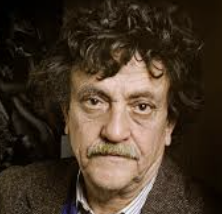
What television does is rent us friends and relatives who are quite satisfactory. The child watching TV loves these people, you know -- they're in color, and they're talking to the child. Why wouldn't a child relate to these people? And you know, if you can't sleep at 3 o'clock in the morning, you can turn on a switch, and there are your friends and relatives, and they obviously like you. And they're charming. Who wouldn't want Peter Jennings for a relative? This is quite something, to rent artificial friends and relatives right inside the house.
▼
Source
source
Interviewed by Frank Houston, "The Salon Interview: Kurt Vonnegut", Salon
2 weeks 5 days ago
The TV generation is postliterate and retribalized. It seeks by violence to scrub the old private image and to merge in a new tribal identity, like any corporate executive.
▼
Source
source
(p. 201)
3 months 2 weeks ago
"The real saint", Baudelaire pretends to think, "is he who flogs and kills people for their own good." His argument will be heard. A race of real saints is beginning to spread over the earth for the purposes of confirming these curious conclusions about rebellion.
3 weeks ago
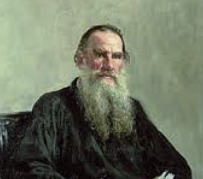
Condemn me if you choose - I do that myself, - but condemn me, and not the path which I am following, and which I point out to those who ask me where, in my opinion, the path is.
▼
Source
source
"Letter to N.N.," quoted by Havelock Ellis in "The New Spirit" (1892) p. 226
1 month 3 weeks ago
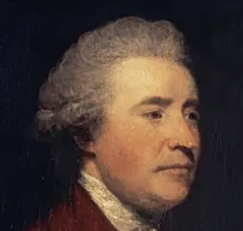
When he entered into the Whig party, he did not conceive that they pretended to any discoveries. They did not affect to be better Whigs, than those were who lived in the days in which principle was put to the test. Some of the Whigs of those days were then living. They were what the Whigs had been at the Revolution; what they had been during the reign of queen Anne; what they had been at the accession of the present royal family.
▼
Source
source
p. 409
2 months 3 weeks ago
The best life is the one in which the creative impulses play the largest part and the possessive impulses the smallest.
1 month 2 weeks ago
It is impossible for any man, when the most favourable circumstances concur, to acquire sufficient knowledge and strength of mind to discharge the duties of a king, entrusted with uncontrolled power; how then must they be violated when his very elevation is an insuperable bar to the attainment of either wisdom or virtue; when all the feelings of a man are stifled by flattery, and reflection shut out by pleasure! Surely it is madness to make the fate of thousands depend on the caprice of a weak fellow creature, whose very station sinks him NECESSARILY below the meanest of his subjects! But one power should not be thrown down to exalt another--for all power intoxicates weak man; and its abuse proves, that the more equality there is established among men, the more virtue and happiness will reign in society.
▼
Source
source
Ch. 1

2 months 2 weeks ago
At present we are on the outside of the world, the wrong side of the door. We discern the freshness and purity of the morning, but they do not make us fresh and pure. We cannot mingle with the splendours we see. But all the leaves of the New Testament are rustling with the rumour that it will not always be so. Some day, God willing, we shall get in.
3 months 2 weeks ago
At any street corner the feeling of absurdity can strike any man in the face.

3 months 1 week ago
To the divine providence it has seemed good to prepare in the world to come for the righteous good things, which the unrighteous shall not enjoy; and for the wicked evil things, by which the good shall not be tormented. But as for the good things of this life, and its ills, God has willed that these should be common to both; that we might not too eagerly covet the things which wicked men are seen equally to enjoy, nor shrink with an unseemly fear from the ills which even good men often suffer. There is, too, a very great difference in the purpose served both by those events which we call adverse and those called prosperous. For the good man is neither uplifted with the good things of time, nor broken by its ills; but the wicked man, because he is corrupted by this world's happiness, feels himself punished by its unhappiness.
▼
Source
source
I, 8
2 weeks 5 days ago
All media are extensions of some human faculty -- psychic or physical.
2 months 3 weeks ago
You come from attending the funeral of mankind to attend to a natural phenomenon. A little thought is sexton to all the world.
▼
Source
source
p. 490

2 months 3 weeks ago
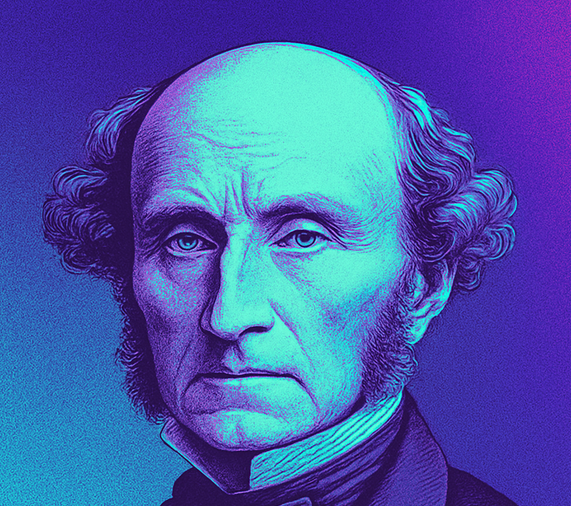
But he, with these burthens on him, planned, commenced, and completed, the History of India; and this in the course of about ten years, a shorter time than has been occupied (even by writers who had no other employment) in the production of almost any other historical work of equal bulk, and of anything approaching to the same amount of reading and research. And to this is to be added, that during the whole period, a considerable part of almost every day was employed in the instruction of his children: in the case of one of whom, myself, he exerted an amount of labour, care, and perseverance rarely, if ever, employed for a similar purpose, in endeavouring to give, according to his own conception, the highest order of intellectual education.
▼
Source
source
(p. 4)
1 month 1 week ago
Hegel made famous his aphorism that all the rational is real and all the real rational; but there are many of us who, unconvinced by Hegel, continue to believe that the real, the really real, is irrational, that reason builds upon irrationalities. Hegel, a great framer of definitions, attempted with definitions to reconstruct the universe, like that artillery sergeant who said that cannon were made by taking a hole and enclosing it with steel.
2 weeks 5 days ago
The poor man is ruined as soon as he begins to ape the rich.
▼
Source
source
Maxim 941
2 weeks 3 days ago
An appeal to his alarm is never a good plan to rid oneself of a spirited young man.
▼
Source
source
The Pavilion on the Links, ch. III.
1 week 3 days ago
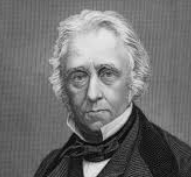
Time, and reflection, and discussion, have produced their natural effect on minds eminently intelligent and candid. No intermediate shades of opinion are now left. There is no twilight. The light has been divided from the darkness. Two parties are ranged in battle array against each other. There is the standard of monopoly. Here is the standard of free trade; and by the standard of free trade I pledge myself to stand firmly.
▼
Source
source
Speech in Edinburgh (2 December 1845), quoted in Speeches of the Right Honourable T. B. Macaulay, M.P. (1854), p. 423
3 months 1 week ago
But it isn't just a matter of faith, but of faith and works. Each is necessary. For the demons also believe you heard the apostle and tremble (Jas 2:19); but their believing doesn't do them any good. Faith alone is not enough, unless works too are joined to it: Faith working through love (Gal 5:6), says the apostle.
▼
Source
source
16A:11:2
1 month ago
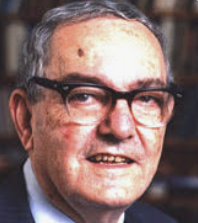
Even Darwin's natural selection only predicts that survivors will be fit enough, that is, fitter than their losing competitors; it postulates satisficing, not optimizing.
▼
Source
source
p. 166; As cited in Ronald J. Baker (2010, p. 122).
2 months 4 weeks ago
How many things served us yesterday for articles of faith, which today are fables for us?
▼
Source
source
Ch. 27. Of Friendship

1 month 3 weeks ago
The last thing abandoned by a party is its phraseology, because among political parties, as elsewhere, the vulgar make the language, and the vulgar abandon more easily the ideas that have been instilled into it than the words that it has learnt. France Before The Consulate, Chapter I: "How the Republic was ready to accept a master", in Memoir, Letters, and Remains, Vol I (1862), p. 266 Variant translation: The last thing a political party gives up is its vocabulary. This is because, in party politics as in other matters, it is the crowd who dictates the language, and the crowd relinquishes the ideas it has been given more readily than the words it has learned.
▼
Source
source
As quoted in The Viking book of Aphorisms : A Personal Selection (1962) by W. H. Auden, and Louis Kronenberger, p. 306. Variant translation: The last thing that a party abandons is its language.

1 month 3 weeks ago
It is reconciled in policy; and politics ought to be adjusted, not to human reasonings, but to human nature; of which the reason is but a part; and by no means the greatest part.
▼
Source
source
Observations on a Late Publication on the Present State of the Nation (1769), page 78
6 months 3 weeks ago
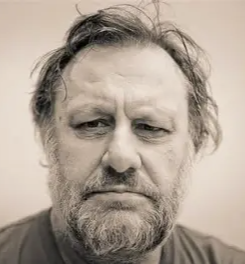
When we observe a thing, we see too much in it, we fall under the spell of the wealth of empirical detail which prevents us from clearly perceiving the notional determination which forms the core of the thing. The problem is thus not that of how to grasp the multiplicity of determinations, but rather to abstract from them, how to constrain our gaze and teach it to grasp only the notional determinism.

2 months 2 weeks ago
Ambition is the death of thought.
▼
Source
source
p. 77e

2 months 1 week ago
At times the world sees straight, but many times the world goes astray.
▼
Source
source
Book II, epistle i, line 63

2 months 3 days ago
Choose always the way that seems the best, however rough it may be; custom will soon render it easy and agreeable.
▼
Source
source
As quoted in A Dictionary of Thoughts: Being a Cyclopedia of Laconic Quotations from the Best Authors of the World, both Ancient and Modern (1908) by Tyron Edwards, p. 101
1 month 3 days ago
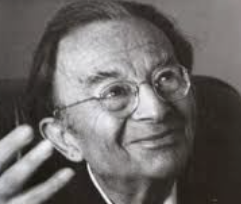
People have committed suicide because of their failure to realize the passions for love, power, fame, revenge. Cases of suicide because of a lack of sexual satisfaction are virtually nonexistent.
▼
Source
source
p. 30
3 weeks ago
People usually think that progress consists in the increase of knowledge, in the improvement of life, but that isn't so. Progress consists only in the greater clarification of answers to the basic questions of life. The truth is always accessible to a man. It can't be otherwise, because a man's soul is a divine spark, the truth itself. It's only a matter of removing from this divine spark (the truth) everything that obscures it. Progress consists, not in the increase of truth, but in freeing it from its wrappings. The truth is obtained like gold, not by letting it grow bigger, but by washing off from it everything that isn't gold.
▼
Source
source
Tolstoy's Diaries (1985) edited and translated by R. F. Christian. London: Athlone Press, Vol 2, p. 512
3 weeks ago
I had wished to visit a slaughter-house, in order to see with my own eyes the reality of the question raised when vegetarianism is discussed. But at first I felt ashamed to do so, as one is always ashamed of going to look at suffering which one knows is about to take place, but which one cannot avert; and so I kept putting off my visit. But a little while ago I met on the road a butcher ... He is not yet an experienced butcher, and his duty is to stab with a knife. I asked him whether he did not feel sorry for the animals that he killed. He gave me the usual answer: 'Why should I feel sorry? It is necessary.' But when I told him that eating flesh is not necessary, but is only a luxury, he agreed; and then he admitted that he was sorry for the animals.
▼
Source
source
Ch. IX
1 month 2 weeks ago
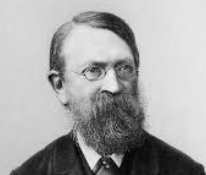
Not bodies produce sensations, but element-complexes (sensation-complexes) constitute the bodies. When the physicist considers the bodies as the permanent reality, the `elements' as the transient appearance, he does not realise that all `bodies' are only mental symbols for element-complexes (sensation-complexes)
▼
Source
source
p. 23, as quoted in Lenin as Philosopher: A Critical Examination of the Philosophical Basis of Leninism (1948) by Anton Pannekoek, p. 33
1 month 1 week ago
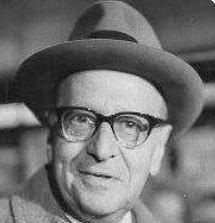
The metaphysical apologia at least betrayed the injustice of the established order through the incongruence of concept and reality. The impartiality of scientific language deprived what was powerless of the strength to make itself heard and merely provided the existing order with a neutral sign for itself. Such neutrality is more metaphysical than metaphysics.
▼
Source
source
E. Jephcott, trans., p. 17.
1 month 1 day ago
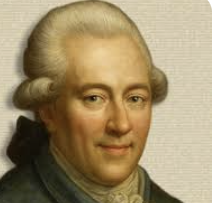
Sickness is mankind's greatest defect.
▼
Source
source
F 100
2 months 2 weeks ago
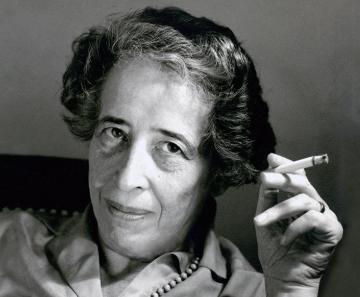
The defiance of established authority, religious and secular, social and political, as a world-wide phenomenon may well one day be accounted the outstanding event of the last decade.
▼
Source
source
"Civil Disobedience"
1 month 1 day ago
Before one blames, one should always find out whether one cannot excuse. To discover little faults has been always the particularity of such brains that are a little or not at all above the average. The superior ones keep quiet or say something against the whole and the great minds transform without blaming.
▼
Source
source
K 39 Variant translation: Before we blame we should first see whether we cannot excuse.
2 months 2 weeks ago
Look for yourself, and you will find in the long run only hatred, loneliness, despair, rage, ruin, and decay. But look for Christ and you will find Him, and with Him everything else thrown in.
▼
Source
source
Book IV, Chapter 10, "The New Men"
1 month 1 week ago
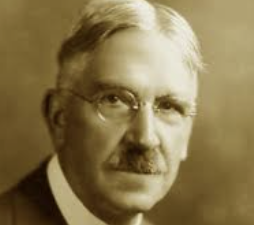
It is no accident that all democracies have put a high estimate upon education; that schooling has been their first care and enduring charge. Only through education can equality of opportunity be anything more than a phrase. Accidental inequalities of birth, wealth, and learning are always tending to restrict the opportunities of some as compared with those of others. Only free and continued education can counteract those forces which are always at work to restore, in however changed a form, feudal oligarchy. Democracy has to be born anew every generation, and education is its midwife.
▼
Source
source
"The Need of an Industrial Education in an Industrial Democracy," Manual Training and Vocational Education17 (1916); also Middle Works 10: 137-143.
3 weeks ago
When a person is haughty, he distances himself from other people and thereby deprives himself of one of life's biggest pleasures-open, joyful communication with everyone.
▼
Source
source
p. 108

2 months 1 week ago
Indulge in no wrathfulness, for a man when he indulges in wrath becomes then forgetful of his duty and good works . . . and sin and crime of every kind occur unto his mind, and until the subsiding of the wrath he is said to be just like Ahareman.
2 weeks ago
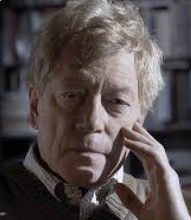
Conservatives have, on the whole, accepted nationality as a sphere of local duties and loyalties, defining an inheritance and a community that has a right to pass on its values from generation to generation. The nation may indeed be the best that we now have, by way of a society linking the dead to the unborn, in the manner extolled by Burke. And for this very reason it arouses the hostility of liberals, who are constantly searching for a place outside loyalty and obedience, from which all human claims can be judged. Hence, in the conflicts of our times, while conservatives leap to the defense of the nation and its interests, wishing to maintain its integrity and to enforce its law, liberals advocate transnational initiatives, international courts, and doctrines of universal rights, all of which, they believe, should stand in judgment over the nation and hold it to account.
▼
Source
source
"The Limits of Liberty," The American Spectator
1 month 1 week ago
Naturalism is a word of many meetings in philosophy as well as in art. like most isms - classicism and romanticism, idealism and realism in art - it's has become an emotional term, a war cry of partisans.
▼
Source
source
p. 157

2 months 2 weeks ago
There is little in common between the organised parading of madness in the eighteenth century and the freedom with which madness came to the fore during the Renaissance. The earlier age had found it everywhere, an integral element of each experience, both in images and in real life dangers. During the classical period, it was also on public view, but behind bars. When it manifested itself it was at a carefully controlled distance, under the watchful eye of a reason that denied all kinship with it, and felt quite unthreatened by any hint of resemblance. Madness had become a thing to be observed, no longer the monster within, but an animal moved by strange mechanisms, more beast than man, where all humanity had long since disappeared.
▼
Source
source
Part One: 5. The Insane
2 months 2 weeks ago
I must plunge into the water of doubt again and again.
▼
Source
source
Ch. 7 : Remarks on Frazer's Golden Bough, p. 119
1 month 1 week ago
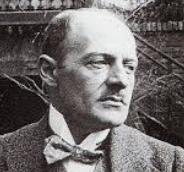
The "old maid" with her repressed cravings for tenderness, sex, and propagation, is rarely quite free of ressentiment. What we call "prudery," in contrast with true modesty, is but one of the numerous variants of sexual ressentiment. The habitual behavior of many old maids, who obsessively ferret out all sexually significant events in their surroundings in order to condemn them harshly, is nothing but sexual gratification transformed into ressentiment satisfaction. Thus the criticism accomplishes the very thing it pretends to condemn.
▼
Source
source
L. Coser, trans. (1973), pp. 61-62
CivilSimian.com created by AxiomaticPanic, CivilSimian, Kalokagathia