

2 months 3 weeks ago
Indignation is a submission of our thoughts, but not of our desires.
2 months 3 weeks ago
I find the Englishman to be him of all men who stands firmest in his shoes. They have in themselves what they value in their horses, - mettle and bottom.
▼
Source
source
Manners
2 months 1 week ago
It is better to correct your own faults than those of another.
2 months 2 weeks ago
Man cannot will unless he has first understood that he must count on no one but himself; that he is alone, abandoned on earth in the midst of his infinite responsibilities, without help, with no other aim than the one he sets himself, with no other destiny than the one he forges for himself on this earth.
1 month 3 weeks ago
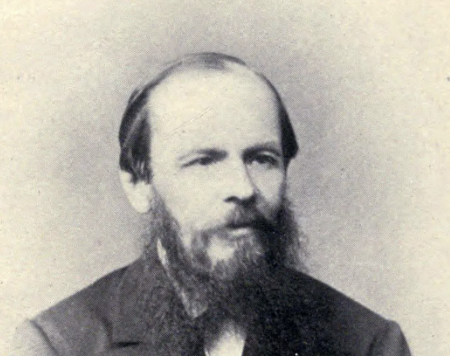
Who consciously throws himself into the water or onto the knife?
▼
Source
source
Part 2, Chapter ?

2 months 2 weeks ago
Maybe the target nowadays is not to discover what we are but to refuse what we are.
▼
Source
source
p. 785

2 weeks 4 days ago
I think it is not helpful to apply Darwinian language too widely. Conquest of nation by nation is too distant for Darwinian explanations to be helpful. Darwinism is the differential survival of self-replicating genes in a gene pool, usually as manifested by individual behaviour, morphology, and phenotypes. Group selection of any kind is not Darwinism as Darwin understood it nor as I understand it. There is a very vague analogy between group selection and conquest of a nation by another nation, but I don't think it's a very helpful analogy. So I would prefer not to invoke Darwinian language for that kind of historical interpretation.
1 month 2 weeks ago
If I were to be totally sincere, I would say that I do not know why I live and why I do not stop living. The answer probably lies in the irrational character of life which maintains itself without reason.
2 months 4 weeks ago
There must then be something that is better, and that must be God. When you see a stately and stupendous edifice, though you do not know who is the owner of it, you would yet conclude it was not built for rats. And this divine structure, that we behold of the celestial palace, have we not reason to believe that it is the residence of some possessor, who is much greater than we?
▼
Source
source
Ch. 12, tr. Cotton, rev. W. Carew Hazlitt, 1877
2 months 5 days ago
The utility of a science which enables men to take cognizance of the travellers on the mind's highway, and excludes those disorderly interlopers, verbal fallacies, needs but small attestation. Its searching penetration by definition alone, before which even mathematical precision fails, would especially commend it to those whom the abstruseness of the study does not terrify, and who recognise the valuable results which must attend discipline of mind. Like a medicine, though not a panacea for every ill, it has the health of the mind for its aim, but requires the determination of a powerful will to imbibe its nauseating yet wholesome influence: it is no wonder therefore that puny intellects, like weak stomachs, abhor and reject it.
▼
Source
source
Introduction to Aristotle's Organon, as translated by Octavius Freire Owen (1853), p. v
3 weeks 3 days ago
"The Precession of Simulacra,"
▼
Source
source
p. 6

1 month 3 weeks ago
Granted I am a babbler, a harmless vexatious babbler, like all of us. But what is to be done if the direct and sole vocation of every intelligent man is babble, that is, the intentional pouring of water through a sieve?
▼
Source
source
Part 1, Chapter 5
1 month 5 days ago
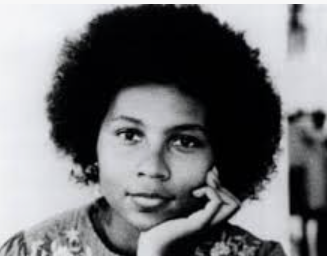
The first act of violence that patriarchy demands of males is not violence toward women. Instead patriarchy demands of all males that they engage in acts of psychic self-mutilation, that they kill off the emotional parts of themselves. If an individual is not successful in emotionally crippling himself, he can count on patriarchal men to enact rituals of power that will assault his self-esteem.
▼
Source
source
The Will To Change: Men, Masculinity, and Love (2004), p. 66
2 months 2 weeks ago
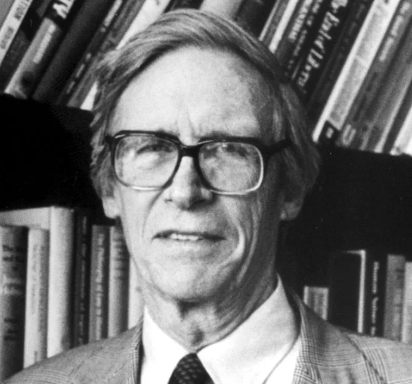
The fundamental criterion for judging any procedure is the justice of its likely results.
▼
Source
source
Chapter IV, Section 37, p. 230
1 month 3 days ago
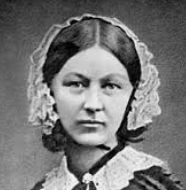
The family uses people, not for what they are, nor for what they are intended to be, but for what it wants them for - its own uses. It thinks of them not as what God has made them, but as the something which it has arranged that they shall be.
1 month 3 weeks ago
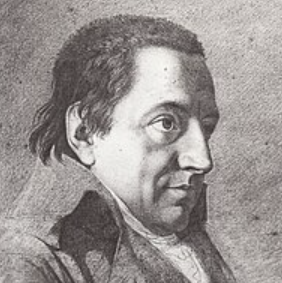
The nature of the Absolute State consists herein, -that all individual powers be directed towards the Life of the Race,-in place of which Race, the State puts the aggregate of its own Citizens. It therefore becomes necessary, first, that all Individuals, without exception, should be taken into equal consideration by the State; and second, that every Individual, with all his individual powers, without exception or reserve, should be taken into equal consideration. In a State so constituted, where all, as Individuals, are dedicated to the Race, it follows at the same time, that all without exception, with all the Rights which belong to them as component parts of the Race, are dedicated to all the other individual members of the State.
▼
Source
source
p. 150-151
1 month 2 weeks ago
The ideal of Morality has no more dangerous rival than the ideal of highest Strength, of most powerful life; which also has been named (very falsely as it was there meant) the ideal of poetic greatness. It is the maximum of the savage; and has, in these times, gained, precisely among the greatest weaklings, very many proselytes. By this ideal, man becomes a Beast-Spirit, a Mixture; whose brutal wit has, for weaklings, a brutal power of attraction.
2 weeks 4 days ago
Ten years ago, you could have traveled thousands of miles through the United States and never seen a baseball cap turned back to front. Today, the reverse baseball cap is ubiquitous. I do not know what the pattern of geographical spread of the reverse baseball cap precisely was, but epidemiology is certainly among the professions primarily qualified to study it.
1 week ago
Identical in the physical processes by which he originates-identical in the early stages of his formation-identical in the mode of his nutrition before and after birth, with the animals which lie immediately below him in the scale-Man, if his adult and perfect structure be compared with theirs, exhibits, as might be expected, a marvellous likeness of organization. He resembles them as they resemble one another-he differs from them as they differ from one another.-And, though these differences and resemblances cannot be weighed and measured, their value may be readily estimated; the scale or standard of judgment, touching that value, being afforded and expressed by the system of classification of animals now current among zoologists.
▼
Source
source
Ch.2, p. 83
1 month 4 days ago
The progress of human knowledge depends on maintaining that touch of scepticism even about the most "unquestionable" truths. A century ago, Darwin's theory of evolution by natural selection was regarded as scientifically unshakeable; today, most biologists have their reservations about it. Fifty years ago, Freud's sexual theory of neurosis was accepted by most psychiatrists; today, it is widely recognized that his methods were highly questionable. At the turn of this century, a scientist who questioned Newton's theory of gravity would have been regarded as insane; twenty years later, it had been supplanted by Einstein's theory, although, significantly, few people actually understood it. It seems perfectly conceivable that our descendants of the twenty-second century will wonder how any of us could have been stupid enough to have been taken in by Darwin, Freud or Einstein.
▼
Source
source
p. 4

3 months 2 weeks ago
"This is the truth," we say. "You can discuss it as much as you want; we aren't interested. But in a few years there'll be the police who will show you we are right."
1 month 2 weeks ago
Oblivious of Democritus, the unwilling materialists of our day have generally been awkwardly intellectual and quite incapable of laughter. If they have felt anything, they have felt melancholy. Their allegiance and affection were still fixed on those mythical sentimental worlds which they saw to be illusory. The mechanical world they believed in could not please them, in spite of its extent and fertility. Giving rhetorical vent to their spleen and prejudice, they exaggerated nature's meagreness and mathematical dryness. When their imagination was chilled they spoke of nature, most unwarrantably, as dead, and when their judgment was heated they took the next step and called it unreal.
▼
Source
source
Ch. 3 "Mechanism"
2 months 3 weeks ago
The animals are much more content with mere existence than we are; the plants are wholly so; and man is so according to how dull and insensitive he is. The animal's life consequently contains less suffering but also less pleasure than the human's, the direct reason being that on the one hand it is free from care and anxiety and the torments that attend them, but on the other is without hope and therefore has no share in that anticipation of a happy future which, together with the enchanting products of the imagination which accompany it, is the source of most of our greatest joys and pleasures. The animal lacks both anxiety and hope because its consciousness is restricted to what is clearly evident and thus to the present moment: the animal is the present incarnate.
▼
Source
source
Vol. 2 "On the Suffering of the World" as translated in Essays and Aphorisms (1970), as translated by R. J. Hollingdale

2 months 2 weeks ago
Philosophers are often like little children, who first scribble random lines on a piece of paper with their pencils, and now ask an adult "What is that?"
▼
Source
source
Ch. 9 : Philosophy, p. 193
2 months 2 weeks ago
Deconstruction never had meaning or interest, at least in my eyes, than as a radicalization, that is to say, also within the tradition of a certain Marxism, in a certain spirit of Marxism.
▼
Source
source
Specters of Marx. Routledge, 1994. p. 115
2 months 3 weeks ago
Marriage is for women the commonest mode of livelihood, and the total amount of undesired sex endured by women is probably greater in marriage than in prostitution.
1 month ago
Human beings, viewed as behaving systems, are quite simple. The apparent complexity of our behavior over time is largely a reflection of the complexity of the environment in which we find ourselves.
▼
Source
source
p. 53.
1 month 3 weeks ago
Those who have been once intoxicated with power, and have derived any kind of emolument from it, even though but for one year, never can willingly abandon it. They may be distressed in the midst of all their power; but they will never look to any thing but power for their relief.
1 month 2 weeks ago
A minimum of unconsciousness is necessary if one wants to stay inside history. To act is one thing; to know one is acting is another. When lucidity invests the action, insinuates itself into it, action is undone, and with it, prejudice, whose function consists, precisely, in subordinating, in enslaving consciousness to action. The man who unmasks his fictions renounces his own resources and, in a sense, himself. Consequently, he will accept other fictions which will deny him, since they will not have cropped up from his own depths. No man concerned with his equilibrium may exceed a certain degree of lucidity and analysis.

3 months 2 weeks ago
It was the addition of status that brought the little things: a more comfortable seat here, a better cut of meat there, a shorter wait in line at the other place. To the philosophical mind, these items might seem scarcely worth any great trouble to acquire.Yet no one, however philosophical, could give up those privileges, once acquired, without a pang. That was the point.
1 month 2 weeks ago
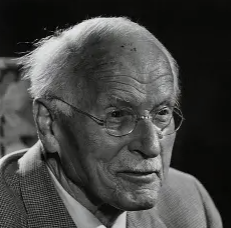
Great and enduring civilizations like those of the Hindus and the Chinese were built upon this foundation and developed from it a discipline of self-knowledge which they brought to a high pitch of refinement both in philosophy and practice.
▼
Source
source
Carl Jung, Modern Man in Search of a Soul. quoted in Hindu Culture, K. Guru Dutt, and quoted in Gewali, Salil (2013). Great Minds on India. New Delhi: Penguin Random House.

2 months 3 weeks ago
Philosophy is by its nature something esoteric, neither made for the mob nor capable of being prepared for the mob.
▼
Source
source
Introduction to the Critical Journal of Philosophy, cited in W. Kaufmann, Hegel (1966), p. 56

3 months 1 week ago
See a person's means (of getting things). Observe his motives. Examine that in which he rests. How can a person conceal his character? See a person's "being", observe his motive, notice his result. How can a person conceal his character?
1 month 1 week ago
How are we to adjudicate among rival ontologies? Certainly the answer is not provided by the semantical formula "To be is to be the value of a variable"; this formula serves rather, conversely, in testing the conformity of a given remark or doctrine to a prior ontological standard.
▼
Source
source
"On What There Is"
2 months 3 weeks ago
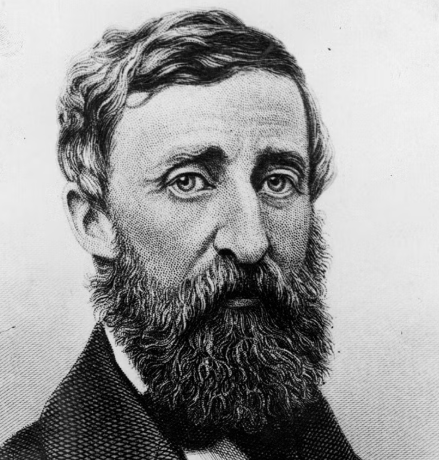
Not without a slight shudder at the danger, I often perceive how near I had come to admitting into my mind the details of some trivial affair, - the news of the street; and I am astonished to observe how willing men are to lumber their minds with such rubbish, - to permit idle rumors and incidents of the most insignificant kind to intrude on ground which should be sacred to thought. Shall the mind be a public arena, where the affairs of the street and the gossip of the tea-table chiefly are discussed? Or shall it be a quarter of heaven itself, - an hypæthral temple, consecrated to the service of the gods? I find it so difficult to dispose of the few facts which to me are significant, that I hesitate to burden my attention with those which are insignificant, which only a divine mind could illustrate. Such is, for the most part, the news in newspapers and conversation. It is important to preserve the mind's chastity in this respect.
▼
Source
source
pp. 491-2
2 months 3 weeks ago
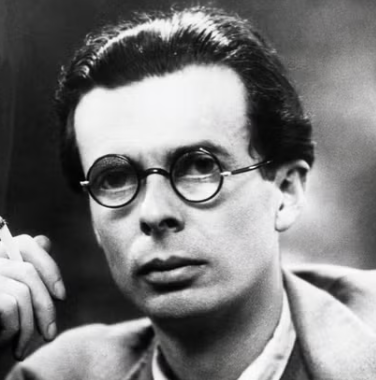
The soul of wit may become the very body of untruth.
▼
Source
source
Foreward (p. vii)
3 months 1 week ago
The Superior Man has nothing to compete for. But if he must compete, he does it in an archery match, wherein he ascends to his position, bowing in deference. Descending, he drinks (or has [the winner] drink) the ritual cup. Note: Bowing is a courtesy for the host who invites him as well drinking a cup.
2 weeks 5 days ago
At electric speed, all forms are pushed to the limits of their potential.
▼
Source
source
p. 109

1 month 4 weeks ago
When we consider the being and substance of that universe in which we are immutably set, we shall discover that neither we ourselves nor any substance doth suffer death; for nothing is in fact diminished in its substance, but all things, wandering through infinite space, undergo change of aspect.
▼
Source
source
Introductory Epistle
1 month 3 weeks ago
A widow, the mother of a family, and from her heart she produces chords to which my whole being responds.
▼
Source
source
Part 1, Chapter 12

1 month 4 days ago
To-day is the parent of to-morrow. The present casts its shadow far into the future. That is the law of life, individual and social. Revolution that divests itself of ethical values thereby lays the foundation of injustice, deceit, and oppression for the future society. The means used to prepare the future become its cornerstone.
3 months 1 week ago
Bad times, hard times, this is what people keep saying; but let us live well, and times shall be good. We are the times: Such as we are, such are the times.
▼
Source
source
80:8
3 months 1 week ago
By faithfulness we are collected and wound up into unity within ourselves, whereas we had been scattered abroad in multiplicity.
▼
Source
source
As quoted in Footprints in Time : Fulfilling God's Destiny for Your Life (2007) by Jeff O'Leary, p. 223

2 months 3 weeks ago
An evil may be real, tho' its cause has no relation to us: It may be real, without being peculiar: It may be real, without shewing itself to others: It may be real, without being constant: And it may be real, without falling under the general rules. Such evils as these will not fail to render us miserable, tho' they have little tendency to diminish pride: And perhaps the most real and the most solid evils of life will be found of this nature.
▼
Source
source
Part 1, Section 6
2 months 3 weeks ago
Pi's face was masked, and it was understood that none could behold it and live. But piercing eyes looked out from the mask, inexorable, cold and enigmatic.
▼
Source
source
"The Mathematician's Nightmare", Nightmares of Eminent Persons and Other Stories, 1954

2 months 3 weeks ago
When the qualification to vote is regulated by years, it is placed on the firmest possible ground, because the qualification is such as nothing but dying before the time can take away; and the equality of Rights, as a principle, is recognized in the act of regulating the exercise. But when Rights are placed upon, or made dependent upon property, they are on the most precarious of all tenures. "Riches make themselves wings, and fly away," and the rights fly with them ; and thus they become lost to the man when they would be of most value.
1 month 4 days ago
Yet its essence was the certitude that his life was not totally at the mercy of chance. Somehow, it was more important than that. This sense of power inside his head - which he could intensify by pulling a face and wrinkling up the muscles of his forehead - aroused a glow of optimism, an expectation of exciting events. He knew that for him, fate held something special in store.
▼
Source
source
p. 26
CivilSimian.com created by AxiomaticPanic, CivilSimian, Kalokagathia