


2 months 2 weeks ago
Lightly men talk of saying what they mean. Often when he was teaching me to write in Greek the Fox would say, "Child, to say the very thing you really mean, the whole of it, nothing more or less or other than what you really mean; that's the whole art and joy of words." A glib saying. When the time comes to you at which you will be forced at last to utter the speech which has lain at the center of your soul for years, which you have, all that time, idiot-like, been saying over and over, you'll not talk about joy of words. I saw well why the gods do not speak to us openly, nor let us answer. Till that word can be dug out of us, why should they hear the babble that we think we mean? How can they meet us face to face till we have faces?
▼
Source
source
Orual
1 month 1 week ago
Men have been released from [concentration] camps who have taken over the jargon of their jailers and with cold reason and mad consent (the price, as it were, of their survival) tell their story as if it could not have been otherwise than it was, contending that they have not been treated so badly after all.
▼
Source
source
p. 45.
2 months 2 weeks ago
An intolerant sect has no right to complain when it is denied an equal liberty. ... A person's right to complain is limited to principles he acknowledges himself.
▼
Source
source
p. 217
1 month 6 days ago
For successful education there must always be a certain freshness in the knowledge dealt with. It must be either new in itself or invested with some novelty of application to the new world of new times. Knowledge does not keep any better than fish. You may be dealing with knowledge of the old species, with some old truth; but somehow it must come to the students, as it were, just drawn out of the sea and with the freshness of its immediate importance.

3 months 3 weeks ago
That which distinguishes the Christian narrow way from the common human narrow way is the voluntary. Christ was not someone who coveted earthly things but had to be satisfied with poverty, no, he chose poverty.
2 weeks ago
A good American makes propaganda for whatever existence has forced him to become.
▼
Source
source
"Cousins," from Him With His Foot in His Mouth and Other Stories (1984), p. 263
2 months 3 weeks ago
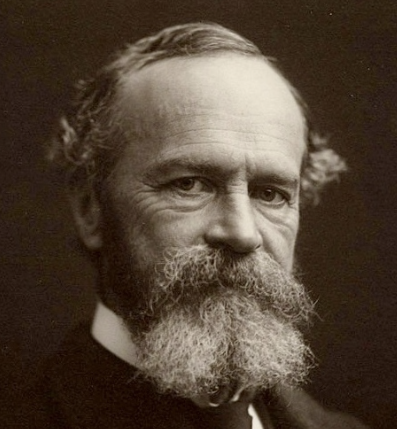
For the philosophy which is so important in each of us is not a technical matter; it is our more or less dumb sense of what life honestly and deeply means. It is only partly got from books; it is our individual way of just seeing and feeling the total push and pressure of the cosmos. ...I have heard friends and colleagues try to popularize philosophy... but they soon grew dry, and then technical, and the results were only partially encouraging. So my enterprise is a bold one. The founder of pragmatism... gave... lectures... with that very word in its title,-flashes of brilliant light relieved against Cimmerian darkness! None of us... understood all that he said-yet here I stand making a very similar venture. ...There is... a curious fascination in hearing deep things talked about, even though neither we nor the disputants understand them. We get the problematic thrill, we feel the presence of the vastness.
▼
Source
source
Lecture I, The Present Dilemma in Philosophy
2 months 3 weeks ago
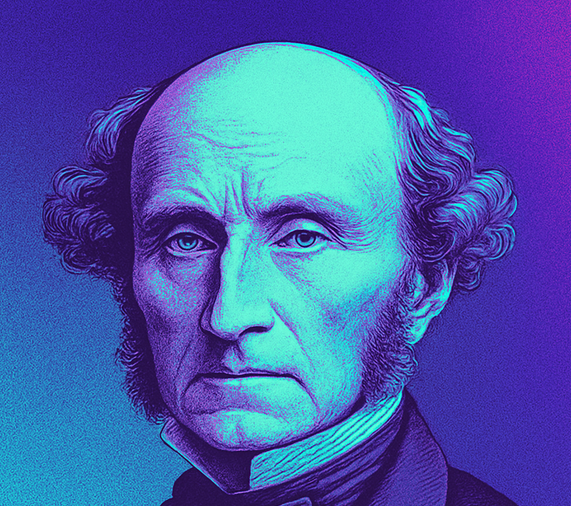
The notion that truths external to the mind may be known by intuition or consciousness, independently of observation and experience, is, I am persuaded, in these times, the great intellectual support of false doctrines and bad institutions. By the aid of this theory, every inveterate belief and every intense feeling, of which the origin is not remembered, is enabled to dispense with the obligation of justifying itself by reason, and is erected into its own all-sufficient voucher and justification. There never was such an instrument devised for consecrating all deep-seated prejudices.
▼
Source
source
(pp. 225-226)
3 months 3 weeks ago
Old age realizes the dreams of youth: look at Dean Swift; in his youth he built an asylum for the insane, in his old age he was himself an inmate.
1 month 3 weeks ago
Time: That which man is always trying to kill, but which ends in killing him.
▼
Source
source
Definitions, as quoted in The Dictionary of Essential Quotations (1983) by Kevin Goldstein-Jackson, p. 154
1 month 1 week ago
To be sure, exchange-value exerts its power in a special way in the realm of cultural goods. For in the world of commodities this realm appears to be exempted from the power of exchange, to be in an immediate relationship with the goods, and it is this appearance in turn which alone gives cultural goods their exchange-value. But they nevertheless simultaneously fall completely into the world of commodities, are produced for the market, and are aimed at the market.
▼
Source
source
p. 279
2 months 2 weeks ago
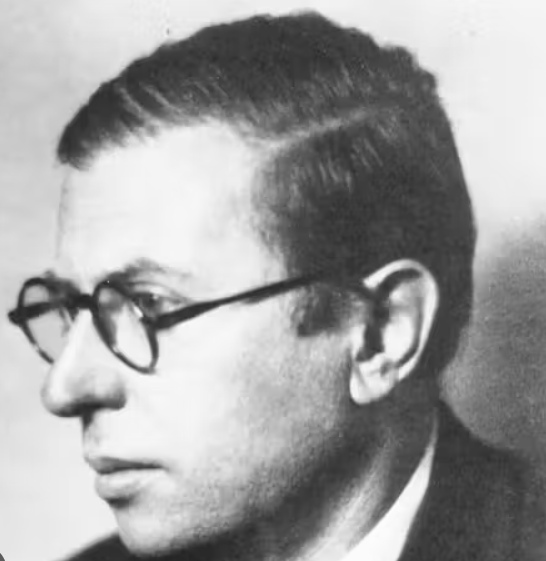
For Genet, reflective states of mind are the rule. And although they are of an unstable nature in everyone, in him...reflection is always contrary to the reflected feeling.
▼
Source
source
p. 278
2 months 4 weeks ago
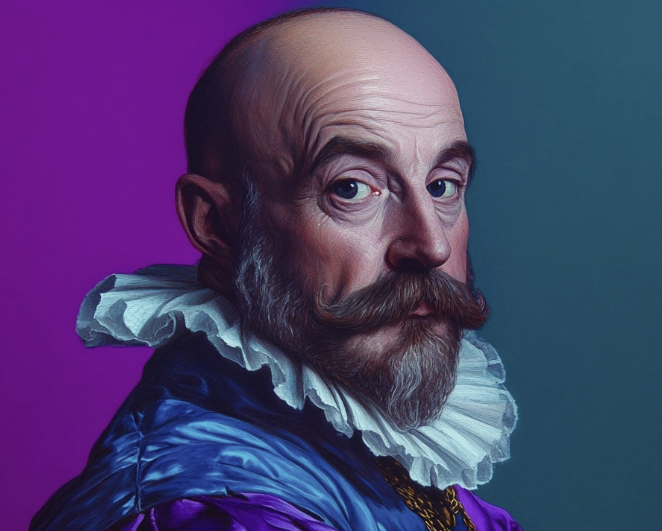
Kings and philosophers shit, and so do ladies.
▼
Source
source
Ch. 42, English translation from Hartle, Ann (2003), Michel de Montaigne: Accidental Philosopher, Cambridge University Press.

2 months 2 weeks ago
Truly to escape Hegel involves an exact appreciation of the price we have to pay to detach ourselves from him. It assumes that we are aware of the extent to which Hegel, insidiously perhaps, is close to us; it implies a knowledge, in that which permits us to think against Hegel, of that which remains Hegelian. We have to determine the extent to which our anti-Hegelianism is possibly one of his tricks directed against us, at the end of which he stands, motionless, waiting for us.
▼
Source
source
Discourse on Language, Inaugural Lecture at the Collège de France, 1970-1971. tr. A. M. Sheridan Smith
3 months 4 days ago
Rules for Axioms. I. Not to omit any necessary principle without asking whether it is admittied, however clear and evident it may be. II. Not to demand, in axioms, any but things that are perfectly evident in themselves.

1 month 4 days ago
The smartphone seems to be a playground, but it is a digital panopticon.
1 month 3 weeks ago
The primary use of knowledge is for such guidance of conduct under all circumstances as shall make living complete. All other uses of knowledge are secondary.
▼
Source
source
Vol. 3, Ch. XV, The Americans
2 months 1 week ago
Unto Thee, O Lord, the Soul of Creation cried: "For whom didst Thou create me, and who so fashioned me? Feuds and fury, violence and the insolence of might have oppressed me; None have I to protect me save Thee; Command for me then the blessings of a settled, peaceful life."
▼
Source
source
Ahunuvaiti Gatha; Yasna 29, 1.
3 weeks 2 days ago
Someday, someday, this crazy world will have to end, And our God will take things back that He to us did lend. And if, on that sad day, you want to scold our God, Why go right ahead and scold Him. He'll just smile and nod.
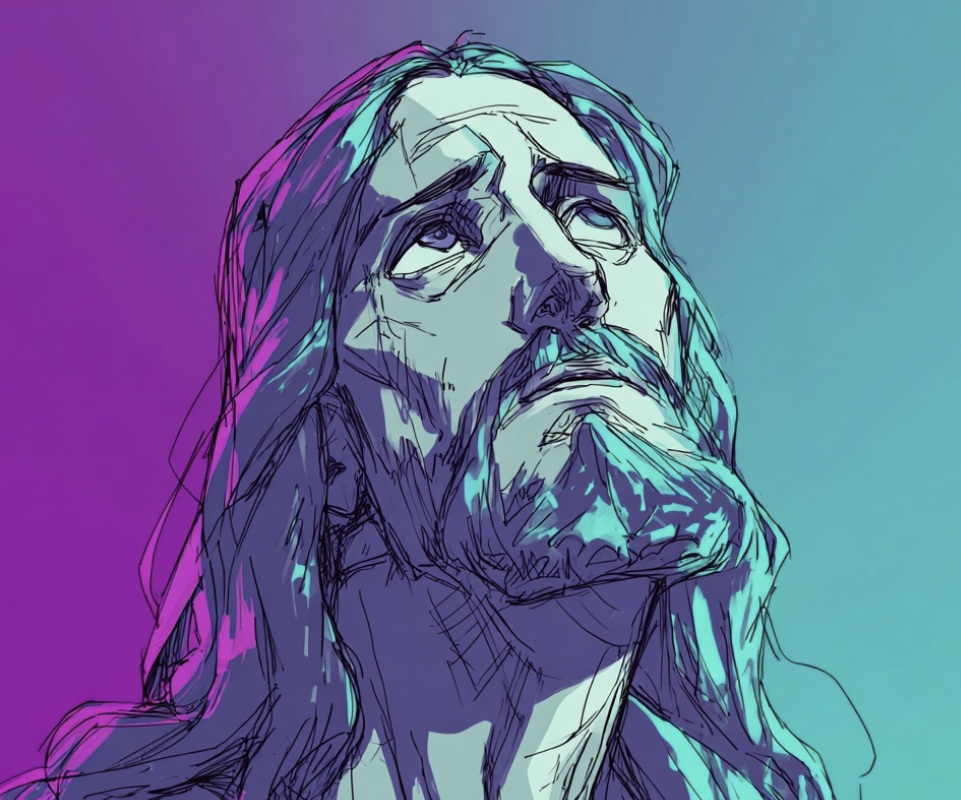
1 month 2 weeks ago
Peace be with you. Receive my peace unto yourselves. Beware that no one lead you astray saying Lo here or lo there! For the Son of Man is within you. Follow after Him! Those who seek Him will find Him. Go then and preach the gospel of the Kingdom. Do not lay down any rules beyond what I appointed you, and do not give a law like the lawgiver lest you be constrained by it.
▼
Source
source
Chapter 4. tion.
1 month 2 weeks ago
Sleep on now, and take your rest: behold, the hour is at hand, and the Son of man is betrayed into the hands of sinners. Rise, let us be going: behold, he is at hand that doth betray me.
▼
Source
source
26:45-46 (KJV)

1 month 2 weeks ago
German idealism rescued philosophy from the attack of British empiricism, and the struggle between the two became not merely a clash of different philosophical school, but a struggle for philosophy as such.
▼
Source
source
P. 16
1 month 2 weeks ago
Woes and wonders of power, that tonic hell, synthesis of poison and panacea.

3 months 3 weeks ago
What! the inventors of ancient civilisations, the first makers of tools and tape lines, the first builders of vehicles, ships, and houses, the first observers of the laws of the heavens and the multiplication tables is it contended that they were entirely different from the inventors and observers of our own time, and superior to them? And that the first slow steps forward were of a value which has not been equalled by the discoveries we have made with all our travels and circumnavigations of the earth?
1 month 4 days ago
The principle of brotherhood expounded by the agitator of Nazareth preserved the germ of life, of truth and justice, so long as it was the beacon light of the few. The moment the majority seized upon it, that great principle became a shibboleth and harbinger of blood and fire, spreading suffering and disaster. The attack on the omnipotence of Rome was like a sunrise amid the darkness of the night, only so long as it was made by the colossal figures of a Huss, a Calvin, or a Luther. Yet when the mass joined in the procession against the Catholic monster, it was no less cruel, no less bloodthirsty than its enemy. Woe to the heretics, to the minority, who would not bow to its dicta. After infinite zeal, endurance, and sacrifice, the human mind is at last free from the religious phantom; the minority has gone on in pursuit of new conquests, and the majority is lagging behind, handicapped by truth grown false with age.
1 month 2 weeks ago
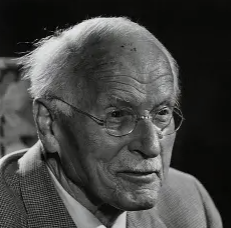
As the animus is partial to argument, he can best be seen at work in disputes where both parties know they are right. Men can argue in a very womanish way, too, when they are anima-possessed and have thus been transformed into the animus of their own anima.
▼
Source
source
Aion (1951). CW 9, Part II: P.29
2 months 2 weeks ago
Not my idea of God, but God.

2 months 3 weeks ago
Philosophy is by its nature something esoteric, neither made for the mob nor capable of being prepared for the mob.
▼
Source
source
Introduction to the Critical Journal of Philosophy, cited in W. Kaufmann, Hegel (1966), p. 56
3 months 2 weeks ago
476 ... is usually taken as the date of the "fall of the Roman Empire." The date, however, is a false one. No one at this period of time considered that the Roman Empire had "fallen." Indeed, it still existed and was the most powerful realm in Europe. Its capital was at Constantinople and the Emperor was Zeno. It is only because we ourselves are culturally descended from the Roman west, that we tend to ignore the continued existence of the Roman Empire in the east.
2 months 2 weeks ago
There is little in common between the organised parading of madness in the eighteenth century and the freedom with which madness came to the fore during the Renaissance. The earlier age had found it everywhere, an integral element of each experience, both in images and in real life dangers. During the classical period, it was also on public view, but behind bars. When it manifested itself it was at a carefully controlled distance, under the watchful eye of a reason that denied all kinship with it, and felt quite unthreatened by any hint of resemblance. Madness had become a thing to be observed, no longer the monster within, but an animal moved by strange mechanisms, more beast than man, where all humanity had long since disappeared.
▼
Source
source
Part One: 5. The Insane

2 months 3 weeks ago
How just, how suitable to our crime is the punishment with which Providence threatens us? We have enslaved multitudes, and shed much innocent blood in doing it; and now are threatened with the same. And while other evils are confessed, and bewailed, why not this especially, and publicly; than which no other vice, if all others, has brought so much guilt on the land?

1 month 3 weeks ago
Thus is man that great and true Amphibium, whose nature is disposed to live not only like other creatures in diverse elements, but in divided and distinguished worlds.
▼
Source
source
Section 34
2 months 3 weeks ago
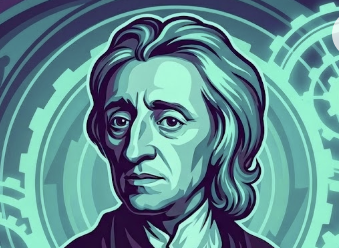
When by these steps he has got resolution enough not to be deterr'd from what he ought to do, by the apprehension of danger; when fear does not, in sudden or hazardous occurrences, decompose his mind, set his body a-trembling, and make him unfit for action, or run away from it, he has then the courage of a rational creature: and such an hardiness we should endeavour by custom and use to bring children to, as proper occasions come in our way.
▼
Source
source
Sec. 115
2 months 3 weeks ago
The last peculiarity of consciousness to which attention is to be drawn in this first rough description of its stream is that it is always interested more in one part of its object than in another, and welcomes and rejects, or chooses, all the while it thinks.
▼
Source
source
Ch. 9
2 months 3 weeks ago
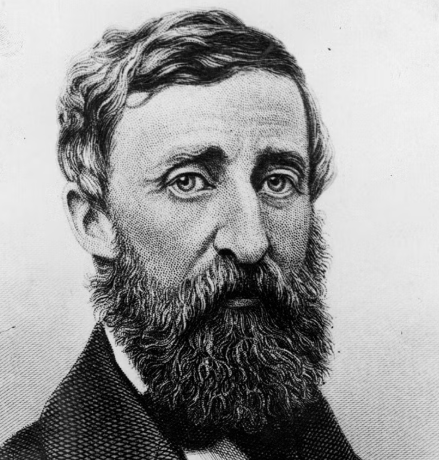
Sphere Music - Some sounds seem to reverberate along the plain, and then settle to earth again like dust; such are Noise, Discord, Jargon. But such only as spring heavenward, and I may catch from steeples and hilltops in their upward course, which are the more refined parts of the former, are the true sphere music - pure, unmixed music - in which no wail mingles.
▼
Source
source
August 5, 1838
3 months 1 week ago
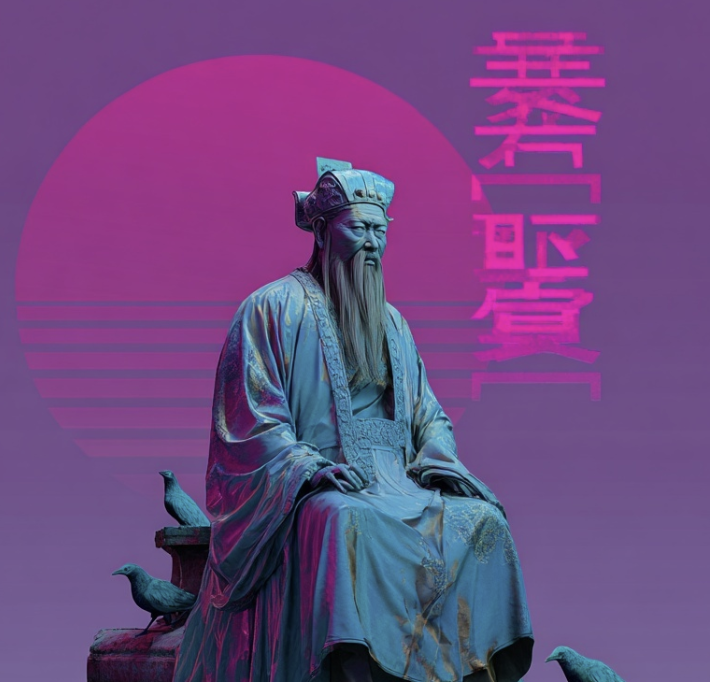
Sincerity becomes apparent. From being apparent, it becomes manifest. From being manifest, it becomes brilliant. Brilliant, it affects others. Affecting others, they are changed by it. Changed by it, they are transformed. It is only he who is possessed of the most complete sincerity that can exist under heaven, who can transform.
1 month 1 week ago
And this God, the living God, your God, our God, is in me, is in you, lives in us, and we live and move and have our being in Him. And he is in us by virtue of the hunger, the longing, which we have for Him, He is Himself creating the longing for Himself.
1 month 1 week ago
In the face of the idea that truth might afford the opposite of satisfaction and turn out to be completely shocking to humanity at any given historical moment, ... the fathers of pragmatism made the satisfaction of the subject the criterion of truth. For such a doctrine there is no possibility of rejecting or even criticizing any species of belief that is enjoyed by its adherents.
▼
Source
source
p. 52.
2 months 3 weeks ago
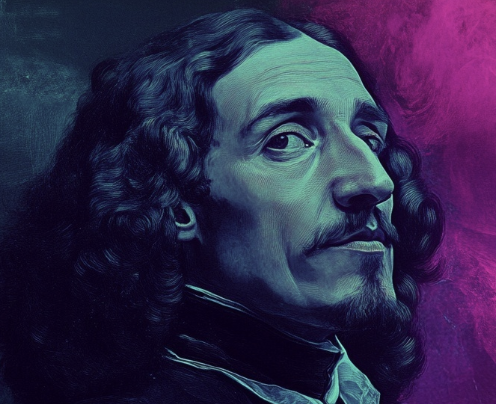
Speaking generally, he holds dominion, to whom are entrusted by common consent affairs of state - such as the laying down, interpretation, and abrogation of laws, the fortification of cities, deciding on war and peace, &c. But if this charge belong to a council, composed of the general multitude, then the dominion is called a democracy; if the council be composed of certain chosen persons, then it is an aristocracy ; and, if, lastly, the care of affairs of state, and, consequently, the dominion rest with one man, then it has the name of monarchy.
▼
Source
source
Ch. 2, Of Natural Right
1 month 3 weeks ago
The administrators of the executive power may be either elective or not; and in the former case all or only some of them may be elective. They are elective in a proper democracy, that is to say, in a democracy which recognizes representation. If all the public officials are directly elected by the whole people, the democracy is a pure democracy; if only some, it is a mixed democracy. The public officials may also fill vacancies themselves; this is the case in a pure aristocracy. But if only some of the magistrates are thus replaced by the public officers, and if the others are again directly elected by the people, then the form of government is that of a democratic aristocracy. A permanent president (monarch) may also be elected to exercise the executive power during his lifetime. In all these cases, either all citizens of the commonwealth, or only some of them, are eligible to office. Eligibility may, therefore, be limited or unlimited.
2 months 3 weeks ago
There are, in every country, some magnificent charities established by individuals. It is, however, but little that any individual can do, when the whole extent of the misery to be relieved is considered. He may satisfy his conscience, but not his heart. He may give all that he has, and that all will relieve but little. It is only by organizing civilization upon such principles as to act like a system of pulleys, that the whole weight of misery can be removed.
▼
Source
source
Means by Which the Fund Is to Be Created
3 months 3 weeks ago
This fact, that the opposite of sin is by no means virtue, has been overlooked. The latter is partly a pagan view, which is content with a merely human standard, and which for that very reason does not know what sin is, that all sin is before God. No, the opposite of sin is faith.
3 weeks ago
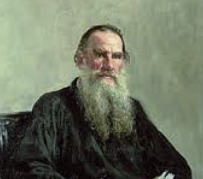
Three days later the little princess was buried, and Prince Andrei went up the steps to where the coffin stood, to give her the farewell kiss. And there in the coffin was the same face, though with closed eyes. "Ah, what have you done to me?" it still seemed to say, and Prince Andrei felt that something gave way in his soul and that he was guilty of a sin he could neither remedy nor forget.
▼
Source
source
Bk. IV, Ch. 9
2 months 2 weeks ago
Can a mortal ask questions which God finds unanswerable? Quite easily, I should think. All nonsense questions are unanswerable. How many hours are there in a mile? Is yellow square or round? Probably half the questions we ask - half our great theological and metaphysical problems - are like that.

3 months ago
I dare affirm in knowledge of nature, that a little natural philosophy, and the first entrance into it, doth dispose the opinion to atheism; but on the other side, much natural philosophy and wading deep into it, will bring about men's minds to religion; wherefore atheism every way seems to be combined with folly and ignorance, seeing nothing can can be more justly allotted to be the saying of fools than this, "There is no God" Of Atheism.
2 months 3 weeks ago
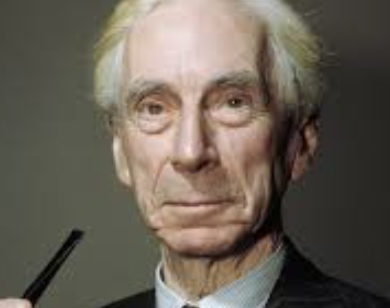
I do not think that the real reason why people accept religion has anything to do with argumentation. They accept religion on emotional grounds. One is often told that it is a very wrong thing to attack religion, because religion makes men virtuous. So I am told; I have not noticed it.
▼
Source
source
"The Emotional Factor"
1 month 3 weeks ago
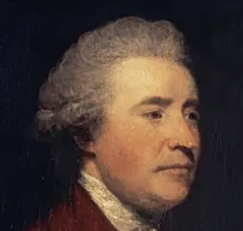
Abstract liberty, like other mere abstractions, is not to be found.
2 months 3 weeks ago
The fundament upon which all our knowledge and learning rests is the inexplicable.
▼
Source
source
Vol. 2, Ch. 1, § 1
2 months 4 weeks ago
The most profound joy has more of gravity than of gaiety in it.
▼
Source
source
Book II, Ch. 20
3 weeks 4 days ago
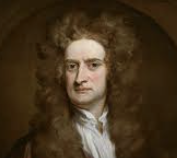
We are to admit no more causes of natural things than such as are both true and sufficient to explain their appearances.
▼
Source
source
"Rules of Reasoning in Philosophy" : Rule I
CivilSimian.com created by AxiomaticPanic, CivilSimian, Kalokagathia