


1 month 2 weeks ago
In [Aristotle's] formal logic, thought is organized in a manner very different from that of the Platonic dialogue. In this formal logic, thought is indifferent toward its objects. Whether they are mental or physical, whether they pertain to society or to nature, they become subject to the same general laws of organization, calculation, and conclusion - but they do so as fungible signs or symbols, in abstraction from their particular "substance." This general quality (quantitative quality) is the precondition of law and order - in logic as well as in society - the price of universal control.
▼
Source
source
p. 136
1 month 3 weeks ago
The Doctrine of a Perfect God; in whose nature nothing arbitrary or changeable can have a place; in whose Highest Being we all live, and in this Life may, and ought at all times to be, blessed;-this Doctrine, which ignorant men think they have sufficiently demolished when they have proclaimed it to be Mysticism, is by no means Mysticism, for it has an immediate reference to human action, and in deed to the inmost spirit which ought to inspire and guide all our actions. It can only become Mysticism when it is associated with the pretext that the insight into this truth proceeds from a certain inward and mysterious light, which is not accessible to all men, but is only bestowed upon a few favourites chosen from among the rest:-in which pretext the Mysticism consists, for it betrays a presumptuous contemplation of personal merit, and a pride in mere sensuous Individuality.
▼
Source
source
p, 122-123
1 month 1 week ago
The aim is to replace economic oligarchies by the State, which has a will-to-power of its own and is quite as little concerned with the public good; and a will-to-power, moreover, which is not economic but military and therefore much more dangerous to any good folk who have a taste for staying alive. And on the bourgeois side what on earth is the sense of objecting to State control in economic affairs if one accepts private monopolies which have all the economic and technical disadvantages of State monopolies and possibly some others as well?
▼
Source
source
p. 230
1 month 5 days ago
The effects of mescalin or LSD can be, in some respects, far more satisfying than those of alcohol. To begin with, they last longer; they also leave behind no hangover, and leave the mental faculties clear and unimpaired. They stimulate the faculties and produce the ideal ground for a peak experience.
▼
Source
source
p. 88
1 month 1 week ago
As an empiricist I continue to think of the conceptual scheme of science as a tool, ultimately, for predicting future experience in the light of past experience. Physical objects are conceptually imported into the situation as convenient intermediaries-not by definition in terms of experience, but simply as irreducible posits comparable, epistemologically, to the gods of Homer. For my part I do, qua lay physicist, believe in physical objects and not in Homer's gods; and I consider it a scientific error to believe otherwise. But in point of epistemological footing the physical objects and the gods differ only in degree and not in kind. Both sorts of entities enter our conception only as cultural posits. The myth of physical objects is epistemologically superior to most in that it has proved more efficacious than other myths as a device for working a manageable structure into the flux of experience.
▼
Source
source
"Two Dogmas of Empiricism"
2 months 2 weeks ago
In writing what he does not speak, what he would never say and, in truth, would probably never even think, the author of the written speech is already entrenched in the posture of the sophist; the man of non-presence and non-truth. Writing is thus already on the scene. The incompatibility between written and the true is clearly announced at the moment Socrates starts to recount the way in which men are carried out themselves by pleasure, become absent from themselves, forget themselves and die in the thrill of song.
▼
Source
source
Plato's Pharmacy, Pharmacia
2 months 2 weeks ago
My thought is me: that's why I can't stop. I exist because I think ... and I can't prevent myself from thinking.
▼
Source
source
Lundi ("Monday")

1 month 4 weeks ago
In the pursuit of truth we must beware of being misled by terms which we do not rightly understand. That is the chief point. Almost all philosophers utter the caution; few observe it.
▼
Source
source
Paragraph 1
1 month 1 week ago
The most authentic Catholic ethic, monastic asceticism, is an ethic of eschatology, directed to the salvation of the individual soul rather than to the maintenance of society. And in the cult of virginity may there not perhaps be a certain obscure idea that to perpetuate ourselves in others hinders our own personal perpetuation?
2 months 2 weeks ago
It is, in fact, far easier to act under conditions of tyranny than it is to think.
▼
Source
source
The Human Condition

2 months 4 weeks ago
My appetite comes to me while eating.
▼
Source
source
Book III, Ch. 9. Of Vanity
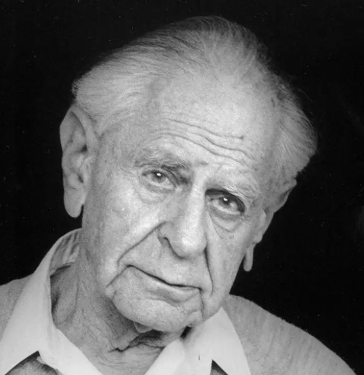
2 months 2 weeks ago
By 'arguing...' I mean... criticizing... inviting... criticism; and trying to learn from it.
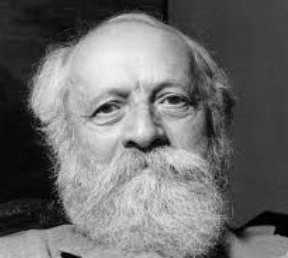
1 month 1 week ago
You do not attain to knowledge by remaining on the shore and watching the foaming waves, you must make the venture and cast yourself in, you must swim, alert and with all your force, even if a moment comes when you think you are losing consciousness; in this way, and in no other, do you reach anthropological insight.
▼
Source
source
p. 148

3 months 2 weeks ago
There were many special laws affecting the several kings inscribed about the temples, but the most important was the following: They were not to take up arms against one another, and they were all to come to the rescue if any one in any of their cities attempted to overthrow the royal house; like their ancestors, they were to deliberate in common about war and other matters, giving the supremacy to the descendants of Atlas. And the king was not to have the power of life and death over any of his kinsmen unless he had the assent of the majority of the ten.
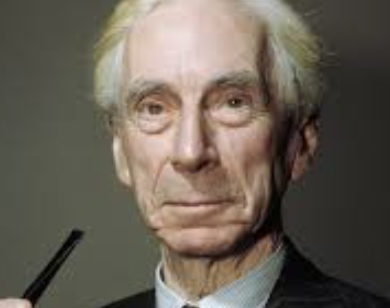
2 months 3 weeks ago
Instinctively we divide mankind into friends and foes - friends, towards whom we have the morality of co-operation; foes, towards whom we have that of competition. But this division is constantly changing; at one moment a man hates his business competitor, at another, when both are threatened by Socialism or by an external enemy, he suddenly begins to view him as a brother. Always when we pass beyond the limits of the family it is the external enemy which supplies the cohesive force. In times of safety we can afford to hate our neighbour, but in times of danger we must love him.
▼
Source
source
Authority and the Individual, 1949
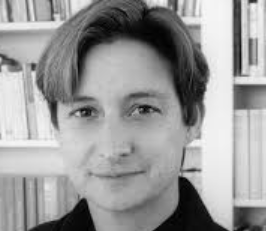
3 weeks 3 days ago
The ethical and political practice of nonviolence can rely neither exclusively on the dyadic encounter, nor on the bolstering of a prohibition; it requires a political opposition to the biopolitical forms of racism and war logics that rely on phantasmagoric inversions that occlude the binding and interdependent character of the social bond. It requires, as well, an account of why, and under what conditions, the frameworks for understanding violence and nonviolence, or violence and self-defense, seem to invert into one another, causing confusion about how best to pin down those terms.
▼
Source
source
p. 62

1 month 2 weeks ago
Nothing proves that we are more than nothing.

1 month 4 weeks ago
If all things are in common among friends, the most precious is Wisdom. What can Juno give which thou canst not receive from Wisdom? What mayest thou admire in Venus which thou mayest not also contemplate in Wisdom? Her beauty is not small, for the lord of all things taketh delight in her. Her I have loved and diligently sought from my youth up.
▼
Source
source
As quoted in Giordano Bruno : His Life and Thought (1950) by Dorothea Waley Singer
2 months 4 weeks ago
Man is certainly crazy. He could not make a mite, and he makes gods by the dozen.
▼
Source
source
Ch. 12
2 months 3 weeks ago
Our colleges ought to have lit up in us a lasting relish for the better kind of man, a loss of appetite for mediocrities, and a disgust for cheapjacks. We ought to smell, as it were, the difference of quality in men and their proposals when we enter the world of affairs about us.
▼
Source
source
The Social Value of the College-Bred

3 months 3 weeks ago
As a genius of construction man raises himself far above the bee in the following way: whereas the bee builds with wax that he gathers from nature, man builds with the far more delicate conceptual material which he first has to manufacture from himself.
1 month 1 week ago
And yet there is nothing so badly imagined: nature seems to have provided, that the follies of men should be transient, but they by writing books render them permanent. A fool ought to content himself with having wearied those who lived with him: but he is for tormenting future generations; he is desirous that his folly should triumph over oblivion, which he ought to have enjoyed as well as his grave; he is desirous that posterity should be informed that he lived, and that it should be known for ever that he was a fool. Commonly paraphrased as "An author is a fool who, not content with having bored those who have lived with him, insists on boring future generations".
▼
Source
source
No. 66. (Rica writing to * * *)
2 months 3 weeks ago
The individual produces an object and, by consuming it, returns to himself, but returns as a productive and self reproducing individual. Consumption thus appears as a moment of production.
▼
Source
source
Introduction, p. 14.
1 month 2 weeks ago
I live only because it is in my power to die when I choose to: without the idea of suicide, I'd have killed myself right away.
3 weeks 3 days ago
I will argue that in the literal sense the programmed computer understands what the car and the adding machine understand, namely, exactly nothing.

2 months 2 weeks ago
The critique of the highest values hitherto does not simply refute them or declare them invalid. It is rather a matter of displaying their origins as impositions which must affirm precisely what ought to be negated by the values established.
▼
Source
source
p. 26

2 months 3 weeks ago
Respect the child. Be not too much his parent. Trespass not on his solitude.
▼
Source
source
Education
2 weeks 4 days ago
The river of my title is a river of DNA, and it flows through time, not space. It is a river of information, not a river of bones and tissues.
2 months 3 weeks ago
Though love repine, and reason chafe, There came a voice without reply, - "'T is man's perdition to be safe When for the truth he ought to die."
▼
Source
source
Sacrifice
1 week ago
A small beginning has led us to a great ending. If I were to put the bit of chalk with which we started into the hot but obscure flame of burning hydrogen, it would presently shine like the sun. It seems to me that this physical metamorphosis is no false image of what has been the result of our subjecting it to a jet of fervent, though nowise brilliant, thought to-night. It has become luminous, and its clear rays, penetrating the abyss of the remote past, have brought within our ken some stages of the evolution of the earth. And in the shifting "without haste, but without rest" of the land and sea, as in the endless variation of the forms assumed by living beings, we have observed nothing but the natural product of the forces originally possessed by the substance of the universe.
2 months 2 weeks ago
The extreme nature of dominant-end views is often concealed by the vagueness and ambiguity of the end proposed.
▼
Source
source
Chapter IX, Section 83, p. 554

3 months 3 weeks ago
Happy is the one in whom there is true sorrow over his sin, so that the extreme unimportance to him of everything else is only the negative expression of the confirmation that one thing is unconditionally important to him, so that the unconditional unimportance to him of everything else is a deadly sickness that still is very far from being a sickness unto death but is precisely unto life, because the life is in this, that one thing is unconditionally important to him: to find forgiveness.
1 month 2 weeks ago
Fourth, this supreme law, which is celestial and living harmony, does not so much as demand that the special ideas shall surrender their peculiar arbitrariness and caprice entirely; for that would be self-destructive. It only requires that they influence and be influenced by one another.
3 months 2 weeks ago
Knowledge is the food of the soul; and we must take care, my friend, that the Sophist does not deceive us when he praises what he sells, like the dealers wholesale or retail who sell the food of the body; for they praise indiscriminately all their goods, without knowing what are really beneficial or hurtful.

2 months 1 week ago
Ah, Postumus! they fleet away, our years, nor piety one hour can win from wrinkles and decay, and Death's indomitable power.
▼
Source
source
Book II, ode xiv, line 1 (trans. John Conington)
5 days ago
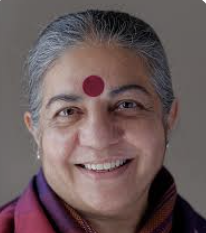
Principles of Earth Democracy, #10: Earth Democracy connects people in circles of care, cooperation, and compassion instead of dividing them through competition and conflict, fear and hatred. In the face of a world of greed, inequality, and overconsumption, Earth Democracy globalizes compassion, justice, and sustainability.
▼
Source
source
(p. 11)

2 months 3 weeks ago
The heart is everywhere, and each part of the organism is only the specialized force of the heart itself.

2 months 2 weeks ago
An entire mythology is stored within our language.
▼
Source
source
Ch. 7 : Remarks on Frazer's Golden Bough, p. 133
1 month 4 days ago
It is true that parents today are learning to enhance the physical qualities of their children. But their minds and characters they cannot mould. The antiquated system of education and our perverse social influences unfortunately do that. In view of the numerous misfit and marred children these institutions have created, I am quite content not to have contributed any of my own.

1 month 3 weeks ago
So to be patriots as not to forget we are gentlemen.

3 months 2 weeks ago
The machine is only a tool after all, which can help humanity progress faster by taking some of the burdens of calculations and interpretations off its back. The task of the human brain remains what it has always been; that of discovering new data to be analyzed, and of devising new concepts to be tested.
2 weeks 5 days ago
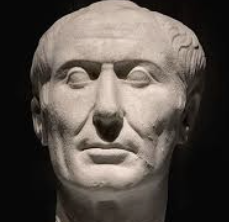
Everything is worth what its purchaser will pay for it.
▼
Source
source
Maxim 847
2 months 1 week ago
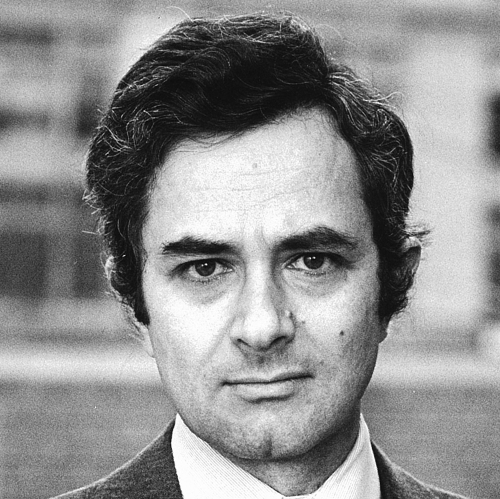
Any reductionist program has to be based on an analysis of what is to be reduced. If the analysis leaves something out, the problem will be falsely posed.
▼
Source
source
p. 167.
2 months 4 weeks ago
He who should teach men to die would at the same time teach them to live.
▼
Source
source
Ch. 18. That Men are not to judge of our Happiness till after Death, tr. Cotton, rev. W. Hazlitt, 1842

3 months 1 day ago
In living bodies, how all the various limbs harmonize, and mutually combine, for common defence against injury! What can be more heterogeneous, and unlike, than the body and the soul? and yet with what strong bonds nature has united them, is evident from the pang of separation. As life itself is nothing else but the concordant union of body and soul, so is health the harmonious cooperation of all the parts and functions of the body.
1 month 2 weeks ago
He who has never envied the vegetable has missed the human drama.
▼
Source
source
p. 178, first American edition
1 month 1 week ago
Even after his conversion, the true 'apostate' is not primarily committed to the positive contents of his new belief and to the realization of its aims. He is motivated by the struggle against the old belief and lives on for its negation. The apostate does not affirm his new convictions for their own sake; he is engaged in a continuous chain of acts of revenge against his own spiritual past. In reality he remains a captive of this past, and the new faith is merely a handy frame of reference for negating and rejecting the old. As a religious type, the apostate is therefore at the opposite pole from the 'resurrected,' whose life is transformed by a new faith which is full of intrinsic meaning and value.
▼
Source
source
L. Coser, trans. (1973), pp. 66-67

2 months 3 weeks ago
Among a people without fellow-feeling, especially if they read and speak different languages, the united public opinion, necessary to the working of the representative government, cannot exist.
▼
Source
source
Ch. XVI: Of Nationality, As Connected with Representative Government (p. 382)
CivilSimian.com created by AxiomaticPanic, CivilSimian, Kalokagathia