

1 month 2 weeks ago
That higher and "complete" man is begotten by the "unknown" father and born from Wisdom, and it is he who, in the figure of the puer aeternus-"vultu mutabilis albus et ater"-represents our totality, which transcends consciousness. It was this boy into whom Faust had to change, abandoning his inflated onesidedness which saw the devil only outside. Christ's "Except ye become as little children" is a prefiguration of this, for in them the opposites lie close together; but what is meant is the boy who is born from the maturity of the adult man, and not the unconscious child we would like to remain.
▼
Source
source
Answer to Job, R. Hull, trans. (1984), pp. 157-158
3 months 2 weeks ago
"My field," said Goethe, "is time." That is indeed the absurd speech. What, in fact, is the Absurd Man? He who, without negating it, does nothing for the eternal. Not that nostalgia is foreign to him. But he prefers his courage and his reasoning. The first teaches him to live without appeal and to get along with what he has; the second informs him of his limits. Assured of his temporally limited freedom, of his revolt devoid of future, and of his mortal consciousness, he lives out his adventure within the span of his lifetime.
2 months 3 weeks ago
The speaker with whom I was most struck, though I dissented from nearly every word he said, was Thirlwall, the historian, since Bishop of St. David's, then a Chancery barrister, unknown except by a high reputation for eloquence acquired at the Cambridge Union before the era of Austin and Macaulay. His speech was in answer to one of mine. Before he had uttered ten sentences, I set him down as the best speaker I had ever heard, and I have never since heard any one whom I placed above him.
▼
Source
source
(p. 125)
2 months 1 week ago
Speciesism is an attitude of prejudice towards beings because they're not members of our species, so just as racism means that you're prejudiced against beings who are not members of your race and sexism means you're prejudiced against people of the other sex. So we humans tend to be speciesist in we think that any being that is a member of the species homo sapien just automatically has a higher moral status and is more important than any being that is a member of any other species, irrespective of the actual characteristics of those beings.
▼
Source
source
Peter Singer - The Genius of Darwin: The Uncut Interviews - Richard Dawkins, 2009.
2 months 3 weeks ago
There are some simple maxims [...] which I think might be commanded to writers of expository prose. First: never use a long word if a short word will do. Second: if you want to make a statement with a great many qualifications, put some of the qualifications in separate sentences. Third: do not let the beginning of your sentence lead the reader to an expectation which is contradicted by the end.
▼
Source
source
"How I Write", The Writer, September 1954
2 months 2 weeks ago
A new word is like a fresh seed sown on the ground of the discussion.
1 week ago
The only medicine for suffering, crime, and all the other woes of mankind, is wisdom.
1 month 3 weeks ago
The effect of liberty to individuals is, that they may do what they please: we ought to see what it will please them to do, before we risk congratulations.
2 weeks 1 day ago
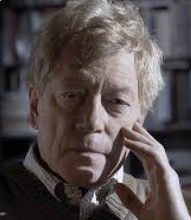
Democracies owe their existence to national loyalties - the loyalties that are supposedly shared by government and opposition, by all political parties, and by the electorate as a whole. Wherever the experience of nationality is weak or non-existent, democracy has failed to take root. For without national loyalty, opposition is a threat to government, and political disagreements create no common ground.
2 weeks 5 days ago
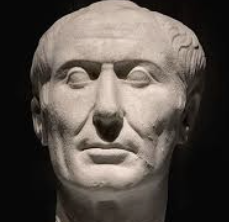
Audacity augments courage; hesitation, fear.
▼
Source
source
Maxim 63 Variant translation: "Valour grows by daring, fear by holding back."
3 months 1 day ago
The logic now in use serves rather to fix and give stability to the errors which have their foundation in commonly received notions than to help the search for truth. So it does more harm than good.
▼
Source
source
Aphorism 7
2 months 2 weeks ago
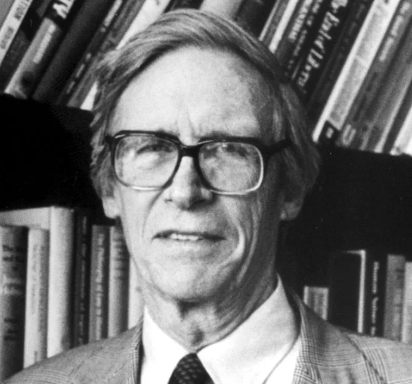
We may suppose that everyone has in himself the whole form of a moral conception.
▼
Source
source
Chapter I, Section 9, pg. 50
1 month 2 weeks ago
When I happen to be satisfied with everything, even God and myself, I immediately react like the man who, on a brilliant day, torments himself because the sun is bound to explode in a few billion years.
2 months 3 weeks ago
The only thing we are naturally afraid of is pain, or loss of pleasure. And because these are not annexed to any shape, colour, or size of visible objects, we are frighted of none of them, till either we have felt pain from them, or have notions put into us that they will do us harm.
▼
Source
source
Sec. 115
1 month 1 week ago
Art expresses, it does not state; it is concerned with existences in their perceived qualities, not with conceptions symbolized in terms.
▼
Source
source
p. 139
2 months 3 weeks ago
To what shall the character of utility be ascribed, if not to that which is a source of pleasure?
▼
Source
source
Théorie des peines et des récompenses (1811); translation by Richard Smith, The Rationale of Reward, J. & H. L. Hunt, London, 1825, Bk. 3, Ch. 1

2 months 3 weeks ago
Whatever you do, crush the infamous thing, and love those who love you.
▼
Source
source
Letter to Jean le Rond d'Alembert (28 November 1762);
2 weeks 5 days ago
Primitivism has become the vulgar cliche of much modern art and speculation.
▼
Source
source
(p. 77)
3 weeks 3 days ago
Particularly in the case of all professional of press-images which testify of the real events. In making reality, even the most violent, emerge to the visible, it makes the real substance disappear. It is like the Myth of Eurydice : when Orpheus turns around to look at her, she vanishes and returns to hell. That is why, the more exponential the marketing of images is growing the more fantastically grows the indifference towards the real world. Finally, the real world becomes a useless function, a collection of phantom shapes and ghost events. We are not far from the silhouettes on the walls of the cave of Plato.
1 month 1 week ago
Every great advance in science has issued from a new audacity of imagination.
▼
Source
source
The Quest for Certainty (1929), Ch. XI

1 month 2 weeks ago
The philosopher ... subjects experience to his critical judgment, and this contains a value judgment - namely, that freedom from toil is preferable to toil, and an intelligent life is preferable to a stupid life. It so happened that philosophy was born with these values. Scientific thought had to break this union of value judgment and analysis, for it became increasingly clear that the philosophic values did not guide the organisation of society.
▼
Source
source
p. 126
2 months 1 week ago
Truthfulness under oath is, by now, a matter of our civic religion, our relation to our fellow citizens rather than our relation to a nonhuman power.
▼
Source
source
"John Searle on Realism and Relativism." Truth and Progress: Philosophical Papers, Volume 3 (1998).
1 month 3 weeks ago
Yes, I dreamed a dream, my dream of the third of November. They tease me now, telling me it was only a dream. But does it matter whether it was a dream or reality, if the dream made known to me the truth? If once one has recognized the truth and seen it, you know that it is the truth and that there is no other and there cannot be, whether you are asleep or awake. Let it be a dream, so be it, but that real life of which you make so much I had meant to extinguish by suicide, and my dream, my dream - oh, it revealed to me a different life, renewed, grand and full of power!
2 months 2 weeks ago
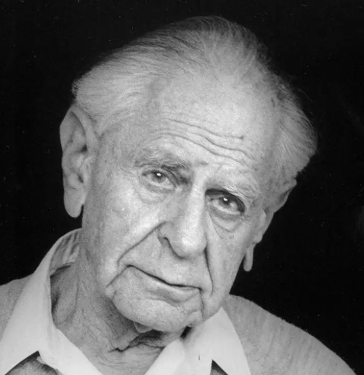
One of the ideas I had discussed in The Poverty of Historicism was the influence of a prediction upon the event predicted. I had called this the "Oedipus effect", because the oracle played a most important role in the sequence of events which led to the fulfilment of its prophecy. ... For a time I thought that the existence of the Oedipus effect distinguished the social from the natural sciences. But in biology, too-even in molecular biology-expectations often play a role in bringing about what has been expected.
▼
Source
source
Page 29

1 month 3 weeks ago
It is the common wonder of all men, how among so many million of faces there should be none alike.
▼
Source
source
Section 2
1 month 1 week ago
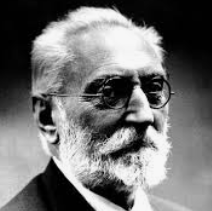
It is the furious longing to give finality to the Universe, to make it conscious and personal, that has brought us to believe in God, to wish that God may exist, to create God, in a word. To create Him, yes! This saying ought not to scandalize even the most devout theist. For to believe in God is, in a certain sense, to create Him, although He first creates us. It is He who is continually creating Himself.
2 weeks 5 days ago
All media of communications are cliches serving to enlarge man's scope of action, his patterns of associations and awareness. These media create environments that numb our powers of attention by sheer pervasiveness.
1 month 3 days ago
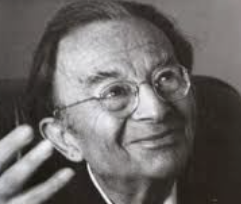
I believe that one can and must hope for a sane society that furthers man's capacity to love his fellow men, to work and create, to develop his reason and his objectivity of a sense of himself that is based on the experience of his productive energy. I believe that one can and must hope for the collective regaining of a mental health that is characterized by the capacity to love and to create...
1 month 3 weeks ago
Men without their choice derive benefits from that association; without their choice they are subjected to duties in consequence of these benefits; and without their choice they enter into a virtual obligation as binding as any that is actual. Look through the whole of life and the whole system of duties. Much the strongest moral obligations are such as were never the results of our option. I allow, that if no supreme ruler exists, wise to form, and potent to enforce, the moral law, there is no sanction to any contract, virtual or even actual, against the will of prevalent power. On that hypothesis, let any set of men be strong enough to set their duties at defiance, and they cease to be duties any longer.
▼
Source
source
p. 442
2 weeks 5 days ago
Civilization gives the barbarian or tribal man an eye for an ear and is now at odds with the electronic world.
▼
Source
source
(p. 30)
2 months 1 week ago
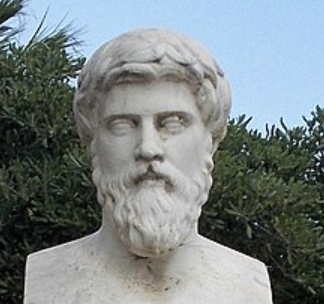
There were two brothers called Both and Either; perceiving Either was a good, understanding, busy fellow, and Both a silly fellow and good for little, Philip said, "Either is both, and Both is neither."
▼
Source
source
35 Philip

2 months 4 weeks ago
The first law that ever God gave to man was a law of pure obedience; it was a commandment naked and simple, wherein man had nothing to inquire after, nor to dispute; forasmuch as to obey is the proper office of a rational soul, acknowledging a heavenly superior and benefactor.
▼
Source
source
Ch. 12, tr. Cotton, 1685
2 months 4 weeks ago
Out of special hatred for our faith, the devil has sent some whores here to destroy our poor young men . . . such a syphilitic whore can poison ten, twenty, thirty or more of the children of good people, and thus is to be considered a murderer, or worse, as a poisoner.
1 month 3 weeks ago
Where popular authority is absolute and unrestrained, the people have an infinitely greater, because a far better founded, confidence in their own power. They are themselves, in a great measure, their own instruments. They are nearer to their objects. Besides, they are less under responsibility to one of the greatest controlling powers on the earth, the sense of fame and estimation. The share of infamy that is likely to fall to the lot of each individual in public acts is small indeed; the operation of opinion being in the inverse ratio to the number of those who abuse power. Their own approbation of their own acts has to them the appearance of a public judgment in their favor. A perfect democracy is, therefore, the most shameless thing in the world. As it is the most shameless, it is also the most fearless. No man apprehends in his person that he can be made subject to punishment.
1 month 1 week ago
The basic word I-Thou can be spoken only with one's whole being. The concentration and fusion into a whole being can never be accomplished by me, can never be accomplished without me. I require a Thou to become; becoming I, I say Thou.
2 weeks 5 days ago
Radical changes of identity, happening suddenly and in very brief intervals of time, have proved more deadly and destructive of human values than wars fought with hardware weapons.
▼
Source
source
p. 97
2 weeks 5 days ago
Newton, and 'proper scientific method' after him, conducted attention to 'continuous description' of experimental phenomena instead of to causes.
▼
Source
source
p. 50

2 months 3 weeks ago
The more you obey your conscience, the more your conscience will demand of you.
▼
Source
source
Book IV, Chapter 8, "Is Christianity Hard or Easy?"
1 month 1 week ago
We live in a nightmare of falsehoods, and there are few who are sufficiently awake and aware to see things as they are. Our first duty is to clear away illusions and recover a sense of reality. If war should come, it will do so on account of our delusions, for which our hag-ridden conscience attempts to find moral excuses. To recover a sense of reality is to recover the truth about ourselves and the world in which we live, and thereby to gain the power of keeping this world from flying asunder.
▼
Source
source
p. 80
3 months 1 week ago
Of Every One-Hundred Men, Ten shouldn't even be there, Eighty are nothing but targets, Nine are real fighters... We are lucky to have them... They make the battle. Ah but the One, One of them is a Warrior... and He will bring the others back.
1 month 3 weeks ago
The strides of humanity are slow, they can only be counted in centuries.
▼
Source
source
Act II.
2 weeks 5 days ago
We should provide in peace what we need in war.
▼
Source
source
Maxim 709
1 month 4 weeks ago
Since I have spread my wings to purpose high, The more beneath my feet the clouds I see, The more I give the winds my pinions free, Spurning the earth and soaring to the sky.
▼
Source
source
As quoted in "Giordano Bruno" by Thomas Davidson, in The Index Vol. VI. No. 36 (4 March 1886), p. 429
2 weeks 4 days ago
The patient typically finds himself impelled by some deep, inner conviction that something is true, or right, or virtuous: a conviction that doesn't seem to owe anything to evidence or reason, but which, nevertheless, he feels as totally compelling and convincing. We doctors refer to such a belief as "faith".
1 month 2 weeks ago
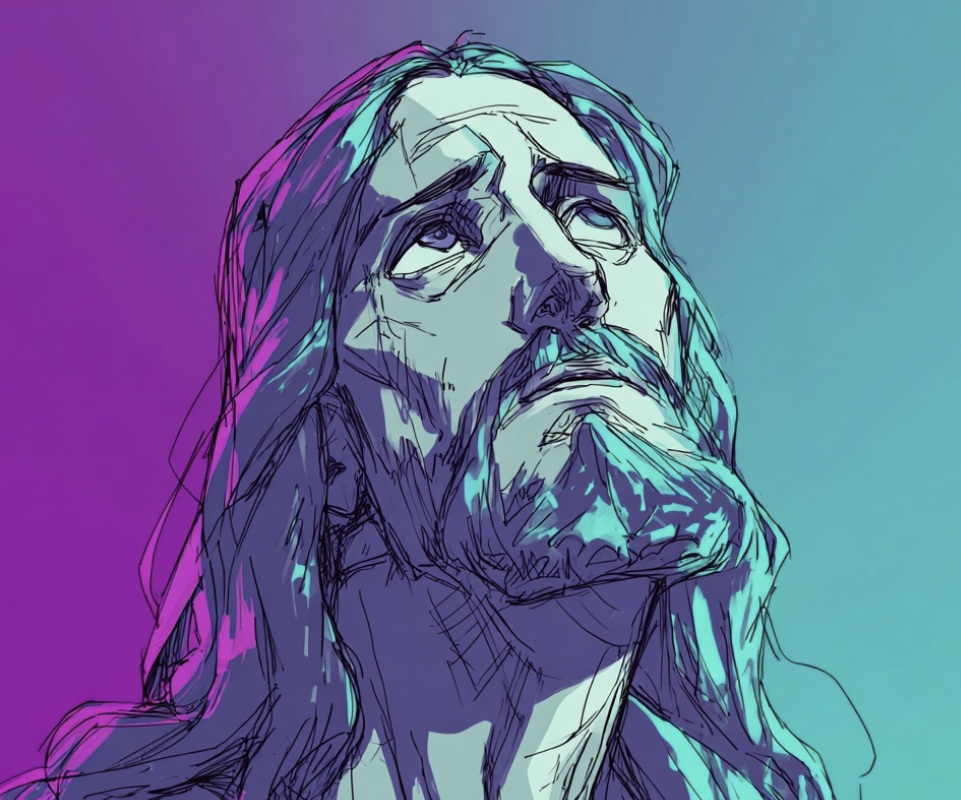
Simon Peter said to Him, "Let Mary leave us, for women are not worthy of Life." Jesus said, "I myself shall lead her in order to make her male, so that she too may become a living spirit resembling you males. For every woman who will make herself male will enter the Kingdom of Heaven."
2 months 3 weeks ago
There is no logical impossibility in the hypothesis that the world sprang into being five minutes ago, exactly as it then was, with a population that "remembered" a wholly unreal past. There is no logically necessary connection between events at different times; therefore nothing that is happening now or will happen in the future can disprove the hypothesis that the world began five minutes ago.
▼
Source
source
The Analysis of Mind (1921), Lecture IX: Memory, p. 159
2 weeks 5 days ago
In tetrad form, the artefact is seen to be not netural or passive, but an active logos or utterance of the human mind or body that transforms the user and his ground.
▼
Source
source
p. 99

1 month 2 weeks ago
At the present time a serious, strong state can have but one sound foundation - military and bureaucratic centralization. Between a monarchy and the most democratic republic there is only one essential difference: in the former, the world of officialdom oppresses and robs the people for the greater profit of the privileged and propertied classes, as well as to line its own pockets, in the name of the monarch; in the latter, it oppresses and robs the people in exactly the same way, for the benefit of the same classes and the same pockets, but in the name of the people's will. In a republic a fictitious people, the "legal nation" supposedly represented by the state, smothers the real, live people. But it will scarcely be any easier on the people if the cudgel with which they are beaten is called the people's cudgel.
CivilSimian.com created by AxiomaticPanic, CivilSimian, Kalokagathia