


2 months 2 weeks ago
But in fact there is no circle at all in the formulation of our question. Beings can be determined in their being without the explicit concept of the meaning of being having to be already available. If this were not so there could not have been as yet any ontological knowledge. And probably no one would deny the factual existence of such knowledge. It is true that "being" is "presupposed" in all previous ontology, but not as an available concept-not as the sort of thing we are seeking.
▼
Source
source
Introduction: The Exposition of the Question of the Meaning of Being (Stambaugh translation)

1 month 1 week ago
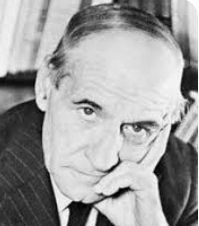
No human acquisition is stable. Even what appears to us most completely won and consolidated can disappear in a few generations. This thing we call "civilization" - all these physical and moral comforts, all these conveniences, all these shelters, all these virtues and disciplines which have become habit now, on which we count, and which in effect constitute a repertory or system of securities which man made for himself like a raft in the initial shipwreck which living always is - all these securities are insecure securities which in the twinkling of an eye, at the least carelessness, escape from man's hands and vanish like phantoms.
▼
Source
source
p. 25
3 months 6 days ago
No thing great is created suddenly, any more than a bunch of grapes or a fig. If you tell me that you desire a fig, I answer you that there must be time. Let it first blossom, then bear fruit, then ripen.
▼
Source
source
Book I, ch. 15, 7.
2 weeks 5 days ago
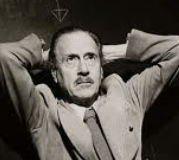
Cartoons drove the photo back to myth and dream screen.

3 months 3 weeks ago
Not merely in the realm of commerce but in the world of ideas as well our age is organizing a regular clearance sale. Everything is to be had at such a bargain that it is questionable whether in the end there is anybody who will want to bid. Every speculative price-fixer who conscientiously directs attention to the significant march of modern philosophy, every Privatdocent, tutor, and student, every crofter and cottar goes further. Perhaps it would be untimely and ill-timed to ask them where they are going.
2 months 3 weeks ago
We forfeit three-fourths of ourselves in order to be like other people.
▼
Source
source
As attributed in Dictionary of Quotations from Ancient and Modern English and Foreign Sources (1899) by James Wood, p. 624
2 months 3 weeks ago
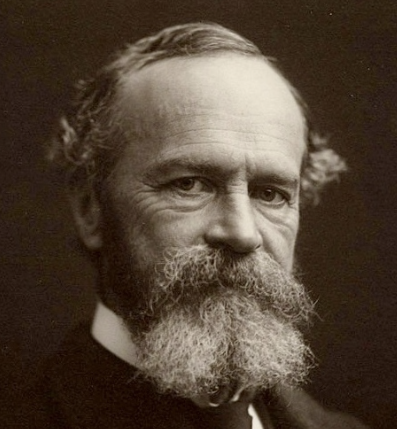
Genius, in truth, means little more than the faculty of perceiving in an unhabitual way.
▼
Source
source
Ch. 19
1 month 2 weeks ago
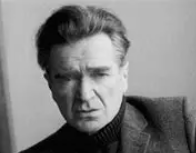
It is an understatement to say that in this society injustices abound: in truth, it is itself the quintessence of injustice.
1 month 3 weeks ago
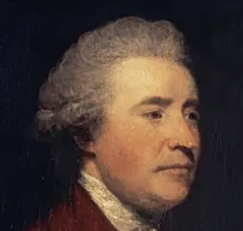
Religious persecution may shield itself under the guise of a mistaken and over-zealous piety.
▼
Source
source
Speech in opening the impeachment of Warren Hastings (18 February 1788), quoted in The Works of the Right Honourable Edmund Burke, Volume the Tenth (1899), pp. 7-8


1 month 2 weeks ago
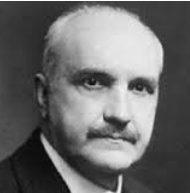
Every moment celebrates obsequies over the virtues of its predecessor.
▼
Source
source
Ch. XIV
2 months 3 weeks ago
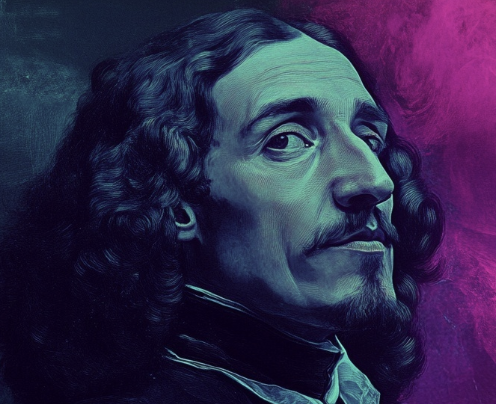
Of all the things that are beyond my power, I value nothing more highly than to be allowed the honor of entering into bonds of friendship with people who sincerely love truth. For, of things beyond our power, I believe there is nothing in the world which we can love with tranquility except such men.
▼
Source
source
Spinoza, Correspondence, 146, Letter xix
1 month 1 week ago
Having given up autonomy, reason has become an instrument.
▼
Source
source
p. 21.

1 month 2 weeks ago
Marx explains the alienation of labor as exemplified in, first, the relation of the worker to the product of his labor and, second, the relation of the worker to his own activity. P. 276
1 month 2 weeks ago
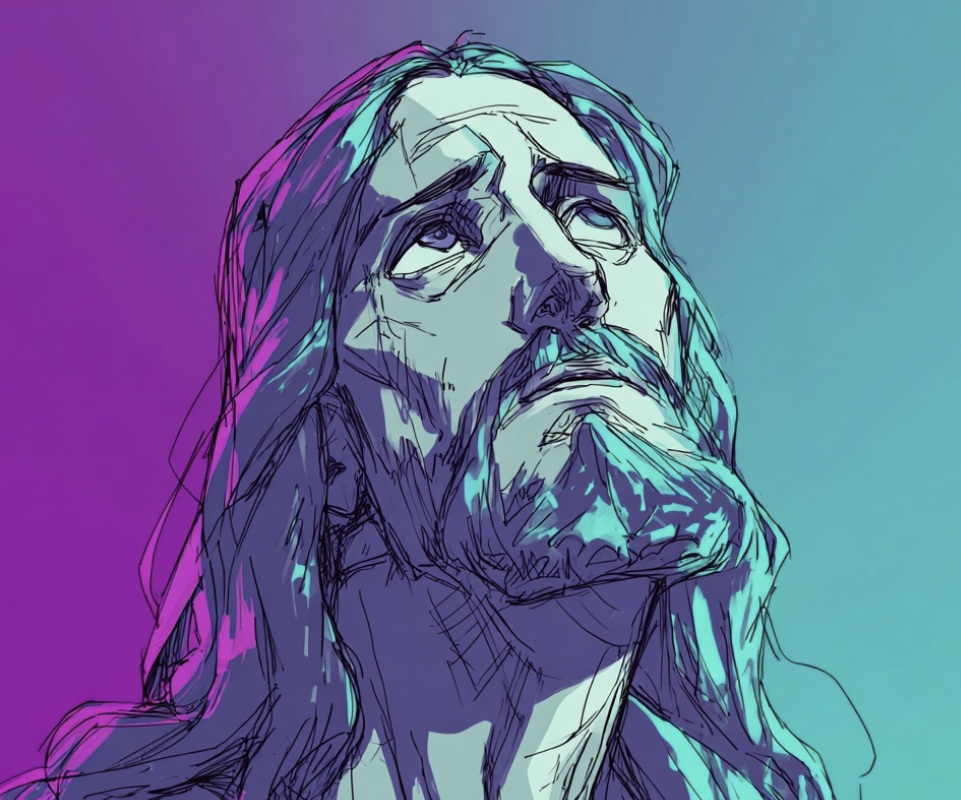
Can the children of the bridechamber mourn, as long as the bridegroom is with them? but the days will come, when the bridegroom shall be taken from them, and then shall they fast. No man putteth a piece of new cloth unto an old garment, for that which is put in to fill it up taketh from the garment, and the rent is made worse. Neither do men put new wine into old bottles: else the bottles break, and the wine runneth out, and the bottles perish: but they put new wine into new bottles, and both are preserved.
▼
Source
source
9:15-17 (KJV)
1 month 1 week ago
The Ottoman Empire whose sick body was not supported by a mild and regular diet, but by a powerful treatment, which continually exhausted it.
▼
Source
source
No. 19. (Usbek writing to Rustan)
2 months 5 days ago
Soul, indeed, is a certain medium between an impartible essence, and an essence which is divisible about bodies. But intellect is an impartible essence alone. And qualities and material forms are divisible about bodies. Not everything which acts on another, effects that which it does effect by approximation and contact; but those natures which effect any thing by approximation and contact, use approximation accidentally.
2 months 3 weeks ago
[T]hings are impressed better by active than by passive repetition. ...[I]t pays better to wait and recollect by an effort from within, than to look at the book again.
▼
Source
source
Ch. 16

2 months 3 weeks ago
Superstition is to religion what astrology is to astronomy, the mad daughter of a wise mother. These daughters have too long dominated the earth.
▼
Source
source
"Whether it is useful to maintain the people in superstition," Treatise on Toleration, 1763
1 month 3 weeks ago
To be in love is not the same as loving. You can be in love with a woman and still hate her.

1 month 3 weeks ago
On its pass through finitude, the being-for-itself of the counter-image expresses itself most potently as ""I-ness", as self-identical individuality. Just as a planet in its orbit no sooner reaches its farthest distance from the center than it returns to its closest proximity, so the point of the farthest distance from God, the I-ness, is also the moment of its return to the Absolute, of the re-absorption into the ideal.
▼
Source
source
P. 30
2 months 1 week ago
Cato requested old men not to add the disgrace of wickedness to old age, which was accompanied with many other evils.
▼
Source
source
Cato the Elder
2 months 3 weeks ago
The mind intent upon resolving as well as compounding the concept of a composite demands and presumes boundaries in which it may acquiesce in the former as well as in the latter direction.

3 months ago
Faith is born and preserved in us by preaching why Christ came, what he brought and gave to us, and the benefits we obtain when we receive him. This happens when Christian liberty - which he gives to us - is rightly taught and we are told in what way as Christians we are all kings and priests and therefore lords of all.
▼
Source
source
p. 70
2 months 3 weeks ago
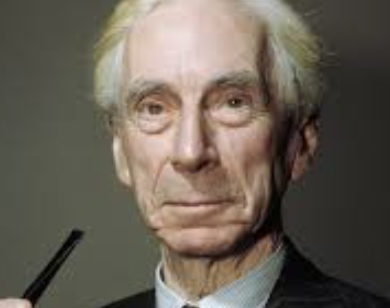
In a logically perfect language, there will be one word and no more for every simple object, and everything that is not simple will be expressed by a combination of words, by a combination derived, of course, from the words for the simple things that enter in, one word for each simple component.

2 months 3 days ago
Evil destroyeth itself.
2 months 3 weeks ago
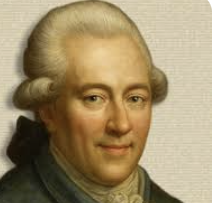
Doctors are men who prescribe medicine of which they know little, to human beings of whom they know less, to cure diseases of which they know nothing.
▼
Source
source
Note: This attribution to Voltaire appears in Strauss' Familiar Medical Quotations (1968), p. 394, and in publications as early as 1956
1 month 1 day ago
It is said that truth comes from the mouths of fools and children: I wish every good mind which feels an inclination for satire would reflect that the finest satirist always has something of both in him.
▼
Source
source
J 157
2 months 3 weeks ago
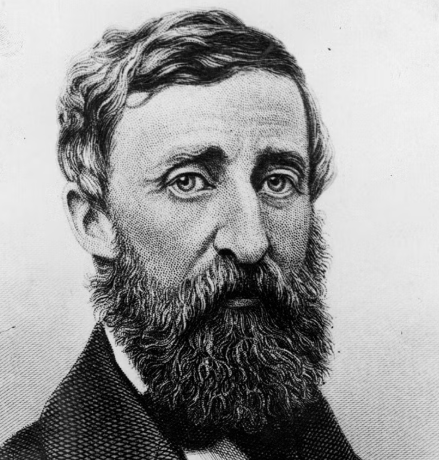
It is remarkable, that almost all speakers and writers feel it to be incumbent on them, sooner or later, to prove or to acknowledge the personality of God. ... In reading a work on agriculture, we have to skip the author's moral reflections, and the words "Providence" and "He" scattered along the page, to come at the profitable level of what he has to say. What he calls his religion is for the most part offensive to the nostrils. ... There is more religion in men's science than there is science in their religion.

3 months 1 day ago
He that gives quickly gives twice.
▼
Source
source
Adagia, 1508

2 months 3 weeks ago
Whatever bitterness and hate may be found in the movements which we are to examine, it is not bitterness or hate, but love, that is their mainspring. It is difficult not to hate those who torture the objects of our love. Though difficult, it is not impossible; but it requires a breadth of outlook and a comprehensiveness of understanding which are not easy to preserve amid a desperate contest. If ultimate wisdom has not always been preserved by Socialists and Anarchists, they have not differed in this from their opponents; and in the source of their inspiration they have shown themselves superior to those who acquiesce ignorantly or supinely in the injustices and oppressions by which the existing system is preserved.
▼
Source
source
Introduction, p. 10.
1 month 6 days ago
Every human being is the natural guardian of his own importance.
▼
Source
source
Ch. 9: "Science and Philosophy", p. 195
2 months 1 week ago
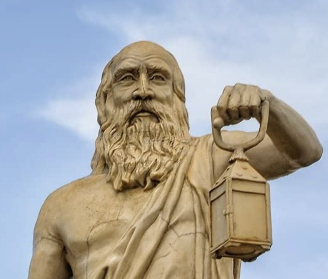
Poverty is a virtue which one can teach oneself.
▼
Source
source
Stobaeus, iv. 32a. 19
2 months 3 weeks ago
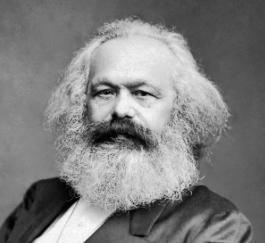
Lincoln is not the product of a popular revolution. This plebeian, who worked his way up from stone-breaker to Senator in Illinois, without intellectual brilliance, without a particularly outstanding character, without exceptional importance-an average person of good will, was placed at the top by the interplay of the forces of universal suffrage unaware of the great issues at stake. The new world has never achieved a greater triumph than by this demonstration that, given its political and social organisation, ordinary people of good will can accomplish feats which only heroes could accomplish in the old world!
2 months 3 weeks ago
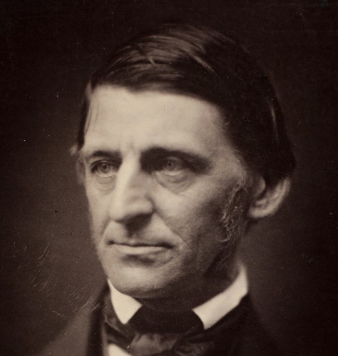
The imagination is not a talent of some men but is the health of every man.
▼
Source
source
Poetry and Imagination
1 month 3 weeks ago
We are taught to believe that a desire of domineering over our countrymen is love to our country; and those who hate civil war abet rebellion, and that the amiable and conciliatory virtues of lenity, moderation, and tenderness to the privileges of those who depend on this kingdom are a sort of treason to the state. It is impossible that we should remain long in a situation, which breeds such notions and dispositions, without some great alteration in the national character.


3 months 2 weeks ago
Titles are an important part of a story and I take considerable care in choosing one. In fact, I cannot start a story until I have chosen a title.
1 month 2 weeks ago
An ardent affection for the human race makes enthusiastic characters eager to produce alteration in laws and governments prematurely. To render them useful and permanent, they must be the growth of each particular soil, and the gradual fruit of the ripening understanding of the nation, matured by time, not forced by an unnatural fermentation.
▼
Source
source
Appendix

2 months 1 week ago
With a malicious man carry on no conflict, and do not molest him in any way whatever.
2 months 4 weeks ago
Wars begin when you will, but they do not end when you please. Variant translation: Wars are begun at will but not ended at will.
▼
Source
source
Book III, Chapter 7.
6 months 3 weeks ago
I believe in clear-cut positions. I think that the most arrogant position is this apparent, multidisciplinary modesty of "what I am saying now is not unconditional, it is just a hypothesis," and so on. It really is a most arrogant position. I think that the only way to be honest and expose yourself to criticism is to state clearly and dogmatically where you are. You must take the risk and have a position.
3 months 2 weeks ago
It is surely better to be wronged than to do wrong.
2 weeks 1 day ago
In the greatest confusion there is still an open channel to the soul. It may be difficult to find because by midlife it is overgrown, and some of the wildest thickets that surround it grow out of what we describe as our education. But the channel is always there, and it is our business to keep it open, to have access to the deepest part of ourselves.
▼
Source
source
Foreword to The Closing of the American Mind by Allan Bloom
2 months 3 weeks ago
Wit makes its own welcome, and levels all distinctions. No dignity, no learning, and no force of character can make any stand against good wit.
▼
Source
source
The Comic
3 weeks 3 days ago
Just acquiring this amount of "education" will not, by itself, make you an educated person, even less will it give you what Oakeshott calls "judgment." But if the manner of instruction is adequate, the student should be able to acquire this much knowledge in a way that combines intellectual openness, critical scrutiny, and logical clarity. If so, learning will not stop when the student leaves the university.
1 month 2 weeks ago
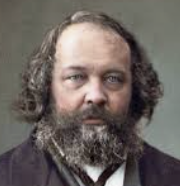
A person is strong only when he stands upon his own truth, when he speaks and acts from his deepest convictions. Then, whatever the situation he may be in, he always knows what he must say and do. He may fall, but he cannot bring shame upon himself or his cause. If we seek the liberation of the people by means of a lie, we will surely grow confused, go astray, and lose sight of our objective, and if we have any influence at all on the people we will lead them astray as well - in other words, we will be acting in the spirit of reaction and to its benefit.
▼
Source
source
"Appendix A"
2 months 3 weeks ago
An act has no ethical quality whatever unless it be chosen out of several all equally possible.
▼
Source
source
Ch. 9
CivilSimian.com created by AxiomaticPanic, CivilSimian, Kalokagathia