
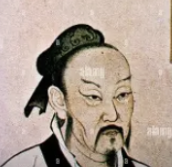
Mencius — The Philosopher of Innate Human Goodness (372–289 BCE)
Mencius was one of the most important thinkers in the Confucian tradition. Living about a century after Confucius, he became the philosopher who developed and expanded Confucian ideas into a powerful moral philosophy.
His central claim was bold and optimistic: human beings are naturally inclined toward goodness.
According to Mencius, cruelty and corruption do not arise from human nature itself but from harmful environments, bad leadership, and neglected moral development.
The Heir of Confucius
Mencius lived during the turbulent period of Chinese history known as the Warring States era.
Competing kingdoms fought for power, and philosophers traveled from court to court advising rulers on how to govern.
Mencius served as a political advisor and argued passionately for humane and moral government.
He believed rulers must govern through virtue rather than fear or punishment.
“The people are the most important element in a nation; the ruler is the least.”
The Sprouts of Virtue
Mencius taught that every human being possesses what he called the “sprouts” of moral virtue.
These sprouts are the beginnings of four key virtues:
compassion, shame, respect, and a sense of right and wrong.
Just as plants grow when properly nurtured, these moral capacities develop when supported by education, culture, and good social institutions.
When neglected, they can wither.
“The feeling of compassion is the beginning of humanity.”
The Famous Child at the Well
To illustrate his theory, Mencius described a famous thought experiment.
Imagine seeing a small child about to fall into a well.
Almost anyone, he argued, would feel immediate alarm and compassion.
This reaction does not arise from calculation or a desire for praise.
It arises naturally from the human heart.
For Mencius, this spontaneous moral response reveals the goodness embedded within human nature.
“The heart that cannot bear to see the suffering of others is the root of human virtue.”
Moral Government
Mencius believed that political stability depends on the moral character of rulers.
When leaders govern with compassion and justice, the people naturally respond with loyalty and cooperation.
When rulers exploit or neglect their people, rebellion becomes morally justified.
In this way, Mencius developed an early theory of moral accountability in government.
“He who uses force will gain followers for a time; he who governs with virtue gains their hearts.”
Legacy — The Optimistic View of Humanity
Mencius became one of the most revered philosophers in the Confucian tradition.
For centuries, his writings were studied throughout China as part of the classical education of scholars and officials.
His belief in the natural moral potential of human beings stands as one of the most influential optimistic visions in the history of philosophy.
In a world often marked by conflict and injustice, Mencius insisted that the roots of goodness are already present within the human heart.
“If people are given a livelihood, they will develop a moral life.”
CivilSimian.com created by AxiomaticPanic, CivilSimian, Kalokagathia