
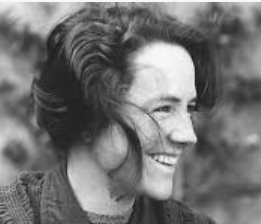
Anne Morrow Lindbergh — The Philosopher of Solitude, Love, and Inner Balance (1906–2001)
Anne Morrow Lindbergh was a writer of inward landscapes — a thinker who transformed private reflection into public wisdom. In an age of acceleration, noise, and spectacle, she defended stillness, contemplation, and the quiet work of the soul. Her philosophy suggests that the deepest truths of life are not discovered through conquest, but through attention.
A Life Between Sky and Page
Born into an accomplished American family, Lindbergh was educated at Smith College and grew up surrounded by literature, politics, and public life. Her marriage to aviator Charles Lindbergh drew her into global attention, thrusting her into a world of fame, travel, and scrutiny.
Yet she did not become merely an observer of events. She became their interpreter — recording experience with a sensitivity that transformed daily life into philosophical meditation.
“It is a good thing to have all the props pulled out from under us occasionally.”
Solitude as Renewal
Lindbergh’s most beloved book, Gift from the Sea, explores solitude not as loneliness, but as nourishment. She believed that modern life fragments the self through constant obligation and distraction.
Solitude restores wholeness. In silence, one remembers what truly matters.
Retreat, for Lindbergh, is not escape from life. It is preparation for living it well.
“The sea does not reward those who are too anxious, too greedy, or too impatient.”
The Discipline of Simplicity
Central to her philosophy is the idea of simplification. Modern culture, she argued, multiplies possessions, roles, and expectations until individuals lose their center.
True fulfillment requires deliberate reduction — fewer commitments, fewer distractions, fewer illusions.
Simplicity is not deprivation. It is clarity.
“To live consciously, we must learn to simplify.”
Love as Growth, Not Possession
Lindbergh reflected deeply on relationships, especially marriage and friendship. She rejected the romantic ideal that love requires constant closeness or total fusion.
Instead, she believed that enduring love depends on distance as well as intimacy. Partners must remain individuals, capable of solitude, if they are to meet each other freely.
Love, in her view, is not ownership. It is mutual unfolding.
“The most exhausting thing in life is being insincere.”
Writing as Contemplation
For Lindbergh, writing was not merely expression. It was a mode of understanding. Journals, letters, and essays allowed her to trace the subtle movements of thought and feeling.
She treated language as a tool for self-knowledge, believing that clarity of words can lead to clarity of life.
Legacy — The Courage to Be Quiet
Anne Morrow Lindbergh’s enduring influence lies not in systems or doctrines, but in orientation. She reminds us that depth is available even within ordinary existence.
Her work stands as a gentle counterargument to the modern cult of speed: meaning grows slowly, like shells shaped by the sea.
To read her is to be invited — not to escape the world, but to return to it with steadier hands and clearer sight.
“Good communication is as stimulating as black coffee, and just as hard to sleep after.”
CivilSimian.com created by AxiomaticPanic, CivilSimian, Kalokagathia