
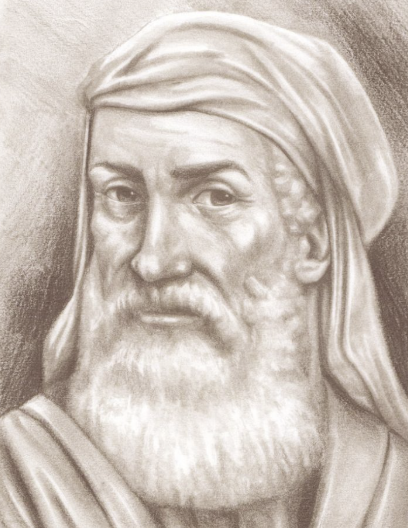
Empedocles of Acragas — The Philosopher Who Tried to Explain Everything (c. 494–434 BCE)
Empedocles was a rare creature in the ancient world: a philosopher, poet, scientist, healer, political agitator, and—depending on whom you ask—a magician or a god. He did not merely speculate about the cosmos. He sang it into being, blending myth and mechanism in an early attempt to explain how change is possible without chaos.
A Public Figure with Cosmic Ambitions
Empedocles was born in Acragas (modern Agrigento) in Sicily, a wealthy Greek city known for luxury and excess. He rejected tyranny, defended democracy, and reportedly refused kingship. Philosophy, for him, was inseparable from civic life.
He dressed dramatically, spoke prophetically, and cultivated an aura of authority. This was not mere vanity. In a world without laboratories or journals, persuasion mattered. Empedocles needed people to listen if they were to rethink how reality itself worked.
“Friends, I know of truths that escape ordinary sight.”
The Four Roots — Matter Without Creation or Destruction
Empedocles rejected the idea that things truly come into being or pass away. Nothing is created from nothing. Nothing is annihilated. What we call birth and death are rearrangements.
He proposed four eternal “roots” of all things: earth, air, fire, and water. These elements do not change into one another. Instead, they mix and separate in different proportions, producing the world of plants, animals, and stars.
“Fools! For they have no far-reaching thoughts, who suppose that what was not comes into being, or that anything perishes and is utterly destroyed.”
Love and Strife — Forces, Not Gods
To explain motion and change, Empedocles introduced two opposing forces: Love (Philia) and Strife (Neikos). Love draws the elements together. Strife pulls them apart.
These are not moral metaphors. They are cosmic principles. The universe moves in cycles: total unity under Love, total separation under Strife, and long intermediate phases—like our own— where mixtures produce life and diversity.
“At one time all things come together in love, at another they are borne apart by hatred’s strife.”
An Early Theory of Evolution
Empedocles offered one of the strangest and most imaginative accounts of life’s origins in antiquity. In early phases of the world, body parts formed independently: wandering limbs, isolated eyes, headless torsos.
Only certain combinations survived. Creatures whose parts happened to fit together endured. The rest vanished. This is not modern evolution, but it is a startling anticipation of natural selection: survival without design.
“Many creatures with faces and breasts sprang up, ill-joined and short-lived.”
Purification, Guilt, and the Soul
Alongside his natural philosophy, Empedocles taught a religious doctrine of the soul. Souls, he believed, were divine beings exiled into mortal bodies as punishment for ancient crimes.
Through cycles of rebirth, purification, and ethical living, the soul could return to divine harmony. Knowledge of nature was not merely intellectual. It was redemptive.
“I have been boy and girl, bush and bird and silent fish in t
CivilSimian.com created by AxiomaticPanic, CivilSimian, Kalokagathia