

1 month 2 weeks ago
That life is worth living is the most necessary of assumptions and, were it not assumed, the most impossible of conclusions.
1 month 2 weeks ago
I often asked myself the following question. There is no doubt that at all times for many men one of the greatest tortures of their lives has been the contact, the collision with the folly of their neighbours. And yet how is it that there has never been attempted - I think this is so - a study on this matter, an Essay on Folly? For the pages of Erasmus do not treat of this aspect of the matter.
▼
Source
source
Chap. VIII: The Masses Intervene In Everything, And Why Their Intervention Is Solely By Violence

1 month 2 weeks ago
If the individual were no longer compelled to prove himself on the market, as a free economic subject, the disappearance of this kind of freedom would be one of the greatest achievements of civilization. The technological processes of mechanization and standardization might release individual energy into a yet uncharted realm of freedom beyond necessity. The very structure of human existence would be altered; the individual would be liberated from the work world's imposing upon him alien needs and alien possibilities. The individual would be free to exert autonomy over a life that would be his own.
▼
Source
source
p. 2
3 months 2 days ago
And I must speak plainly. If I were a judge, I would have such a poisonous, syphilitic whore tortured by being broken on the wheel and having her veins lacerated, for it is not to be denied what damage such a filthy whore does to young blood, so that it is unspeakably damaged before it is even fully grown and destroyed in the blood.
▼
Source
source
pp. 552-554 (1566); cited in Susan C. Karant-Nunn & Merry E. Wiesner-Hanks [editors and translators], Luther on Women: a Sourcebook, Cambridge University Press, 2003, pp. 157-158)
1 month 2 weeks ago
There is no cure for birth and death save to enjoy the interval.
▼
Source
source
"War Shrines"
1 month 2 weeks ago
Were we to undertake an exhaustive self-scrutiny, disgust would paralyze us, we would be doomed to a thankless existence.
1 month 1 week ago
Bourgeois norms are experienced as the evident laws of a natural order-the further the bourgeois class propagates its representations, the more naturalized they become.
▼
Source
source
p. 140
3 weeks 1 day ago
While we stop to think, we often miss our opportunity.
▼
Source
source
Maxim 185

2 months 6 days ago
It is requisite to choose the most excellent life; for custom will make it pleasant. Wealth is an infirm anchor, glory is still more infirm; and in a similar manner, the body, dominion, and honour. For all these are imbecile and powerless. What then are powerful anchors. Prudence, magnanimity, fortitude. These no tempest can shake. This is the Law of God, that virtue is the only thing that is strong; and that every thing else is a trifle.
▼
Source
source
Pythagorean Ethical Sentences From Stobæus
2 months 3 weeks ago
Most human beings have an almost infinite capacity for taking things for granted.
▼
Source
source
"Variations on a Philosopher" in Themes and Variations, 1950
1 month 2 weeks ago
Classical science was based upon the belief that it is possible to formulate both the position and velocity at one time of any given particle. It followed that knowledge of the position and velocity of a given number of particles would enable the future behavior of the whole collection to be accurately predicted. The principle of Heisenberg is that given the determination of position, its velocity can be stated only as of a certain order of probability, while if its velocity is determined the correlative factor of position can be stated only as of a certain order of probability. Both cannot be determined at once, from which it follows necessarily that the future of the whole collection cannot possibly be foretold except in terms of some order of probability.
1 month 1 week ago
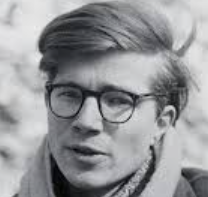
I could see clearly that this problem could only be solved on the individual and personal level; political revolt is irrelevant. Both Camus and Sartre had been neatly hog-tied by their earlier radicalism. Camus came to see that rebellion is a political roundabout that revolves back to the same old tyranny; too ashamed to admit that he had outgrown his leftism, he found himself in an intellectual cul-de-sac. Sartre accused Camus of being a reactionary; but he paid for his own refusal to reexamine his political convictions by congealing into a grotesque attitude of permanent indignation, shaking his fist at some abstract Authority. Where politics is concerned, he seemed determined to be guided by his emotions.
▼
Source
source
p. 101
3 weeks 5 days ago
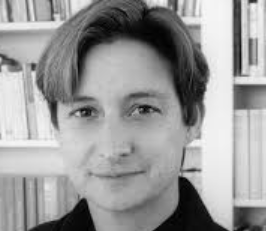
Indeed it may be only by risking the incoherence of identity that connection is possible.
▼
Source
source
Bodies That Matter: On the Discursive Limits of "Sex"
2 months 1 week ago
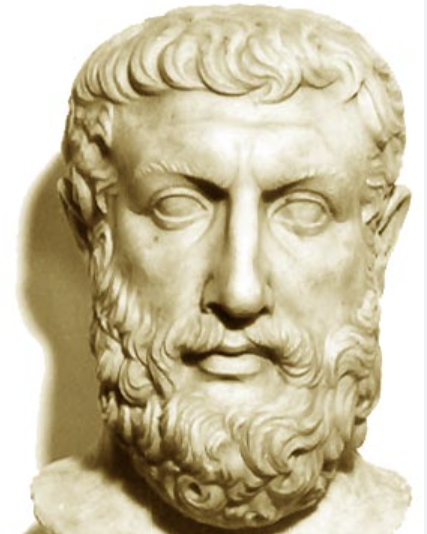
Never will this prevail, that the things that are not are - bar your thought from this road of inquiry.
▼
Source
source
Frag. B 7.1-2, quoted by Plato, Sophist, 237a

3 months 3 weeks ago
A son is a mirror in which the father sees himself reflected, and the father is a mirror in which the son sees himself as he will be in the future.
1 month 3 weeks ago
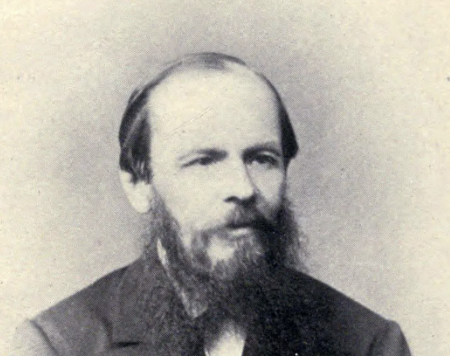
To study the meaning of man and of life - I am making significant progress here. I have faith in myself. Man is a mystery: if you spend your entire life trying to puzzle it out, then do not say that you have wasted your time. I occupy myself with this mystery, because I want to be a man.
▼
Source
source
Personal correspondence (1839), as quoted in Dostoevsky: His Life and Work (1971) by Konstantin Mochulski, as translated by Michael A. Minihan, p. 17
1 month 2 weeks ago
In proportion as a man's interests become humane and his efforts rational, he appropriates and expands a common life, which reappears in all individuals who reach the same impersonal level of ideas.
▼
Source
source
Ch. VIII: Ideal Society
1 month 2 weeks ago
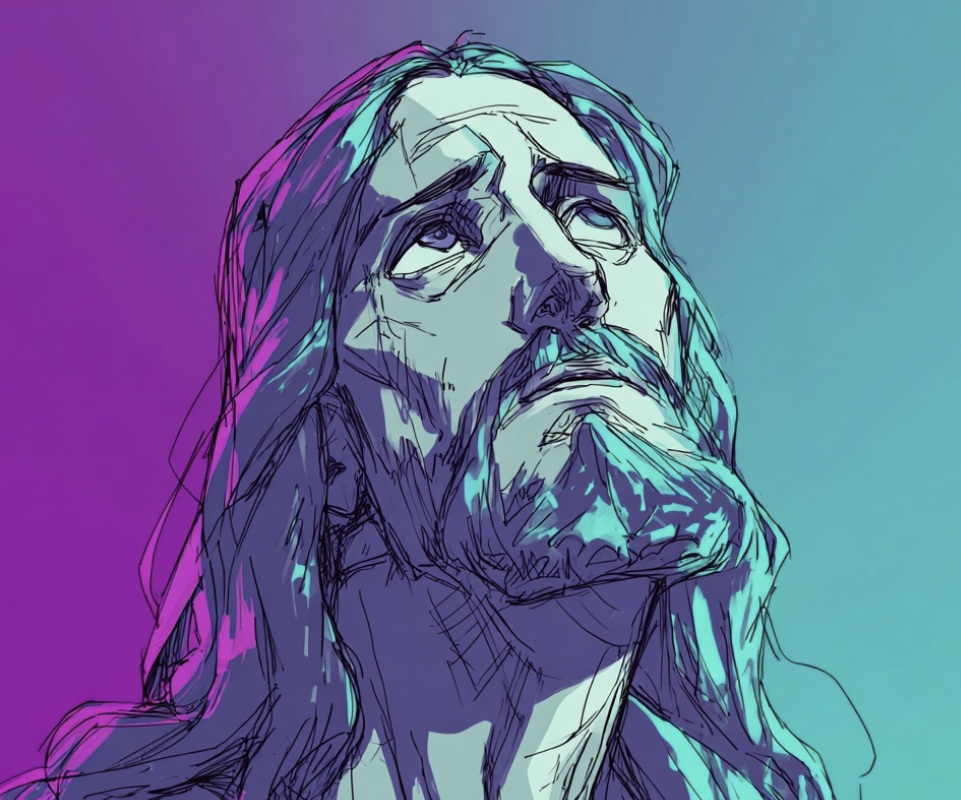
Therefore whoever hears these sayings of Mine, and does them, I will liken him to a wise man who built his house on the rock: and the rain descended, the floods came, and the winds blew and beat on that house; and it did not fall, for it was founded on the rock.
3 months 3 days ago
Nothing is terrible except fear itself.
▼
Source
source
De Augmentis Scientiarum, Book II, "Fortitudo"

2 months ago
The world that I regard is my selfe, it is the Microcosme of mine owne frame, that I cast mine eye on; for the other, I use it but like my Globe, and turne it round sometimes for my recreation. Men that look upon my outside, perusing onely my condition, and fortunes, do erre in my altitude; for I am above Atlas his shoulders.
▼
Source
source
Section 12
1 month 2 weeks ago
Because rhythm is a universal scheme of existence, underlying all realization of order in change, it pervades all the arts, literary, musical, plastic and architectural, as well as the dance. Since man succeeds only as he adapts his behavior to the order of nature, his achievements and victories, as they ensue upon resistance and struggle, become the matrix of all esthetic subject-matter; in some sense they constitute the common pattern of art, the ultimate conditions of form. Their cumulative orders of succession become without express intent the means by which man commemorates and celebrates the most intense and full moments of his experience. Underneath the rhythm of every art and every work of art there lies, as a substratum in the depths of the subconsciousness, the basic pattern of the relations of the live creature to his environment.
▼
Source
source
p. 156
1 month 3 weeks ago
Every step closer to my soul excites the scornful laughter of my devils, those cowardly ear-whisperers and poison-mixers. It was easy for them to laugh, since I had to do strange things.
▼
Source
source
P. 234
1 month 1 week ago
These are the visionary, mystical moments, when a man 'completes his partial mind'. His everyday conscious self is only a small part of the mind, like the final crescent of the moon. In moments of crisis, the full moon suddenly appears.
▼
Source
source
p. 156
3 weeks 1 day ago
Sentimentality, like pornography, is fragmented emotion; a natural consequence of a high visual gradient in any culture.
1 month 2 weeks ago
Anyone can escape into sleep, we are all geniuses when we dream, the butcher's the poet's equal there.
2 months 1 day ago
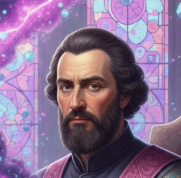
Those wise men knew God to be in things, and Divinity to be latent in Nature, working and glowing differently in different subjects and succeeding through diverse physical forms, in certain arrangements, in making them participants in her, I say, in her being, in her life and intellect.
▼
Source
source
As translated by Arthur Imerti
2 months 3 weeks ago
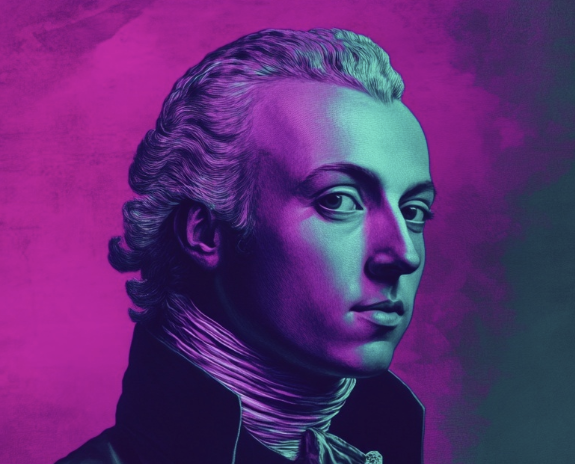
Men will not understand ... that when they fulfil their duties to men, they fulfil thereby God's commandments; that they are consequently always in the service of God, as long as their actions are moral, and that it is absolutely impossible to serve God otherwise.
▼
Source
source
As quoted in German Thought, From The Seven Years' War To Goethe's Death : Six Lectures (1880) by Karl Hillebrand, p. 207
2 months 3 weeks ago
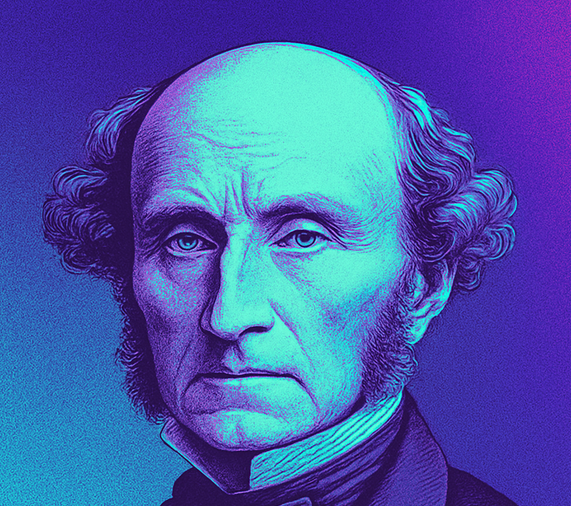
My father's moral inculcations were at all times mainly those of the "Socratici viri;" justice, temperance (to which he gave a very extended application), veracity, perseverance, readiness to encounter pain and especially labour; regard for the public good; estimation of persons according to their merits, and of things according to their intrinsic usefulness; a life of exertion in contradiction to one of self-indulgent sloth. These and other moralities he conveyed in brief sentences, uttered as occasion arose, of grave exhortation, or stern reprobation and contempt.But though direct moral teaching does much, indirect does more; and the effect my father produced on my character, did not depend solely on what he said or did with that direct object, but also, and still more, on what manner of man he was.
▼
Source
source
(p. 47)
2 months 3 weeks ago
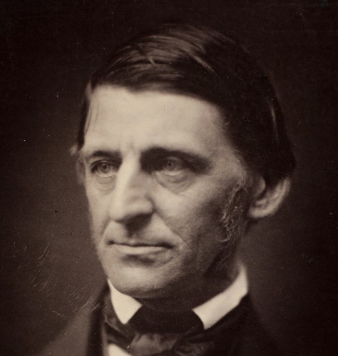
By the rude bridge that arched the flood, Their flag to April's breeze unfurled, Here once the embattled farmers stood, And fired the shot heard round the world.
▼
Source
source
Hymn sung at the Completion of the Battle Monument
1 month 1 week ago
For this is our central human problem: that we are almost constantly the victims of our emotions, always being swept up and down on a kind of inner-switchback. We possess a certain control over them; we can 'direct our thoughts' -- or feelings -- in such a way as to intensify them. This is certainly our most remarkable human characteristic: imagination. Animals require actual physical stimuli to trigger their experience. A man can retreat into a book -- or a daydream -- and live through certain experiences quite independent of the physical world. He can even, for example, imagine a sexual encounter, and not only experience all the appropriate physical responses, but even the sexual climax. Such a curious ability is far beyond the power of any animal.
▼
Source
source
p. 23
2 weeks 6 days ago
It may be that brain hardware has co-evolved with the internal virtual worlds that it creates. This can be called hardware-software co-evolution.
2 months 2 weeks ago
As iron is eaten away by rust, so the envious are consumed by their own passion.
▼
Source
source
§ 5
1 month 2 weeks ago
I know well that many of my readers do not think as I do. This also is most natural and confirms the theorem. For although my opinion turn out erroneous, there will always remain the fact that many of those dissentient readers have never given five minutes' thought to this complex matter. How are they going to think as I do? But by believing that they have a right to an opinion on the matter without previous effort to work one out for themselves, they prove patently that they belong to that absurd type of human being which I have called the "rebel mass." It is precisely what I mean by having one's soul obliterated, hermetically closed. Here it would be the special case of intellectual hermetism.
▼
Source
source
Chap. VIII: The Masses Intervene In Everything, And Why Their Intervention Is Solely By Violence

1 month 4 weeks ago
History, it is easily perceived, is a picture-gallery containing a host of copies and very few originals.
▼
Source
source
p. 88
1 month 2 weeks ago
Subjective reason ... is inclined to abandon the fight with religion by setting up two different brackets, one for science and philosophy, and one for institutionalized mythology, thus recognizing both of them. For the philosophy of objective reason there is no such way out. Since it hold to the concept of objective truth, it must take a positive or a negative stand with regard to the content of established religion.
▼
Source
source
p. 12.
2 months 3 weeks ago
This is the contradiction of racism, colonialism, and all forms of tyranny: in order to treat a man like a dog, one must first recognize him as a man.


2 months 3 weeks ago
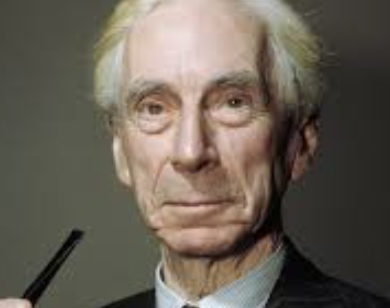
Suppose atomic bombs had reduced the population of the world to one brother and one sister, should they let the human race die out? I do not know the answer, but I do not think it can be in the affirmative merely on the ground that incest is wicked.
▼
Source
source
p. 47

2 months 3 weeks ago
All that time is lost which might be better employed.
▼
Source
source
As quoted in A Dictionary of Quotations in Most Frequent Use: Taken Chiefly from the Latin and French, but comprising many from the Greek, Spanish, and Italian Languages, translated into English (1809) by David Evans Macdonnel
1 month 2 weeks ago
Verily I say unto you, That a rich man shall hardly enter into the kingdom of heaven. And again I say unto you, It is easier for a camel to go through the eye of a needle, than for a rich man to enter into the kingdom of God.
▼
Source
source
19:23-24 (KJV)
1 month 1 week ago
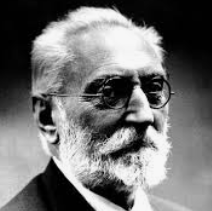
True science teaches, above all, to doubt and be ignorant.
1 month 2 weeks ago
A man discovers what he is actually worth in this world when he faces society as a man, without money, name, or powerful connections, stripped of all but his native potentialities. He soon finds that nothing has less weight than his human qualities. They are prized so low that the market does not even list them. Strict science, which acknowledges man only as a biological concept, reflects man's lot in the actual world; in himself, man is nothing more than a member of a species. In the eyes of the world, the quality of humanity confers no title to existence, nay, not even a right of sojourn. Such title must be certified by special social circumstances stipulated in documents to be presented on demand.
▼
Source
source
p. 137.
1 week ago
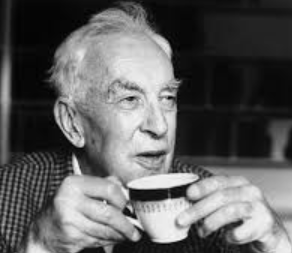
Compassion is the desire that moves the individual self to widen the scope of its self-concern to embrace the whole of the universal self.
▼
Source
source
The Toynbee-Ikeda Dialogue: Man Himself Must Choose
3 weeks 1 day ago
Everybody tends to merge his identity with other people at the speed of light. It's called being mass man.
3 months 1 week ago
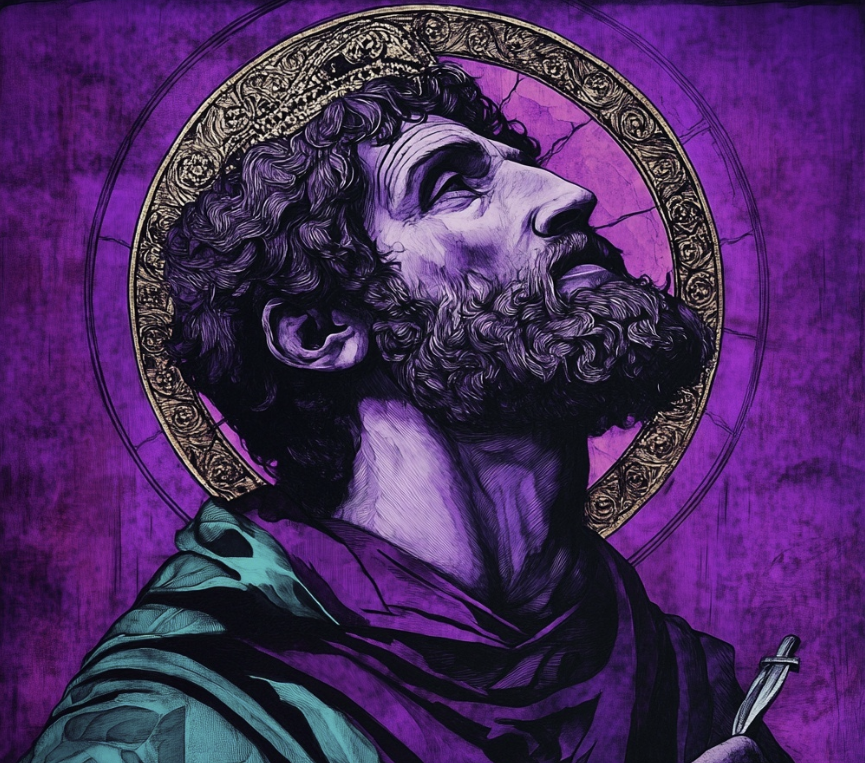
Nobody should ever doubt that in the washing of rebirth (Titus 3:5) absolutely all sins, from the least to the greatest, are altogether forgiven.
▼
Source
source
229E:2
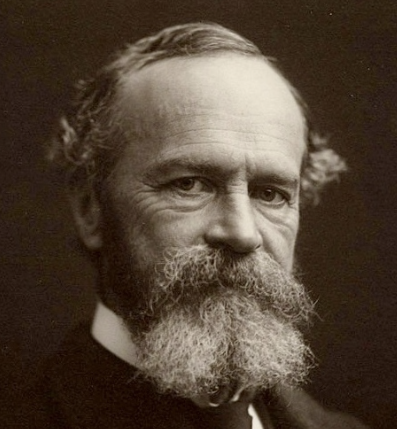
2 months 3 weeks ago
As a rule we disbelieve all the facts and theories for which we have no use.
▼
Source
source
"The Will to Believe" p. 10
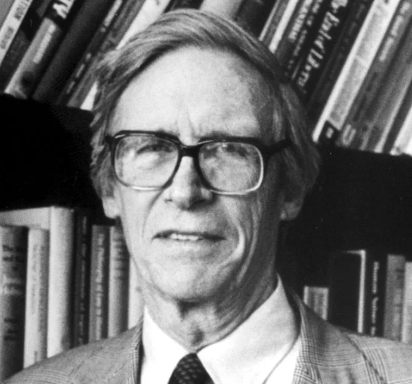
2 months 3 weeks ago
The first statement of the two principles reads as follows. First: each person is to have an equal right to the most extensive basic liberty compatible with a similar liberty for others. Second: social and economic inequalities are to be arranged so that they are both (a)reasonably expected to be to everyone's advantage, and (b) attached to positions and offices open to all.
▼
Source
source
Chapter II, Section 11, pg. 60
1 month 2 weeks ago
We know that the real lesson to be taught is that the human person is precious and unique; but we seem unable to set it forth except in terms of ideology and abstraction.
▼
Source
source
Ch. 10, p. 148
1 month 1 week ago
May we not say, perhaps, that the evil man is annihilated because he wished to be annihilated, or that he did not wish strongly enough to eternalize himself because he was evil? May we say that it is not believing in the other life which causes a man to be good, but rather that being good causes him believe in it? And what is being good and being evil? These states belong to the sphere of ethics, not of religion; or rather, does not the doing good though being evil pertain to ethics, and the being good [forgivable] though doing evil, to religion?
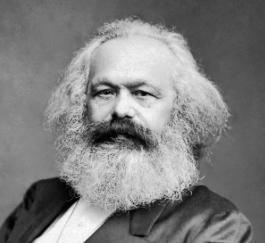
2 months 3 weeks ago
Ramsgate is full of Jews and fleas.
▼
Source
source
MEKOR IV, 490, 25 August 1879
CivilSimian.com created by AxiomaticPanic, CivilSimian, Kalokagathia