

1 month 1 week ago
I prefer to reach the few who really want to learn, rather than the many who come to be amused.
3 months 2 days ago
Let all the 'free-will' in the world do all it can with all its strength; it will never give rise to a single instance of ability to avoid being hardened if God does not give the Spirit, or of meriting mercy if it is left to its own strength.
▼
Source
source
p. 202
1 month 2 weeks ago
When scientists take part in activity they transform themselves from scientists into acting beings, that is, they become elements, data, facts; as soon as they reflect on their activity, however, they are re-transformed into scientists. The trained specialist qua scientist looks upon himself as a chain of judgments and inferences; qua member of society, he regard himself as a mere object. The same holds for everyone. The individual is divided into innumerable functions, the interconnection of which are unknown. In society a man is pater familias under one aspect, business man under another, thinker under a third; to be more precise, he is not a human being at all, but all these aspects and many more in an inevitable succession.
▼
Source
source
p. 155.
3 weeks 1 day ago
Each new technology is a reprogramming of sensory life.
▼
Source
source
(p. 33)

2 months 3 weeks ago
A single part of physics occupies the lives of many men, and often leaves them dying in uncertainty.
▼
Source
source
"A Madame la Marquise du Châtelet, Avant-Propos," Eléments de Philosophie de Newton, 1738

2 months 3 weeks ago
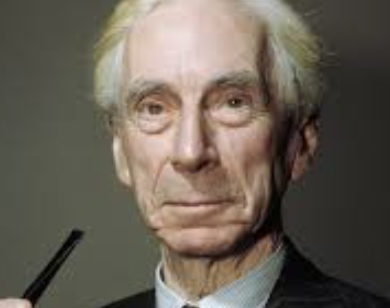
The pursuit of knowledge is, I think, mainly actuated by love of power. And so are all advances in scientific technique. In politics, also, a reformer may have just as strong a love of power as a despot. It would be a complete mistake to decry love of power altogether as a motive. Whether you will be led by this motive to actions which are useful, or to actions which are pernicious, depends upon the social system, and upon your capacities.
2 months 3 weeks ago
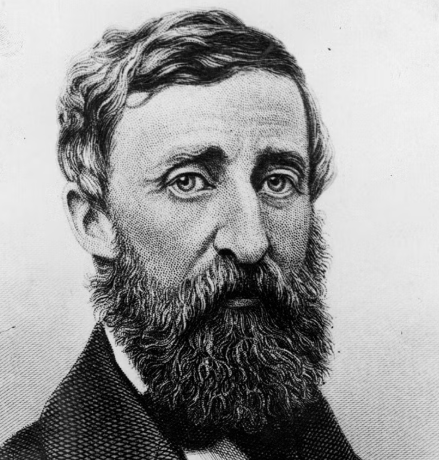
A slight sound at evening lifts me up by the ears, and makes life seem inexpressibly serene and grand. It may be Uranus, or it may be in the shutter.
▼
Source
source
July 10-12, 1841
2 weeks 3 days ago
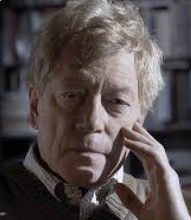
Schopenhauer argues that the empirical world exists only as a representation: 'every object, whatever its origin, is, as object, already conditioned by the subject, and thus is essentially only the subject's representation.' A representation is a subjective state that has been ordered according to space, time and causality - the primary forms of sensibility and understanding. So long as we turn our thoughts towards the natural world, and search for the thing-in-itself behind the representation is futile. Every argument and every experience leads only to the same end: the system of representations, standing like a veil between the subject and the thing-in-itself. No scientific investigation can penetrate the veil; and yet it is only a veil, Schopenhauer affirms, a tissue of illusions which we can, if we choose, penetrate by other means. The way to penetrate the veil was stumbled upon by Kant.
▼
Source
source
A Short History of Modern Philosophy (1981; 2nd ed. 1995), p. 177
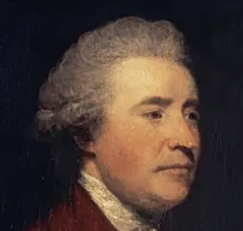
1 month 3 weeks ago
I take toleration to be a part of religion. I do not know which I would sacrifice; I would keep them both: it is not necessary that I should sacrifice either.
▼
Source
source
Speech on the Bill for the Relief of Protestant Dissenters
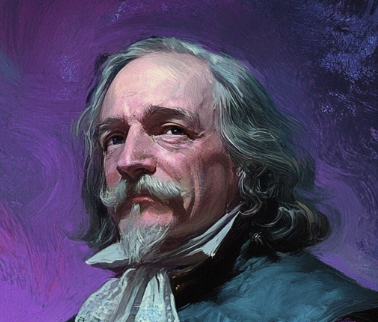
1 month 2 weeks ago
Whatsoever therefore is consequent to a time of Warre, where every man is Enemy to every man; the same is consequent to the time, wherein men live without other security, than what their own strength, and their own invention shall furnish them withall. In such condition, there is no place for Industry; because the fruit thereof is uncertain: and consequently no Culture of the Earth; no Navigation, nor use of the commodities that may be imported by Sea; no commodious Building; no Instruments of moving, and removing things as require much force; no Knowledge of the face of the Earth; no account of Time; no Arts; no Letters; no Society; and which is worst of all, continuall feare, and danger of violent death; And the life of man solitary, poore, nasty, brutish, and short.
▼
Source
source
The First Part, Chapter 13, p. 62
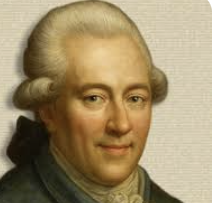
1 month 4 days ago
A book is a mirror: if an ape looks into it an apostle is hardly likely to look out. We have no words for speaking of wisdom to the stupid. He who understands the wise is wise already.
▼
Source
source
E 49
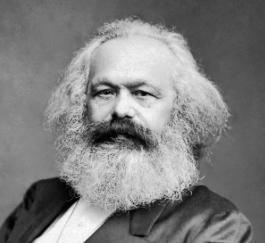
2 months 3 weeks ago
Long hours of labour seem to be the secret of the rational and healthful processes, which are to raise the condition of the labourer by an improvement of his mental and moral powers and to make a rational consumer out of him.
▼
Source
source
Vol. II, Ch. XXI, p. 520.
1 month 1 week ago
The unbeliever walks for a quadrillion miles, yet one moments of reality makes up for it.
▼
Source
source
Chapter Seven, The Great Synthesis…
2 months 3 weeks ago
There are various, nay, incredible faiths; why should we be alarmed at any of them? What man believes, God believes.
1 month 2 weeks ago
Thought must be judged by something that is not thought, by its effect on production or its impact on social conduct, as art today is being ultimately gauged in every detail by something that is not art, be it box-office or propaganda value.
▼
Source
source
describing the pragmatist view, p. 51.
2 months 3 weeks ago
First of all, no one knows his place in society, his class position or social status; nor does he know his fortune in the distribution of natural assets and abilities, his intelligence and strength, and the like. Nor, again, does anyone know his conception of the good, the particulars of his rational plan of life, or even the special features of psychology such as his aversion to risk or liability to optimism or pessimism. More than this, I assume that the parties do not know the particular circumstances of their own society. That is, they do not know its particular economic or political situation, or the level of civilization and culture it has been able to achieve. The persons in the original position have no information as to which generation they belong.
▼
Source
source
p. 117
2 months 3 weeks ago
The means employed by Nature to bring about the development of all the capacities of men is their antagonism in society, so far as this is, in the end, the cause of a lawful order among men.
▼
Source
source
Fourth Thesis
2 months 2 weeks ago
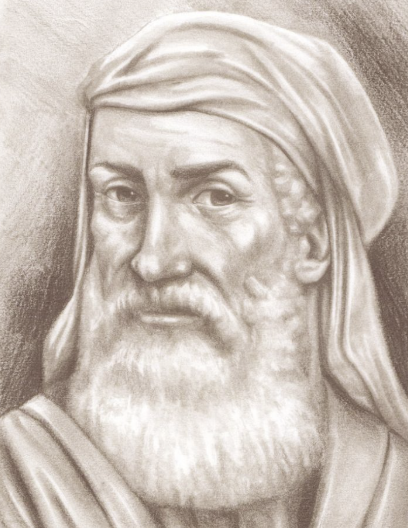
But, when the elements have been mingled in the fashion of a man and come to the light of day, or in the fashion of the race of wild beasts or plants or birds, then men say that these come into being; and when they are separated, they call that woeful death. They call it not aright; but I too follow the custom, and call it so myself.
▼
Source
source
fr. 9 As quoted by John Burnet, Early Greek philosophy (1908) p. 240
1 month 1 week ago
Horace and Aristotle told us of the virtues of their fathers, and the vices of their own time, and authors down through the centuries have told us the same. If they were right, men would now be bears.

2 months 3 weeks ago
Most shocking of all is alledging the Sacred Scriptures to favour this wicked practice. One would have thought none but infidel cavillers would endeavour to make them appear contrary to the plain dictates of natural light, and Conscience, in a matter of common Justice and Humanity; which they cannot be. Such worthy men, as referred to before, judged otherways; Mr. Baxter declared, the Slave-Traders should be called Devils, rather than Christians; and that it is a heinous crime to buy them.
1 week 3 days ago
I am too much of a sceptic to deny the possibility of anything - especially as I am now so much occupied with theology - but I don't see my way to your conclusion.
▼
Source
source
Letter to Herbert Spencer (22 March 1886); this is often quoted with a variant spelling as: I am too much of a skeptic to deny the possibility of anything.
1 month 2 weeks ago
The novel, the novel proper that is, is about people's treatment of each other, and so it is about human values.
▼
Source
source
Ch. 10, p. 138
3 weeks 1 day ago
Computers can do better than ever what needn't be done at all. Making sense is still a human monopoly.
▼
Source
source
(p. 109)

2 months 2 weeks ago
This is not for me, I want an entirely rural spot.
▼
Source
source
C 1920, expressing displeasure at a village that had a park with a fountain.
3 weeks 6 days ago
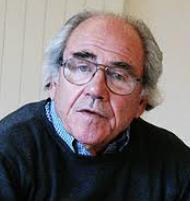
Yet there is a certain solitude like no other - that of the man preparing his meal in public on a wall, or on the hood of his car, or along a fence, alone. You see that all the time here. It is the saddest sight in the world. Sadder than destitution, sadder than the beggar is the man who eats alone in public. Nothing more contradicts the laws of man or beast, for animals always do each other the honour of sharing or disputing each other's food. He who eats alone is dead (but not he who drinks alone. Why is this?).
▼
Source
source
New York (p. 15)
2 months 2 weeks ago
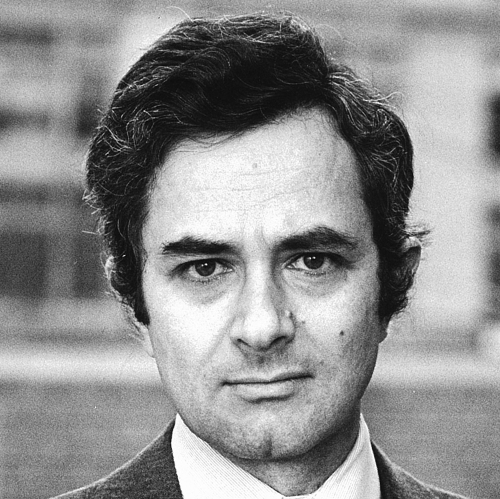
Even if I could by gradual degrees be transformed into a bat, nothing in my present constitution enables me to imagine what the experiences of such a future stage of myself thus metamorphosed would be like. The best evidence would come from the experience of bats, if we only knew what they were like.
▼
Source
source
p. 169.
2 months 2 weeks ago
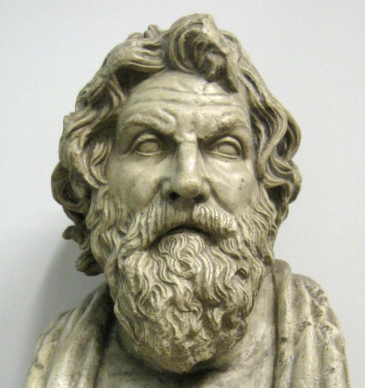
States are doomed when they are unable to distinguish good men from bad.
▼
Source
source
§ 5

1 month 2 weeks ago
For a long time - always, in fact - I have known that life here on earth is not what I needed and that I wasn't able to deal with it; for this reason and for this reason alone, I have acquired a touch of spiritual pride, so that my existence seems to me the degradation and the erosion of a psalm.
2 months 3 weeks ago
I always made one prayer to God, a very short one. Here it is: "O Lord, make our enemies quite ridiculous!" God granted it.
▼
Source
source
16 May 1767, Letter to Étienne Noël Damilaville

2 weeks 1 day ago
I'm delighted to hear someone make the claim that there is moral progress because it can be such a incendiary thing to say, and its something that I say and deeply believe in.
3 months 2 days ago
There can be no doubt that the Virgin Mary is in heaven. How it happened we do not know.
▼
Source
source
Weimar edition of Martin Luther's Works (Translation by William J. Cole) Vol. 10, p. 268
2 months 3 weeks ago
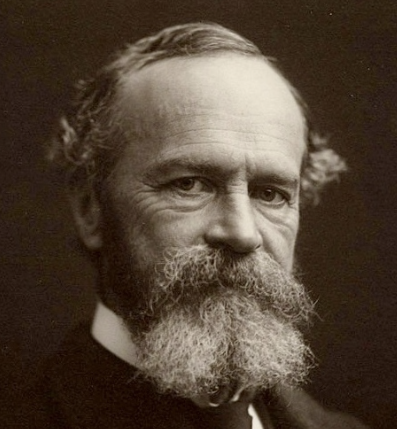
I will now confess my own utopia. I devoutly believe in the reign of peace and in the gradual advent of some sort of socialistic equilibrium. The fatalistic view of the war function is to me nonsense, for I know that war-making is due to definite motives and subject to prudential checks and reasonable criticisms, just like any other form of enterprise. And when whole nations are the armies, and the science of destruction vies in intellectual refinement with the science of production, I see that war becomes absurd and impossible from its own monstrosity. Extravagant ambitions will have to be replaced by reasonable claims, and nations must make common cause against them.
2 months 3 weeks ago
Psychologists have hitherto failed to realize that imagination is a necessary ingredient of perception itself.
▼
Source
source
A 120

3 months 1 week ago
Now what has been said about the Jews is also to be understood about Cahorsins, and anyone else depending upon the depravity of usury.
▼
Source
source
art. 4
3 months 1 week ago
The Law teaches that the universe was invented and created by God, and that it did not come into being by chance or by itself.
2 months 3 weeks ago
If you feel irritated by the absurd remarks of two people whose conversation you happen to overhear, you should imagine that you are listening to a dialogue of two fools in a comedy.
▼
Source
source
T. B. Saunders, trans., § 38
1 month 2 weeks ago
In most cases the esthetic objection to doses of morals and of economic or political propaganda in works of art will be found upon analysis to reside in the over-weighing of certain values at the expense of others until, except for those in a similar stare of one-sides enthusiasm, weariness rather than refreshment sets in.
▼
Source
source
p. 188
3 months 3 weeks ago
Milton Ashe is not the type to marry a head of hair and a pair of eyes.
2 months 3 weeks ago
Children are made to learn bits of Shakespeare by heart, with the result that ever after they associate him with pedantic boredom. If they could meet him in the flesh, full of jollity and ale, they would be astonished, and if they had never heard of him before they might be led by his jollity to see what he had written. But if at school they had been inoculated against him, they will never be able to enjoy him. The same sort of thing applies to music lessons. Human beings have certain capacities for spontaneous enjoyment, but moralists and pedants possess themselves of the apparatus of these enjoyments, and having extracted what they consider the poison of pleasure they leave them dreary and dismal and devoid of everything that gives them value. Shakespeare did not write with a view to boring school-children; he wrote with a view to delighting his audiences. If he does not give you delight, you had better ignore him.
▼
Source
source
Part III: Man and Himself, Ch. 20: The Happy Man, p. 201
2 months 1 week ago
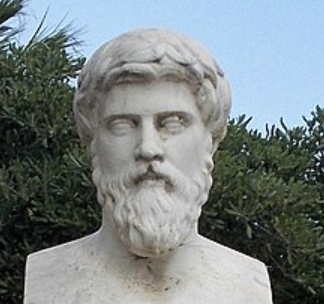
"I will show," said Agesilaus, "that it is not the places that grace men, but men the places."
▼
Source
source
Of Agesilaus the Great
1 month 2 weeks ago
I thought that the only action a man could perform without shame was to take his life; that he had no right to diminish himself in the succession of days and the inertic of misery. No elect, I kept telling myself, but those who committed suicide.
1 month 1 week ago
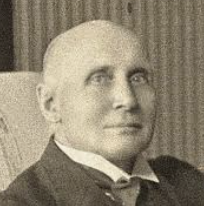
A philosopher of imposing stature doesn't think in a vacuum. Even his most abstract ideas are, to some extent, conditioned by what is or is not known in the time when he lives.
▼
Source
source
Ch. 29, June 10, 1943.
1 month 2 weeks ago
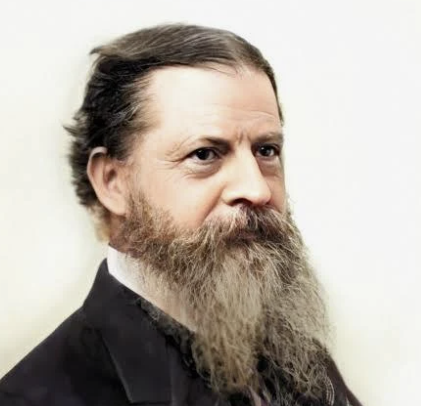
The law of habit exhibits a striking contrast to all physical laws in the character of its commands. A physical law is absolute. What it requires is an exact relation. Thus, a physical force introduces into a motion a component motion to be combined with the rest by the parallelogram of forces; but the component motion must actually take place exactly as required by the law of force. On the other hand, no exact conformity is required by the mental law. Nay, exact conformity would be in downright conflict with the law ; since it would instantly crystallise thought and prevent all further formation of habit. The law of mind only makes a given feeling more likely to arise. It thus resembles the "non-conservative" forces of physics, such as viscosity and the like, which are due to statistical uniformities in the chance encounters of trillions of molecules.
2 weeks 6 days ago
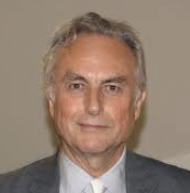
Just because science so far has failed to explain something, such as consciousness, to say it follows that the facile, pathetic explanations which religion has produced somehow by default must win the argument is really quite ridiculous.
▼
Source
source
Steve Paulson, "The flying spaghetti monster" Salon.com

3 months 3 weeks ago
No human being, even the most passionately loved and passionately loving, is ever in our possession.
3 weeks 6 days ago
The Intentionality of the mind not only creates the possibility of meaning, but limits its forms.
▼
Source
source
P. 166.
3 weeks 1 day ago
It is sometimes expedient to forget who we are.
▼
Source
source
Maxim 233
2 months 3 weeks ago
The average man's opinions are much less foolish than they would be if he thought for himself: in science, at least, his respect for authority is on the whole beneficial.
▼
Source
source
On Education, Especially in Early Childhood (1926), Ch. 2: The Aims of Education, p. 63
CivilSimian.com created by AxiomaticPanic, CivilSimian, Kalokagathia