

1 month 1 week ago
We know as little of a supreme being as of Matter. But there is as little doubt of the existence of a supreme being as of Matter. The world beyond is reality, and experiential fact. We only don't understand it.
▼
Source
source
Letter to Morton Kelsey (1958) as quoted by Morton Kelsey, Myth, History & Faith: The Mysteries of Christian Myth & Imagination (1974) Ch.VIII
2 months 1 week ago
Men rush to California and Australia as if the true gold were to be found in that direction; but that is to go to the very opposite extreme to where it lies. They go prospecting farther and farther away from the true lead, and are most unfortunate when they think themselves most successful.
▼
Source
source
p. 489

1 month 2 weeks ago
The one infinite is perfect, in simplicity, of itself, absolutely, nor can aught be greater or better, This is the one Whole, God, universal Nature, occupying all space, of whom naught but infinity can give the perfect image or semblance.
▼
Source
source
II 12 as translated by Dorothea Waley Singer
3 weeks 5 days ago
Men can be provincial in time, as well as in place.
▼
Source
source
Preface, p. ix
1 week ago
A good conscience is eight parts of courage.
▼
Source
source
Catriona, ch. XI (1893).
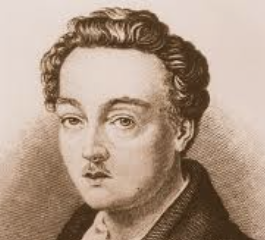
1 month 1 week ago
Death is the most blessed dream.
▼
Source
source
Act II.
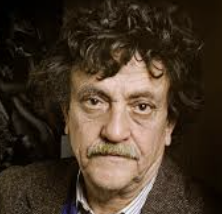
1 week 6 days ago
The telling of jokes is an art of its own, and it always rises from some emotional threat. The best jokes are dangerous, and dangerous because they are in some way truthful.
▼
Source
source
Interviewed by J. Rentilly, "The Best Jokes Are Dangerous", McSweeny's
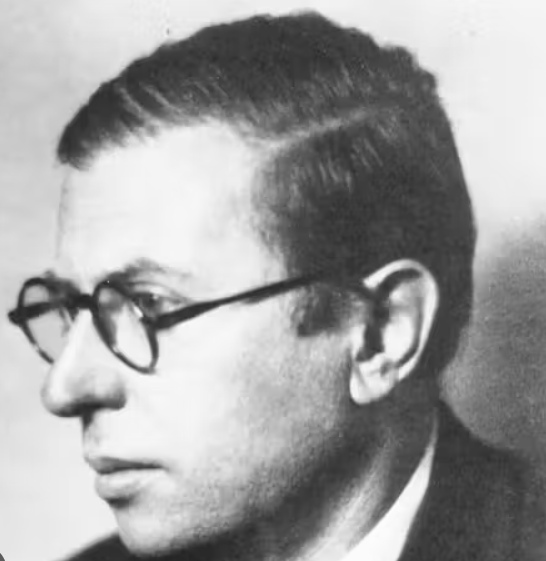
2 months 1 week ago
I think they do it to pass the time, nothing more. But time is too large, it can't be filled up. Everything you plunge into it is stretched and disintegrates.
▼
Source
source
Diary entry of Friday (2 February), concerning a card game

2 months 1 week ago
Being is only Being for Dasein.
▼
Source
source
Macquarrie & Robinson translation
2 months 2 weeks ago
The value of life lies not in the length of days, but in the use we make of them... Whether you find satisfaction in life depends not on your tale of years, but on your will.
▼
Source
source
Book I, Ch. 20
3 weeks 3 days ago
Steiner goes further than this -- and this is his own central contribution to modern thought. He states that once we have made a habit of remembering Mozart and the stars, we shall find ourselves developing powers of 'spiritual vision.' We shall never again feel ourselves to be helpless victims of the external world.
▼
Source
source
p. 169
1 month 1 week ago
...the French business is no light or trivial thing, or such as has commonly occurd in the course of political Events. At present the whole political State of Europe hinges upon it. On the Continent there is little doubt; every thing will take is future shape and colour from the good or ill success of the Duke of Brunswick. In my opinion, it is the most important crisis that ever existed in the World. ... My poor opinion is, that these principles...cannot possibly be realized in practice in France, without an absolute certainty and that at no remote period, of overturning the whole fabrick of the British Constitution.
▼
Source
source
Letter to the Foreign Secretary, Lord Grenville (19 September 1792), quoted in P. J. Marshall and John A. Woods (eds.), The Correspondence of Edmund Burke, Volume VII: January 1792-August 1794 (1968), pp. 218-219

1 month 4 days ago
In its relation to the reality of daily life, the high culture of the past was many things-opposition and adornment, outcry and resignation. But it was also the appearance of the realm of freedom: the refusal to behave.
▼
Source
source
p. 71
2 months 1 week ago
Never have so many been manipulated so much by so few.
▼
Source
source
Chapter 3 (pp. 19-20)
1 month 1 week ago
Each individual imagines that he can exist, live, think, and act for himself, and believes that he himself is the thinking principle of his thoughts; whereas in truth he is but a single ray of the ONE universal and necessary Thought.
▼
Source
source
p. 21

2 months 1 week ago
It seems to me that, in every culture, I come across a chapter headed Wisdom. And then I know exactly what is going to follow: Vanity of vanities, all is vanity.
▼
Source
source
Conversation of 1934
4 weeks ago
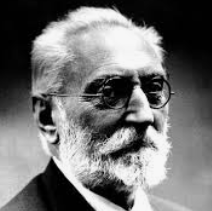
Not by way of reason, but only by way of love and suffering, do we come to the living God, the human God. Reason rather separates us from Him. We cannot first know Him in order that afterward we may love Him; we must begin by loving Him, longing for Him, hungering after Him, before knowing Him. The knowledge of God proceeds from the love of God, and this love has little or nothing of the rational in it. For God is indefinable. To seek to define Him is to seek to confine Him within the limits of our mind - that is to say, to kill Him. In so far as we attempt to define Him, there rises up before us - Nothingness.
2 months 1 week ago
My sympathies are, of course, with the Government side, especially the Anarchists; for Anarchism seems to me more likely to lead to desirable social change than highly centralized, dictatorial Communism.
▼
Source
source
Authors Take Sides on the Spanish War (1937) edited by Nancy Cunard and publisehd by the Left Review
2 months 1 week ago
The Quaestor turned back the pages until he found himself among the Pensées. "We are not satisfied," he read, "with the life we have in ourselves and our own being; we want to live an imaginary life in other people's idea of us. Hence all our efforts are directed to seeming what we are not. We labor incessantly to preserve and embellish this imaginary being, and neglect that which is really ours." The Quaestor put down the book, ... and ruefully reflected that all his own troubles had arisen from this desire to seem what in fact he was not. To seem a man of action, when in fact he was a contemplative; to seem a politician, when nature had made him an introspective psychologist; to seem a wit, which God had intended him for a sage.
▼
Source
source
"Variations on a Philosopher" in Themes and Variations (1943), p. 2
2 months 1 week ago
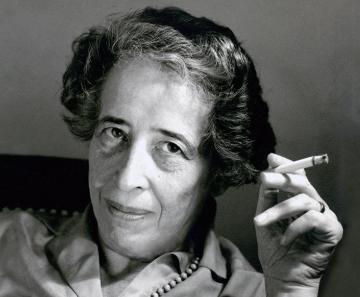
Before mass leaders seize the power to fit reality to their lies, their propaganda is marked by its extreme contempt for facts as such, for in their opinion fact depends entirely on the power of man who can fabricate it.
▼
Source
source
On "alternate facts"
2 months 2 weeks ago
Love to his soul gave eyes; he knew things are not as they seem. The dream is his real life; the world around him is the dream.
4 days ago
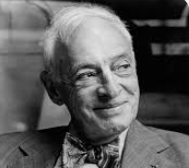
We take foreigners to be incomplete Americans - convinced that we must help and hasten their evolution.
▼
Source
source
" A Second Half Life" (1991), p. 324

1 month 2 weeks ago
Be substantially great in thyself, and more than thou appearest unto others.
▼
Source
source
Part I, Section XIX
2 months 2 weeks ago
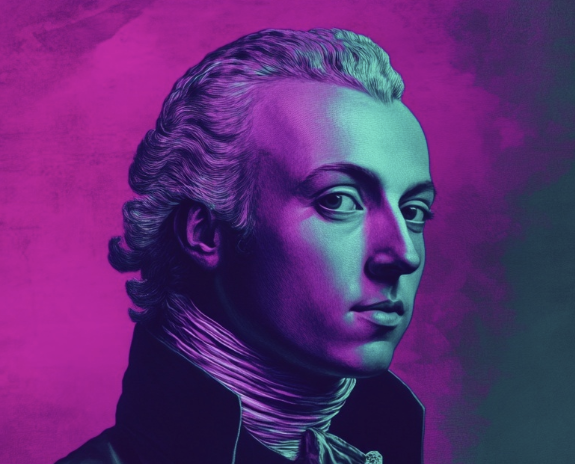
The use of the intellect in the sciences whose primitive concepts as well as axioms are given by sensuous intuition is only logical, that is, by it we only subordinate cognitions to one another according to their relative universality conformably to the principle of contradiction, phenomena to more general phenomena, and consequences of pure intuition to intuitive axioms. But in pure philosophy, such as metaphysics, in which the use of the intellect in respect to principles is real, that is to say, where the primary concept of things and relations and the very axioms are given originally by the pure intellect itself, and not being intuitions do not enjoy immunity from error, the method precedes the whole science, and whatever is attempted before its precepts are thoroughly discussed and firmly established is looked upon as rashly conceived and to be rejected among vain instances of mental playfulness.
4 weeks ago
Uncertainty, doubt, perpetual wrestling with the mystery of our final destiny, mental despair, and the lack of any solid and stable foundation, may be the basis of an ethic.
1 month 2 days ago
The man with the clear head is the man who frees himself from those fantastic "ideas" and looks life in the face, realises that everything in it is problematic, and feels himself lost. As this is the simple truth - that to live is to feel oneself lost - he who accepts it has already begun to find himself, to be on firm ground. Instinctively, as do the shipwrecked, he will look round for something to which to cling, and that tragic, ruthless glance, absolutely sincere, because it is a question of his salvation, will cause him to bring order into the chaos of his life.
▼
Source
source
Chapter XIV: Who Rules The World?

3 months 1 week ago
If the genius is an artist, then he accomplishes his work as art, but neither he nor his work of art has a telos outside him.

2 months 1 week ago
The miracles in fact are a retelling in small letters of the very same story which is written across the whole world in letters too large for some of us to see. Of that larger script part is already visible, part is still unsolved. In other words, some of the miracles do locally what God has already done universally: others do locally what He has not yet done, but will do. In that sense, and from our human point of view, some are reminders and others prophecies.
▼
Source
source
"Miracles" (1942), p. 29
4 days ago
A writer who says that there are no truths, or that all truth is 'merely relative,' is asking you not to believe him. So don't.
▼
Source
source
"The Nature of Philosophy" (p. 6)
2 weeks ago
The "hard law of value," the "law set in stone"-when it abandons us, what sadness, what panic! This is why there are still good days left to fascist and authoritarian methods, because they revive something of the violence necessary to life-whether suffered or inflicted. The violence of ritual, the violence of work, the violence of knowledge, the violence of blood, the violence of power and of the political is good! It is clear, luminous, the relations of force, contradictions, exploitation, repression! This is lacking today, and the need for it makes itself felt.
▼
Source
source
"Value's Last Tango," p. 156

2 months 6 days ago
Today, criminal justice functions and justifies itself only by this perpetual reference to something other than itself, by this unceasing reinscription in non-juridical systems.
2 months 2 weeks ago
He that defers his charity 'till he is dead, is (if a man weighs it rightly) rather liberal of another man's, than of his own.
▼
Source
source
Ornamenta Rationalia, [§55]

3 weeks 3 days ago
The most disheartening tendency common among readers is to tear out one sentence from a work, as a criterion of the writer's ideas or personality.

2 months 2 weeks ago
The supreme enjoyment is in satisfaction with oneself ; it is in order to deserve this satisfaction that we are placed on earth and endowed with freedom.
▼
Source
source
As quoted in Dreamer of Democracy by James Miller and Jim Miller, p. 194.
1 month 1 week ago
Modern man may assert that he can dispense with them, and he may bolster his opinion by insisting that there is no scientific evidence of their truth. But since we are dealing with invisible and unknowable things (for God is beyond human understanding, and there is no mean of proving immortality), why should we bother with evidence?
▼
Source
source
p. 75-76
2 months 1 week ago
Sometimes a scream is better than a thesis.
▼
Source
source
1836
2 months 2 days ago
I am not adverting here to the alleged privacy of experience to its possessor. The point of view in question is not one accessible only to a single individual. Rather it is a type. It is often possible to take up a point of view other than one's own, so the comprehension of such facts is not limited to one's own case. There is a sense in which phenomenological facts are perfectly objective: one person can know or say of another what the quality of the other's experience is. They are subjective, however, in the sense that even this objective ascription of experience is possible only for someone sufficiently similar to the object of ascription to be able to adopt his point of view - to understand the ascription in the first person as well as in the third, so to speak. The more different from oneself the other experiencer is, the less success one can expect with this enterprise.
▼
Source
source
pp. 171-172
2 months 1 week ago
We cannot suppose that an individual's thinking survives bodily death, since that destroys the organization of the brain and dissipates the energy which utilized the brain tracks. God and immortality, the central dogma of the Christian religion, find no support in science. But we in the West have come to think of them as the irreducible minimum of theology. No doubt people will continue to entertain these beliefs, because they are pleasant, just as it is pleasant to think ourselves virtuous and our enemies wicked. But for my part I cannot see any grounds for either. I do not pretend to be able to prove that there is no God. I equally cannot prove Satan is a fiction. The Christian God may exist, so might the Gods of Olympus, Ancient Egypt or Babylon; but no one of these hypotheses is more probable than any other. They lie outside the region of provable knowledge and there is no reason to consider any of them.
1 month 3 days ago
While they denounce as subversive anarchy signs of independent thought, of thinking for themselves on the part of others lest such thought disturb the conditions by which they profit, they think quite literally for themselves, that is of themselves.
▼
Source
source
Human Nature and Conduct (1921) Part 1 Section IV.
1 month 1 week ago
Those who have been once intoxicated with power, and have derived any kind of emolument from it, even though but for one year, never can willingly abandon it. They may be distressed in the midst of all their power; but they will never look to any thing but power for their relief.
1 month 4 days ago
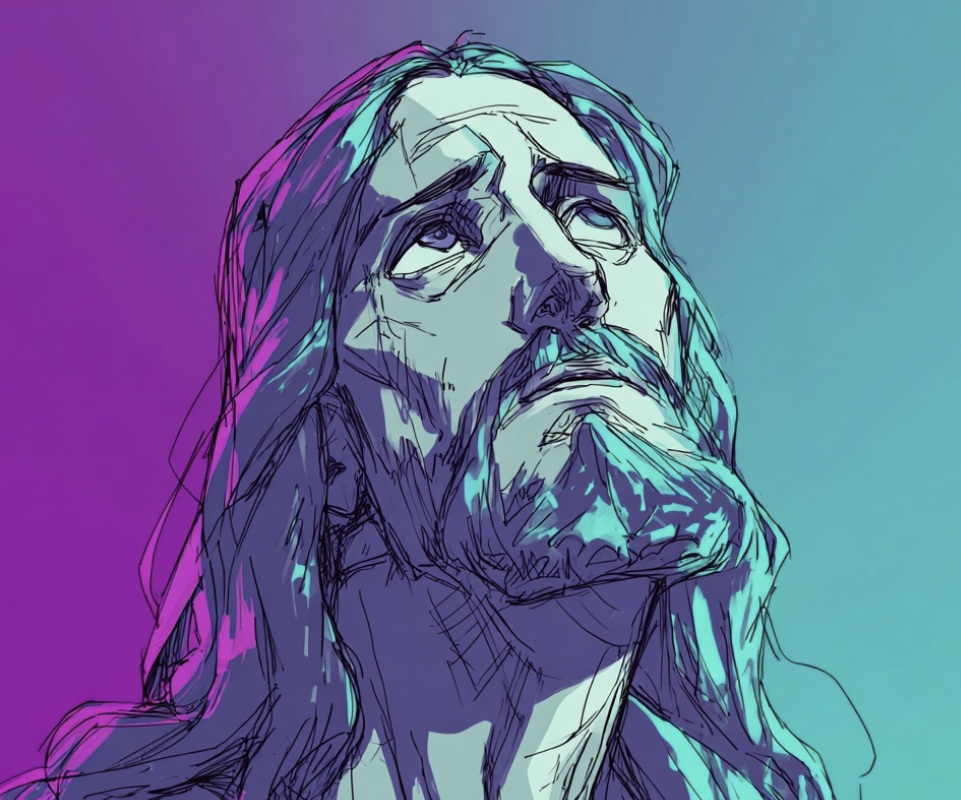
Blessed is the lion which becomes man when consumed by man; and cursed is the man whom the lion consumes, and the lion becomes man. (7) This saying has been interpreted by some as referring to such anger as consumes a man…(rather than is consumed by him, through his reason and love), 'til that man is the lion of Anger. Other more mystical interpretations might also be found or devised that have merit.
2 months 1 week ago
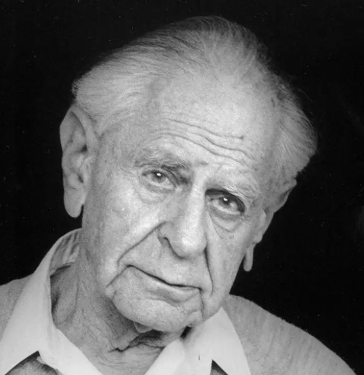
There is an almost universal tendency, perhaps an inborn tendency, to suspect the good faith of a man who holds opinions that differ from our own opinions. ... It obviously endangers the freedom and the objectivity of our discussion if we attack a person instead of attacking an opinion or, more precisely, a theory.
▼
Source
source
"The Importance of Critical Discussion" in On the Barricades: Religion and Free Inquiry in Conflict (1989) by Robert Basil

2 months 1 week ago
Most shocking of all is alledging the Sacred Scriptures to favour this wicked practice. One would have thought none but infidel cavillers would endeavour to make them appear contrary to the plain dictates of natural light, and Conscience, in a matter of common Justice and Humanity; which they cannot be. Such worthy men, as referred to before, judged otherways; Mr. Baxter declared, the Slave-Traders should be called Devils, rather than Christians; and that it is a heinous crime to buy them.

1 month 2 weeks ago
Pour recueillir les biens inestimables qu'assure la liberté de la presse, il faut savoir se soumettre aux maux inévitables qu'elle fait naître. Translation: In order to enjoy the inestimable benefits that the liberty of the press ensures, it is necessary to submit to the inevitable evils it creates.
▼
Source
source
Chapter XI.
1 month 1 week ago
Religion, always a principle of energy, in this new people, is no way worn out or impaired; and their mode of professing it is also one main cause of this free spirit. The people are Protestants; and of that kind which is the most adverse to all implicit submission of mind and opinion. This is a persuasion not only favourable to liberty, but built upon it.
3 months 1 week ago
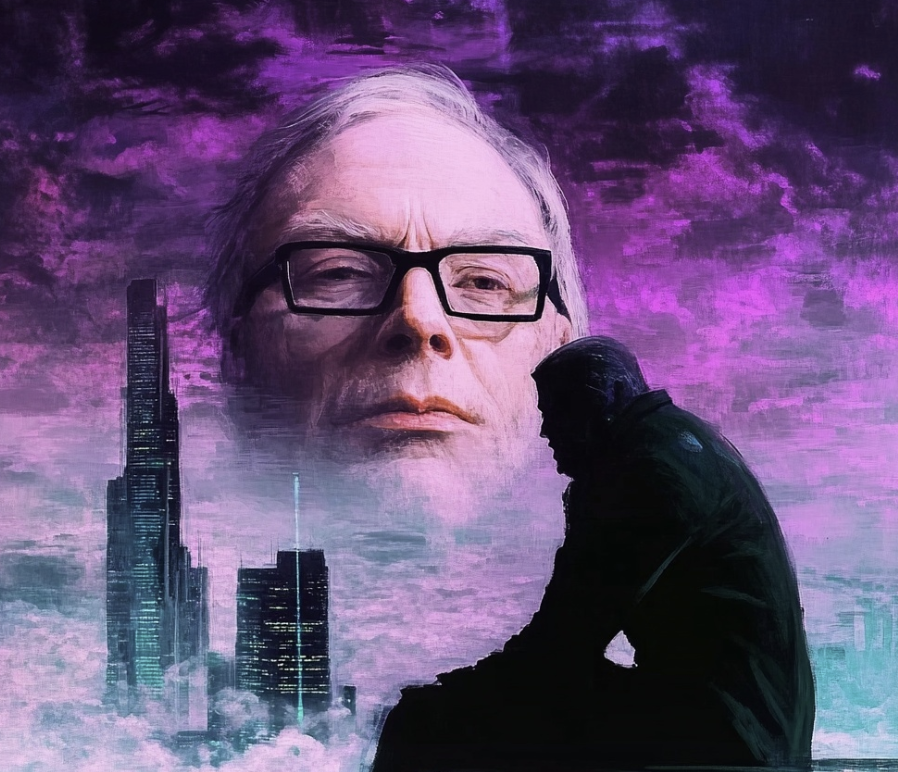
Junz found revulsion growing strong within him. A planet full of people meant nothing against the dictates of economic necessity!
1 month 2 days ago
In philosophical anthropology, ... where the subject is man in his wholeness, the investigator cannot content himself, as in anthropology as an individual science, with considering man as another part of nature and with ignoring the fact that he, the investigator, is himself a man and experiences this humanity in his inner experience in a way that he simply cannot experience any part of nature.
▼
Source
source
p. 147

2 months 6 days ago
In situations of sparse resources along with degraded self-images and depoliticized sensibilities, one avenue for poor people is in existential rebellion and anarchic expression. The capacity to produce social chaos is the last resort of desperate people.
▼
Source
source
The Role of Law in Progressive Politics in Keeping Faith: Philosophy and Race in America
2 months 2 weeks ago
POLITICAL economy, considered as a branch of the science of a statesman or legislator, proposes two distinct objects: first, to provide a plentiful revenue or subsistence for the people, or more properly to enable them to provide such a revenue or subsistence for themselves; and secondly, to supply the state or commonwealth with a revenue sufficient for the public services. It proposes to enrich both the people and the sovereign.
▼
Source
source
Introduction, p. 459.
1 week 4 days ago
The condition of life to which people of the well-to-do classes are accustomed is that of an abundant production of various articles necessary for their comfort and pleasure, and these things are obtained only thanks to the existence of factories and works organized as at present. And, therefore, discussing the improvement of the workers' position, the men of science belonging to the well- to-do classes always have in view only such improvements as will not do away with the system of factory-production and those conveniences of which they avail themselves.
▼
Source
source
Chapter V: Why Learned Economists Assert What Is False
CivilSimian.com created by AxiomaticPanic, CivilSimian, Kalokagathia