

1 month 1 week ago
The history of the Romanovs is an Elizabethan tragedy that lasts for three centuries. Its keynote is cruelty, a barbaric, pointless kind of cruelty that has always been common in the East, but that came to Europe only recently, in the time of Hitler.
▼
Source
source
pp. 61-62
3 weeks 2 days ago
Age may have one side, but assuredly Youth has the other. There is nothing more certain than that both are right, except perhaps that both are wrong. Let them agree to differ; for who knows but what agreeing to differ may not be a form of agreement rather than a form of difference?
▼
Source
source
Crabbed Age and Youth.

3 months 4 weeks ago
The greatest danger, that of losing one's own self, may pass off as quietly as if it were nothing; every other loss, that of an arm, a leg, five dollars, a wife etc., is sure to be noticed.
3 months 3 weeks ago
It is change, continuing change, inevitable change, that is the dominant factor in society today. No sensible decision can be made any longer without taking into account not only the world as it is, but the world as it will be ... This, in turn, means that our statesmen, our businessmen, our everyman must take on a science fictional way of thinking.
3 months 1 week ago
Christ's whole body groans in pain. Until the end of the world, when pain will pass away, this man groans and cries to God. And each one of us has part in the cry of that whole body. Thou didst cry out in thy day, and thy days have passed away; another took thy place and cried out in his day. Thou here, he there, and another there. The body of Christ ceases not to cry out all the day, one member replacing the other whose voice is hushed. Thus there is but one man who reaches unto the end of time, and those that cry are always His members.
▼
Source
source
p.423
1 month 3 weeks ago
In a single second we do away with all seconds; God himself could not do as much.
1 month 1 week ago
Indeed much of the literature written about black folks in the post-civil rights era emphasized the need for jobs. Material advancement was deemed the pressing agenda. Mental health concerns were not a high priority.

4 months ago
Who is the most moral man? First, he who obeys the law most frequently, who ... is continually inventive in creating opportunities for obeying the law. Then, he who obeys it even in the most difficult cases. The most moral man is he who sacrifices the most to custom. ... Self-overcoming is demanded, not on account of any useful consequences it may have for the individual, but so that hegemony of custom and tradition shall be made evident.
3 months 3 weeks ago
Never let your sense of morals prevent you from doing what is right.
1 month 1 week ago
The prestige which constitutes three-fourths of might is first of all made up of that superb indifference which the powerful have for the weak, an indifference so contagious that it is communicated even to those who are its object.
▼
Source
source
in The Simone Weil Reader, p. 168
1 month 3 weeks ago
Sometimes I had an overwhelming urge to speak, not about that, but only to hint that there were some curious things about me which no one knew of. I wanted to find out whether other people had undergone similar experiences. I never succeeded in discovering so much as a trace of them in others. As a result, I had the feeling that I was either outlawed or elect, accursed or blessed.
▼
Source
source
p. 41
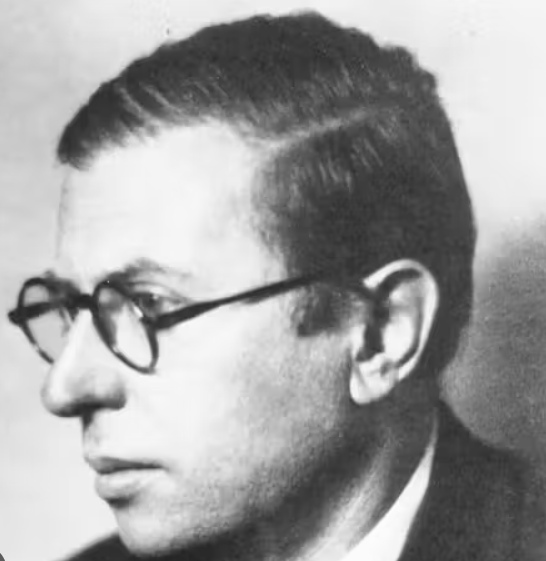
2 months 3 weeks ago
Tout existant naît sans raison, se prolonge par faiblesse et meurt par rencontre. Every existing thing is born without reason, prolongs itself out of weakness and dies by chance.
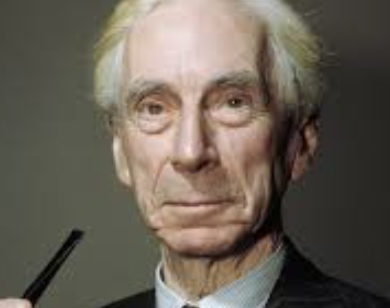
2 months 4 weeks ago
The fundamental concept in social science is Power, in the same sense in which Energy is the fundamental concept in physics.
▼
Source
source
Ch. 1: The Impulse to Power
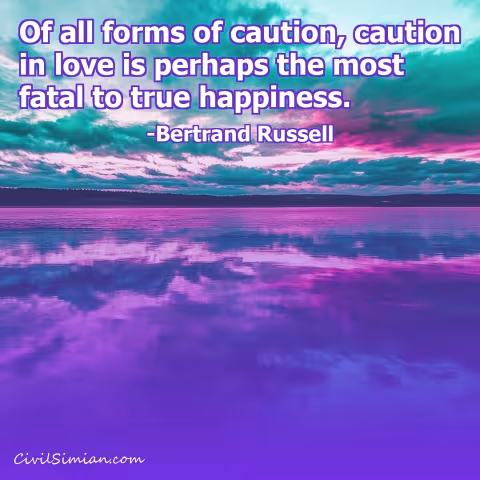
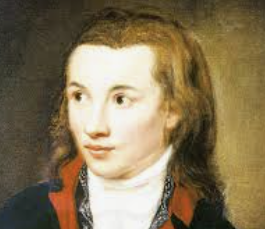
1 month 3 weeks ago
Pure mathematics is religion.

2 months 3 weeks ago
Among these Jews there suddenly turns up a man who goes about talking as if He was God. He claims to forgive sins. He says He has always existed. He says He is coming to judge the world at the end of time. Now let us get this clear. Among Pantheists, like the Indians, anyone might say that he was a part of God, or one with God: there would be nothing very odd about it. But this man, since He was a Jew, could not mean that kind of God. God, in their language, meant the Being outside of the world, who had made it and was infinitely different from anything else. And when you have grasped that, you will see that what this man said was, quite simply, the most shocking thing that has ever been uttered by human lips.
▼
Source
source
Book II, Chapter 3, "The Shocking Alternative"
3 months 3 weeks ago
"I conclude that all is well," says Oedipus, and that remark is sacred. It echoes in the wild and limited universe of man. It teaches that all is not, has not been, exhausted. It drives out of this world a god who had come into it with dissatisfaction and a preference for futile suffering. It makes of fate a human matter, which must be settled among men.
3 months 6 days ago
Credulity in arts and opinions is likewise of two kinds viz., when men give too much belief to arts themselves, or to certain authors in any art. The sciences that sway the imagination more than the reason are principally three viz., astrology, natural magic, and alchemy. Alchemy may be compared to the man who told his sons that he had left them gold, buried somewhere in his vineyard; while they by digging found no gold, but by turning up the mould about the roots of the vines procured a plentiful vintage. So the search and endeavours to make gold have brought many useful inventions to light.
▼
Source
source
De Augmentis Scientiarum (1623) as quoted by Edward Thorpe, History of Chemistry, Vol. 1, p. 43.
2 months 3 weeks ago
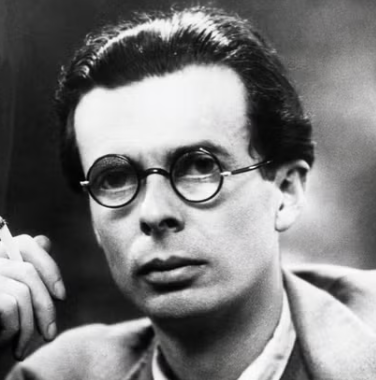
Suso has even left a diagrammatic picture of the relations subsisting between Godhead, triune God and creatures. In this very curious and interesting drawing a chain of manifestation connects the mysterious symbol of the Divine Ground with the three Persons of the Trinity, and the Trinity in turn is connected in a descending scale with angels and human beings. These last, as the drawing vividly shows, may make one of two choices. They can either live the life of the outer man, the life of the separative selfhood; in which case they are lost (for, in the words of the Theologia Germanica, "nothing burns in hell but the self"). Or else they can identify themselves with the inner man, in which case it becomes possible for them, as Suso shows, to ascend again, through unitive knowledge, to the Trinity and even, beyond the Trinity, to the ultimate Unity of the Divine Ground.
3 months 5 days ago
Who does not in some sort live to others, does not live much to himself.
▼
Source
source
Book III, Ch. 10
1 month 2 weeks ago
But the capacity to enjoy is impossible without the capacity to suffer; and the faculty of enjoyment is one with that of pain. Whosoever does not suffer does not enjoy, just as whosoever is insensible to cold is insensible to heat.
2 months 3 weeks ago
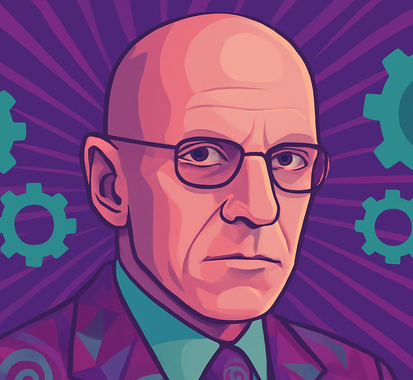
The soul is the prison of the body.
▼
Source
source
Discipline and Punish (1977) as translated by Alan Sheridan, p. 30
2 months 3 weeks ago
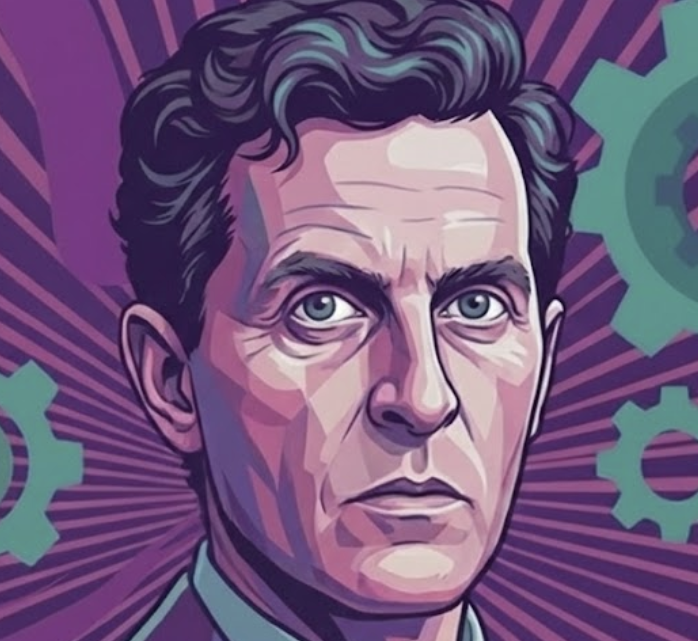
A man will be imprisoned in a room with a door that's unlocked and opens inwards; as long as it does not occur to him to pull rather than push it.
▼
Source
source
p. 42e
2 months 3 weeks ago
The most radical revolutionary will become a conservative the day after the revolution.
▼
Source
source
The New Yorker
1 month 2 weeks ago
And here, facing this supreme religious sacrifice, we reach the summit of the tragedy, the very heart of it - the sacrifice of our own individual consciousness upon the alter of the perfected Human Consciousness, of the Divine Consciousness. But is there really a tragedy? ...if we could succeed in understanding and feeling that we were going to enrich Christ, should we hesitate for a moment in surrendering ourselves to Him? Would the stream that flows into the sea, and feels in the freshness of its waters the bitterness of the salt of the ocean, wish to flow back to its source? would it wish to return to the cloud which drew it life from the sea? is it not joy to feel itself absorbed?
2 months 3 weeks ago
The worst of misfortunes is still a stroke of luck, since one feels oneself living when one experiences it.
▼
Source
source
p. 275
3 months 5 days ago
It is more of a job to interpret the interpretations than to interpret the things, and there are more books about books than about any other subject: we do nothing but write glosses about each other.
▼
Source
source
Ch. 13
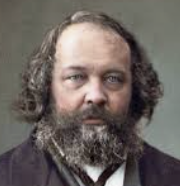
1 month 3 weeks ago
By striving to do the impossible, man has always achieved what is possible. Those who have cautiously done no more than they believed possible have never taken a single step forward.
▼
Source
source
As quoted in The Explorers (1996) by Paolo Novaresio ISBN 1-55670-495-X
2 months 3 weeks ago
I would in fact tend to have more confidence in the outcome of a democratic decision if there was a minority that voted against it, than if it was unanimous... Social psychology has amply shown the strength of this bandwagon effect.
▼
Source
source
Habermas (1993) "Further reflections on the public sphere", in: Craig Calhoun Eds. Habermas and the Public Sphere. MIT Press. p. 441

2 weeks 5 days ago
The measure of a man is a man. Justice, morality, ethics, fairness, goodness all based on the preservation of life. You can do other things, but you'd be Good by coincidence.
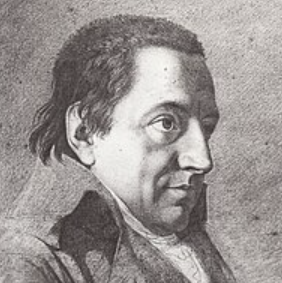
1 month 3 weeks ago
The free being with absolute freedom proposes to itself certain ends. It wills because it wills, and the willing of an object is itself the last ground of such willing. Thus we have previously determined a free being, and any other determination would destroy the conception of an Ego, or of a free being. Now, if it could be so arranged that the willing of an unlawful end would necessarily - in virtue of an always effective law - result in the very reverse of that end, then the unlawful will would always ANNIHILATE ITSELF. A person could not will that end for the very reason because he did will it; his unlawful will would become the ground of its own annihilation, as the will is indeed always its own last ground.
▼
Source
source
p. 193
1 month 3 weeks ago
To dream of an enterprise of demolition that would spare none of the traces of the original Big Bang.
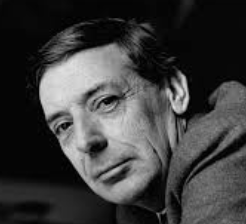
1 month 1 week ago
A further turn is to be found in some "unmasking" accounts of natural science, which aim to show that its pretensions to deliver the truth are unfounded, because of social forces that control its activities. Unlike the case of history, these do not use truths of the same kind; they do not apply science to the criticism of science. They apply the social sciences, and typically depend on the remarkable assumption that the sociology of knowledge is in a better position to deliver truth about science than science is to deliver truth about the world.
▼
Source
source
p. 2
2 months 3 weeks ago
The limits of my language mean the limits of my world. (5.6) Variant translations: The limits of my language stand for the limits of my world. The limits of my language are the limits of my mind. All I know is what I have words for.
▼
Source
source
Original German: Die Grenzen meiner Sprache bedeuten die Grenzen meiner Welt.
2 months 2 weeks ago
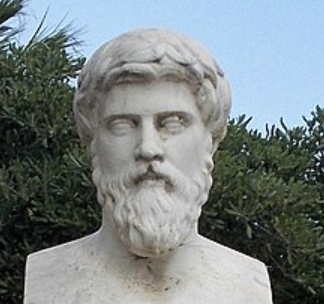
As Athenodorus was taking his leave of Cæsar, "Remember," said he, "Cæsar, whenever you are angry, to say or do nothing before you have repeated the four-and-twenty letters to yourself."
▼
Source
source
Cæsar Augustus
4 days ago
Though it is often assumed that naturalism must be hostile to religion, the opposite is true. Enemies of religion think of it as an intellectual error, which humanity will eventually grow out of. It is hard to square this view with Darwinian science - why should religion be practically universal, if it has no evolutionary value?
▼
Source
source
Sweet Morality (p. 224)
2 months 4 weeks ago
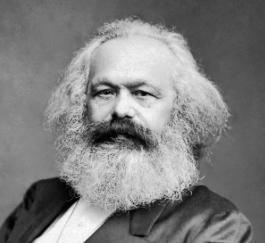
Communism differs from all previous movements in that it overturns the basis of all earlier relations of production and intercourse, and for the first time consciously treats all natural premises as the creatures of hitherto existing men, strips them of their natural character and subjugates them to the power of the united individuals. Its organisation is, therefore, essentially economic, the material production of the conditions of this unity; it turns existing conditions into conditions of unity. The reality, which communism is creating, is precisely the true basis for rendering it impossible that anything should exist independently of individuals, insofar as reality is only a product of the preceding intercourse of individuals themselves.
▼
Source
source
Vol. I, Part 4.
1 month 1 week ago
The STATE IDEA, the authoritarian principle, has been proven bankrupt by the experience of the Russian Revolution. If I were to sum up my whole argument in one sentence I should say: The inherent tendency of the State is to concentrate, to narrow, and monopolize all social activities; the nature of revolution is, on the contrary, to grow, to broaden, and disseminate itself in ever-wider circles. In other words, the State is institutional and static; revolution is fluent, dynamic. These two tendencies are incompatible and mutually destructive. The State idea killed the Russian Revolution and it must have the same result in all other revolutions, unless the libertarian idea prevail.
1 month 1 week ago
Every human being is the natural guardian of his own importance.
▼
Source
source
Ch. 9: "Science and Philosophy", p. 195
2 months 4 weeks ago
And now, at half-past ten o'clock, I hear the cockerels crow in Hubbard's barns, and morning is already anticipated. It is the feathered, wakeful thought in us that anticipates the following day.
▼
Source
source
July 11, 1851
3 months 6 days ago
No one has yet been found so firm of mind and purpose as resolutely to compel himself to sweep away all theories and common notions, and to apply the understanding, thus made fair and even, to a fresh examination of particulars. Thus it happens that human knowledge, as we have it, is a mere medley and ill-digested mass, made up of much credulity and much accident, and also of the childish notions which we at first imbibed.
▼
Source
source
Aphorism 97
2 months 4 weeks ago
Beauty is the main positive form of the aesthetic assimilation of reality, in which aesthetic ideal finds it direct expression...
▼
Source
source
About Beauty
3 weeks 2 days ago
For his purposes (and mine), scientific medicine is defined as the set of practices which submit themselves to the ordeal of being tested. Alternative medicine is defined as that set of practices which cannot be tested, refuse to be tested, or consistently fail tests. If a healing technique is demonstrated to have curative properties in properly controlled double-blind trials, it ceases to be alternative. It simply, as Diamond explains, becomes medicine. Conversely, if a technique devised by the President of the Royal College of Physicians consistently fails in double-blind trials, it will cease to be a part of 'orthodox' medicine. Whether it will then become 'alternative' will depend upon whether it is adopted by a sufficiently ambitious quack (there are always sufficiently gullible patients).
▼
Source
source
Foreword to Snake Oil and Other Preoccupations by John Diamond, Vintage, 2001.
1 month 1 week ago
There is something between the gross specialised values of the mere practical man, and the thin specialised values of the mere scholar. Both types have missed something; and if you add together the two sets of values, you do not obtain the missing elements.
▼
Source
source
Ch. 13: "Requisites for Social Progress", p. 279
1 month 1 week ago
In the first place for over two centuries religion has been on the defensive, and on a weak defensive. The result of the repetition of this undignified retreat, during many generations, has at last almost entirely destroyed the intellectual authority of religious thinkers. Consider this contrast: when Darwin or Einstein proclaim theories which modify our ideas, it is a triumph for science. We do not go about saying that there is another defeat for science, because its old ideas have been abandoned. We know that another step of scientific insight has been gained.Religion will not regain its old power until it can face change in the same spirit as does science. Its principles may be eternal, but the expression of those principles requires continual development.
▼
Source
source
Ch. 12: "Religion and Science", p. 263
1 month 1 week ago
I must also call your attention to the fact that it is crucial for my viewpoint that human behavior is to a large extent charged with a considerable amount of energy, but that in contrast to Freud I do not consider this energy to be sexual, but the vital energy within any organism which, according to biological laws, gives man the desire to live, and that means to adapt himself to the social necessities of his society. To go back to what I consider to be the misunderstanding, it has never been my position that society only deforms or manifests that which is already there. If we make the distinction between human necessities in general and human desires in particular then indeed, society creates particular desires which, however, follow the general laws of the necessities rooted in human nature.
1 month 2 weeks ago
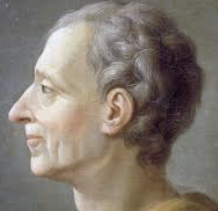
The laws of Rome had wisely divided public power among a large number of magistracies, which supported, checked and tempered each other. Since they all had only limited power, every citizen was qualified for them, and the people - seeing many persons pass before them one after the other - did not grow accustomed to any in particular. But in these times the system of the republic changed. Through the people the most powerful men gave themselves extraordinary commissions - which destroyed the authority of the people and magistrates, and placed all great matters in the hands of one man, or a few.
▼
Source
source
Chapter XI.
1 month 1 week ago
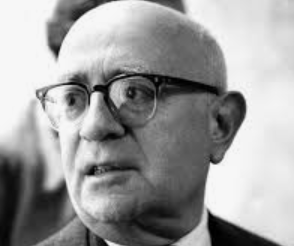
All the world's not a stage.
▼
Source
source
E. Jephcott, trans. (1974), § 94
1 week 3 days ago
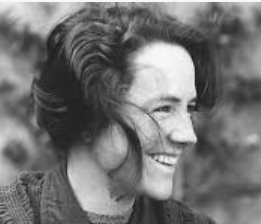
People don't want to be understood - I mean not completely. It's too destructive. Then they haven't anything left.
1 month 4 weeks ago
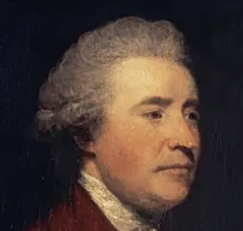
We want no foreign examples to rekindle in us the flame of liberty. The example of our own ancestors is abundantly sufficient to maintain the spirit of freedom in its full vigour, and to qualify it in all its exertions. The example of a wise, moral, well-natured, and well-tempered spirit of freedom, is that alone which can be useful to us, or in the least degree reputable or safe. Our fabric is so constituted; one part of it bears so much on the other, the parts, are so made for one another, and for nothing else, that to introduce any foreign matter into it, is to destroy it.
▼
Source
source
p. 471
CivilSimian.com created by AxiomaticPanic, CivilSimian, Kalokagathia