

1 month 2 weeks ago
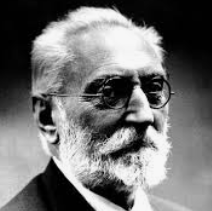
In the most secret chamber of the spirit of him who believes himself convinced that death puts an end to his personal consciousness, his memory, for ever, and all unknown to him perhaps, there lurks a shadow, a vague shadow, a shadow of uncertainty, and while he says within himself, "Well, let us live this life that passes away, for there is no other!" the silence of this secret chamber speaks to him and murmurs, "Who knows!... " These voices are like the humming of a mosquito when the south-west wind roars through the trees in the wood; we cannot distinguish this faint humming, yet nevertheless, merged in the clamor of the storm, it reaches the ear.

4 months ago
Where there have been powerful governments, societies, religions, public opinions, in short wherever there has been tyranny, there the solitary philosopher has been hated; for philosophy offers an asylum to a man into which no tyranny can force it way, the inward cave, the labyrinth of the heart.
2 months 3 weeks ago
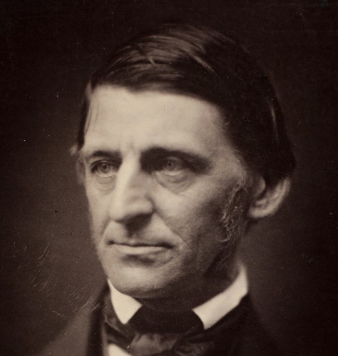
Genius is always sufficiently the enemy of genius by over influence.
▼
Source
source
par. 19
1 month 4 weeks ago
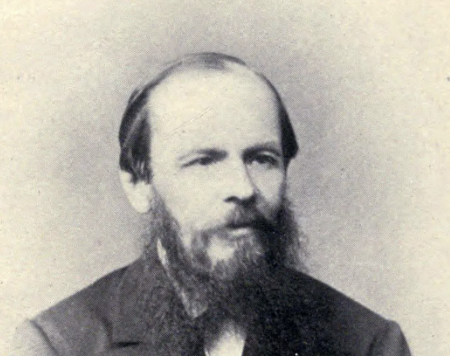
Nor is there any embarrassment in the fact that we're ridiculous, isn't it true? For it's actually so, we are ridiculous, light-minded, with bad habits, we're bored, we don't know how to look, how to understand, we're all like that, all, you, and I, and they! Now, you're not offended when I tell you to your face that you're ridiculous? And if so, aren't you material? You know, in my opinion it's sometimes even good to be ridiculous, if not better: we can the sooner forgive each other, the sooner humble ourselves; we can't understand everything at once, we can't start right out with perfection! To achieve perfection, one must first begin by not understanding many things! And if we understand too quickly, we may not understand well. This I tell you, you, who have already been able to understand. .. and not understand ... so much. I'm not afraid for you now.
▼
Source
source
Part 4, Chapter ?
1 month 4 weeks ago
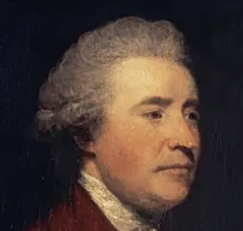
The power of discretionary disqualification by one law of Parliament, and the necessity of paying every debt of the Civil List by another law of Parliament, if suffered to pass unnoticed, must establish such a fund of rewards and terrors as will make Parliament the best appendage and support of arbitrary power that ever was invented by the wit of man. This is felt. The quarrel is begun between the Representatives and the People. The Court Faction have at length committed them. In such a strait the wisest may well be perplexed, and the boldest staggered. The circumstances are in a great measure new. We have hardly any land-marks from the wisdom of our ancestors, to guide us. At best we can only follow the spirit of their proceeding in other cases.
▼
Source
source
Volume i, p. 516
1 month 1 week ago
Popular presentation today is all too often that which puts the mob in a position to talk about something without understanding it.
▼
Source
source
G 32

1 month 2 weeks ago
Recognize what is in your sight, and that which is hidden from you will become plain to you. For there is nothing hidden which will not become manifest.
3 weeks 6 days ago
Each visitor performed the ceremony of greeting this old aunt whom not one of them knew, not one of them wanted to know, and not one of them cared about; Anna Pávlovna observed these greetings with mournful and solemn interest and silent approval. The aunt spoke to each of them in the same words, about their health and her own, and the health of Her Majesty, "who, thank God, was better today." And each visitor, though politeness prevented his showing impatience, left the old woman with a sense of relief at having performed a vexatious duty and did not return to her the whole evening.
▼
Source
source
Bk. I, Ch. II

3 months 5 days ago
We are no nearer heaven on the top of Mount Cenis than at the bottom of the sea; take the distance with your astrolabe. They debase God even to the carnal knowledge of women, to so many times, and so many generations.
▼
Source
source
Ch. 12
4 months ago
Haste is universal because everyone is in flight from himself.

3 months 6 days ago
We are much beholden to Machiavel and others, that write what men do, and not what they ought to do.
▼
Source
source
Book II, xxi, 9
3 weeks 4 days ago
He is a despicable sage whose wisdom does not profit himself.
▼
Source
source
Maxim 629

3 months 4 weeks ago
I will not by suppression, or by performing tricks, try to produce the impression that the ordinary Christianity in the land and the Christianity of the New Testament are alike. "What Do I Want?"
1 month 3 weeks ago
Anarchy, in its own nature, is an evil of short duration. The more horrible are the mischiefs it inflicts, the more does it hasten to a close.
▼
Source
source
Book 7, Ch. 5


1 month 2 weeks ago
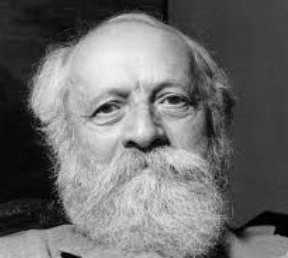
God ... demands everything, in order to give everything anew to him who loves Him, after that loving has truly given up all.
▼
Source
source
p. 45
1 month 2 weeks ago
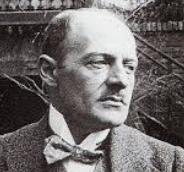
Even after his conversion, the true 'apostate' is not primarily committed to the positive contents of his new belief and to the realization of its aims. He is motivated by the struggle against the old belief and lives on for its negation. The apostate does not affirm his new convictions for their own sake; he is engaged in a continuous chain of acts of revenge against his own spiritual past. In reality he remains a captive of this past, and the new faith is merely a handy frame of reference for negating and rejecting the old. As a religious type, the apostate is therefore at the opposite pole from the 'resurrected,' whose life is transformed by a new faith which is full of intrinsic meaning and value.
▼
Source
source
L. Coser, trans. (1973), pp. 66-67

1 month 3 weeks ago
This world was created from God's fear of solitude. In other words, us, the creatures, have no other meaning but to distract the Creator. Poor clowns of the absolute, we forget that we live dramas for the boredom of a spectator, whose claps have never reached the ears of a mortal.

3 weeks 2 days ago
Scientific beliefs are supported by evidence, and they get results. Myths and faiths are not and do not.
3 weeks 4 days ago
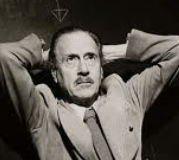
The potential of any new technology is always dissipated by its users involvement in its predecessors.
▼
Source
source
(p. 210)
1 month 3 weeks ago
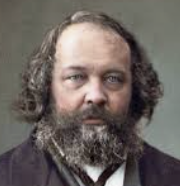
If there is a state, then necessarily there is domination and consequently slavery. A state without slavery, open or camouflaged, is inconceivable - that is why we are enemies of the state.
1 month 3 weeks ago
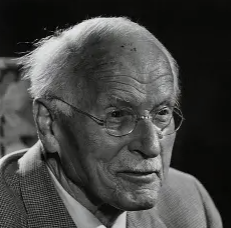
The deep critical thinker has become the misfit of the world. This is not a coincidence. To maintain order and control you must isolate the intellectual, the sage, the philosopher, the savant before their ideas awaken people.
2 months 4 weeks ago
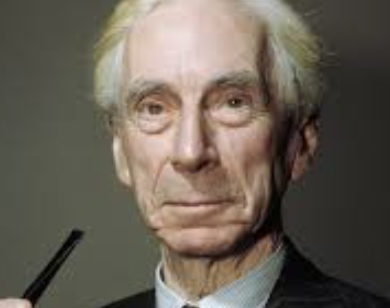
Philosophy seems to me on the whole a rather hopeless business.
▼
Source
source
Letter to Gilbert Murray, December 28, 1902
3 months 4 weeks ago
A genius and an Apostle are qualitatively different, they are definitions which each belong in their own spheres: the sphere of immanence, and the sphere of transcendence.

1 month 1 week ago
Poems are magic ceremonies of language.
3 months 5 days ago
No circumstance is ever so desperate that one cannot nurture some spark of hope.
▼
Source
source
Act I, scene i
2 months 3 weeks ago
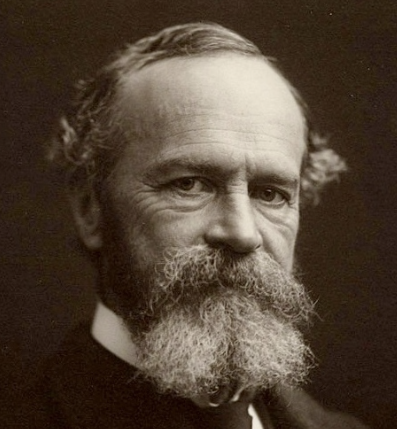
Religion, therefore, as I now ask you arbitrarily to take it, shall mean for us the feelings, acts, and experiences of individual men in their solitude, so far as they apprehend themselves to stand in relation to whatever they may consider the divine. Since the relation may be either moral, physical, or ritual, it is evident that out of religion in the sense in which we take it, theologies, philosophies, and ecclesiastical organizations may secondarily grow.
▼
Source
source
Lecture II, "Circumscription of the Topic"
1 month 4 weeks ago
...he always firmly believed that they were purely on the defensive in that rebellion. He considered the Americans as standing at that time, and in that controversy, in the same relation to England, as England did to king James the Second, in 1688.
▼
Source
source
p. 396
1 month 3 weeks ago
The meeting of two personalities is like the contact of two chemical substances: if there is any reaction, both are transformed.
▼
Source
source
p. 49
1 month 2 weeks ago
Judge not, that you be not judged. For with what judgment you judge, you will be judged; and with the measure you use, it will be measured back to you. And why do you look at the speck in your brother's eye, but do not consider the plank in your own eye? Or how can you say to your brother, 'Let me remove the speck from your eye'; and look, a plank is in your own eye? Hypocrite! First remove the plank from your own eye, and then you will see clearly to remove the speck from your brother's eye.
▼
Source
source
Matthew 7:1-5 (NKJV) (Also Luke 6:37-42)
1 month 4 weeks ago
To be in love is not the same as loving. You can be in love with a woman and still hate her.
2 months 4 weeks ago
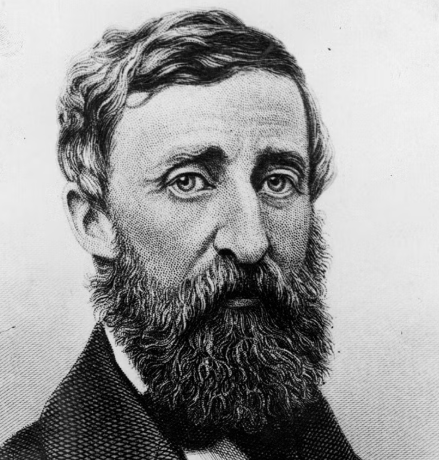
We may well be ashamed to tell what things we have read or heard in our day. I do not know why my news should be so trivial, - considering what one's dreams and expectations are, why the developments should be so paltry. The news we hear, for the most part, is not news to our genius. It is the stalest repetition.
▼
Source
source
p. 491

1 month 2 weeks ago
Society ... can afford to grant more than before because its interests have become the innermost drives of its citizens.
▼
Source
source
p. 72
2 weeks 6 days ago
No realistic, sane person goes around Chicago without protection.
▼
Source
source
Humboldt's Gift (1975), p. 452
3 months 2 weeks ago
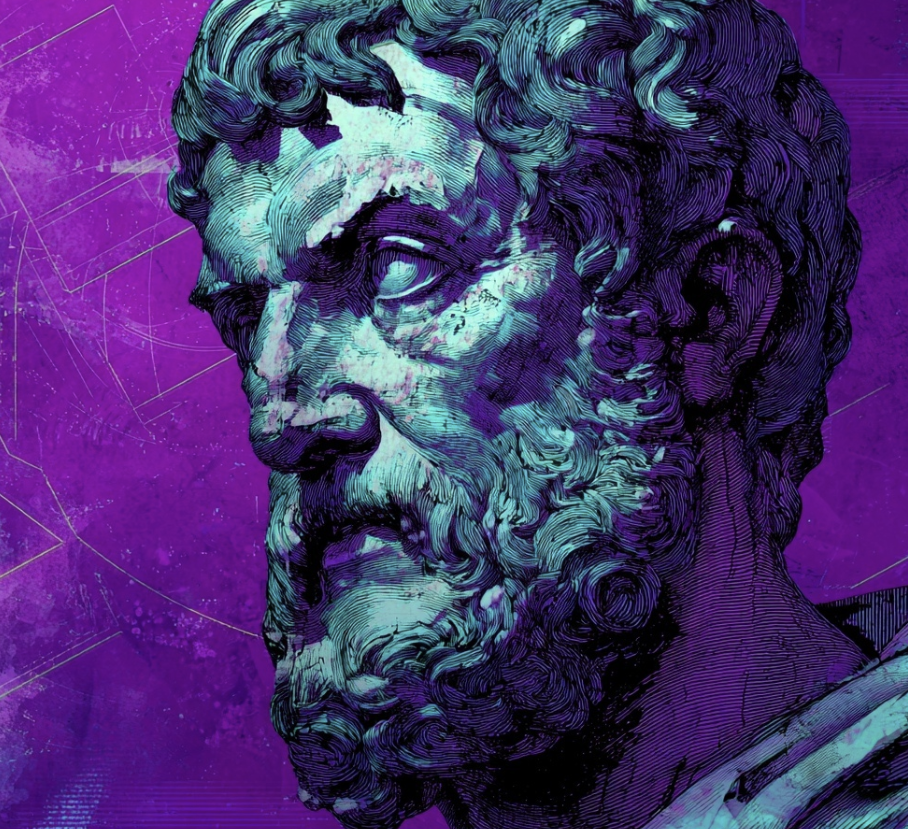
The happiness which belongs to man, is that state in which he enjoys as many of the good things, and suffers as few of the evils incident to human nature as possible; passing his days in a smooth course of permanent tranquility. A wise man, though deprived of sight or hearing, may experience happiness in the enjoyment of the good things which yet remain; and when suffering torture, or laboring under some painful disease, can mitigate the anguish by patience, and can enjoy, in his afflictions, the consciousness of his own constancy.
2 weeks 6 days ago
Yes, I am in favor of censorship, but it has to be conducted by people like me. And that's the difficulty (laughs). I'm in favor of encouraging every possible form of self-restraint and parental control. And I certainly don't think that pornography should be protected under the American Constitution.
▼
Source
source
Interview with Salon.com, 1998

2 months 3 weeks ago
No one has the right to obey.
▼
Source
source
in a radio interview with Joachim Fest (9 November 1964)
1 month 1 week ago
The most successful tempters and thus the most dangerous are the deluded deluders.
▼
Source
source
F 120
1 month 3 weeks ago
Ennui is the echo in us of time tearing itself apart.
3 weeks 4 days ago
Never find your delight in another's misfortune.
▼
Source
source
Maxim 467

2 months 3 weeks ago
It is simply no good trying to keep any thrill: that is the very worst thing you can do. Let the thrill go-let it die away-go on through that period of death into the quieter interest and happiness that follow-and you will find you are living in a world of new thrills all the time. But if you decide to make thrills your regular diet and try to prolong them artificially, they will all get weaker and weaker, and fewer and fewer, and you will be a bored, disillusioned old man for the rest of your life. It is because so few people understand this that you find many middle-aged men and women maundering about their lost youth, at the very age when new horizons ought to be appearing and new doors opening all round them. It is much better fun to learn to swim than to go on endlessly (and hopelessly) trying to get back the feeling you had when you first went paddling as a small boy.
▼
Source
source
Book III, Chapter 6, "Christian Marriage"
2 months 3 weeks ago
The alleged power to charm down insanity, or ferocity in beasts, is a power behind the eye.
▼
Source
source
Behavior
1 month 6 days ago
Since these questions lie in the future, imagination must supply the lack of experienced feeling in attaching value to them. But values can be only imperfectly anticipated.
3 months 4 weeks ago
This is approximately the way Christendom relates to the essentially Christian, the unconditioned. After seventeen, eighteen detours and running all around someone finally has his finite existence assured, and then we receive a sermon about Seek first the kingdom of God. Is this sobriety or is this intoxication?
2 months 3 weeks ago
We can pool information about experiences, but never the experiences themselves. From family to nation, every human group is a society of island universes.
▼
Source
source
Page 159
3 weeks 4 days ago
Prose is private drama; poetry is corporate drama.
▼
Source
source
(p. 275)
3 weeks 6 days ago
Understand that all the evils from which you suffer, you yourselves cause by yielding to the suggestions by which emperors, kings, members of parliament, governors, officers, capitalists, priests, authors, artists, and all who need this fraud of patriotism in order to live upon your labour, deceive you!
▼
Source
source
Patriotism and Government
2 months 2 days ago
We are far more liable to catch the vices than the virtues of our associates.
▼
Source
source
As quoted in Thesaurus of Epigrams: A New Classified Collection of Witty Remarks, Bon Mots and Toasts (1942) by Edmund Fuller
1 month 5 days ago
To me, believing that some correspondence intrinsically just is reference (not as a result of our operational and theoretical constraints, or our intentions, but as an ultimate metaphysical fact) amounts to a magical theory of reference. Reference itself becomes what Locke called a 'substantial form' (an entity which intrinsically belongs with a certain name) on such a view. Even if one is willing to contemplate such unexplainable metaphysical facts, the epistemological problems that accompany such a metaphysical view seem insuperable. For, assuming a world of mind- independent, discourse-independent entities (this is the presupposition of the view we are discussing), there are, as we have seen, many different 'correspondences' which represent possible or candidate reference relations (infinitely many, in fact, if there are infinitely many things in the universe).
▼
Source
source
Chap. 2 : A problem about reference
CivilSimian.com created by AxiomaticPanic, CivilSimian, Kalokagathia