

3 weeks 1 day ago
No tears are shed, when an enemy dies.
▼
Source
source
Maxim 376
3 weeks 3 days ago
Ivan Ilych's life had been most simple and most ordinary and therefore most terrible.
▼
Source
source
Ch. II

1 month 1 week ago
At the deepest level, the desire for complete union with God exhibits a narcissistic structure.
2 months 4 weeks ago
Good roads, canals, and navigable rivers, by diminishing the expence of carriage, put the remote parts of the country more nearly upon a level with those of the neighbourhood of the town. They are upon that the greatest of all improvements.
▼
Source
source
Chapter XI, Part I, p. 174.
3 months 1 week ago
If it is pleasing to observe in nature her desire to paint God in all his works, in which we see some traces of him because they are his images, how much more just is it to consider in the productions of minds the efforts which they make to imitate the essential truth, even in shunning it, and to remark wherein they attain it and wherein they wander from it, as I have endeavored to do in this study.

1 month 3 weeks ago
If the State, modeled after the universe, is split into two spheres or classes of beings - wherein the free represent the ideas and the unfree the concrete and sensate things - then the ultimate and uppermost order remains unrealized by both. By using sensate things as tools or organs, the ideas obtain a direct relationship to the apparitions and enter into them as souls. God, however, as identity of the highest order, remains above all reality and eternally has merely an indirect relationship. If then in the higher moral order the State represents a second nature, then the divine can never have anything other than an indirect relationship to it, never can it bear any real relationship to it, and religion, if it seeks to preserve itself in unscathed pure ideality, can therefore never exist - even in the most perfect State - other than esoterically in the form of mystery cults.
▼
Source
source
P. 51
2 months 3 weeks ago
How significant is the enormous heightening, under mescalin, of the perception of color! ... Man's highly developed color sense is a biological luxury-inestimably precious to him as an intellectual and spiritual being, but unnecessary to his survival as an animal. ... Mescalin raises all colors to a higher power and makes the percipient aware of innumerable fine shades of difference, to which, at ordinary times, he is completely blind. It would seem that, for Mind at Large, the so-called secondary characters of things are primary.
▼
Source
source
describing his experiment with mescaline, pp. 26-27
1 week 6 days ago
Nothing is so galling to a people not broken in from the birth, as a paternal, or, in other words, a meddling government, a government which tells them what to read, and say, and eat, and drink, and wear.
▼
Source
source
p. 252

1 month 1 week ago
Paradoxical as it may seem, a Latin prose or a geometry problem, even though they are done wrong, may be of a great service one day, provided we devote the right kind of effort to them. Should the occasion arise, they can one day make us better able to give someone in affliction exactly the help required to save him, at the supreme moment of his need.
3 months 2 days ago
A prince who is not wise himself will never take good advice.
▼
Source
source
The Prince (1513), Ch. 23; translated by W. K. Marriot

1 month 1 week ago
Revolutionary feminism embraces men who are able to change, who are capable of responding mutually in a subject-to-subject encounter where desire and fulfillment are in no way linked to coercive subjugation. This feminist vision of the sexual imaginary is the space few men seem able to enter.
3 weeks 1 day ago
Sentimentality, like pornography, is fragmented emotion; a natural consequence of a high visual gradient in any culture.
2 months 2 weeks ago
The evidence of our own eyes makes it more plausible to believe that the world was not created by any god at all. If, however, we insist on believing in divine creation, we are forced to admit that the god who made the world cannot be all-powerful and all good. He must be either evil or a bungler.
▼
Source
source
The God of Suffering? Project Syndicate, 2008

2 months 3 weeks ago
This body which called itself and which still calls itself the Holy Roman Empire was in no way holy, nor Roman, nor an empire.
▼
Source
source
Essai sur l'histoire générale et sur les mœurs et l'esprit des nations, Chapter 70, 1756
2 months 3 weeks ago
What are the earth and all its interests beside the deep surmise which pierces and scatters them?

1 month 3 weeks ago
This day I heard from Laurence who has sent me papers confirming the portentous State of France-where the Elements which compose Human Society seem all to be dissolved, and a world of Monsters to be producd in the place of it-where Mirabeau presides as the Grand Anarch; and the late Grand Monarch makes a figure as ridiculous as pitiable.
▼
Source
source
Letter to Richard Burke (c. 10 October 1789), quoted in Alfred Cobban and Robert A. Smith (eds.), The Correspondence of Edmund Burke, Volume VI: July 1789-December 1791 (1967), p. 30

1 month 1 week ago
We might liken the 'two selves' to Laurel and Hardy. Ollie is the objective mind, 'you'. Stan is the subjective mind, the 'hidden you'. But Stan happens to be in control of your energy supply. So if you wake up feeling low and discouraged, you (Ollie) tend to transmit your depression to Stan, who fails to send you energy, which makes you feel lower than ever. This vicious circle is the real cause of most mental illness.
▼
Source
source
p. 121

3 months 3 weeks ago
There was no denying that he would always be conscious of the fact that an Earthman was an Earthman. He couldn't help that. That was the result of a childhood immersed in an atmosphere of bigotry so complete that it was almost invisible, so entire that you accepted its axioms as second nature. Then you left it and saw it for what it was when you looked back.
2 months 3 weeks ago
The great writers to whom the world owes what religious liberty it possesses, have mostly asserted freedom of conscience as an indefeasible right, and denied absolutely that a human being is accountable to others for his religious belief.
▼
Source
source
Ch. 1: Introductory
3 weeks 6 days ago
The very ideology of "cultural production" is antithetical to all culture, as is that of visibility and of the polyvalent space: culture is a site of the secret, of seduction, of initiation, of a restrained and highly ritualized symbolic exchange.
▼
Source
source
"The Beaubourg Effect," p. 64
1 month 1 week ago
The vain man is in like cause with the avaricious - he takes the mean for the end; forgetting the end he pursues the means for its own sake and goes no further. The seeming to be something, conducive to being it, ends by forming our objective. We need that others should believe in our superiority to them in order that we may believe in it ourselves, and upon their belief base our faith in our own persistence, or at least in the persistence of our fame. We are more grateful to him that congratulates us on the skill with which we defend a cause than we are to him who recognizes the truth or goodness of the cause itself. A rabid mania for originality is rife in the modern intellectual world and characterizes all individual effort. We would rather err with genius than hit the mark with the crowd.

3 months 3 weeks ago
It is the failing of a certain literature to believe that life is tragic because it is wretched. Life can be magnificent and overwhelming that is its whole tragedy. Without beauty, love, or danger it would be almost easy to live. And M. Sartre's hero does not perhaps give us the real meaning of his anguish when he insists on those aspects of man he finds repugnant, instead of basing his reasons for despair on certain of man's signs of greatness. The realization that life is absurd cannot be an end, but only a beginning. This is a truth nearly all great minds have taken as their starting point. It is not this discovery that is interesting, but the consequences and rules of action drawn from it.
2 months 3 weeks ago
Yes, I am so free. And what a superb absence is my soul.
▼
Source
source
Orestes, Act 1

2 months 2 weeks ago
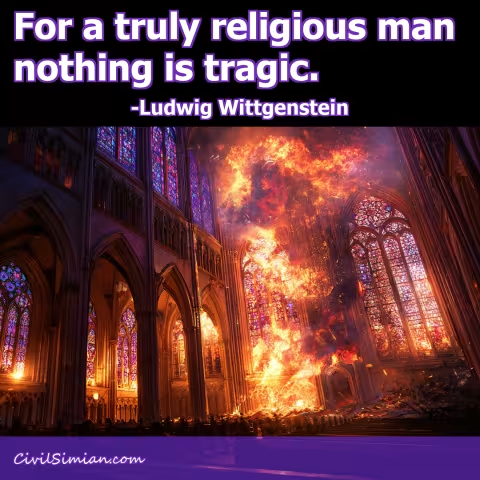
What cannot be imagined cannot even be talked about.
▼
Source
source
Journal entry (12 October 1916), p. 84e

2 months 2 weeks ago
There are many who know many things, yet are lacking in wisdom.

2 months 3 weeks ago
The safest road to Hell is the gradual one - the gentle slope, soft underfoot, without sudden turnings, without milestones, without signposts.
▼
Source
source
Letter XII

3 days ago
Getting rid of predation isn't a matter of moralising. A python who kills a small human child isn't morally blameworthy. Nor is a lion who hunts and kills a terrified zebra. In both cases, the victim suffers horribly. But the predator lacks the empathetic and mind-reading skills needed to understand the implications of what s/he is doing. Some humans still display a similar deficit. From the perspective of the victim, the moral status or (lack of) guilty intent of a human or nonhuman predator is irrelevant. Either way, to stand by and watch the snake asphyxiate a child would be almost as morally abhorrent as to kill the child yourself. So why turn this principle on its head with beings of comparable sentience to human infants and toddlers? With power comes complicity.
▼
Source
source
"The Radical Plan to Phase out Earth's Predatory Species", io9, 30 Jul. 2014
2 months 3 weeks ago
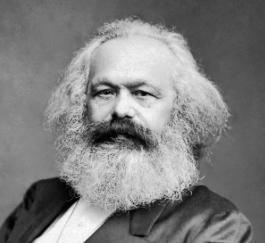
For as soon as the distribution of labour comes into being, each man has a particular exclusive sphere of activity, which is forced upon him and from which he cannot escape. He is a hunter, a fisherman, a shepherd, or a critical critic and must remain so if he does not wish to lose his means of livelihood; while in communist society, where nobody has one exclusive sphere of activity but each can become accomplished in any branch he wishes, society regulates the general production and thus makes it possible for me to do one thing today and another tomorrow, to hunt in the morning, to fish in the afternoon, rear cattle in the evening, criticize after dinner, just as I have in mind, without ever becoming hunter, fisherman, shepherd or critic.
▼
Source
source
Vol. 1, Part 1.
1 month 2 weeks ago
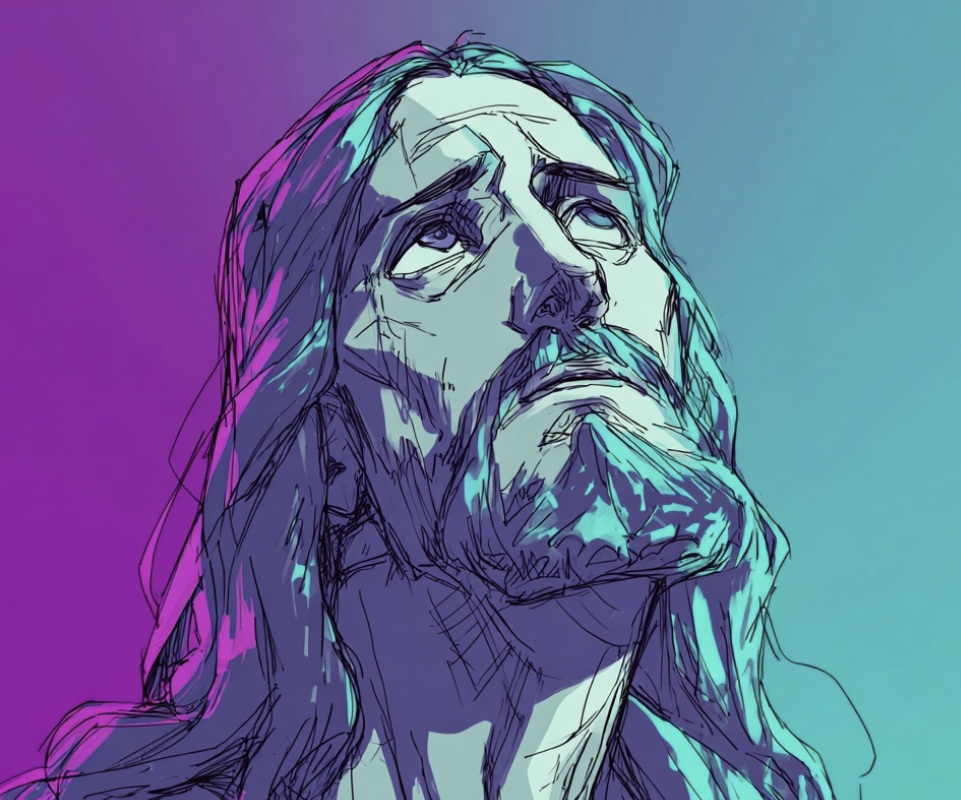
Master, we saw one casting out devils in thy name, and he followeth not us: and we forbad him, because he followeth not us. But Jesus said, Forbid him not: for there is no man which shall do a miracle in my name, that can lightly speak evil of me. For he that is not against us is on our part.
▼
Source
source
Mark 9:38-40 (KJV)
1 month 3 weeks ago
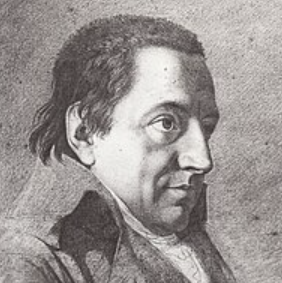
It was these Romans who reunited in one State the Culture which had now been produced by the intermixture of different races, and thereby completed the period of Ancient Time, and closed the simple course of Ancient Civilization. With respect to its influence on Universal History, this nation, more than any other, was the blind and unconscious instrument for the furtherance of a higher World-Plan; after having formed itself, by its internal des tiny indicated above, into a most fit and proper instrument for that purpose.
▼
Source
source
p. 192

1 month 6 days ago
There is a physical, not moral, impossibility of supplying the wants of the intellect in the state of civilisation at which we have arrived. The stimulus, the training, the time, are all three wanting to us; or, in other words, the means and inducements are not there. Look at the poor lives we lead. It is a wonder that we are so good as we are, not that we are so bad. In looking round we are struck with the power of the organisations we see, not with their want of power. Now and then, it is true, we are conscious that there is an inferior organisation, but, in general, just the contrary.
2 months 3 weeks ago
The history of all hitherto existing society is the history of class struggles.
▼
Source
source
Section 1, paragraph 1, lines 1-2.
2 months 3 weeks ago
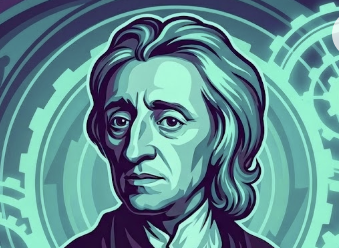
We are all a sort of camelions, that still take a tincture from things near us; nor is it to be wonder'd at in children, who better understand what they see than what they hear.
▼
Source
source
Sec. 67
2 months 3 weeks ago
All this is merely saying that he, in a degree once common, but now very unusual, threw his feelings into his opinions; which truly it is difficult to understand how any one who possesses much of both, can fail to do. None but those who do not care about opinions, will confound it with intolerance. Those, who having opinions which they hold to be immensely important, and their contraries to be prodigiously hurtful, have any deep regard for the general good, will necessarily dislike, as a class and in the abstract, those who think wrong what they think right, and right what they think wrong: though they need not therefore be, nor was my father, insensible to good qualities in an opponent, nor governed in their estimation of individuals by one general presumption, instead of by the whole of their character.
▼
Source
source
(pp. 50-51)
1 month 3 weeks ago
It is so by nature that the plant will develop with regularity, that the animal will move purposefully, and that human beings will think. Why should I take exception to recognizing also the last as the expression of an original force of nature, as I do the first and the second?
▼
Source
source
P. Preuss, trans. (1987), p. 11

2 months ago
The long habit of living indisposeth us for dying.
▼
Source
source
Chapter V
1 month 2 weeks ago
The young man who has not wept is a savage, and the old man who will not laugh is a fool.
▼
Source
source
Ch. 3, P. 57
2 months 3 weeks ago
If you make the same guess often enough it ceases to be a guess and becomes a Scientific Fact. This is the inductive method.
▼
Source
source
Pilgrim's Regress 22
1 month 2 weeks ago
The Spirit of the Lord is on me, because he has anointed me to proclaim good news to the poor. He has sent me to proclaim freedom for the prisoners and recovery of sight for the blind, to set the oppressed free, to proclaim the year of the Lord's favor.
▼
Source
source
Luke 4:18-19 NIV
1 month 1 week ago
In classroom settings I have often listened to groups of students tell me that racism really no longer shapes the contours of our lives, that there is no such thing as racial difference, that "we are all just people." Then a few minutes later I give them an exercise. I ask if they were about to die and could choose to come back as a white male, a white female, a black female, or a black male, which identity would they choose. Each time I do this exercise, most individuals, irrespective of gender or race invariably choose whiteness, and most often male whiteness. Black females are the least chosen. When I ask students to explain their choice they proceed to do a sophisticated analysis of privilege based on race (with perspectives that take gender and class into consideration).
▼
Source
source
Teaching Community: A Pedagogy of Hope
1 month 3 days ago
In Administrative Behavior, bounded rationality is largely characterized as a residual category - rationality is bounded when it falls short of omniscience. And the failures of omniscience are largely failures of knowing all the alternatives, uncertainty about relevant exogenous events, and inability to calculate consequences. There was needed a more positive and formal characterization of the mechanisms of choice under conditions of bounded rationality... Two concepts are central to the characterization: search and satisficing.
▼
Source
source
p. 502; As cited in Barros (2010, p. 464-5).
2 months 3 weeks ago
It may be expedient but it is not just that some should have less in order that others may prosper.
▼
Source
source
Chapter I, Section 3, pg. 15
2 months 3 weeks ago
Essentially, this war...is a great race-conflict, a conflict of Teuton and Slav, in which certain other nations, England, France and Belgium, have been led into cooperation with the Slav. ... The conflict of Germany and Russia has been produced not by this or that diplomatic incident, but by primitive passions expressing themselves in the temper of the two races.
▼
Source
source
War: The Offspring of Fear (1914), quoted in Ray Monk, Bertrand Russell: The Spirit of Solitude, 1872-1921 (1996), p. 373

1 month 1 week ago
"What I believe" is a process rather than a finality. Finalities are for gods and governments, not for the human intellect. While it may be true that Herbert Spencer's formulation of liberty is the most important on the subject, as a political basis of society, yet life is something more than formulas. In the battle for freedom, as Ibsen has so well pointed out, it is the struggle for, not so much the attainment of, liberty, that develops all that is strongest, sturdiest and finest in human character.
2 months 3 weeks ago
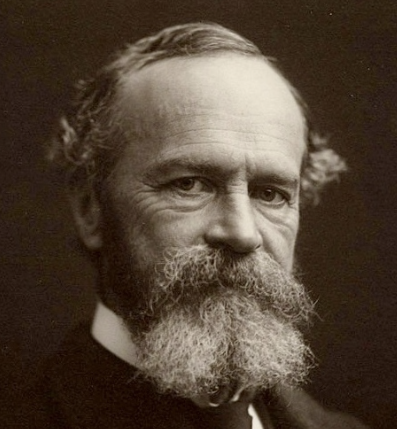
Keep the faculty of effort alive in you by a little gratuitous exercise every day. That is, be systematically ascetic or heroic in little unnecessary points, do every day or two something for no other reason than that you would rather not do it, so that when the hour of dire need draws nigh, it may find you not unnerved and untrained to stand the test. So with the man who has daily inured himself to habits of concentrated attention, energetic volition, and self-denial in unnecessary things. He will stand like a tower when everything rocks around him, and when his softer fellow-mortals are winnowed like chaff in the blast.
▼
Source
source
Ch. 4
2 months 3 weeks ago
Children (nay, and men too) do most by example.
▼
Source
source
Sec. 67
1 month 3 weeks ago
But like the desire for eternal life, the desire for omniscience and absolute perfection is merely an imaginary desire; and, as history and daily experience prove, the supposed human striving for unlimited knowledge and perfection is a myth. Man has no desire to know everything; he only wants to know the things to which he is particularly drawn.
▼
Source
source
Lecture XXX, Atheism alone a Positive View
2 months 3 weeks ago
Science, ever since the time of the Arabs, has had two functions: (1) to enable us to know things, and (2) to enable us to do things.
CivilSimian.com created by AxiomaticPanic, CivilSimian, Kalokagathia