


3 months 2 weeks ago
Homer tells us also that Sisyphus had put Death in chains. Pluto could not endure the sight of his deserted, silent empire. He dispatched the god of war, who liberated Death from the hands of her conqueror.
1 month 2 weeks ago
It is the highest service to submit the evil impulse to God through the power of love.
▼
Source
source
p. 45

2 months 2 weeks ago
By Thy perfect Intelligence, O MazdaThou didst first create us having bodies and spiritual consciences,And by Thy Thought gave our selves the power of thought, word, and deed.Thus leaving us free to choose our faith at our own will.
▼
Source
source
Ahunuvaiti Gatha; Yasna 31, 11.

2 months 2 weeks ago
My aim is not to provide excuses for black behavior or to absolve blacks of personal responsibility. But when the new black conservatives accent black behavior and responsibility in such a way that the cultural realities of black people are ignored, they are playing a deceptive and dangerous intellectual game with the lives and fortunes of disadvantaged people. We indeed must criticize and condemn immoral acts of black people, but we must do so cognizant of the circumstances into which people are born and under which they live. By overlooking these circumstances, the new black conservatives fall into the trap of blaming black poor people for their predicament. It is imperative to steer a course between the Scylla of environmental determinism and the Charybdis of a blaming-the-victims perspective.
▼
Source
source
(p56)
1 week 2 days ago
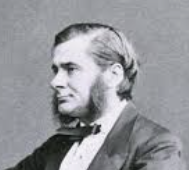
The mediaeval university looked backwards: it professed to be a storehouse of old knowledge... The modern university looks forward: it is a factory of new knowledge.
▼
Source
source
Letter to E. Ray Lankester (11 April 1892) Huxley Papers, Imperial College: 30.448

1 month 2 weeks ago
Born in a prison, with burdens on our shoulders and our thoughts, we could not reach the end of a single day if the possibilities of ending it all did not incite us to begin the next day all over again.
1 week 2 days ago
Becky Sharp's acute remark that it is not difficult to be virtuous on ten thousand a year, has its application to nations; and it is futile to expect a hungry and squalid population to be anything but violent and gross.
▼
Source
source
"Joseph Priestley"
1 month 1 week ago
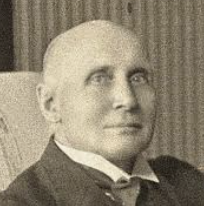
A general definition of civilization: a civilized society is exhibiting the five qualities of truth, beauty, adventure, art, peace.
▼
Source
source
p. 353.

3 months 1 week ago
In archery we have something like the way of the superior man. When the archer misses the center of the target, he turns round and seeks for the cause of his failure in himself.

2 months 3 weeks ago
How just, how suitable to our crime is the punishment with which Providence threatens us? We have enslaved multitudes, and shed much innocent blood in doing it; and now are threatened with the same. And while other evils are confessed, and bewailed, why not this especially, and publicly; than which no other vice, if all others, has brought so much guilt on the land?
1 month 3 weeks ago
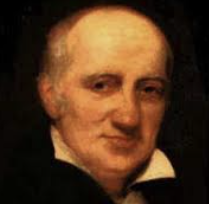
No man must encroach upon my province nor I upon his. He may advise me, moderately and without perniciousness, but he must not expect to dictate to me. He may censure me freely and without reserve but he should remember that I am to act by my deliberation and not his. He may exercise a republican boldness in judging, but he must not be peremptory and imperious in prescribing. Force may never be resorted to but, in the most extraordinary and imperious emergency.
▼
Source
source
Book II, "Of Rights"

2 months 3 weeks ago
I think if I had met him [Lenin] without knowing who he was, I should not have guessed that he was a great man; he struck me as too opinionated and narrowly orthodox. His strength comes, I imagine, from his honesty, courage, and unwavering faith-religious faith in the Marxian gospel, which takes the place of the Christian martyr's hopes of Paradise, except that it is less egotistical... I went to Russia a Communist; but contact with those who have no doubts has intensified a thousandfold my own doubts, not as to Communism in itself, but as to the wisdom of holding a creed so firmly that for its sake men are willing to inflict widespread misery.
▼
Source
source
Part I, Ch. 3: Lenin, Trotsky and Gorky
3 weeks ago
The "interface" of the Renaissance was the meeting of medieval pluralism and modern homogeneity and mechanism - a formula for blitz and metamorphosis.
▼
Source
source
(p. 161)
2 months 3 weeks ago
It is only when we think abstractly that we have such a high opinion of man. Of men in the concrete, most of us think the vast majority very bad. Civilized states spend more than half their revenue on killing each other's citizens. Consider the long history of the activities inspired by moral fervour: human sacrifices, persecutions of heretics, witch-hunts, pogroms leading up to wholesale extermination by poison gases ... Are these abominations, and the ethical doctrines by which they are prompted, really evidence of an intelligent Creator? And can we really wish that the men who practised them should live for ever? The world in which we live can be understood as a result of muddle and accident; but if it is the outcome of a deliberate purpose, the purpose must have been that of a fiend. For my part, I find accident a less painful and more plausible hypothesis.
▼
Source
source
Essay Do We Survive Death?, 1936
3 weeks 2 days ago
Feelings, the most diverse, very strong and very weak, very significant and very worthless, very bad and very good, if only they infect the reader, the spectator, the listener, constitute the subject of art.

2 months 3 weeks ago
Four snakes gliding up and down a hollow for no purpose that I could see - not to eat, not for love, but only gliding.
▼
Source
source
April 11, 1834
3 months 1 week ago
It is more shameful to distrust our friends than to be deceived by them.
2 days ago
There is no end. There is no beginning. There is only the infinite passion of life.
▼
Source
source
Fellini on Fellini (1976) edited by Anna Keel and Christian Strich; translated by Isabel Quigly.
2 months 3 weeks ago
To whomever gives a kiss or a blowRender a kiss or blow, but to whomever gives when you are unable to return, offer all the hatred in your hear, for you were slaves and he enslaves you.
▼
Source
source
Acts 8 & 9
1 month 3 weeks ago
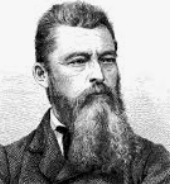
Pantheism makes God into a present, real, and material being; empiricism - to which rationalism also belongs - makes God into an absent, remote, unreal, and negative being. Empiricism does not deny God existence, but denies him all positive determinations, because their content is supposed to be only finite and empirical; the infinite cannot, therefore, be an object for man. But the more determinations I deny to a being, the more do I cut it of[ from myself, and the less power and influence do I concede to it over me, the freer do I make myself of it. The more qualities I possess, the more I am for others, and the greater is the extent of my influence and effects. And the more one is, the more one is known to others. Hence, each negation of an attribute of God is a partial atheism, a sphere of godlessness.
▼
Source
source
Part I, Section 16
2 months 3 weeks ago
I do wish I believed in the life eternal, for it makes me quite miserable to think man is merely a kind of machine endowed, unhappily for himself, with consciousness.
▼
Source
source
Greek Exercises (1888); at the age of fifteen, Russell used to write down his reflections in this book, for fear that his people should find out what he was thinking.

2 weeks 5 days ago
I am not advocating a morality based on evolution. I am saying how things have evolved. I am not saying how we humans morally ought to behave.
▼
Source
source
Ch. 1. Why Are People?
3 weeks ago
Acoustic space is totally discontinuous, like touch. It is a sphere without centers or margins.
2 months 1 week ago
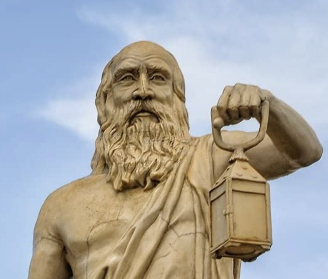
He lit a lamp in broad daylight and said, as he went about, "I am looking for a human."
▼
Source
source
Diogenes Laërtius, vi. 41. This line is frequently translated as "I am looking for an honest man."
3 weeks ago
While Poe and the Symbolists were exploring the irrational in literature, Freud had begun to explore the resonant figure/ground double-plot of the conscious and unconscious.
▼
Source
source
p. 52
1 month 2 weeks ago
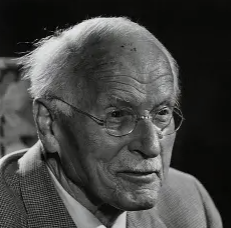
My soul, my soul, where are you? Do you hear me? I speak, I call you-are you there? I have returned, here I am again. I have shaken the dust of all the lands from my feet, and I have come to you again, I am with you. After long years of long wandering, I have come to you anew. Shall I tell you everything I have seen, experienced, and drunk in? Or do you not want to hear about all the noise of life and the world? But one thing you must know, the one thing I have learned is that one must live this life. This life is the way, the long sought-after way to the unfathomable, which we call "divine". There is no other way. All other ways are false paths.
▼
Source
source
Book 2, 12. Nov. 1913
1 month 3 weeks ago
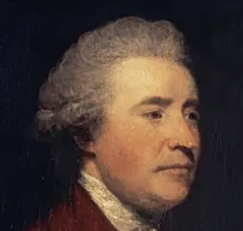
Old religious factions are volcanoes burnt out.
▼
Source
source
Speech on the Petition of the Unitarians
1 month 1 week ago
The oneness of the universe, and the oneness of each element of the universe, repeat themselves to the crack of doom in the creative advance from creature to creature, each creature including in itself the whole of history and exemplifying the self-identity of things and their mutual diversities.
▼
Source
source
Pt. III, ch. 1, sec. 7.
2 months 3 weeks ago
Philosophy, if it cannot answer so many questions as we could wish, has at least the power of asking questions which increase the interest of the world, and show the strangeness and wonder lying just below the surface even in the commonest things of daily life.
1 month 1 week ago
If you have had your attention directed to the novelties in thought in your own lifetime, you will have observed that almost all really new ideas have a certain aspect of foolishness when they are first produced.
▼
Source
source
Ch. 3: "The Century of Genius", pp. 67-68
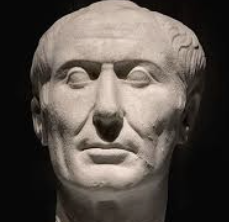
3 weeks ago
A fair exterior is a silent recommendation.
▼
Source
source
Maxin 267
1 month 3 weeks ago
Men may one day feel that they are partakers of a common nature, and that true freedom and perfect equity, like food and air, are pregnant with benefit to every constitution.
▼
Source
source
Vol. 1, bk. 1, ch. 3
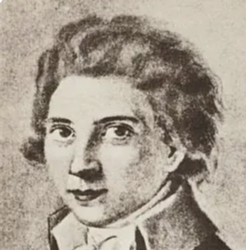
1 month 3 weeks ago
When one considers the sublime disposition underlying the tmly universal educatiOn (of traditional India) ... then what IS or has been called religion in Europe seems to us to be scarcely deserving of that name. And one feels compelled to advise those who Wish to witness religion to travel to India for that purpose ....
▼
Source
source
quoted in Londhe, S. (2008). A tribute to Hinduism: Thoughts and wisdom spanning continents and time about India and her culture. New Delhi: Pragun Publication.
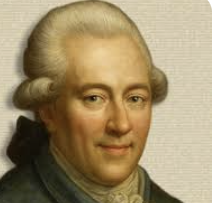
1 month 3 days ago
To do the opposite of something is also a form of imitation, namely an imitation of its opposite.
▼
Source
source
D 96 Variant translation: To do just the opposite is also a form of imitation.

1 month 2 weeks ago
It is the sphere farthest removed from the concreteness of society which may show most clearly the extent of the conquest of thought by society.
▼
Source
source
p. 104
3 weeks 2 days ago
The positivist philosophy of Comte and the I doctrine deduced from it that humanity is an organism, and Darwin's doctrine of a law of the struggle for existence that is supposed to govern life, with the differentiation of various breeds of people which follows from it, and the anthropology, biology, and sociology of which people are now so fond-all have the same aim. These have all become favourite sciences because they serve to justify the way in which people free themselves from the human obligation to labour, while consuming the fruits of other people's labour.

3 months 1 day ago
Never any good came out of female domination. God created Adam master and lord of living creatures, but Eve spoiled it all.
▼
Source
source
-- Table Talk, quoted in Luther On "Woman"
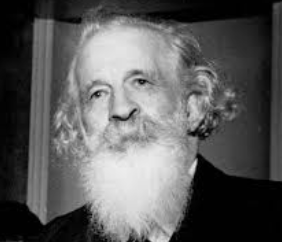
1 month 2 weeks ago
Two half philosophers will probably never a whole metaphysician make.
▼
Source
source
A Retrospective Glance at the Lifework of a Master of Books
1 month 3 weeks ago
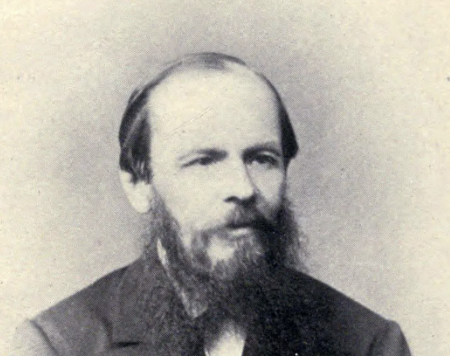
To kill someone for committing murder is a punishment incomparably worse than the crime itself. Murder by legal sentence is immeasurably more terrible than murder by brigands.
▼
Source
source
Part 1, Chapter 2
3 weeks 5 days ago
The ascription of an unconscious intentional phenomenon to a system implies that the phenomenon is in principle accessible to consciousness. A statement of the author's "connection principle."
▼
Source
source
"Consciousness, Explanatory Inversion, and Cognitive Science," The Behavioral and Brain Sciences 13, 4 (December 1990): 585-696.

1 month 6 days ago
The Outsider has his proper place in the Order of Society, as the impractical dreamer.
▼
Source
source
Chapter Three, The Romantic Outsider

2 months 3 weeks ago
If this is the best of possible worlds, what then are the others?

2 months 5 days ago
Evil destroyeth itself.
2 months 3 weeks ago
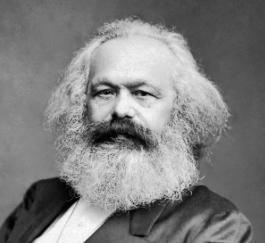
I pre-suppose, of course, a reader who is willing to learn something new and therefore to think for himself.
▼
Source
source
Author's prefaces to the First Edition.
1 month 2 weeks ago
What I know wreaks havoc upon what I want.
2 months 3 weeks ago
I know nothing, I am neither woman nor girl; I have been living in a dream and when someone kissed me, it made me want to laugh. Now I am here before you, it seems as though I have just awakened and it is morning.
▼
Source
source
Act 6, sc. 2
1 month 1 week ago
It belongs to the self-respect of intellect to pursue every tangle of thought to its final unravelment.
▼
Source
source
Ch. 12: "Religion and Science", p. 258
1 month 2 weeks ago
The conscious side of woman corresponds to the emotional side of man, not to his "mind." Mind makes up the soul, or better, the "animus" of woman, and just as the anima of a man consists of inferior relatedness, full of affect, so the animus of woman consists of inferior judgments, or better, opinions.
▼
Source
source
The Secret of the Golden Flower (1931) Commentary by C.G.Jung in CW 13: Alchemical Studies. P. 60
1 month 1 week ago
No epoch is homogeneous; whatever you may have assigned as the dominant note of a considerable period, it will always be possible to produce men, and great men, belonging to the same time, who exhibit themselves as antagonistic to the tone of their age.
▼
Source
source
Ch. 4: "The Eighteenth Century", p. 93
3 weeks 5 days ago
Picturing others and everything which brings you closer to them is futile from the instant that 'communication' can make their presence immediate.
▼
Source
source
(p. 42)
CivilSimian.com created by AxiomaticPanic, CivilSimian, Kalokagathia