



1 week 2 days ago
God may not play dice but he enjoys a good round of Trivial Pursuit every now and again.
▼
Source
source
"God"

2 months 6 days ago
Be substantially great in thyself, and more than thou appearest unto others.
▼
Source
source
Part I, Section XIX

3 months 2 weeks ago
I have read in Plato and Cicero sayings that are very wise and very beautiful; but I never read in either of them, "Come unto me, all ye that labor and are heavy laden."
▼
Source
source
p. 62

4 months 1 day ago
But it is better perhaps to examine next the universal good, and to enquire in what sense the expression is used. Though such an investigation is likely to be difficult, because the persons who have introduced these ideas are our friends. Yet it will perhaps appear the best, and indeed the right course, at least for the preservation of truth, to do away with private feelings, especially as we are philosophers; for since both are dear to us, we are bound to prefer the truth.

3 months 2 days ago
The atheist who affects to reason, and the fanatic who rejects reason, plunge themselves alike into inextricable difficulties. The one perverts the sublime and enlightening study of natural philosophy into a deformity of absurdities by not reasoning to the end. The other loses himself in the obscurity of metaphysical theories, and dishonours the Creator, by treating the study of his works with contempt. The one is a half-rational of whom there is some hope, the other a visionary to whom we must be charitable.
▼
Source
source
A Discourse, &c. &c.

2 months 5 days ago
The principle of equality does not destroy the imagination, but lowers its flight to the level of the earth.
▼
Source
source
Book Three, Chapter XI.

3 months 1 day ago
Opinion considers the opposition of what is true and false quite rigid, and, confronted with a philosophical system, it expects agreement or contradiction. And in an explanation of such a system, opinion still expects to find one or the other.
▼
Source
source
Preface, § 2

3 months ago
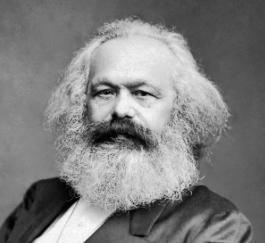
Revolutions are the locomotives of history.
▼
Source
source
Chapter 3, The Class Struggles in France, 1848 to 1850, 1850

3 months 1 week ago
Anyone who studies present and ancient affairs will easily see how in all cities and all peoples there still exist, and have always existed, the same desires and passions. Thus, it is an easy matter for him who carefully examines past events to foresee future events in a republic and to apply the remedies employed by the ancients, or, if old remedies cannot be found, to devise new ones based upon the similarity of the events. But since these matters are neglected or not understood by those who read, or, if understood, remain unknown to those who govern, the result is that the same problems always exist in every era.
▼
Source
source
Book 1, Chapter 39

3 weeks ago
However long Jewish, Christian and Muslim theologians struggle to find multiple meanings in this text, the dominant seems to be this: Abraham's unquestioning willingness to heed gods command to sacrifice the thing he loved most is what qualified him to become the father of what are called still the Abrahamic faiths.
1 month 3 weeks ago
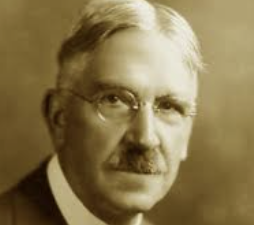
As long as politics is the shadow cast on society by big business, the attenuation of the shadow will not change the substance.
▼
Source
source
Quoted in John Dewey and American Democracy by Robert Westbrook (Ithaca: Cornell University Press, 1991), p. 440
2 months 5 days ago
You may set the Negro free, but you cannot make him otherwise than an alien to the European. Nor is this all we scarcely acknowledge the common features of humanity in this stranger whom slavery has brought among us. His physiognomy is to our eyes hideous, his understanding weak, his tastes low; and we are almost inclined to look upon him as a being intermediate between man and the brutes.
▼
Source
source
Chapter XVIII.

3 months 2 days ago
Money is always to be found when men are to be sent to the frontiers to be destroyed: when the object is to preserve them, it is no longer so.
▼
Source
source
"Charity", 1770

3 months 2 weeks ago
For freedom is not acquired by satisfying yourself with what you desire, but by destroying your desire.
▼
Source
source
Book IV, ch. 1, 175.
3 months 1 day ago
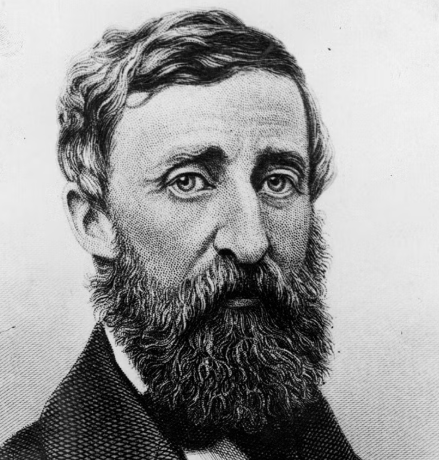
Not without a slight shudder at the danger, I often perceive how near I had come to admitting into my mind the details of some trivial affair, - the news of the street; and I am astonished to observe how willing men are to lumber their minds with such rubbish, - to permit idle rumors and incidents of the most insignificant kind to intrude on ground which should be sacred to thought. Shall the mind be a public arena, where the affairs of the street and the gossip of the tea-table chiefly are discussed? Or shall it be a quarter of heaven itself, - an hypæthral temple, consecrated to the service of the gods? I find it so difficult to dispose of the few facts which to me are significant, that I hesitate to burden my attention with those which are insignificant, which only a divine mind could illustrate. Such is, for the most part, the news in newspapers and conversation. It is important to preserve the mind's chastity in this respect.
▼
Source
source
pp. 491-2
3 weeks 5 days ago
Give us grace and strength to forbear and to persevere. Give us courage and gaiety and the quiet mind, spare to us our friends, soften to us our enemies.
▼
Source
source
Prayer, inscribed on the bronze memorial to Stevenson in St. Giles Cathedral, Edinburgh, Scotland

2 months 3 weeks ago
For remember that in general we don't use language according to strict rules - it hasn't been taught us by means of strict rules, either.
▼
Source
source
p. 25

1 month 4 weeks ago
How can a rational being be ennobled by anything that is not obtained by its own exertions?
▼
Source
source
Ch. 3
1 month 3 weeks ago
What, by a word lacking even in grammar, is called amorality, is a thing that does not exist. If you are unwilling to submit to any norm, you have, nolens volens, to submit to the norm of denying all morality, and this is not amoral, but immoral. It is a negative morality which preserves the empty form of the other.
▼
Source
source
Chapter XV: We Arrive At The Real Question
2 months 1 day ago
No man can mortgage his injustice as a pawn for his fidelity.
1 month 3 weeks ago
People think they have taken quite an extraordinarily bold step forward when they have rid themselves of belief in hereditary monarchy and swear by the democratic republic. In reality, however, the state is nothing but a machine for the oppression of one class by another, and indeed in the democratic republic no less than in the monarchy.
▼
Source
source
Introduction to 1891 edition of Karl Marx's, The Civil War in France
3 weeks 5 days ago
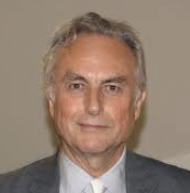
It is an article of passionate faith among "politically correct" biologists and anthropologists that brain size has no connection with intelligence; that intelligence has nothing to do with genes; and that genes are probably nasty fascist things anyway.
1 month ago
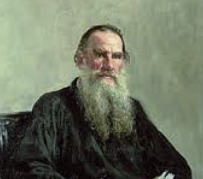
Wealth is a great sin in the eyes of God. Poverty is a great sin in the eyes of man.
▼
Source
source
p. 86

1 month 1 week ago
There is in Shaw, as in Gurdjieff and Nietzsche, a recognition of the immense effort of Will that is necessary to express even a little freedom, that places them beside Pascal and St. Augustine as religious thinkers. Their view is saved from pessimism only by its mystical recognition of the possibilities of pure Will, freed from the entanglements of automatism.
▼
Source
source
p. 292
1 month 3 weeks ago
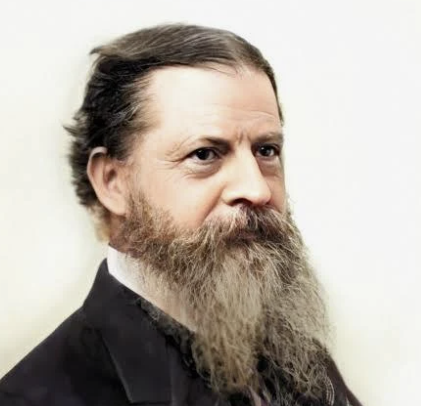
Were the ends of a person already explicit, there would be no room for development, for growth, for life; and consequently there would be no personality. The mere carrying out of predetermined purposes is mechanical. This remark has an application to the philosophy of religion. It is that genuine evolutionary philosophy, that is, one that makes the principle of growth a primordial element of the universe, is so far from being antagonistic to the idea of a personal creator, that it is really inseparable from that idea; while a necessitarian religion is in an altogether false position and is destined to become disintegrated. But a pseudo-evolutionism which enthrones mechanical law above the principle of growth is at once scientifically unsatisfactory, as giving no possible hint of how the universe has come about, and hostile to all hopes of personal relations to God.

3 months 1 week ago
I would take to be quite a fool any man who would make a book full of laws and statutes for an apple tree telling it how to bear apples and not thorns, when the tree is able by its own nature to do this better than the man with all his books can describe and demand.
▼
Source
source
p. 89

4 months 1 day ago
I have worked for this restlessness oriented toward inward deepening. But without authority. Instead of conceitedly making myself out to be a witness for the truth and causing others rashly to want to be the same, I am an unauthorized poet who influences by means of the ideas.

1 month 4 weeks ago
We are on a mission: we are called to the cultivation of the earth.
▼
Source
source
Fragment No. 32

2 months 1 day ago
India is pre-eminently distinguished for the many traits of original grandeur of thought and of the wonderful remains of immediate knowledge.
▼
Source
source
quoted in Londhe, S. (2008). A tribute to Hinduism: Thoughts and wisdom spanning continents and time about India and her culture. New Delhi: Pragun Publication.

2 months 4 weeks ago
They [Christians] believe that the living, dynamic activity of love has been going on in God forever and has created everything else. And that, by the way, is perhaps the most important difference between Christianity and all other religions: that in Christianity God is not an impersonal thing nor a static thing-not even just one person-but a dynamic pulsating activity, a life, a kind of drama, almost, if you will not think me irreverent, a kind of dance ... (The) pattern of this three-personal life is ... the great fountain of energy and beauty spurting up at the very center of reality.
▼
Source
source
Book IV, Chapter 4, "Good Infection"
2 months ago
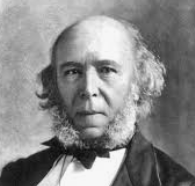
He who carries self-regard far enough to keep himself in good health and high spirits, in the first place thereby becomes an immediate source of happiness to those around, and in the second place maintains the ability to increase their happiness by altruistic actions. But one whose bodily vigour and mental health are undermined by self-sacrifice carried too far, in the first place becomes to those around a cause of depression, and in the second place renders himself incapable, or less capable, of actively furthering their welfare. In estimating conduct we must remember that there are those who by their joyousness beget joy in others, and that there are those who by their melancholy cast a gloom on every circle they enter.
▼
Source
source
Ethics (New York:1915), § 72, pp. 193-194
2 months 2 weeks ago
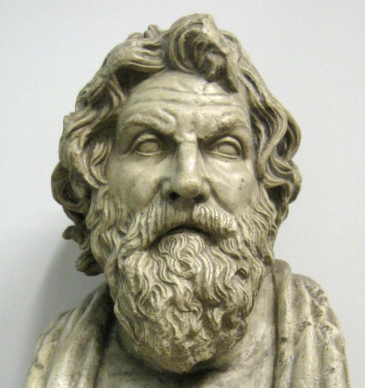
There is no work so mean, but it would amply serve me to furnish me with sustenance.
▼
Source
source
iv. 35
3 months ago
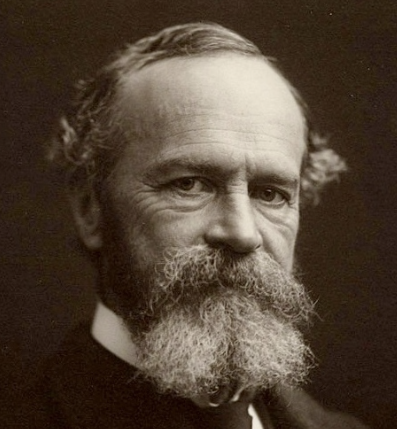
One mode of emotional excitability is exceedingly important in the composition of the energetic character, from its peculiarly destructive power over inhibitions. I mean what in its lower form is mere irascibility, susceptibility to wrath, the fighting temper; and what in subtler ways manifests itself as impatience, grimness, earnestness, severity of character. Earnestness means willingness to live with energy, though energy bring pain. The pain may be pain to other people or pain to one's self - it makes little difference; for when the strenuous mood is on one, the aim is to break something, no matter whose or what. Nothing annihilates an inhibition as irresistibly as anger does it; for, as Moltke says of war, destruction pure and simple is its essence.
3 months 2 weeks ago
Shut out the evil love of the world, that you may be filled with the love of God. You are a vessel that was already full: you must pour away what you have, that you may take in what you have not.
▼
Source
source
Second Homily, as translated by John Burnaby (1955), p. 274

3 months 2 weeks ago
It is said in the Book of Poetry, "In silence is the offering presented, and the spirit approached to; there is not the slightest contention." Therefore the superior man does not use rewards, and the people are stimulated to virtue. He does not show anger, and the people are awed more than by hatchets and battle-axes.
2 months 4 weeks ago
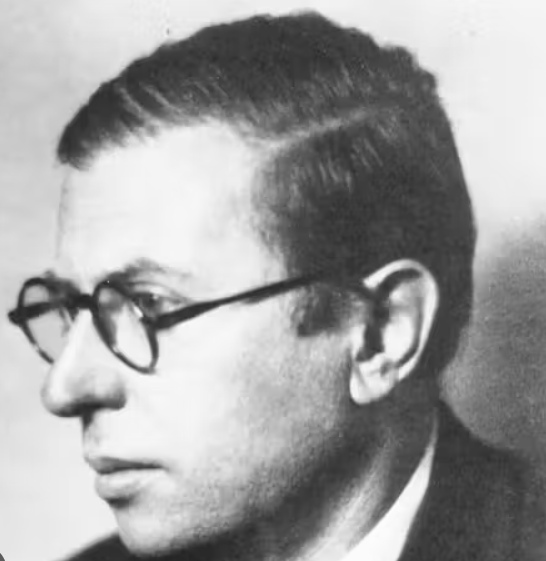
He was free, free in every way, free to behave like a fool or a machine, free to accept, free to refuse, free to equivocate; to marry, to give up the game, to drag this death weight about with him for years to come. He could do what he liked, no one had the right to advise him, there would be for him no Good or Evil unless he thought them into being.
▼
Source
source
L'âge de raison (The Age of Reason)

1 month 2 weeks ago
The struggle to end sexist oppression that focuses on destroying the cultural basis for such domination strengthens other liberation struggles. Individuals who fight for the eradication of sexism without struggles to end racism or classism undermine their own efforts. Individuals who fight for the eradication of racism or classism while supporting sexist oppression are helping to maintain the cultural basis of all forms of group oppression.
1 month 3 weeks ago
The Register of Knowledge of Fact is called History.
▼
Source
source
The First Part, Chapter 9, p. 40
3 months 1 day ago
The frontiers are not east or west, north or south, but wherever a man fronts a fact, though that fact be his neighbor, there is an unsettled wilderness between him and Canada, between him and the setting sun, or, farther still, between him and it.
3 months 2 days ago
I die adoring God, loving my friends, not hating my enemies, and detesting superstition.
▼
Source
source
Déclaration de Voltaire, note to his secretary, Jean-Louis Wagnière, 28 February 1778

3 months 4 weeks ago
Certain success evicts one from the paradise of winning against the odds.
3 months ago
We are obviously heading for revolution-something I have never once doubted since 1850. The first act will include a by no means gratifying rehash of the stupidities of '48-'49. However, that's how world history runs its course, and one has to take it as one finds it.
▼
Source
source
Letter to Ludwig Kugelmann (28 December 1862), quoted in The Collected Works of Karl Marx and Friedrich Engels: Volume 41. Letters 1860-64 (2010), p. 437
2 months 2 weeks ago
We should infer in the case of a beautiful dwelling-place that it was built for its owners and not for mice; we ought, therefore, in the same way to regard the universe as the dwelling-place of the gods.
▼
Source
source
As quoted in De Natura Deorum by Cicero, iii. 10.
2 months 4 weeks ago
Mr. Sensible learned only catchwords from them. He could talk like Epicurus of spare diet, but he was a glutton. He had from Montaigne the language of friendship, but no friend.
▼
Source
source
Pilgrim's Regress 176
4 weeks ago
Today we experience, in reverse, what pre-literate man faced with the advent of writing.
▼
Source
source
p. 273

4 months 3 days ago
Everything which distinguishes man from the animals depends upon this ability to volatilize perceptual metaphors in a schema, and thus to dissolve an image into a concept. For something is possible in the realm of these schemata which could never be achieved with the vivid first impressions: the construction of a pyramidal order according to castes and degrees, the creation of a new world of laws, privileges, subordinations, and clearly marked boundaries, a new world, one which now confronts that other vivid world of first impressions as more solid, more universal, better known, and more human than the immediately perceived world, and thus as the regulative and imperative world.

1 month 3 weeks ago
If those who lead you say, 'See, the Kingdom is in the sky,' then the birds of the sky will precede you. If they say to you, 'It is in the sea,' then the fish will precede you. Rather, the Kingdom is inside of you, and it is outside of you. When you come to know yourselves, then you will become known, and you will realize that it is you who are the sons of the living Father. But if you will not know yourselves, you dwell in poverty and it is you who are that poverty. (3) And when he was demanded of the Pharisees, when the kingdom of God should come, he answered them and said, The kingdom of God cometh not with observation: Neither shall they say, Lo here! or, lo there! for, behold, the kingdom of God is within you.
▼
Source
source
(Luke 17:21)
CivilSimian.com created by AxiomaticPanic, CivilSimian, Kalokagathia