


2 months 4 weeks ago
No punishment has ever possessed enough power of deterrence to prevent the commission of crimes. On the contrary, whatever the punishment, once a specific crime has appeared for the first time, its reappearance is more likely than its initial emergence could ever have been.
▼
Source
source
Epilogue
3 months ago
Heroism feels and never reasons and therefore is always right.
▼
Source
source
Heroism

3 months 2 weeks ago
Study carefully, the character of the one you recommend, lest their misconduct bring you shame.
▼
Source
source
from Horace, Epistles I.xviii.76

1 month 3 weeks ago
If I were to be totally sincere, I would say that I do not know why I live and why I do not stop living. The answer probably lies in the irrational character of life which maintains itself without reason.

3 months 2 days ago
Faith consists in believing what reason cannot.
▼
Source
source
"The Flood", 1764

1 month 3 weeks ago
He felt neither guilt nor distress at the pleasure with which he was now filled by the proximity of this young creature, and when he discovered in himself even physical symptoms of his inclination he did not take fright, but continued cheerfully and serenely to see Nick whenever the ordinary run of his duties suggested it, congratulating himself upon the newly achieved solidity and rational calm of his spiritual life.
▼
Source
source
The Bell (1958) p. 91
3 months 4 days ago
Hypothetical liberty is allowed to everyone who is not a prisoner and in chains
▼
Source
source
§ 8.23

3 months 4 days ago
When the happiness or misery of others depends in any respect upon our conduct, we dare not, as self-love might suggest to us, prefer the interest of one to that of many. The man within immediately calls to us, that we value ourselves too much and other people too little, and that, by doing so, we render ourselves the proper object of the contempt and indignation of our brethren. Neither is this sentiment confined to men of extraordinary magnanimity and virtue. It is deeply impressed upon every tolerably good soldier, who feels that he would become the scorn of his companions, if he could be supposed capable of shrinking from danger, or of hesitating, either to expose or to throw away his life, when the good of the service required it.
▼
Source
source
Chap. III.
3 months 4 days ago
The natural effort of every individual to better his own condition, when suffered to exert itself with freedom and security is so powerful a principle that it is alone, and without any assistance, not only capable of carrying on the society to wealth and prosperity, but of surmounting a hundred impertinent obstructions with which the folly of human laws too often incumbers its operations; though the effect of these obstructions is always more or less either to encroach upon its freedom, or to diminish its security.
▼
Source
source
Chapter V, paragraph 82.
2 months 2 weeks ago
Virtue cannot dwell with wealth either in a city or in a house.
▼
Source
source
Stobaeus, iv. 31c. 88

4 months 1 day ago
Christ speaks of two debtors, one of whom owed much and the other little, and who both found forgiveness. He asks: Which of these two ought to love more? The answer: The one who has forgiven much. When you love much, you are forgiven much-and when you are forgiven much, you love much. See here the blessed recurrence of salvation in love!
1 month 3 weeks ago
Eternal vigilance is the price of knowledge.
▼
Source
source
p. 58
3 months 1 day ago
I believe that Communism is necessary to the world, and I believe that the heroism of Russia has fired men's hopes in a way which was essential to the realization of Communism in the future. Regarded as a splendid attempt, without which ultimate success would have been very improbable, Bolshevism deserves the gratitude and admiration of all the progressive part of mankind.
▼
Source
source
Preface
2 months 4 weeks ago
No one has the right to obey.
▼
Source
source
in a radio interview with Joachim Fest (9 November 1964)

3 months 1 week ago
Libraries are as the shrine where all the relics of the ancient saints, full of true virtue, and that without delusion or imposture, are preserved and reposed.
2 months 4 weeks ago
So that is what hell is. I would never have believed it. You remember: the fire and brimstone, the torture. Ah! the farce. There is no need for torture: Hell is other people.
▼
Source
source
Garcin, Act 1, sc. 5
1 month 3 weeks ago
To think is to run after insecurity, to be demoralized for grandiose trifles, to immure oneself in abstractions with a martyr's avidity, to hunt up complications the way others pursue collapse or gain. The thinker is by definition keen for torment.

3 months 2 weeks ago
I [prefer] a short life with width to a narrow one with length.
1 month 3 weeks ago
We cannot grasp any idea, any organ of meditation, we cannot possess it in full force, until we have felt and sensed it, as much so as if it were an odor or a color.
3 months 1 day ago
In short, competition has to shoulder the responsibility of explaining all the meaningless ideas of the economists, whereas it should rather be the economists who explain competition.
▼
Source
source
Vol. III, Ch. L, Illusions Created by Competition, p. 866.
3 months 4 days ago
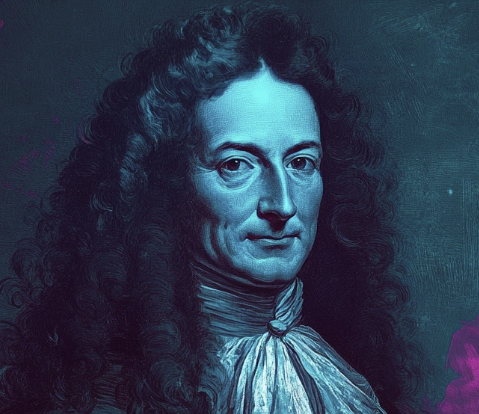
There are two famous labyrinths where our reason very often goes astray. One concerns the great question of the free and the necessary, above all in the production and the origin of Evil. The other consists in the discussion of continuity, and of the indivisibles which appear to be the elements thereof, and where the consideration of the infinite must enter in.
▼
Source
source
Théodicée (1710)ː Préface

2 months 5 days ago
There is hardly a member of Congress who can make up his mind to go home without having despatched at least one speech to his constituents; nor who will endure any interruption until he has introduced into his harangue whatever useful suggestions may be made touching the four-and-twenty States of which the Union is composed, and especially the district which he represents.
▼
Source
source
Book One, Chapter XXI.
3 months 1 day ago
As a beast of toil an ox is fixed capital. If he is eaten, he no longer functions as an instrument of labour, nor as fixed capital either.
▼
Source
source
Vol. II, Ch. VIII, p. 163.
4 weeks ago
Faced with information overload, we have no alternative but pattern-recognition.
▼
Source
source
(p. 132)
1 month 3 weeks ago
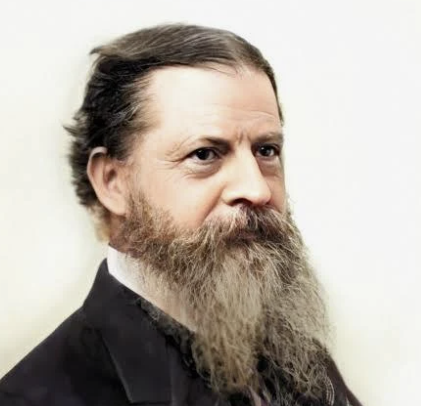
The idea does not belong to the soul; it is the soul that belongs to the idea.
▼
Source
source
Vol. I, par. 216
2 weeks 2 days ago
Not far from the invention of fire... we must rank the invention of doubt.
▼
Source
source
Collected Essays vol 6, viii; quoted in T. H. Huxley: Scientist, Humanist, and Educator (1950) by Cyril Bibby, p. 257
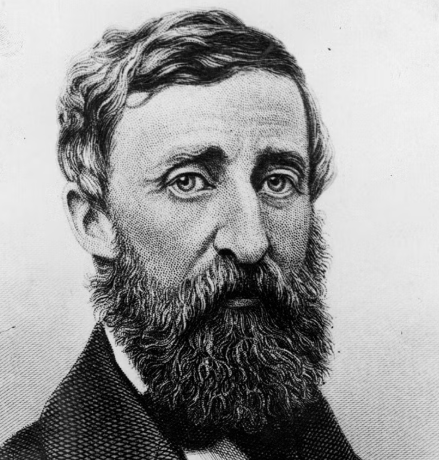
3 months 1 day ago
When will the world learn that a million men are of no importance compared with one man?
▼
Source
source
Letter to Ralph Waldo Emerson, 8 June 1843
3 months ago
Announced by all the trumpets of the sky Arrives the snow, and, driving o'er the fields, Seems nowhere to alight: the whited air Hides hills and woods, the river and the heaven, And veils the farm-house at the garden's end.
▼
Source
source
The Snow-Storm
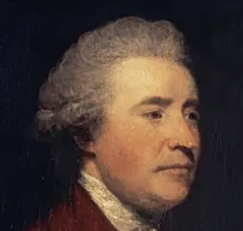
2 months 1 day ago
Slavery they can have anywhere. It is a weed that grows in every soil.
1 month 1 week ago
Opinion is the companion of probability within the medieval epistemology.
▼
Source
source
Chapter 3, Opinion, p. 28.

3 months 3 days ago
The concept of space, therefore, is a pure intuition, being a singular concept, not made up by sensations, but itself the fundamental form of all external sensation.

4 months 1 day ago
While both are dear, Piety requires us to honor truth above our friends.


2 months 1 day ago
Manners are of more importance than laws. The law can touch us here and there, now and then. Manners are what vex or soothe, corrupt or purify, exalt or debase, barbarize or refine us, by a constant, steady, uniform, insensible operation like that of the air we breathe in.
▼
Source
source
No. 1, p. 172 in The Works of the Right Honourable Edmund Burke: A New Edition, v. VIII. London: F. C. and J. Rivington, 1815

1 month 3 weeks ago
As the great words of freedom and fulfillment are pronounced by campaigning leaders and politicians, on the screens and radios and stages, they turn into meaningless sounds which obtain meaning only in the context of propaganda, business, discipline, and relaxation. This assimilation of the ideal with reality testifies to the extent to which the ideal has been surpassed. It is brought down from the sublimated realm of the soul or the spirit or the inner man, and translated into operational terms and problems. Here are the progressive elements of mass culture. The perversion is indicative of the fact that advanced industrial society is confronted with the possibility of a materialization of ideals. The capabilities of this society are progressively reducing the sublimated realm in which the condition of man was represented, idealized, and indicted. Higher culture becomes part of the material culture. In this transformation, it loses the greater part of its truth.
▼
Source
source
pp. 57-58
4 weeks ago
The present is always invisible because it's environmental. No environment is perceptible, simply because it saturates the whole field of attention.
▼
Source
source
Mademoiselle: the magazine for the smart young woman, Volume 64, 1966, p. 114
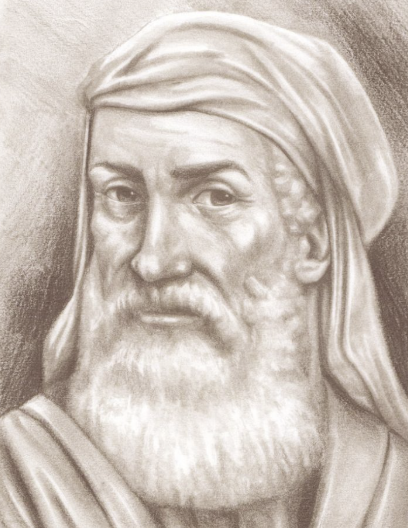
2 months 2 weeks ago
With deep roots Ether plunged into earth.
▼
Source
source
fr. 54
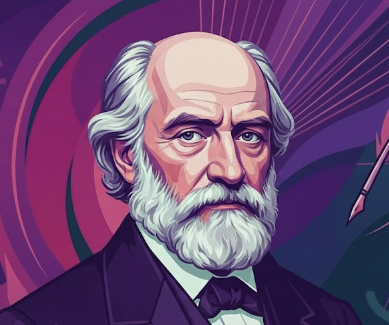
3 months 2 days ago
Christianity taught only what the whole of Asia knew already long before and even better.
▼
Source
source
quoted in Londhe, S. (2008). A tribute to Hinduism: Thoughts and wisdom spanning continents and time about India and her culture. New Delhi: Pragun Publication.
3 months 2 days ago
What a pity and what a poverty of spirit, to assert that beasts are machines deprived of knowledge and sentiment, which affect all their operations in the same manner, which learn nothing, never improve, &c. [...] Some barbarians seize this dog, who so prodigiously excels man in friendship, they nail him to a table, and dissect him living, to show the mezarian veins. You discover in him all the same organs of sentiment which are in yourself. Answer me, machinist, has nature arranged all the springs of sentiment in this animal that he should not feel? Has he nerves to be incapable of suffering? Do not suppose this impertinent contradiction in nature. [...] The animal has received those of sentiment, memory, and a certain number of ideas. Who has bestowed these gifts, who has given these faculties? He who has made the herb of the field to grow, and who makes the earth gravitate towards the sun.
▼
Source
source
"Beasts", in A Philosophical Dictionary, Volume 2, J. and H. L. Hunt, 1824, p. 9
1 month 3 weeks ago
I don't need any support, advice, or compassion, because even if I am the most ruinous man, I still feel so powerful, so strong and fierce. For I am the only one that lives without hope.
3 months 1 day ago
The worker becomes all the poorer the more wealth he produces, the more his production increases in power and range. The worker becomes an ever cheaper commodity the more commodities he creates. With the increasing value of the world of things proceeds in direct proportion the devaluation of the world of men. Labour produces not only commodities; it produces itself and the worker as a commodity - and does so in the proportion in which it produces commodities generally.
▼
Source
source
p. 71, The Marx-Engels Reader

2 months 6 days ago
The severe Schools shall never laugh me out of the Philosophy of Hermes, that this visible world is but a picture of the invisible.
▼
Source
source
Section 12
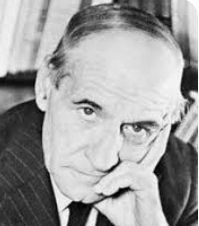
1 month 3 weeks ago
It is not a question of the mass-man being a fool. On the contrary, to-day he is more clever, has more capacity of understanding than his fellow of any previous period. But that capacity is of no use to him; in reality, the vague feeling that he possesses it seems only to shut him up more within himself and keep him from using it. Once for all, he accepts the stock of commonplaces, prejudices, fag-ends of ideas or simply empty words which chance has piled up within his mind, and with a boldness only explicable by his ingenuousness, is prepared to impose them everywhere.... Why should he listen if he has within him all that is necessary? There is no reason now for listening, but rather for judging, pronouncing, deciding. There is no question concerning public life, in which he does not intervene, blind and deaf as he is, imposing his "opinions."
▼
Source
source
Chap. VIII: The Masses Intervene In Everything, And Why Their Intervention Is Solely By Violence
3 months ago
People seem not to see that their opinion of the world is also a confession of character.
▼
Source
source
Worship
4 months 1 day ago
If God stops a man on the road, and calls him with a revelation and sends him armed with divine authority among men, they say to him; from whom dost thou come? He answers: from God. But now God cannot help his messenger physically like a king, who gives him soldiers or policemen, or his ring or his signature, which is known to all; in short, God cannot help men by providing them with physical certainty that an Apostle is an Apostle-which would, moreover, be nonsense. Even miracles, if the Apostle has that gift, give no physical certainty; for the miracle is the object of faith.
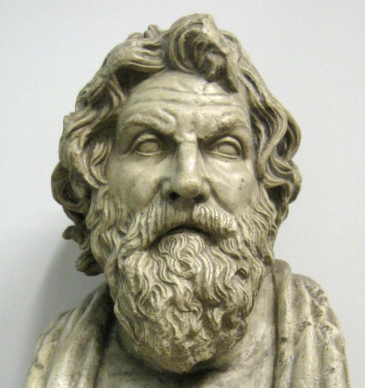
2 months 2 weeks ago
Being asked what learning is the most necessary, he replied, "How to get rid of having anything to unlearn.
▼
Source
source
" § 7

2 months 2 weeks ago
Man is the measure of all things: of things which are, that they are, and of things which are not, that they are not.
▼
Source
source
As quoted in Theaetetus by Plato section 152a


1 month 1 week ago
Someone has said that it requires less mental effort to condemn than to think. The widespread mental indolence, so prevalent in society, proves this to be only too true. Rather than to go to the bottom of any given idea, to examine into its origin and meaning, most people will either condemn it altogether, or rely on some superficial or prejudicial definition of non-essentials.
1 month 1 week ago
The terrible struggle of the thinking man and woman against political, social and moral conventions owes its origin to the family, where the child is ever compelled to battle against the internal and external use of force. The categorical imperatives: You shall! you must! this is right! that is wrong! this is true! that is false! shower like a violent rain upon the unsophisticated head of the young being and impress upon its sensibilities that it has to bow before the long established and hard notions of thoughts and emotions.
CivilSimian.com created by AxiomaticPanic, CivilSimian, Kalokagathia