


3 months 4 days ago
My appetite comes to me while eating.
▼
Source
source
Book III, Ch. 9. Of Vanity

1 month 3 weeks ago
There was a time when religion was kept secret from popular belief within the mystery cults like a holy fire, sharing a common sanctuary with philosophy. The legends of antiquity name the earliest philosophers as the originators of these mystery cults, from which the most enlightened among the later philosophers, notably Plato, liked to educe their divine teachings. At that time philosophers still had the courage and the right to discuss the singly great themes, the only ones worthy of philosophizing and rising above common knowledge.
▼
Source
source
P. 7

2 months 1 day ago
Pour recueillir les biens inestimables qu'assure la liberté de la presse, il faut savoir se soumettre aux maux inévitables qu'elle fait naître. Translation: In order to enjoy the inestimable benefits that the liberty of the press ensures, it is necessary to submit to the inevitable evils it creates.
▼
Source
source
Chapter XI.

2 months 4 weeks ago
If God did not exist, it would be necessary to invent him.

2 months 3 weeks ago
You can put this another way by saying that while in other sciences the instruments you use are things external to yourself (things like microscopes and telescopes), the instrument through which you see God is your whole self. And if a man's self is not kept clean and bright, his glimpse of God will be blurred-like the Moon seen through a dirty telescope. That is why horrible nations have horrible religions: they have been looking at God through a dirty lens.
▼
Source
source
Book IV, Chapter 2, "The Three-personal God"
1 month 4 days ago
The problem with all this--the problem I discussed in the first lecture--is that if the causes/background conditions distinction is fundamentally subjective, not descriptive of the world in itself, then current philosophical explanations of the metaphysical nature of reference are bankrupt.
▼
Source
source
Lecture II: Realism and Reasonableness

5 days ago
I'll admit, I was a naive globalist. I still believe in the ideal, but, I realize that those that hated the idea so much are the authors of the problem they see in it.
Now, I understand clearly, those that author the problem that makes globalization near impossible are also the ones who insist it will never work, nevertheless, human necessity remains a monolith and universal.
2 months 3 weeks ago
The fate of the country does not depend on how you vote at the polls - the worst man is as strong as the best at that game; it does not depend on what kind of paper you drop into the ballot-box once a year, but on what kind of man you drop from your chamber into the street every morning.
▼
Source
source
"Slavery in Massachusetts", 1854
2 months 4 weeks ago
Life is bristling with thorns, and I know no other remedy than to cultivate one's garden.
▼
Source
source
Letter to Pierre-Joseph Luneau de Boisjermain (21 October 1769), from Oeuvres Complètes de Voltaire: Correspondance [Garnier frères, Paris, 1882], vol. XIV, letter # 7692 (p. 478)
2 months 3 weeks ago
What we call Man's power over Nature turns out to be a power exercised by some men over other men with Nature as its instrument.

1 month 1 week ago
Militarism, the destroyer of youth, the raper of women, the annihilator of the best in the race, the very mower of life.

1 month 3 weeks ago
If therefore my work is negative, irreligious, atheistic, let it be remembered that atheism - at least in the sense of this work - is the secret of religion itself; that religion itself, not indeed on the surface, but fundamentally, not in intention or according to its own supposition, but in its heart, in its essence, believes in nothing else than the truth and divinity of human nature. Preface
2 months 3 weeks ago
I am particularly grateful to Nozick for his unfailing help and encouragement during the last stages.
▼
Source
source
Preface, pg. xii
4 weeks 1 day ago
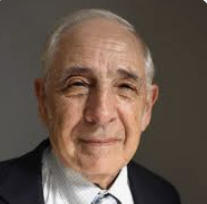
I cannot recall a time when American education was not in a "crisis." We have lived through Sputnik (when we were "falling behind the Russians"), through the era of "Johnny can't read," and through the upheavals of the Sixties. Now a good many books are telling us that the university is going to hell in several different directions at once. I believe that, at least in part, the crisis rhetoric has a structural explanation: since we do not have a national consensus on what success in higher education would consist of, no matter what happens, some sizable part of the population is going to regard the situation as a disaster. As with taxation and relations between the sexes, higher education is essentially and continuously contested territory. Given the history of that crisis rhetoric, one's natural response to the current cries of desperation might reasonably be one of boredom.
2 months 3 weeks ago
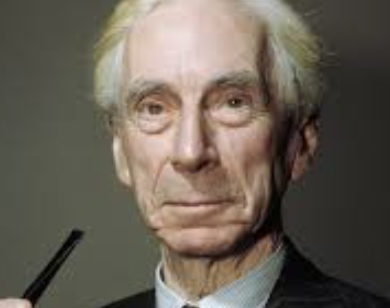
The rules of logic are to mathematics what those of structure are to architecture.
1 month 3 weeks ago
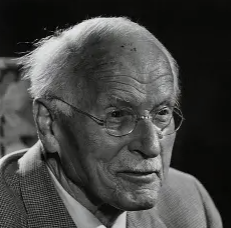
Where love rules, there is no will to power; and where power predominates, there love is lacking. The one is the shadow of the other.
▼
Source
source
P. 97

3 months 3 weeks ago
Writing is hard work. The fact that I love doing it doesn't make it less hard work. People who love tennis will sweat themselves to exhaustion playing it, and the love of the game doesn't stop the sweating. The casual assumption that writers are unemployed bums because they don't go to the office and don't have a boss is something every writer has to live with. I have never known a writer who hasn't suffered as a result of this, hasn't resented it, and hasn't dreamed of murdering the next person who says "Boy, you've sure got it made. You just sit there and toss off a story or something whenever you feel like it."
3 months 3 weeks ago
It is an odd fact that anyone who wishes to start a war must always make it appear that he is fighting in a just cause even if the real motive is naked aggression. Fortunately for the would-be aggressor, a "just cause" is very easy to find.
2 months 3 weeks ago
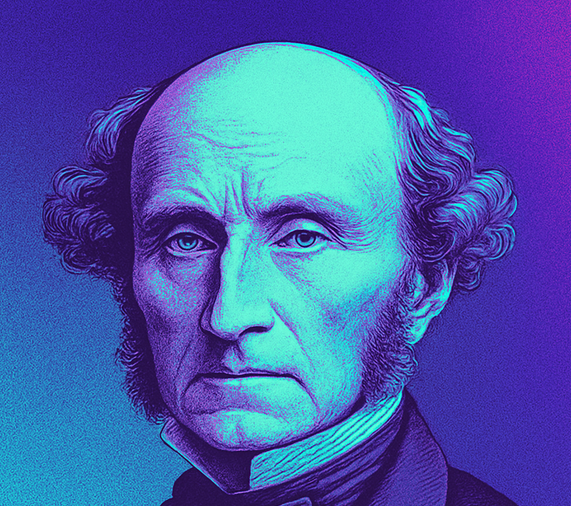
I remember the very place in Hyde Park where, in my fourteenth year, on the eve of leaving my father's house for a long absence, he told me that I should find, as I got acquainted with new people, that I had been taught many things which youths of my age did not commonly know; and that many persons would be disposed to talk to me of this, and to compliment me upon it. What other things he said on this topic I remember very imperfectly; but he wound up by saying, that whatever I knew more than others, could not be ascribed to any merit in me, but to the very unusual advantage which had fallen to my lot.
▼
Source
source
(p. 34)

3 months 2 weeks ago
When we see men of worth, we should think of equaling them; when we see men of a contrary character, we should turn inwards and examine ourselves.

2 months 1 week ago
Rest satisfied with doing well, and leave others to talk of you as they please.
▼
Source
source
As quoted in The World's Laconics: Or, The Best Thoughts of the Best Authors (1853) by Everard Berkeley Variant: Rest satisfied with doing well, and leave others to talk of you as they will.
2 months 3 weeks ago
The greatest challenge to any thinker is stating the problem in a way that will allow a solution.
▼
Source
source
Attributed to Russell in Crainer's The Ultimate Book of Business Quotations (1997), p. 258

3 months 5 days ago
To God, truly, the Giver and Architect of Forms, and it may be to the angels and higher intelligences, it belongs to have an affirmative knowledge of forms immediately, and from the first contemplation. But this assuredly is more than man can do, to whom it is granted only to proceed at first by negatives, and at last to end in affirmatives, after exclusion has been exhausted.
▼
Source
source
Aphorism XV
3 months 1 week ago
The essence of the good is a certain kind of moral purpose, and that of the evil is a certain kind of moral purpose.
▼
Source
source
Book I, ch. 29, 1

2 months 4 weeks ago
To Americans. That some desperate wretches should be willing to steal and enslave men by violence and murder for gain, is rather lamentable than strange. But that many civilized, nay, christianized people should approve, and be concerned in the savage practice, is surprising; and still persist, though it has been so often proved contrary to the light of nature, to every principle of Justice and Humanity, and even good policy, by a succession of eminent men, and several late publications.

3 weeks 5 days ago
Science may fall back on its stupid excuse that science works for science, and that when it has been developed by the scientists it will become accessible to the people also; but art, if it be art, should be accessible to all, and particularly to those for whom it is produced. And the position of our art strikingly arraigns the producers of art for not wishing, not knowing how, and being unable, to serve the people.

3 months 3 weeks ago
Someone in despair despairs over something. So, for a moment, it seems, but only for a moment. That same instant the true despair shows itself, or despair in its true guise. In despairing over something he was really despairing over himself, and he wants now to be rid of himself.
1 month 3 weeks ago
I am a sick man... I am a wicked man. An unattractive man.
▼
Source
source
Part 1, Chapter 1
1 month 3 weeks ago
It is the peculiarity of privilege and of every privileged position to kill the intellect and heart of man. The privileged man, whether he be privileged politically or economically, is a man depraved in intellect and heart.
▼
Source
source
As quoted in "Socialism" article of Encyclopaedia Britannica, 9th edition (1887), edited by Thomas Spencer Baynes with assistance of William Robertson Smith, Vol. 22, p. 216, Charles Scribner's Sons
1 month 1 week ago
That knowledge which adds greatness to character is knowledge so handled as to transform every phase of immediate experience.

2 months 3 weeks ago
The value of a principle is the number of things it will explain; and there is no good theory of disease which does not at once suggest a cure.
▼
Source
source
p. 212

3 months 3 weeks ago
He discovered the cruel paradox by which we always deceive ourselves twice about the people we love — first to their advantage, then to their disadvantage.
1 month 2 weeks ago
No criticism can be brought against a branch of technical science from outside; no thought fitted out with the knowledge of a period and setting its course by definite historical aims could have anything to say to the specialist. Such thought and the critical, dialectical element it communicates to the process of cognition, thereby maintaining conscious connection between that process and historical life, do not exist for empiricism; nor do the associated categories, such as the distinction between essence and appearance, identity in change, and rationality of ends, indeed, the concept of man, of personality, even of society and class taken in the sense that presupposes specific viewpoints and directions of interest.
▼
Source
source
p. 145.

1 month 3 weeks ago
A marvel that has nothing to offer, democracy is at once a nation's paradise and its tomb.
2 months 3 weeks ago
Greater intelligence, wealth and opportunity, for example, allow a person to achieve ends he could not rationally contemplate otherwise.
▼
Source
source
Chapter II, Section 15, pg. 93
2 months 3 weeks ago
When one admits that nothing is certain one must, I think, also admit that some things are much more nearly certain than others. It is much more nearly certain that we are assembled here tonight than it is that this or that political party is in the right. Certainly there are degrees of certainty, and one should be very careful to emphasize that fact, because otherwise one is landed in an utter skepticism, and complete skepticism would, of course, be totally barren and completely useless.
▼
Source
source
"Skepticism"
2 months 3 weeks ago
As the variable capital always stays in the hands of the capitalist in some form or other, it cannot be claimed in any way that it converts itself into revenue for anyone.
▼
Source
source
Vol. II, Ch. XX, p. 452.
1 month 6 days ago
He was then in his fifty-fourth year, when even in the case of poets reason and passion begin to discuss a peace treaty and usually conclude it not very long afterwards.
▼
Source
source
B 30
1 month 6 days ago
The noble simplicity in the works of nature only too often originates in the noble shortsightedness of him who observes it.
▼
Source
source
H 1
2 months 1 day ago
I have no hesitation in saying that although the American woman never leaves her domestic sphere and is in some respects very dependent within it, nowhere does she enjoy a higher station. And if anyone asks me what I think the chief cause of the extraordinary prosperity and growing power of this nation, I should answer that it is due to the superiority of their women.
▼
Source
source
Book Three, Chapter XII.

2 months 1 week ago
Hope is the only good that is common to all men; those who have nothing else possess hope still.
▼
Source
source
A Dictionary of Thoughts (1908) by Tryon Edwards, p. 234
1 month 1 week ago
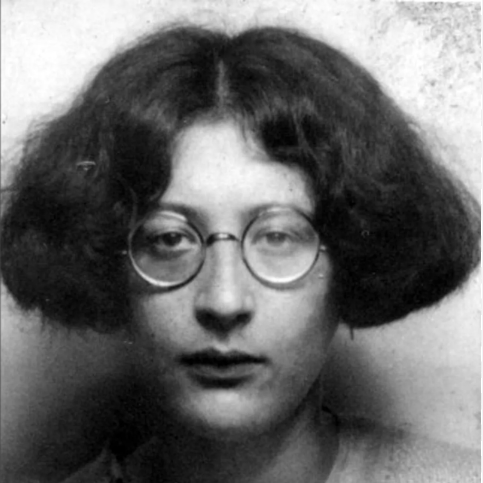
The key to a Christian conception of studies is the realization that prayer consists of attention. It is the orientation of all the attention of which the soul is capable toward God. The quality of the attention counts for much in the quality of the prayer. Warmth of heart cannot make up for it.
▼
Source
source
"Reflections on the Right Use of School Studies with a View to the Love of God"

3 days ago
Human knowledge increases, while human irrationality stays the same. Scientific inquiry may be an embodiment of reason, but what such inquiry demonstrates is that humans are not rational animals. The fact that humanists refuse to accept the demonstration only confirms its truth.
▼
Source
source
An Old Chaos: Humanism and Flying Saucers (p. 81)
2 months 3 weeks ago
I need Christ, not something that resembles Him.
1 month 3 weeks ago
They sang the praises of nature, of the sea, of the woods. They liked making songs about one another, and praised each other like children; they were the simplest songs, but they sprang from their hearts and went to one's heart. And not only in their songs but in all their lives they seemed to do nothing but admire one another. It was like being in love with each other, but an all-embracing, universal feeling.
2 months 3 weeks ago
I am sure that university life would be better, both intellectually and morally, if most university students had temporary childless marriages. This would afford a solution to the sexual urge neither restless nor surreptitious, neither mercenary nor casual, and of such a nature that it need not take up time which ought to be given to work.
▼
Source
source
"Sex in Education", p. 119-120
2 months 3 weeks ago
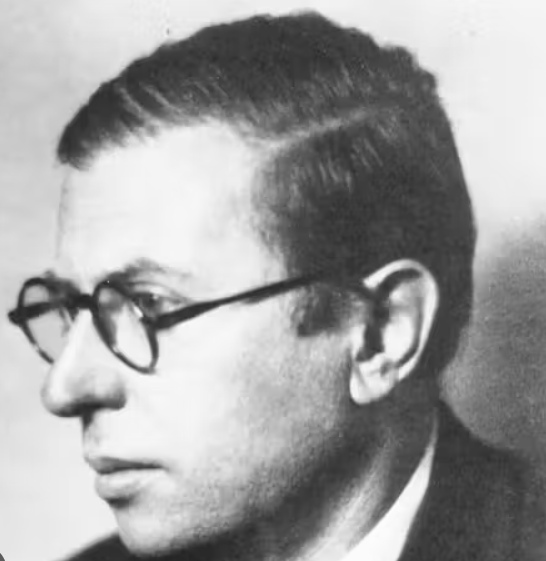
Freedom is what you do with what's been done to you.
3 months 3 weeks ago
Irony is a qualification of subjectivity.
CivilSimian.com created by AxiomaticPanic, CivilSimian, Kalokagathia