


10 months 3 weeks ago
I do wish I believed in the life eternal, for it makes me quite miserable to think man is merely a kind of machine endowed, unhappily for himself, with consciousness.
▼
Source
source
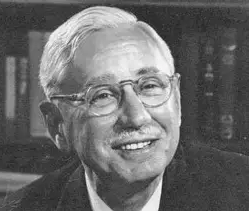
Greek Exercises (1888); at the age of fifteen, Russell used to write down his reflections in this book, for fear that his people should find out what he was thinking.
7 months 1 week ago
Here is a fulfillment of long centuries of civilization and culture; here, in romantic love, more than the triumph of thought or the victories of power is the topmost reach of human beings.
▼
Source
source
Ch. 2 : On Youth



10 months 2 weeks ago
A sovereign shows himself to be a tyrant if he disregards his honest advisors, or punishes them for what they have said.

10 months 4 weeks ago
There is no man so good, who, were he to submit all his thoughts and actions to the laws, would not deserve hanging ten times in his life.
▼
Source
source
Book III, Ch. 9. Of Vanity
7 months 6 days ago
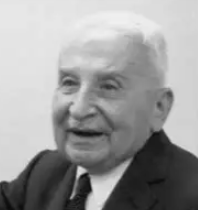
It is, they say, not Russia that plans aggression but, on the contrary, the decaying capitalist democracies. Russia wants merely to defend its own independence. This is an old and well-tried method of justifying aggression. Louis XIV and Napoleon I, Wilhelm II and Hitler were the most peace-loving of all men. When they invaded foreign countries, they did so only in just self-defence. Russia was as much menaced by Estonia or Latvia as Germany was by Luxemburg or Denmark.
11 months 2 weeks ago
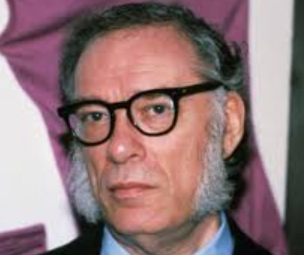
Generals are usually a conservative force who can be relied on to oppose social change.

9 months 1 week ago
We have reached the point where the Objective Logic turns into the Subjective Logic, or, where subjectivity emerges as the true form of objectivity. We may sum up Hegel's analysis in the following schema: The true form of reality requires freedom. Freedom requires self-consciousness and knowledge of the truth. Self-consciousness and knowledge of the truth are the essentials of the subject. The form of reality must be conceived as subject.
▼
Source
source
P. 154-155

10 months 2 weeks ago
Character is higher than intellect...A great soul will be strong to live, as well as strong to think.
▼
Source
source
par. 27
10 months 3 weeks ago
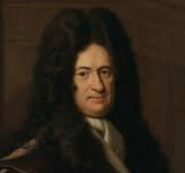
This miracle of analysis, this marvel of the world of ideas, an almost amphibian object between Being and Non-being that we call the imaginary number.
▼
Source
source
Quoted in Singularités : individus et relations dans le système de Leibniz (2003) by Christiane Frémont
9 months 2 weeks ago
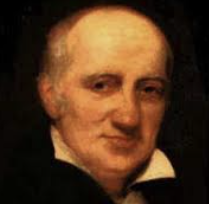
No man must encroach upon my province nor I upon his. He may advise me, moderately and without perniciousness, but he must not expect to dictate to me. He may censure me freely and without reserve but he should remember that I am to act by my deliberation and not his. He may exercise a republican boldness in judging, but he must not be peremptory and imperious in prescribing. Force may never be resorted to but, in the most extraordinary and imperious emergency.
▼
Source
source
Book II, "Of Rights"
10 months 3 weeks ago
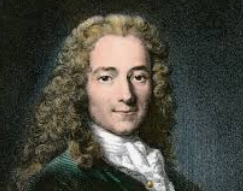
Religion may be purified. This great work was begun two hundred years ago: but men can only bear light to come in upon them by degrees.
▼
Source
source
The critical review, or annals of literature, Volume XXVI, by A Society of Gentlemen (1768) p. 450
9 months 1 week ago
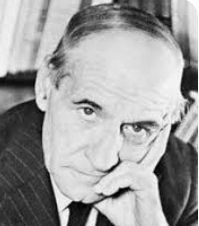
The man with the clear head is the man who frees himself from those fantastic "ideas" and looks life in the face, realises that everything in it is problematic, and feels himself lost. As this is the simple truth - that to live is to feel oneself lost - he who accepts it has already begun to find himself, to be on firm ground. Instinctively, as do the shipwrecked, he will look round for something to which to cling, and that tragic, ruthless glance, absolutely sincere, because it is a question of his salvation, will cause him to bring order into the chaos of his life.
▼
Source
source
Chapter XIV: Who Rules The World?
10 months 3 weeks ago
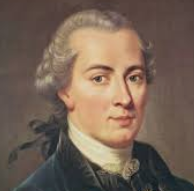
The guardians who have kindly undertaken the supervision will see to it that by far the largest part of mankind, including the entire "beautiful sex," should consider the step into maturity, not only as difficult but as very dangerous. After having made their domestic animals dumb and having carefully prevented these quiet creatures from daring to take any step beyond the lead-strings to which they have fastened them, these guardians then show them the danger which threatens them, should they attempt to walk alone.

10 months 2 weeks ago
But you must see that if two things are alike, then it is a further question whether the first is copied from the second, or the second from the first, or both from a third.''What would the third be?''Some have thought that all these loves were copies of our love for the Landlord.'
▼
Source
source
Pilgrim's Regress 59


10 months 3 weeks ago
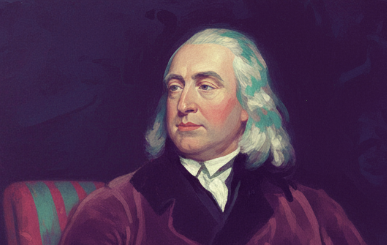
Liberty therefore not being more fit than other words in some of the instances in which it has been used, and not so fit in others, the less the use that is made of it the better. I would no more use the word liberty in my conversation when I could get another that would answer the purpose, than I would brandy in my diet, if my physician did not order me: both cloud the understanding and inflame the passions.
▼
Source
source
Jeremy Bentham, quoted in P. J. Kelly, Utilitarianism and Distributive Justice: Jeremy Bentham and the Civil Law, Oxford, 1990, p. 96
7 months 5 days ago
It is to this law that our souls must adjust themselves, this they should follow, this they should obey. Whatever happens, assume that it was bound to happen, and do not be willing to rail at Nature. That which you cannot reform, it is best to endure, and to attend uncomplainingly upon the God under whose guidance everything progresses; for it is a bad soldier who grumbles when following his commander.
10 months 2 weeks ago
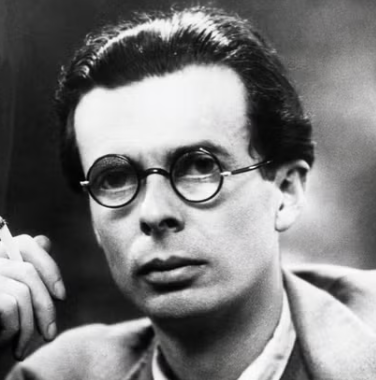
That men do not learn very much from the lessons of history is the most important of all the lessons that history has to teach.
▼
Source
source
"A Case of Voluntary Ignorance" in Collected Essays, 1959

10 months 3 weeks ago
As for the Soothsayer, although I am certain no one feels the true beauties of that work better than I, I am far from finding these beauties in the same places as the infatuated public does. They are not the products of study and knowledge, but rather are inspired by taste and sensitivity.
▼
Source
source
First Dialogue; translated by Judith R. Bush, Christopher Kelly, Roger D. Masters
8 months 2 weeks ago
Ten years ago, you could have traveled thousands of miles through the United States and never seen a baseball cap turned back to front. Today, the reverse baseball cap is ubiquitous. I do not know what the pattern of geographical spread of the reverse baseball cap precisely was, but epidemiology is certainly among the professions primarily qualified to study it.

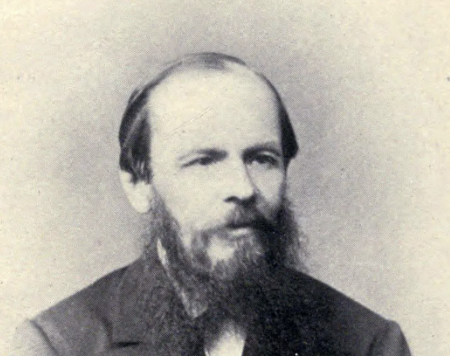
9 months 3 weeks ago
. ... the prince says that the world will be saved by beauty! And I maintain that the reason he has such playful ideas is that he is in love.
▼
Source
source
Part 3, Chapter 5
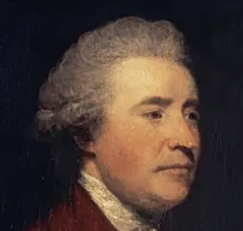
9 months 3 weeks ago
Free trade is not based on utility but on justice.
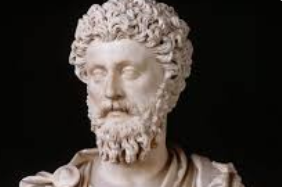
6 months 2 weeks ago
How much more damage anger and grief do than the things that cause them.
▼
Source
source
(Hays translation) XI, 18
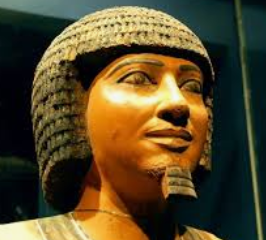
10 months 1 week ago
Beware an act of avarice; it is bad and incurable disease.
▼
Source
source
Maxim no. 19.

9 months 2 weeks ago
Whenever government assumes to deliver us from the trouble of thinking for ourselves, the only consequences it produces are those of torpor and imbecility.
▼
Source
source
Vol. 2, bk. 6, ch. 1
8 months 3 weeks ago
An utterance can have Intentionality, just as a belief has Intentionality, but whereas the Intentionality of the belief is intrinsic the Intentionality of the utterance is derived.
▼
Source
source
P. 27.
7 months 1 week ago
The great man is the one who does not lose his child's heart.
▼
Source
source
Book 4, pt. 2, v. 12
9 months 1 week ago
You are the salt of the earth; but if the salt loses its flavor, how shall it be seasoned? It is then good for nothing but to be thrown out and trampled underfoot by men. You are the light of the world. A city that is set on a hill cannot be hidden. Nor do they light a lamp and put it under a basket, but on a lampstand, and it gives light to all who are in the house. Let your light so shine before men, that they may see your good works and glorify your Father in heaven.
▼
Source
source
Matthew 5:13-16 (NIV) (See also: Mark 9:50; Luke 14:34, 35)
10 months 2 weeks ago
We are reformers in spring and summer; in autumn and winter we stand by the old - reformers in the morning, conservatives at night. Reform is affirmative, conservatism is negative; conservatism goes for comfort, reform for truth.
▼
Source
source
p. 223

10 months 2 days ago
Friends share all things.
▼
Source
source
As quoted in Lives and Opinions of Eminent Philosophers, "Pythagoras", Sect. 10

11 months 1 week ago
To entire sincerity there belongs ceaselessness. Not ceasing, it continues long. Continuing long, it evidences itself. Evidencing itself, it reaches far. Reaching far, it becomes large and substantial. Large and substantial, it becomes high and brilliant. Large and substantial; this is how it contains all things. High and brilliant; this is how it overspreads all things. Reaching far and continuing long; this is how it perfects all things. So large and substantial, the individual possessing it is the co-equal of Earth. So high and brilliant, it makes him the co-equal of Heaven. So far-reaching and long-continuing, it makes him infinite. Such being its nature, without any display, it becomes manifested; without any movement, it produces changes; and without any effort, it accomplishes its ends.
10 months 3 weeks ago
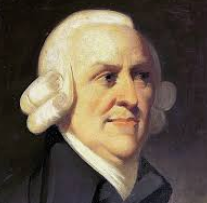
People of the same trade seldom meet together, even for merriment and diversion, but the conversation ends in a conspiracy against the public, or in some contrivance to raise prices. It is impossible indeed to prevent such meetings, by any law which either could be executed, or would be consistent with liberty or justice. But though the law cannot hinder people of the same trade from sometimes assembling together, it ought to do nothing to facilitate such assemblies; much less to render them necessary.
▼
Source
source
Chapter X, Part II, p. 152.
8 months 1 week ago
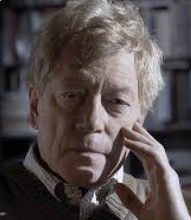
A civilization is a social entity that manifests religious, political , legal, and customary uniformity over an extended period, and which confers on its members the benefits of socially accumulated knowledge.
▼
Source
source
"What is Culture?" (p. 2)
8 months 2 weeks ago
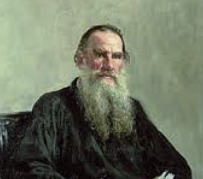
While imprisoned in the shed Pierre had learned not with his intellect but with his whole being, by life itself, that man is created for happiness, that happiness is within him, in the satisfaction of simple human needs, and that all unhappiness arises not from privation but from superfluity. And now during these last three weeks of the march he had learned still another new, consolatory truth- that nothing in this world is terrible. He had learned that as there is no condition in which man can be happy and entirely free, so there is no condition in which he need be unhappy and lack freedom. He learned that suffering and freedom have their limits and that those limits are very near together....
▼
Source
source
Bk. XIV, ch. 12
10 months 4 weeks ago
For truth itself has not the privilege to be spoken at all times and in all sorts.
▼
Source
source
Book III, Ch. 13. Of Experience
7 months 1 day ago
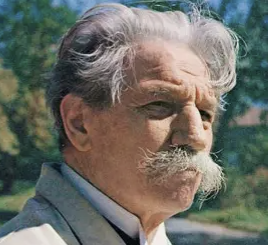
Not less strong than the will to truth must be the will to sincerity. Only an age, which can show the courage of sincerity, can possess truth, which works as a spiritual force within it.

10 months 4 weeks ago
Who does not in some sort live to others, does not live much to himself.
▼
Source
source
Book III, Ch. 10


8 months 2 weeks ago
What happens to one man may happen to all.
▼
Source
source
Maxim 171

9 months 2 weeks ago
What anxiety when one is not sure of one's doubts or wonders: are these actually doubts?
10 months 2 weeks ago
Certainly it is correct to say: Conscience is the voice of God.
▼
Source
source
p. 75

CivilSimian.com created by AxiomaticPanic, CivilSimian, Kalokagathia