

2 months 3 weeks ago
All human activities are equivalent ... and ... all are on principle doomed to failure.
▼
Source
source
Conclusion, II
1 month 3 weeks ago
The political freedom of conscience and of the press, so far from being as it is commonly supposed an extension, is a new case of the limitation of rights and discretion. Conscience and the press ought to be unrestrained, not because men have a right to deviate from the exact line that duty prescribes, but because society, the aggregate of individuals, has no right to assume the prerogative of an infallible judge, and to undertake authoritatively to prescribe to its members in matters of pure speculation.
▼
Source
source
Vol. 1, bk 2 : Principles of Society , Ch. 5 : Of Rights

2 months 3 weeks ago
"And I say also this. I do not think the forest would be so bright, nor the water so warm, nor love so sweet, if there were no danger in the lakes."
▼
Source
source
Hyoi, p. 76
1 month 3 weeks ago
It is impossible for any man, when the most favourable circumstances concur, to acquire sufficient knowledge and strength of mind to discharge the duties of a king, entrusted with uncontrolled power; how then must they be violated when his very elevation is an insuperable bar to the attainment of either wisdom or virtue; when all the feelings of a man are stifled by flattery, and reflection shut out by pleasure! Surely it is madness to make the fate of thousands depend on the caprice of a weak fellow creature, whose very station sinks him NECESSARILY below the meanest of his subjects! But one power should not be thrown down to exalt another--for all power intoxicates weak man; and its abuse proves, that the more equality there is established among men, the more virtue and happiness will reign in society.
▼
Source
source
Ch. 1
1 month 1 day ago
Well, he wasn't a relativist. There's a long and complicated story of the rise of a desire for scientific relativism. Part of it may well be simply sort of rage against reason, the fear of the sciences and a kind of total dislike of the arrogance of a great many scientists who say we're finding out the truth about everything-and here [with Kuhn] there was a way to undermine that arrogance.
▼
Source
source
Ian Hacking, in Gary Stix, "A Q&A with Ian Hacking on Thomas Kuhn's Legacy as "The Paradigm Shift" Turns 50"

3 months 3 weeks ago
I have never worked as hard as now. I go for a brief walk in the morning. Then I come home and sit in my room without interruption until about three o'clock. My eyes can barely see. Then with my walking stick in hand I sneak off to the restaurant, but am so weak that I believe that if somebody were to call out my name, I would keel over and die. Then I go home and begin again. In my indolence during the past months I had pumped up a veritable shower bath, and now I have pulled the string and the ideas are cascading down upon me: healthy, happy, merry, gay, blessed children born with ease and yet all of them with the birthmark of my personality.

2 months 3 weeks ago
Have no mean hours, but be grateful for every hour, and accept what it brings. The reality will make any sincere record respectable. No day will have been wholly misspent, if one sincere, thoughtful page has been written. Let the daily tide leave some deposit on these pages, as it leaves sand and shells on the shore. So much increase of terra firma. this may be a calendar of the ebbs and flows of the soul; and on these sheets as a beach, the waves may cast up pearls and seaweed.
▼
Source
source
July 6, 1840
2 months 3 weeks ago
Who does not see that we are likely to ascertain the distinctive significance of religious melancholy and happiness, or of religious trances, far better by comparing them as conscientiously as we can with other varieties of melancholy, happiness, and trance, than by refusing to consider their place in any more general series, and treating them as if they were outside of nature's order altogether?
▼
Source
source
Lecture I, "Religion and Neurology"

Just now
While the Marxist faith in central planning is now confined to a few dingy sects, a quasi-religious belief in free markets continues to shape the policies of governments.Many writers have pointed to the havoc and ruin that have accompanied the imposition of free markets across the world. Whether in Africa, Asia, Latin America or post-communist Europe, policies of wholesale privatisation and structural adjustment have led to declining economic activity and social dislocation on a massive scale.
▼
Source
source
"The end of the world as we know it," The Guardian
1 month 1 week ago
The most authentic Catholic ethic, monastic asceticism, is an ethic of eschatology, directed to the salvation of the individual soul rather than to the maintenance of society. And in the cult of virginity may there not perhaps be a certain obscure idea that to perpetuate ourselves in others hinders our own personal perpetuation?
3 weeks 2 days ago
Error is the force that welds men together; truth is communicated to men only by deeds of truth. Only deeds of truth, by introducing light into the conscience of each individual, can dissolve the cohesion of error, and detach men one by one from the mass united together by the cohesion of error.
▼
Source
source
My Religion (1884), Ch. 12
1 month 1 week ago
I can assure you that no kingdom has ever had as many civil wars as the kingdom of Christ.
▼
Source
source
No. 29. (Rica writing to Ibben)
2 weeks 5 days ago
For his purposes (and mine), scientific medicine is defined as the set of practices which submit themselves to the ordeal of being tested. Alternative medicine is defined as that set of practices which cannot be tested, refuse to be tested, or consistently fail tests. If a healing technique is demonstrated to have curative properties in properly controlled double-blind trials, it ceases to be alternative. It simply, as Diamond explains, becomes medicine. Conversely, if a technique devised by the President of the Royal College of Physicians consistently fails in double-blind trials, it will cease to be a part of 'orthodox' medicine. Whether it will then become 'alternative' will depend upon whether it is adopted by a sufficiently ambitious quack (there are always sufficiently gullible patients).
▼
Source
source
Foreword to Snake Oil and Other Preoccupations by John Diamond, Vintage, 2001.
3 weeks ago
The young are really the heirs to a generation of incompetence.
3 weeks ago
Manuscript culture is conversational if only because the writer and his audience are physically related by the form of publication as performance.
▼
Source
source
(p. 96)
1 month 2 weeks ago
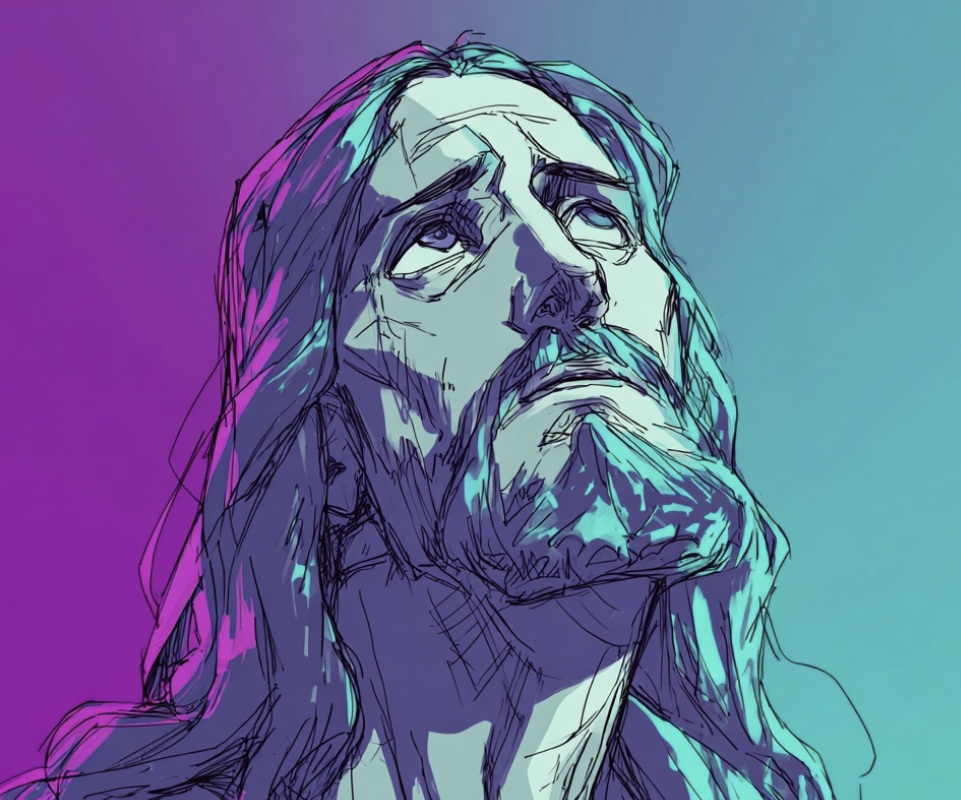
Why tempt ye me, ye hypocrites? Shew me the tribute money.
▼
Source
source
22:18-19 (KJV)

2 months 2 weeks ago
In these downbeat times, we need as much hope and courage as we do vision and analysis; we must accent the best of each other even as we point out the vicious effects of our racial divide and pernicious consequences of our maldistribution of wealth and power. We simply cannot enter the twenty-first century at each other's throats, even as we acknowledge the weighty forces of racism, patriarchy, economic inequality, homophobia, and ecological abuse on our necks. We are at a crucial crossroad in the history of this nation--and we either hang together by combating these forces that divide and degrade us or we hang separately. Do we have the intelligence, humor, imagination, courage, tolerance, love, respect, and will to meet the challenge? Time will tell. None of us alone can save the nation or world. But each of us can make a positive difference if we commit ourselves to do so.
▼
Source
source
(p 109)
3 weeks 4 days ago
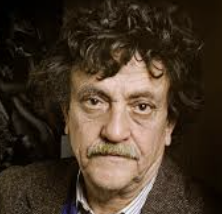
Be kind. Don't kill for any reason. Don't even kill out of self-defense. Really - I mean that. Don't take any more than you need of anything. Help others.
▼
Source
source
From a speech given on 20 January 1969 at the University of Michigan, about two months before Slaughterhouse Five was published

1 month 2 weeks ago
Glory - once achieved, what is it worth?
1 month 2 weeks ago
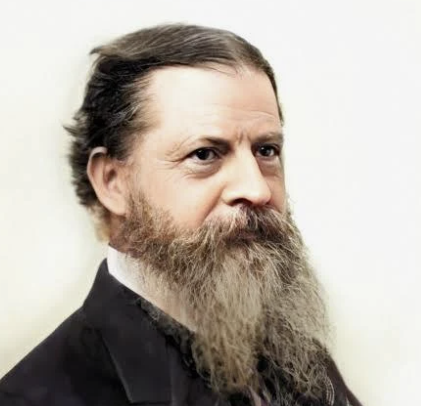
It is terrible to see how a single unclear idea, a single formula without meaning, lurking in a young man's head, will sometimes act like an obstruction ... in an artery, hindering the nutrition of the brain, and condemning its victim to pine away in the fullness of his intellectual vigor and in the midst of intellectual plenty.
▼
Source
source
How to make our ideas clear, Popular Science Monthly, Vol. 12
1 month 2 weeks ago
Irons and the unbreathable air of this world strip us of everything, except the freedom to kill ourselves; and this freedom grants us a strength and pride to triumph over the loads which overwhelm us.
1 month 2 weeks ago
All the concessions we make to Eros are holes in our desire for the absolute.
2 months 3 weeks ago
I need Christ, not something that resembles Him.
3 weeks ago
It is a bad plan that admits of no modification.
▼
Source
source
Maxim 469
2 months 3 weeks ago
The humans live in time but our Enemy (God) destines them for eternity.
▼
Source
source
Letter XV
2 months 2 weeks ago
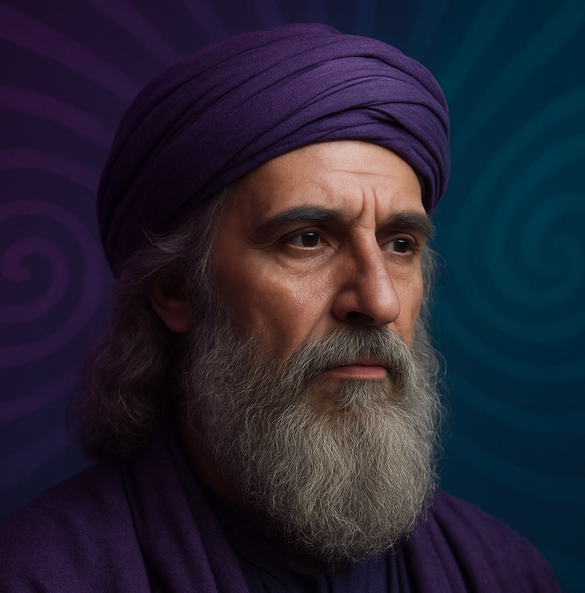
With a drunken man do not walk on the road.
1 month 2 weeks ago
Reason as an organ for perceiving the true nature of reality and determining the guiding principles of our lives has come to be regarded as obsolete.
▼
Source
source
p. 18.
1 month 2 weeks ago
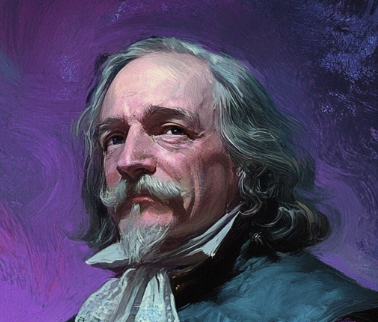
Power as is really divided, and as dangerously to all purposes, by sharing with another an Indirect Power, as a Direct one.
▼
Source
source
The Third Part, Chapter 42, p. 315
1 month 2 weeks ago
The aphorism is cultivated only by those who have known fear in the midst of words, that fear of collapsing with all the words.

1 month 6 days ago
I prefer to reach the few who really want to learn, rather than the many who come to be amused.
1 month 3 weeks ago
On condition that you protect my rights, I will protect your rights. How, then, does some party obtain the right to claim the protection of the other? Evidently, by actually protecting the rights of the other. But if this is so, no party will ever obtain a strictly legal claim to the protection of the other.
▼
Source
source
P. 220

1 month 4 weeks ago
But man is a Noble Animal, splendid in ashes, and pompous in the grave, solemnizing Nativities and Deaths with equal lustre, nor omitting Ceremonies of Bravery, in the infamy of his nature. Life is a pure flame, and we live by an invisible Sun within us.
▼
Source
source
Chapter V
2 months 3 weeks ago
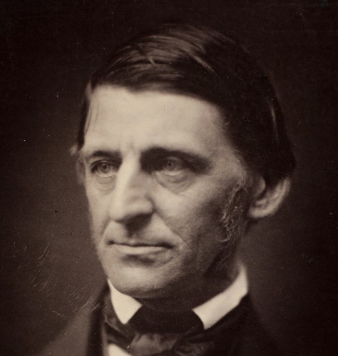
Born for success he seemed, With grace to win, with heart to hold, With shining gifts that took all eyes.
▼
Source
source
In Memoriam E. B. E.
1 week ago
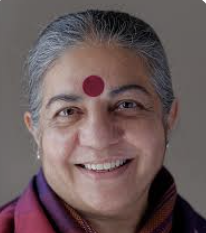
The business of grabbing and money-making, through a violent extractive economy that the 1% have built, is burdening the earth and humanity with unbearable and non-sustainable costs, and has brought us to the brink of extinction. We do not have to escape from the earth; we have to escape from the illusions that enslave our minds and make extinction look inevitable.
3 months 1 day ago
The mariner of old said to Neptune in a great tempest, "O God! thou mayest save me if thou wilt, and if thou wilt thou mayest destroy me; but whether or no, I will steer my rudder true."
▼
Source
source
Book II, Ch. 16. Of Glory

3 months 2 days ago
For I find that even those that have sought knowledge for itself and not for benefit, or ostentation, or any practical enablement in the course of their life, have nevertheless propounded to themselves a wrong mark, namely, satisfaction, which men call truth, and not operation. For as in the courts and services of princes and states, it is a much easier matter to give satisfaction than to do the business; so in the inquiring of causes and reasons it is much easier to find out such causes as will satisfy the mind of man, and quiet objections, than such causes as will direct him and give him light to new experiences and inventions.
▼
Source
source
Valerius Terminus: Of the Interpretation of Nature (ca. 1603), in Works, Vol. 1; The Works of Francis Bacon (1857), Vol. 3, p. 232
6 days ago
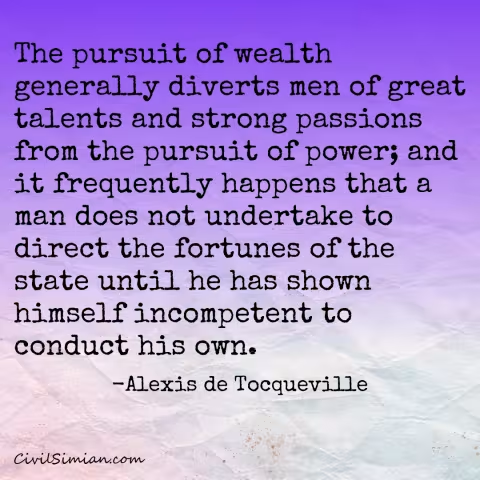
The wave of the future is coming and there is no fighting it.
▼
Source
source
The Wave of the Future
1 month 2 weeks ago
Progress is the injustice each generation commits with regard to its predecessor.
1 month 3 weeks ago
I did not hate the author of my misfortunes - truth and justice acquit me of that; I rather pitied the hard destiny to which he seemed condemned. But I thought with unspeakable loathing of those errors, in consequence of which every man is fated to be, more or less, the tyrant or the slave. I was astonished at the folly of my species, that they did not rise up as one man, and shake off chains so ignominious, and misery so insupportable. So far as related to myself, I resolved - and this resolution has never been entirety forgotten by me - to hold myself disengaged from this odious scene, and never fill the part either of the oppressor or the sufferer.
2 months 1 week ago
Valour, however unfortunate, commands great respect even from enemies: but the Romans despise cowardice, even though it be prosperous.
▼
Source
source
Aemilius Paulus 26 (Tr. Stewart and Long)
2 months 3 weeks ago
Poor David Hume is dying very fast, but with great cheerfulness and good humour and with more real resignation to the necessary course of things then any whining Christian ever dyed with pretended resignation to the will of God.
▼
Source
source
Letter to Alexander Wedderburn 14 August 1776. The Correspondence of Adam Smith edited by E.C. Mossner and Ian Simpson Ross, 2nd edition, Oxford University Press 1986. The Future Hope in Adam Smith's System, Paul Oslington
1 month 2 weeks ago
The ideal being? An angel ravaged by humor.
2 months 3 weeks ago
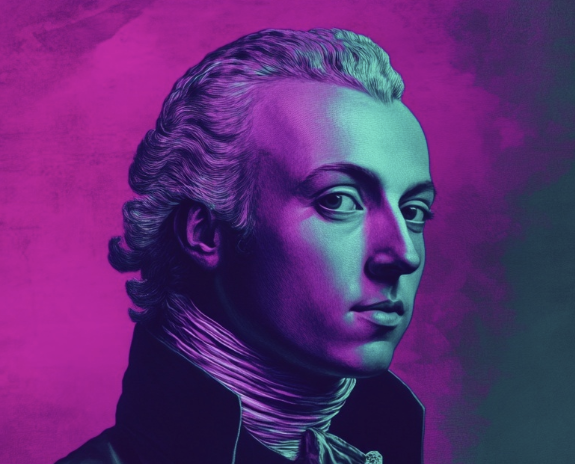
As the analysis of a substantial composite terminates only in a part which is not a whole, that is, in a simple part, so synthesis terminates only in a whole which is not a part, that is, the world.
2 months 3 weeks ago
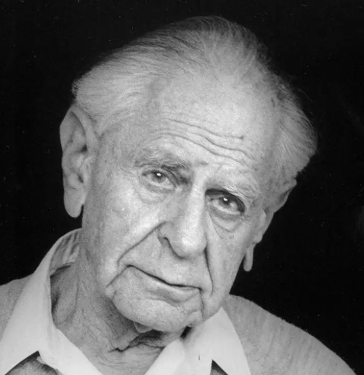
Although I consider our political world to be the best of which we have any historical knowledge, we should beware of attributing this fact to democracy or to freedom. Freedom is not a supplier who delivers goods to our door. Democracy does not ensure that anything is accomplished - certainly not an economic miracle. It is wrong and dangerous to extol freedom by telling people that they will certainly be all right once they are free. How someone fares in life is largely a matter of luck or grace, and to a comparatively small degree perhaps also of competence, diligence, and other virtues. The most we can say of democracy or freedom is that they give our personal abilities a little more influence on our well-being.
1 month 3 weeks ago
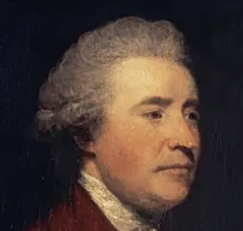
The Leaders have ever since gone...to propagate the principles of French Levelling and confusion, by which no house is safe from its Servants, and no Officer from his Soldiers, and no State or constitution from conspiracy and insurrection. I will not enter into the baseness and depravity of the System they adopt; but one thing I will remark, that its great Object is not, (as they pretend to delude worthy people to their Ruin) the destruction of all absolute Monarchies, but totally to root out that thing called an Aristocrate or Noblemen and Gentleman.
▼
Source
source
Letter to Lord Fitzwilliam (21 November 1791), quoted in Alfred Cobban and Robert A. Smith (eds.), The Correspondence of Edmund Burke, Volume VI: July 1789-December 1791 (1967), p. 451

3 months 3 weeks ago
When you write a short story ... you had better know the ending first. The end of a story is only the end to the reader. To the writer, it's the beginning. If you don't know exactly where you're going every minute you're writing, you'll never get there or anywhere.
Just now
To affirm that humans thrive in many different ways is not to deny that there are universal human values. Nor is it to reject the claim that there should be universal human rights. It is to deny that universal values can only be fully realized in a universal regime. Human rights can be respected in a variety of regimes, liberal and otherwise. Universal human rights are not an ideal constitution for a single regime throughout the world, but a set of minimum standards for peaceful coexistence among regimes that will always remain different.
▼
Source
source
Two Faces of Liberalism (New Press, 2000, ISBN 0-745-62259-3. 168 pages), ch. 1: Liberal Toleration (p. 21)
CivilSimian.com created by AxiomaticPanic, CivilSimian, Kalokagathia