

3 weeks 5 days ago
For nothing can be greater than seduction itself, not even the order that destroys it.
▼
Source
source
Seduction

2 months 2 weeks ago
Do not be arrogant because of your knowledge, but confer with the ignorant man as with the learned. For knowledge has no limits, and none has yet achieved perfection in it. Good speech is more hidden than malachite, yet it is found in the possession of women slaves at the millstones.
▼
Source
source
Maxim no. 1.
2 months 3 weeks ago
Fanaticism is the danger of the world, and always has been, and has done untold harm. I might almost say that I was fanatical against fanaticism.
▼
Source
source
The Future of Science (1959), p. 79; also in BBC The Listener, Vol. 61 (1959), p. 505
2 months 3 weeks ago
Beating is the worst, and therefore the last means to be us'd in the correction of children, and that only in the cases of extremity, after all gently ways have been try'd, and proved unsuccessful; which, if well observ'd, there will very seldom be any need of blows.
▼
Source
source
Sec. 84
2 weeks 2 days ago
Never in the history of the world have there been so many migrants. And almost all of them are migrating from regions where nationality is weak or non-existent to the established nation states of the West. They are not migrating because they have discovered some previously dormant feeling of love or loyalty towards the nations in whose territory they seek a home. On the contrary, few of them identify their loyalties in national terms and almost none of them in terms of the nation where they settle. They are migrating in search of citizenship which is the principal gift of national jurisdictions, and the origin of the peace, law, stability and prosperity that still prevail in the West.
1 month 2 weeks ago
Man must be free of it all, of his bad conscience and of the bad salvation from this conscience in order to become in truth the way. Now, he no longer promises others the fulfillment of his duties, but promises himself the fulfillment of man.
▼
Source
source
p. 178

1 month 2 weeks ago
By capitulating to life, this world has betrayed nothingness. . . . I resign from movement, and from my dreams. Absence! You shall be my sole glory. . . . Let "desire" be forever stricken from the dictionary, and from the soul! I retreat before the dizzying farce of tomorrows. And if I still cling to a few hopes, I have lost forever the faculty of hoping.

1 month 2 weeks ago
My Father is glorified in this, that you keep bearing much fruit and prove yourselves my disciples. Just as the Father has loved me, so I have loved you; remain in my love. If you observe my commandments, you will remain in my love, just as I have observed the commandments of the Father and remain in his love. “These things I have spoken to you, so that my joy may be in you and your joy may be made full. This is my commandment, that you love one another just as I have loved you. No one has love greater than this, that someone should surrender his life in behalf of his friends. You are my friends if you do what I am commanding you. I no longer call you slaves, because a slave does not know what his master does. But I have called you friends, because I have made known to you all the things I have heard from my Father.
▼
Source
source
15:8-15, New World Translation of the Holy Scriptures

3 months 1 week ago
God judged it better to bring good out of evil than to suffer no evil to exist.
▼
Source
source
Enchiridion (c. 420 ), Ch. 27
1 week 2 days ago
Our reverence for the nobility of manhood will not be lessened by the knowledge, that Man, is in substance and in structure, one with the brutes; for, he alone possesses the marvellous endowment of intelligible and rational speech, whereby, in the secular period of his existence, he has slowly accumulated and organized the experience which is almost wholly lost with the cessation of every individual life in other animals; so that now he stands raised upon it as on a mountain top, far above the level of his humble fellows, and transfigured from his grosser nature by reflecting, here and there, a ray from the infinite source of truth.
▼
Source
source
Ch.2, p. 132

2 months 2 weeks ago
Well, as you know, I was blessed to do over a hundred events for my dear brother [Bernie Sanders]. And this is the first time I've had a chance to publicly endorse him again, but yes, indeed. I'll be in his corner that we're going to win this time. And it has to do with the Martin Luther King like criteria of assessing a candidate namely the issues of militarism, poverty, materialism, and racism, xenophobia in all of its forms that includes any kind of racism as you know against black people, brown people, yellow people, anybody, Arabs, Muslims, Jews, Palestinians, Kashmirians, Tibetans and so forth. So that there's no doubt that the my dear brother Bernie stands shoulders above any of the other candidates running in the Democratic primary when it comes to that Martin Luther King-like standards or criteria.
▼
Source
source
Quoted in: Cornel West on Bernie, Trump, and Racism, The Intercept, Mehdi Hasan,

2 months 5 days ago
Use examples; that such as thou teachest may understand thee the better!

1 month 1 week ago
God's love for us is not the reason for which we should love him. God's love for us is the reason for us to love ourselves.
▼
Source
source
p. 270

3 months 1 week ago
For no fact is so simple we believe it at first sight, And there is nothing that exists so great or marvellous That over time mankind does not admire it less and less.
▼
Source
source
Book II, lines 1026-1029 (tr. Stallings)

6 months 4 weeks ago

3 months 1 day ago
A faithful and good servant is a real godsend; but truly 'tis a rare bird in the land.
▼
Source
source
156
3 weeks ago
Even when the wound is healed, the scar remains.
▼
Source
source
Maxim 236
1 month 1 day ago
In sum, a theory is only accepted if the theory has substantial, non-ad hoc, explanatory successes. This is in accordance with Popper; unfortunately, it is in even better accordance with the 'inductivist' accounts that Popper rejects, since these stress support rather than falsification.
▼
Source
source
The 'corroboration' of theories
2 months 3 weeks ago
To require that a so-called layman should not use his own reason in religious matters, particularly since religion is to be appreciated as moral, but instead follow the appointed clergyman and thus someone else's reason, is an unjust demand because as to morals every man must account for all his doings. The clergyman will not and even cannot assume such a responsibility.
▼
Source
source
Kant, Immanuel (1996), pages 94-95



3 months 1 day ago
She [virtue] requires a rough and stormy passage; she will have either outward difficulties to wrestle with, ... or internal difficulties.
▼
Source
source
Book II, Ch. 11. Of Cruelty
2 weeks 5 days ago
To know what you prefer, instead of humbly saying Amen to what the world tells you you ought to prefer, is to have kept your soul alive.
▼
Source
source
An Inland Voyage (1878), Ch. III, "The Royal Sport Nautique".
1 month 2 weeks ago
I am a dreamer of words, of written words. I think I am reading; a word stops me. I leave the page. The syllables of the word begin to move around. Stressed accents begin to invert. The word abandons its meaning like an overload which is too heavy and prevents dreaming. Then words take on other meanings as if they had the right to be young. And the words wander away, looking in the nooks and crannies of vocabulary for new company, bad company.
▼
Source
source
Introduction, sect. 6

1 month 1 week ago
Useless laws weaken the necessary laws.
▼
Source
source
Book XXIX: Of the Manner of Composing Laws, Chapter 16: Things to be Observed in the Composing of Laws
2 months 3 weeks ago
The suppression of liberty is always likely to be irrational.
▼
Source
source
Chapter IV, Section 33, p. 210
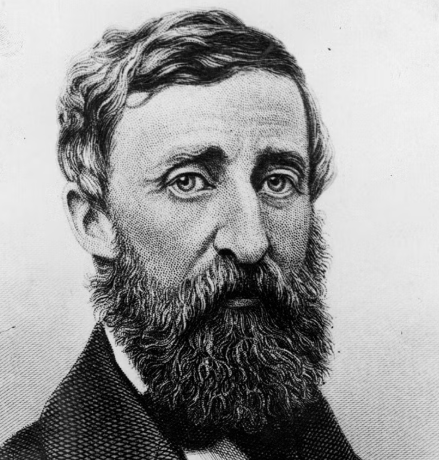
2 months 3 weeks ago
I speak for the slave when I say that I prefer the philanthropy of Captain Brown to that philanthropy which neither shoots me nor liberates me.

3 months 3 weeks ago
[I]t's gravity is the cause; and that which is heavy abides in the middle, and the earth is in the middle: in like manner also, the infinite will abide in itself, through some other cause... and will itself support itself. ...[T]he places of the whole and the part are of the same species; as of the whole earth and a clod, the place is downward; and of the whole of fire, and a spark, the place is upward. So that if the place of the infinite is in itself, there will be the same place also of a part of the infinite.
1 month 3 weeks ago
Unity is the great goal toward which humanity moves irresistibly. But it becomes fatal, destructive of the intelligence, the dignity, the well-being of individuals and peoples whenever it is formed without regard to liberty, either by violent means or under the authority of any theological, metaphysical, political, or even economic idea. That patriotism which tends toward unity without regard to liberty is an evil patriotism, always disastrous to the popular and real interests of the country it claims to exalt and serve. Often, without wishing to be so, it is a friend of reaction - an enemy of the revolution, i.e., the emancipation of nations and men.
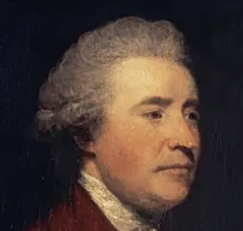
1 month 3 weeks ago
A great revolution is on the point of being accomplished. It is a revolution not in human affairs, but in man himself.
▼
Source
source
p. 2
2 weeks 5 days ago
A good conscience is eight parts of courage.
▼
Source
source
Catriona, ch. XI (1893).

2 months 2 weeks ago
I don't really know what they mean by "intellectuals," all the people who describe, denounce, or scold them. I do know, on the other hand, what I have committed myself to, as an intellectual, which is to say, after all, a cerebro-spinal individual: to having a brain as supple as possible and a spinal column that's as straight as necessary.
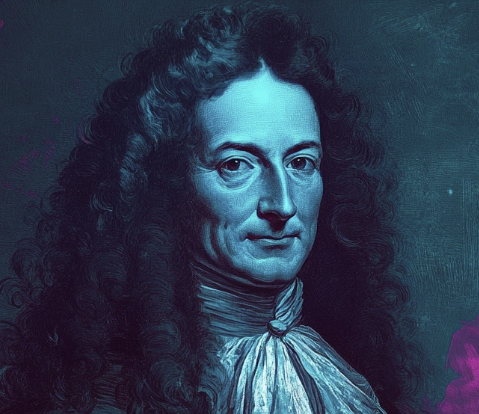
2 months 3 weeks ago
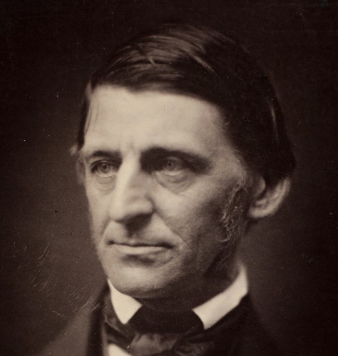
And as every present state of a simple substance is naturally a consequence of its preceding state, so its present is pregnant with its future.
▼
Source
source
La monadologie (22).
2 months 3 weeks ago
Children are all foreigners.
▼
Source
source
September 25, 1839

1 month 2 weeks ago
It is the most advanced industrial society which feels most directly threatened by the rebellion, because it is here that the social necessity of repression and alienation, of servitude and heteronomy is most transparently unnecessary, and unproductive in terms of human progress. Therefore the cruelty and violence mobilized in the struggle against the threat, therefore the monotonous regularity with which the people are made familiar with, and accustomed to inhuman attitudes and behavior-to wholesale killing as patriotic act.
1 month 3 weeks ago
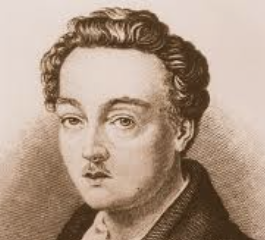
The revolution must end and the republic must begin. In our constitution, right must take the place of duty, welfare that of virtue, and self-defense that of punishment. Everyone must be able to prevail and to live according to one's own nature.
▼
Source
source
Act I.

1 month 1 week ago
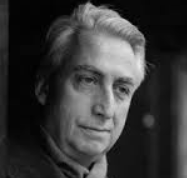
When I was a student I was assigned "Mythologies" and "A Lover's Discourse," by Roland Barthes, and felt at once that something momentous had happened to me, that I had met a writer who had changed my course in life somehow; and looking back now, I think he did.
▼
Source
source
Zadie Smith Interview

3 weeks 5 days ago
In many cases it is a matter for decision and not a simple matter of fact whether x understands y; and so on.
2 months 3 weeks ago
If the colleges were better, if they ... had the power of imparting valuable thought, creative principles, truths which become powers, thoughts which become talents, - if they could cause that a mind not profound should become profound, - we should all rush to their gates: instead of contriving inducements to draw students, you would need to set policy at the gates to keep order in the in-rushing multitude.
▼
Source
source
The Celebration of Intellect, 1861

1 month 6 days ago
The evolutionary urge drives man to seek for intenser forms of fulfillment, since his basic urge is for more life, more consciousness, and this contentment has an air of stagnation that the healthy mind rejects. (This recognition lies at the centre of my own 'outsider theory': that there are human beings to whom comfort means nothing, but whose happiness consists in following an obscure inner-drive, an 'appetite for reality'.)
▼
Source
source
p. 32


1 month 6 days ago
The terrible struggle of the thinking man and woman against political, social and moral conventions owes its origin to the family, where the child is ever compelled to battle against the internal and external use of force. The categorical imperatives: You shall! you must! this is right! that is wrong! this is true! that is false! shower like a violent rain upon the unsophisticated head of the young being and impress upon its sensibilities that it has to bow before the long established and hard notions of thoughts and emotions.

2 months 3 weeks ago
I love liberty, and I loathe constraint, dependence, and all their kindred annoyances. As long as my purse contains money it secures my independence, and exempts me from the trouble of seeking other money, a trouble of which I have always had a perfect horror; and the dread of seeing the end of my independence, makes me proportionately unwilling to part with my money. The money that we possess is the instrument of liberty, that which we lack and strive to obtain is the instrument of slavery.

2 months 3 weeks ago
He who dares not offend cannot be honest.
▼
Source
source
24 April 1776, The Forester's Letters", Letter III: To Cato, Pennsylvania Journal
1 month 2 weeks ago
Can it really be that for us existence means exile, and nothingness, home?
1 month 5 days ago
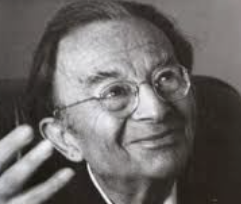
By necrophilia is meant love for all that is violence and destruction; the desire to kill; the worship of force; attraction to death, to suicide, to sadism; the desire to transform the organic into the inorganic by means of "order." The necrophile, lacking the necessary qualities to create, in his impotence finds it easy to destroy because for him it serves only one quality: force.
2 months 3 weeks ago
That the human mind has a certain order of possible progress, in which some things must precede others, an order which governments and public instructors can modify to some, but not to an unlimited extent: that all questions of political institutions are relative, not absolute, and that different stages of human progress not only will have, but ought to have, different institutions: That government is always either in the hands, or passing into the hands, of whatever is the strongest power in society, and that what this power is, does not depend on institutions, but institutions on it: That any general theory or philosophy of politics supposes a previous theory of human progress, and that this is the same thing with a philosophy of history.
▼
Source
source
(p. 162)

3 weeks 6 days ago
I wish we could derive the rest of the phenomena of nature by the same kind of reasoning from mechanical principles; for I am induced by many reasons to suspect that they may all depend upon certain forces by which the particles of bodies, by some causes hitherto unknown, are either mutually impelled towards each other, and cohere in regular figures, or are repelled and recede from each other; which forces being unknown, philosophers have hitherto attempted the search of nature in vain; but I hope the principles here laid down will afford some light either to that or some truer method of philosophy.
▼
Source
source
Preface
1 month 6 days ago
Every daring attempt to make a great change in existing conditions, every lofty vision of new possibilities for the human race, has been labelled Utopian.
▼
Source
source
"Socialism: Caught in the Political Trap", a lecture (c. 1912), published in Red Emma Speaks, Part 1 (1972) edited by Alix Kates Shulman

3 months 2 weeks ago
To two men living the same number of years, the world always provides the same sum of experiences. It is up to us to be conscious of them.
CivilSimian.com created by AxiomaticPanic, CivilSimian, Kalokagathia