

3 months 1 week ago
Rules necessary for axioms. Not to demand in axioms any but things perfectly evident.
2 months 3 weeks ago
Every man, wherever he goes, is encompassed by a cloud of comforting convictions, which move with him like flies on a summer day.
▼
Source
source
Ch. 2: Dreams and Facts
2 months 3 weeks ago
If, when a man writes a poem or commits a murder, the bodily movements involved in his act result solely from physical causes, it would seem absurd to put up a statue to him in the one case and to hang him in the other.
▼
Source
source
"The Doctrine of Free Will"

1 month 3 weeks ago
To be or not to be...Neither one nor the other.

4 weeks ago
Finally, and perhaps most importantly, you need to acquire the skills of writing and speaking that make for candor, rigor, and clarity. You cannot think clearly if you cannot speak and write clearly.
1 month 2 weeks ago
Now, apparently, many men are again feeling homesick for the herd. They devote themselves passionately to whatever there is left in them of the sheep. They want to march through life together, along the collective path, shoulder to shoulder, wool rubbing wool, and the head down. This is the reason why so many European peoples are looking for a shepherd and a sheep dog.
▼
Source
source
p. 170

3 months 5 days ago
It is manifest that there is no danger at all in the proportion or quantity of knowledge, how large soever, lest it should make it swell or out-compass itself; no, but it is merely the quality of knowledge, which, be it in quantity more or less, if it be taken without the true corrective thereof, hath in it some nature of venom or malignity, and some effects of that venom, which is ventosity or swelling. This corrective spice, the mixture whereof maketh knowledge so sovereign, is charity, which the Apostle immediately addeth to the former clause; for so he saith, "Knowledge bloweth up, but charity buildeth up".
▼
Source
source
Book I

1 month 2 weeks ago
What thinkest thou, Simon? of whom do the kings of the earth take custom or tribute? of their own children, or of strangers?
▼
Source
source
17:25 (KJV)
2 months 1 week ago
Cato the elder wondered how that city was preserved wherein a fish was sold for more than an ox.
▼
Source
source
Cato the Elder
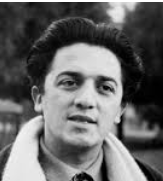
5 days ago
All art is autobiographical; the pearl is the oyster's autobiography.
▼
Source
source
On the autobiographical nature of his films, in The Atlantic

2 months 2 days ago
The single spirit doth simultaneously temper the whole together; this is the single soul of all things; all are filled with God.
▼
Source
source
IV 9; as translated by Dorothea Waley Singer
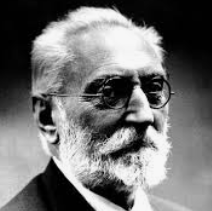
1 month 1 week ago
Consciousness (conscientia) is participated knowledge, is co-feeling, and co-feeling is com-passion. Love personalizes all that it loves. Only by personalizing it can we fall in love with an idea. And when love is so great and so vital, so strong and so overflowing, that it loves everything, then it personalizes everything and discovers that the total All, that the Universe, is also a person possessing a Consciousness, a Consciousness which in its turn suffers, pities, and loves, and therefore is consciousness. And this Consciousness of the Universe, which a love, personalizing all that it loves, discovers, is what we call God.

3 months 2 weeks ago
It is the way of the superior man to prefer the concealment of his virtue, while it daily becomes more illustrious, and it is the way of the mean man to seek notoriety, while he daily goes more and more to ruin. It is characteristic of the superior man, appearing insipid, yet never to produce satiety; while showing a simple negligence, yet to have his accomplishments recognized; while seemingly plain, yet to be discriminating. He knows how what is distant lies in what is near. He knows where the wind proceeds from. He knows how what is minute becomes manifested. Such a one, we may be sure, will enter into virtue.
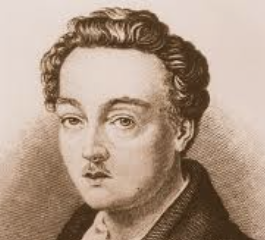
1 month 3 weeks ago
A good man with a good conscience doesn't walk so fast.
▼
Source
source
Scene X.
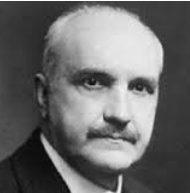
1 month 2 weeks ago
All living souls welcome whatsoever they are ready to cope with; all else they ignore, or pronounce to be monstrous and wrong, or deny to be possible.
▼
Source
source
Ch. 3, P. 62


1 month 3 weeks ago
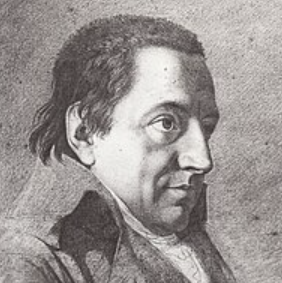
The original thinking force of the universe progresses and develops itself in all possible determinations of which it is capable, just as the other original natural forces progress and assume all possible configurations. I am a particular determination of the formative force, like the plant; a particular determination of the peculiar motive force, like the animal; and in addition to this a determination of the thinking force: and the union of these three basic forces into one force, into one harmonious development, is the distinguishing characteristic of my species.
▼
Source
source
P. Preuss, trans. (1987), p. 12

2 months 4 weeks ago
The end of law is not to abolish or restrain, but to preserve and enlarge freedom. For in all the states of created beings, capable of laws, where there is no law there is no freedom.
▼
Source
source
Second Treatise of Government, Ch. VI, sec. 57

2 months 4 weeks ago
A person who already displays ... cruelty to animals is also no less hardened towards men. We can already know the human heart, even in regard to animals.
▼
Source
source
Part II, p. 212

2 months 3 weeks ago
What would really satisfy us would be a God who said of anything we happened to like, "What does it matter so long as they are contented?" We want, in fact, not so much a Father in Heaven as a grandfather in heaven - a senile benevolence who, as they say, "liked to see young people enjoying themselves" and whose plan for the universe was simply that it might be truly said at the end of each day, "a good time was had by all".
1 week 4 days ago
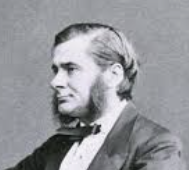
All truth, in the long run, is only common sense clarified.
▼
Source
source
"On the Study of Biology"
2 months 3 weeks ago
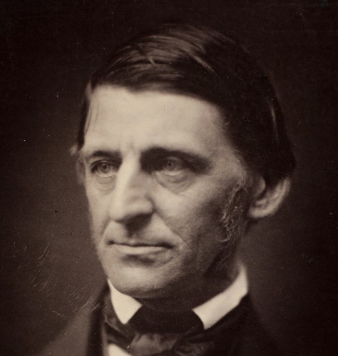
Make yourself necessary to somebody. Do not make life hard to any.
▼
Source
source
Considerations by the Way
2 months 3 weeks ago
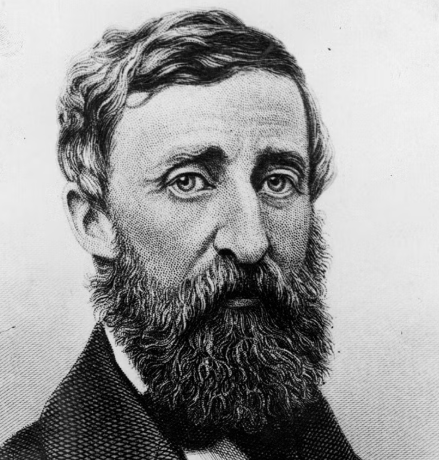
It is not enough to be industrious; so are the ants. What are you industrious about?
▼
Source
source
Letter to Harrison Blake, November 16, 1857

3 months 3 days ago
The believing man hath the Holy Ghost; and where the Holy Ghost dwelleth, He will not suffer a man to be idle, butstirreth him up to all exercises of piety and godliness, and of true religion, to the love of God, to the patient suffering of afflictions, to prayer, to thanksgiving, and the exercise of charity towards all men.
▼
Source
source
p. 320

2 months 4 weeks ago
To hold a pen is to be at war.
▼
Source
source
Letter to Jeanne-Grâce Bosc du Bouchet, comtesse d'Argental (4 October 1748)
2 months 3 weeks ago
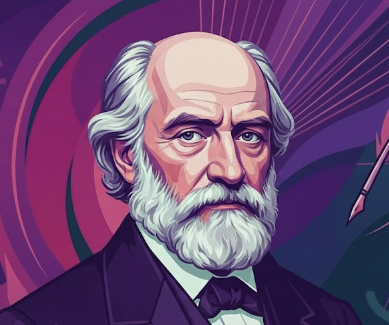
If a person is stupid, we excuse him by saying that he cannot help it; but if we attempted to excuse in precisely the same way the person who is bad, we should be laughed at.
▼
Source
source
E. Payne, trans., vol. 2, p. 230
3 weeks 2 days ago
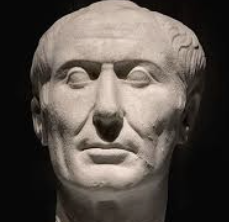
Life is short, but its ills make it seem long.
▼
Source
source
Maxim 124

1 month 2 weeks ago
Kierkegaard's individualistic interpretation of 'the negation of philosophy' inevitably developed a fierce opposition to Western rationalism. .... According to Kierkegaard, the individual is not the knowing but only the 'ethically existing subjectivity.' The sole reality that matters to him is his own 'ethical existence'.
▼
Source
source
P. 263-264
1 month 2 weeks ago
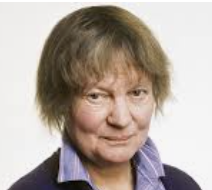
Bereavement is a darkness impenetrable to the imagination of the unbereaved.
▼
Source
source
The Sacred and Profane Love Machine (1974) p. 37.

3 months 4 weeks ago
He who lives as children live who does not struggle for his bread and does not believe that his actions possess any ultimate significance remains childlike.
1 month 3 weeks ago
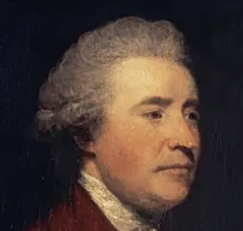
The men of England - the men, I mean of light and leading in England.
▼
Source
source
Volume iii, p. 365
1 week 4 days ago
The only good that I can see in the demonstration of the truth of "Spiritualism" is to furnish an additional argument against suicide. Better live a crossing-sweeper than die and be made to talk twaddle by a "medium" hired at a guinea a séance.
▼
Source
source
Review in the Daily News (17 October 1871), quoted in Life and Letters of Thomas Henry Huxley F.R.S (1900) edited by Leonard Huxley, Vol. 1, p. 452
3 months 2 weeks ago
Before you embark on a journey of revenge, dig two graves.
1 month 3 weeks ago
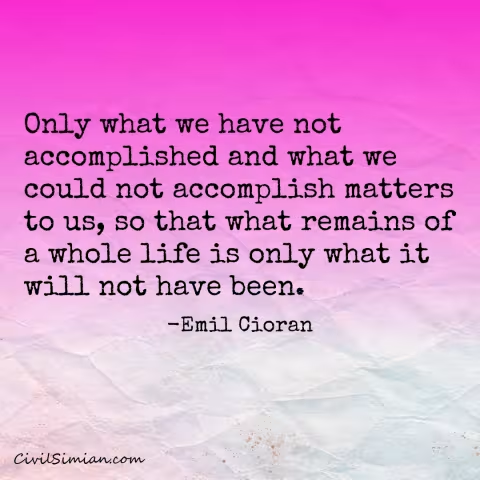
The only thing the young should be taught is that there is virtually nothing to be hoped for from life. One dreams of a Catalogue of Disappointments which would include all the disillusionments reserved for each and every one of us, to be posted in the schools.
2 weeks 5 days ago
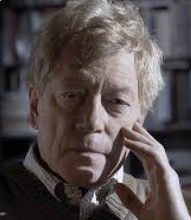
Burke emphasized that the new forms of politics, which hope to organize society around the rational pursuit of liberty, equality, fraternity, or their modernist equivalents, are actually forms of militant irrationality.
▼
Source
source
Why I became a conservative, The New Criterion
1 month 5 days ago
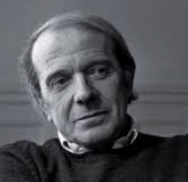
Second, we make no distinction between man and nature: the human essence of nature and the natural essence of man become one within nature in the form of production or industry, just as they do within the life of man as a species. Industry is then no longer considered from the extrinsic point of view of utility, but rather from the point of view of its fundamental identity with nature as production of man and by man.
▼
Source
source
The Desiring Machine
3 months 1 week ago
Look now, this is the starting point of philosophy: the recognition that different people have conflicting opinions, the rejection of mere opinion so that it comes to be viewed with mistrust, an investigation of opinion to determine whether it is rightly held, and the discovery of a standard of judgement, comparable to the balance that we have devised for the determining of weights, or the carpenter's rule for determining whether things are straight or crooked.
▼
Source
source
Book II, ch. 11, 13.
3 months 3 days ago
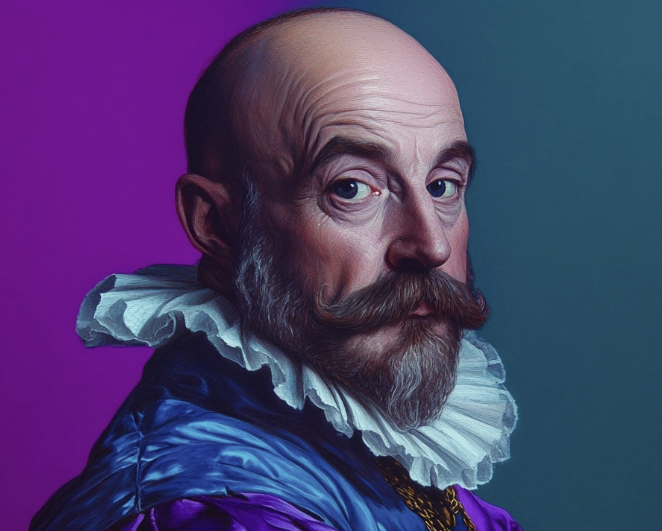
He who establishes his argument by noise and command shows that his reason is weak.
2 months 4 weeks ago
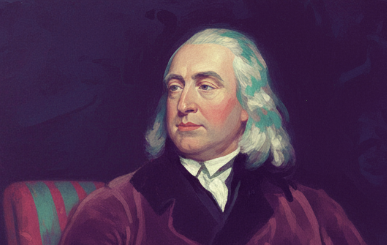
That which has no existence cannot be destroyed - that which cannot be destroyed cannot require anything to preserve it from destruction. Natural rights is simple nonsense: natural and imprescriptible rights, rhetorical nonsense - nonsense upon stilts. But this rhetorical nonsense ends in the old strain of mischievous nonsense for immediately a list of these pretended natural rights is given, and those are so expressed as to present to view legal rights. And of these rights, whatever they are, there is not, it seems, any one of which any government can, upon any occasion whatever, abrogate the smallest particle. The often-quoted phrase 'nonsense upon stilts' is often modernised to 'nonsense on stilts'.
3 months 3 days ago
I approached the task of destroying images by first tearing them out of the heart through God's Word and making them worthless and despised. This indeed took place before Dr. Karlstadt ever dreamed of destroying images. For when they are no longer in the heart, they can do no harm when seen with the eyes. But Dr. Karlstadt, who pays no attention to matters of the heart, has reversed the order by removing them from sight and leaving them in the heart. For he does not preach faith, nor can he preach it; unfortunately, only now do I see that. Which of these two forms of destroying images is best, I will let each man judge for himself.
▼
Source
source
pp. 84-85

2 days ago
Tyranny offers relief from the burden of sanity and a licence to enact forbidden impulses of hatred and violence. By acting on these impulses and releasing them in their subjects tyrants give people a kind of happiness, which as individuals they may be incapable of achieving.
▼
Source
source
An Old Chaos: What a Tyrant Can Do For You (p. 57)
2 weeks 5 days ago
The first effect of modernism was to make high culture difficult: to surround beauty with a wall of erudition.
▼
Source
source
Avant-garde and Kitsch (p. 85)
1 month 3 weeks ago
To suffer is to produce knowledge.
1 month 3 weeks ago
Those who cavalierly reject the Theory of Evolution, as not adequately supported by facts, seem quite to forget that their own theory is supported by no facts at all. Like the majority of men who are born to a given belief, they demand the most rigorous proof of any adverse belief, but assume that their own needs none.

2 months 2 weeks ago
The usage of the words "public" and "public sphere" betrays a multiplicity of concurrent meanings. Their origins go back to various historical phases and, when applied synchronically to the conditions of a bourgeois society that is industrially advanced and constituted as a social-welfare state, they fuse into a clouded amalgam. Yet the very conditions that make the inherited language seem inappropriate appear to require these words, however confused their employment.
▼
Source
source
p. 1 as cited in: Gandy, M (1997) "Ecology, modernity and the intellectual legacy of the Frankfurt School". In: Light, A and Smith, JM, (eds.) Space, Place and Environmental Ethics. p. 240
2 months ago
The more man ascends through the past, and the more he launches into the future, the greater he will be, and all these philosophers and ministers and truth-telling men who have fallen victims to the stupidity of nations, the atrocities of priests, the fury of tyrants, what consolation was left for them in death? This: That prejudice would pass, and that posterity would pour out the vial of ignominy upon their enemies. O Posterity! Holy and sacred stay of the unhappy and the oppressed; thou who art just, thou who art incorruptible, thou who findest the good man, who unmaskest the hypocrite, who breakest down the tyrant, may thy sure faith, thy consoling faith never, never abandon me!
▼
Source
source
As quoted in "Diderot" in The Great Infidels (1881) by Robert Green Ingersoll; The Works of Robert G. Ingersoll Vol. III (1900), p. 367
3 months ago
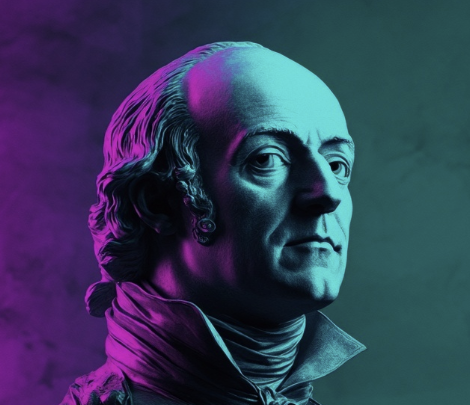
The commodities of Europe were almost all new to America, and many of those of America were new to Europe. A new set of exchanges, therefore, began..and which should naturally have proved as advantageous to the new, as it certainly did to the old continent. The savage injustice of the Europeans rendered an event, which ought to have been beneficial to all, ruinous and destructive to several of those unfortunate countries.
▼
Source
source
Chapter I, p. 481.
2 months 3 weeks ago
People will tell us that without the consolations of religion they would be intolerably unhappy. So far as this is true, it is a coward's argument. Nobody but a coward would consciously choose to live in a fool's paradise. When a man suspects his wife of infidelity, he is not thought the better of for shutting his eyes to the evidence. And I cannot see why ignoring evidence should be contemptible in one case and admirable in the other.
▼
Source
source
"Is There a God?", 1952
2 months 3 weeks ago
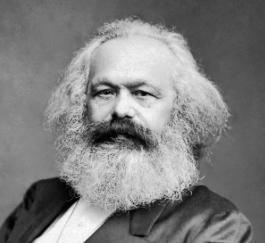
The product of mental labor - science - always stands far below its value, because the labor-time necessary to reproduce it has no relation at all to the labor-time required for its original production.
▼
Source
source
Addenda, "Relative and Absolute Surplus Value" in Economic Manuscripts, 1861-63
CivilSimian.com created by AxiomaticPanic, CivilSimian, Kalokagathia