

6 months 1 day ago
Only now, as we feel the onslaught behind us, do we begin dimly to apprehend why the animals fought, begot, and died; and behind them the plants; and behind these the huge reserve of inorganic forces. We are moved by pity, gratitude, and esteem for our old comrades-in-arms. They toiled, loved, and died to open a road for our coming. We also toil with the same delight, agony, and exaltation for the sake of Someone Else who with every courageous deed of ours proceeds one step farther. All our struggle once more will have a purpose much greater than we, wherein our toils, our miseries, and our crimes will have become useful and holy.

7 months 1 week ago
The heterodox current in Judaism led by Jesus seems to have had no notion of an immortal soul, created by God and then infused into the body: immortality meant being raised from the dead in the body one had in life, then living for ever in a world without decay or corruption. In the Christian religion invented by Paul and Augustine, which was strongly influenced by Plato, immortality meant something quite different - a life out of time, enjoyed by the 'soul' or 'spirit' of the departed. How this Platonic immortality could preserve anything like the persons that once lived was not made clear.
▼
Source
source
Cross-correspondences (pp. 32-3)

9 months 4 weeks ago
Humans are amphibians - half spirit and half animal.... As spirits they belong to the eternal world, but as animals they inhabit time.
▼
Source
source
Letter VIII
5 months 3 weeks ago
By remembering then that I am a part of such a whole, I shall be content with everything that happens. And inasmuch as I am in a manner intimately related to the parts which are of the same kind with myself, I shall do nothing unsocial, but I shall rather direct myself to the things which are of the same kind with myself, and I shall turn all my efforts to the common interest, and divert them from the contrary.
▼
Source
source
X, 6
9 months 3 weeks ago
You can't lead the people if you don't love the people. You can't save the people, if you don't serve the people.
▼
Source
source
Hope on a Tightrope: Words and Wisdom (2008); also on "The Way I See It" Starbucks Coffee Cup #284

6 months ago
There can be no safer deposit on earth than the Treasury of the United States.
▼
Source
source
Letter to Gilbert du Motier, marquis de Lafayette (1825) ME 19:281
9 months 3 weeks ago
When the individual finds in her conscience beliefs that are relevant to public policy but incapable of the defense on the basis of beliefs common to her fellow citizens, she must sacrifice her conscience on the altar of public expediency.
7 months 3 weeks ago
Another force driving progressive evolution is the so-called "arms-race." Prey animals evolve faster running speeds because predators do. Consequently predators have to evolve even faster running speeds, and so on, in an escalating spiral. Such arms races probably account for the spectacularly advanced engineering of eyes, ears, brains, bat "radar" and all the other high-tech weaponry that animals display.
9 months 2 weeks ago
The sight of both eyes becomes one.
▼
Source
source
fr. 88

8 months 1 week ago
The 'open' mind of the poet and artist can sense realities beyond the reach of our normal senses. The real problem is that our materialistic assumptions have a number of false premises built into them: it is only when we recognize this that we see there is no sharp dividing line between the everyday world and the invisible world of the clairvoyant.
▼
Source
source
p. 294
10 months ago
Possibilities that fail to get realized are, for determinism, pure illusions: they never were possibilities at all. There is nothing inchoate, it says, about this universe of ours, all that was or is or shall be actual having been from eternity virtually there. The cloud of alternatives our minds escort this mass of actuality withal is a cloud of sheer deceptions, to which 'impossibilities' is the only name that rightfully belongs.
▼
Source
source
The Dilemma of Determinism in "The Will to Believe" p. 151
10 months 1 week ago
It is not possible to run a course aright when the goal itself has not been rightly placed.
▼
Source
source
Aphorism 81
10 months 4 weeks ago
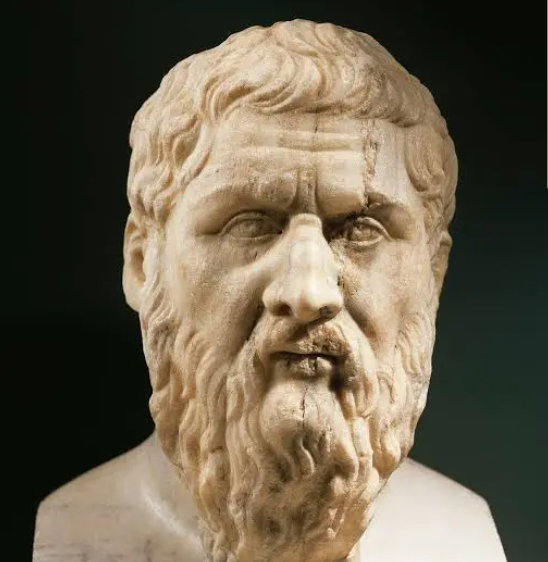
Since those who rule in the city do so because they own a lot, I suppose they're unwilling to enact laws to prevent young people who've had no discipline from spending and wasting their wealth, so that by making loans to them, secured by the young people's property, and then calling those loans in, they themselves become even richer and more honored.

9 months 3 weeks ago
People do not feel in any way ashamed or guilty about spending money on new clothes or a new car instead of giving it to famine relief. (Indeed, the alternative does not occur to them.) This way of looking at the matter cannot be justified. When we buy new clothes not to keep ourselves warm but to look "well-dressed" we are not providing for any important need. We would not be sacrificing anything significant if we were to continue to wear our old clothes, and give the money to famine relief. By doing so, we would be preventing another person from starving. It follows from what I have said earlier that we ought to give money away, rather than spend it on clothes which we do not need to keep us warm. To do so is not charitable, or generous. Nor is it the kind of act which philosophers and theologians have called "supererogatory" - an act which it would be good to do, but not wrong not to do. On the contrary, we ought to give the money away, and it is wrong not to do so.
10 months 3 days ago
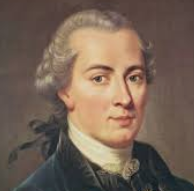
Thus our duties to animals are indirectly duties to humanity.
▼
Source
source
Part II, p. 213

10 months 1 day ago
Pure Mathematics is the class of all propositions of the form "p implies q," where p and q are propositions containing one or more variables, the same in the two propositions, and neither p nor q contains any constants except logical constants. And logical constants are all notions definable in terms of the following: Implication, the relation of a term to a class of which it is a member, the notion of such that, the notion of relation, and such further notions as may be involved in the general notion of propositions of the above form. In addition to these, mathematics uses a notion which is not a constituent of the propositions which it considers, namely the notion of truth.
▼
Source
source
Principles of Mathematics (1903), Ch. I: Definition of Pure Mathematics, p. 3
10 months 1 week ago
We do not become righteous by doing righteous deeds but, having been made righteous, we do righteous deeds.
▼
Source
source
Thesis 40



8 months 1 week ago
The real pioneers in ideas, in art and in literature have remained aliens to their time, misunderstood and repudiated.
10 months 4 weeks ago
No man of sense can put himself and his soul under the control of names... You must consider courageously and thoroughly and not accept anything carelessly.
6 months 2 weeks ago
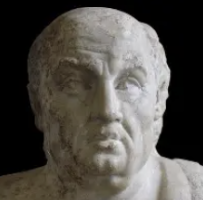
So near at hand is freedom, and is anyone still a slave?
11 months 1 day ago
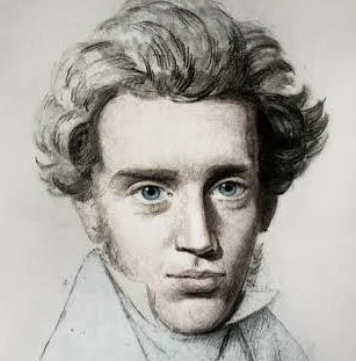
When God chooses to let himself be born in lowliness, when he who holds all possibilities in his hand takes upon himself the form of a lowly servant, when he goes about defenseless and lets people do with him what they will, he surely must know well enough what he is doing and why he wills it; but for all that it is he who has people in his power and not they who have power over him-so history ought not play Mr. Malapert by this wanting to make manifest who he was.
10 months 1 week ago
I would advise no one to send his child where the Holy Scriptures are not supreme. Every institution that does not unceasingly pursue the study of God's word becomes corrupt. Because of this we can see what kind of people they become in the universities and what they are like now. Nobody is to blame for this except the pope, the bishops, and the prelates, who are all charged with training young people. The universities only ought to turn out men who are experts in the Holy Scriptures, men who can become bishops and priests, and stand in the front line against heretics, the devil, and all the world. But where do you find that? I greatly fear that the universities, unless they teach the Holy Scriptures diligently and impress them on the young students, are wide gates to hell.
▼
Source
source
To the Christian Nobility of the German States (1520), translated by Charles M. Jacobs, reported in rev. James Atkinson, The Christian in Society, I (Luther's Works, ed. James Atkinson, vol. 44), p. 207

9 months 1 day ago
I must say, that the whole Scheme of the war is mistaken, (or appears to me to be so), for it ought to be, not for Dunkirk, or this or t'other Town-but to drive Jacobinism from the world.
▼
Source
source
Letter to Dr Charles Burney (14/15 September 1793), quoted in P. J. Marshall and John A. Woods (eds.)
10 months 2 days ago
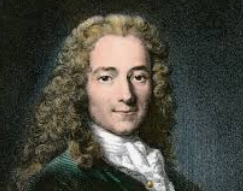
Faith consists in believing what reason cannot.
▼
Source
source
"The Flood", 1764
8 months 3 weeks ago
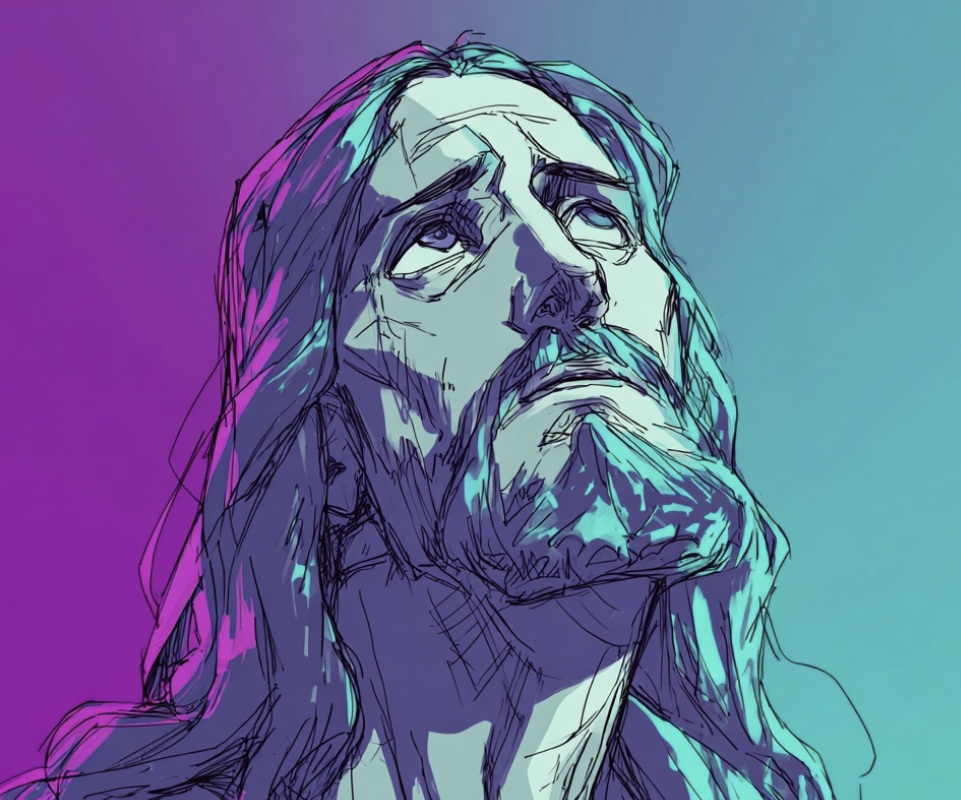
When there were gathered together an innumerable multitude of people, insomuch that they trode one upon another, he began to say unto his disciples first of all, Beware ye of the leaven of the Pharisees, which is hypocrisy. For there is nothing covered, that shall not be revealed; neither hid, that shall not be known. Therefore whatsoever ye have spoken in darkness shall be heard in the light; and that which ye have spoken in the ear in closets shall be proclaimed upon the housetops. And I say unto you my friends, Be not afraid of them that kill the body, and after that have no more that they can do. But I will forewarn you whom ye shall fear: Fear him, which after he hath killed hath power to cast into hell; yea, I say unto you, Fear him.
▼
Source
source
12:1-5
8 months 2 days ago
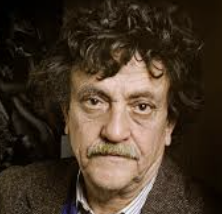
I never knew a writer's wife who wasn't beautiful.
▼
Source
source
Preface (p. xi)
9 months 4 weeks ago
When they have really learned to love their neighbours as themselves, they will be allowed to love themselves as their neighbours.
▼
Source
source
Letter XIV

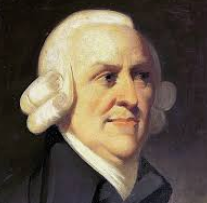
10 months 4 days ago
Nothing but the most exemplary morals can give dignity to a man of small fortune.
▼
Source
source
Chapter I, Part III, Article III, p. 874.


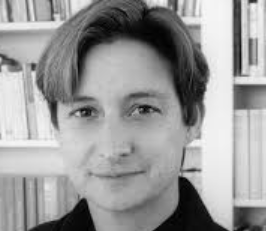
8 months 2 days ago
The ethical and political practice of nonviolence can rely neither exclusively on the dyadic encounter, nor on the bolstering of a prohibition; it requires a political opposition to the biopolitical forms of racism and war logics that rely on phantasmagoric inversions that occlude the binding and interdependent character of the social bond. It requires, as well, an account of why, and under what conditions, the frameworks for understanding violence and nonviolence, or violence and self-defense, seem to invert into one another, causing confusion about how best to pin down those terms.
▼
Source
source
p. 62
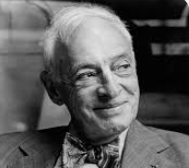
7 months 3 weeks ago
There's something that remains barbarous in educated people, and lately I've more and more had the feeling that we are nonwondering primitives. And why is it that we no longer marvel at these technological miracles? They've become the external facts of every life. We've all been to the university, we've had introductory courses in everything, and therefore we have persuaded ourselves that if we had the time to apply ourselves to these scientific marvels, we would understand them. But of course that's an illusion. It couldn't happen. Even among people who have had careers in science. They know no more about how it all works than we do. So we are in the position of savage men who, however, have been educated into believing that they are capable of understanding everything. Not that we actually do understand, but that we have the capacity.
▼
Source
source
"A Half Life" (1990), pp. 302-303
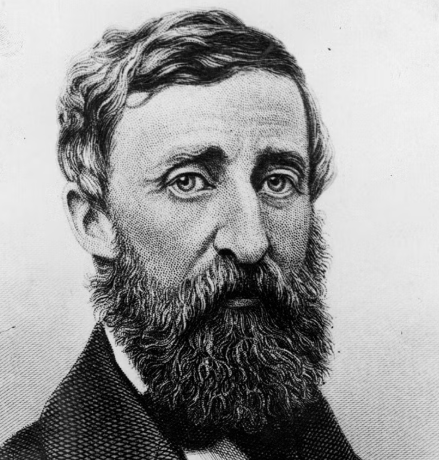
10 months 1 day ago
Who looks in the sun will see no light else; but also he will see no shadow. Our life revolves unceasingly, but the centre is ever the same, and the wise will regard only the seasons of the soul.
▼
Source
source
March 10, 1841
8 months 2 weeks ago
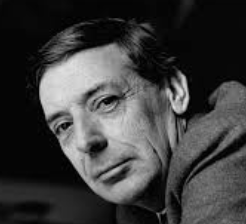
There continue to be complex debates about what Nietzsche understood truth to be. Quite certainly, he did not think, in pragmatist spirit, that beliefs are true if they serve our interests or welfare: we have just seen some of his repeated denials of this idea. The more recently fashionable view is that he was the first of the deniers, thinking that there is no such thing as truth, or that truth is what anyone thinks it is, or that it is a boring category that we can do without. This is also wrong, and more deeply so. Nietzsche did not think that the ideal of truthfulness went into retirement when its metaphysical origins were discovered, and he did not suppose, either, that truthfulness could be detached from a concern for the truth. Truthfulness as an ideal retains its power, and so far from his seeing truth as dispensable or malleable, his main question is how it can be made bearable.
▼
Source
source
p. 16
10 months ago
No particular results then, so far, but only an attitude of orientation, is what the pragmatic method means. The attitude of looking away from first things, principles, 'categories,' supposed necessities; and of looking towards last things, fruits, consequences, facts.
▼
Source
source
Lecture II, What Pragmatism Means
6 months ago
The object of walking is to relax the mind. You should therefore not permit yourself even to think while you walk; but divert your attention by the objects surrounding you. Walking is the best possible exercise. Habituate yourself to walk very far. The Europeans value themselves on having subdued the horse to the uses of man; but I doubt whether we have not lost more than we have gained, by the use of this animal. No one has occasioned so much, the degeneracy of the human body. An Indian goes on foot nearly as far in a day, for a long journey, as an enfeebled white does on his horse; and he will tire the best horses. There is no habit you will value so much as that of walking far without fatigue.
8 months 2 weeks ago
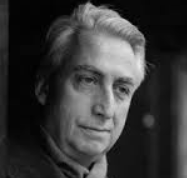
Myth deprives the object of which it speaks of all history. In it, history evaporates.
▼
Source
source
p. 151
6 months 3 weeks ago
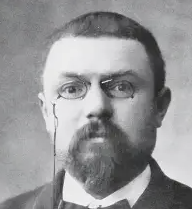
There is no science apart from the general. It may even be said that the very object of the exact sciences is to spare us these direct verifications.
▼
Source
source
Ch. I. (1905) Tr. George Bruce Halstead

8 months 3 weeks ago
In order to conceive, and to steep ourselves in, unreality, we must have it constantly present to our minds. The day we feel it, see it, everything becomes unreal, except that unreality which alone makes existence tolerable.
8 months 3 days ago
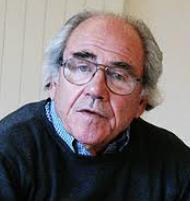
The Marxist critique is only a critique of capital, a critique coming from the heart of the middle and petit bourgeois classes, for which Marxism has served for a century as a latent ideology.... The Marxist seeks a good use of economy. Marxism is therefore only a limited petit bourgeois critique, one more step in the banalization of life toward the "good use" of the social!
▼
Source
source
Canadian Journal of Political and Social Theory 15 (1987) "When Bataille Attacked the Metaphysical Principle of Economy"

8 months 1 week ago
Once we can see how this question of freedom of the will has been vitiated by post-romantic philosophy, with its inbuilt tendency to laziness and boredom, we can also see how it came about that existentialism found itself in a hole of its own digging, and how the philosophical developments since then have amounted to walking in circles round that hole.
▼
Source
source
p. 214

8 months 2 days ago
One of the great American tragedies is to have participated in a just war. It's been possible for politicians and movie-makers to encourage us we're always good guys. The Second World War absolutely had to be fought. I wouldn't have missed it for the world. But we never talk about the people we kill. This is never spoken of.
▼
Source
source
Interviewed by Roger Friedman, "God Bless You, Mr. Vonnegut", FoxNews.com

10 months 1 day ago
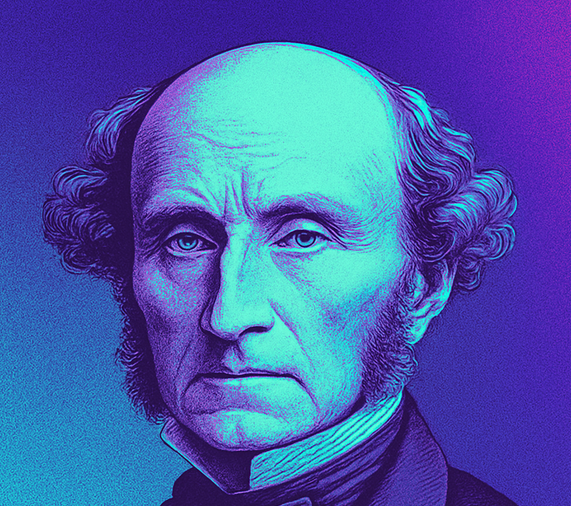
The art of music is good, for the reason, among others, that it produces pleasure; but what proof is it possible to give that pleasure is good? If, then, it is asserted that there is a comprehensive formula, including all things which are in themselves good, and that whatever else is good, is not so as an end, but as a mean, the formula may be accepted or rejected, but is not a subject of what is commonly understood by proof.
▼
Source
source
Ch. 1
10 months 1 day ago
We invite this Congress, and through it the scientists of the world and the general public, to subscribe to the following resolution: "In view of the fact that in any future world war nuclear weapons will certainly be employed, and that such weapons threaten the continued existence of mankind, we urge the governments of the world to realize, and to acknowledge publicly, that their purpose cannot be furthered by a world war, and we urge them, consequently, to find peaceful means for the settlement of all matters of dispute between them".

CivilSimian.com created by AxiomaticPanic, CivilSimian, Kalokagathia