

2 months 3 weeks ago
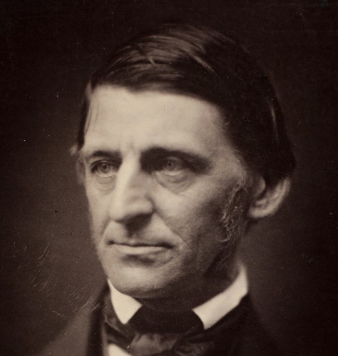
The soul active sees absolute truth; and utters truth, or creates.
▼
Source
source
par. 17
1 month 3 weeks ago
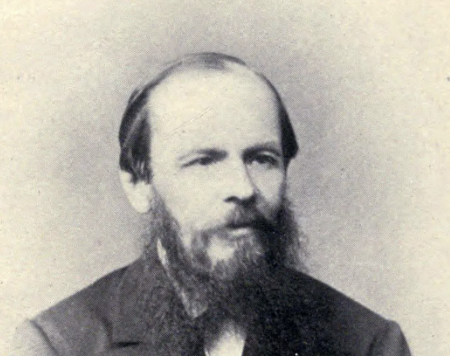
To be acutely conscious is a disease, a real, honest-to-goodness disease.
▼
Source
source
Part 1, Chapter 2 (tr. David Magarshack, 1950) To think too much is a disease, a real, actual disease.
2 months 4 weeks ago
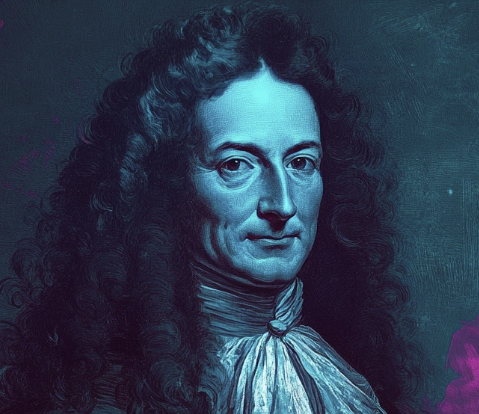
Thus it may be said that not only the soul, the mirror of an indestructible universe, is indestructible, but also the animal itself, though its mechanism may often perish in part and take off or put on an organic slough.
▼
Source
source
La monadologie (77). Sometimes paraphrased as: The soul is the mirror of an indestructible universe.
1 month 1 week ago
...Zen Buddhism, this religion of immanence.
2 months 3 weeks ago
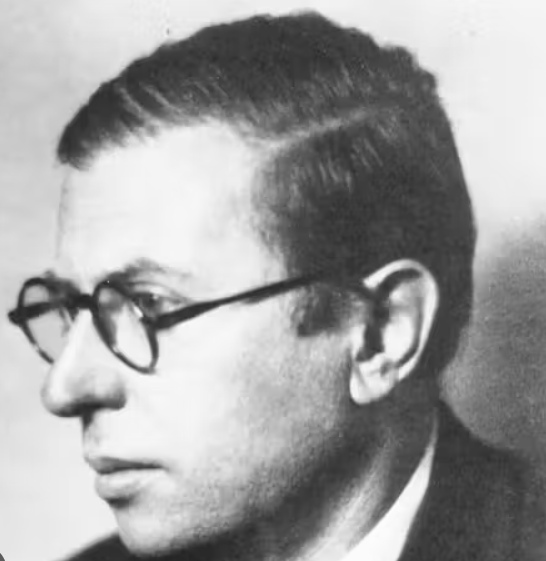
My thought is me: that's why I can't stop. I exist because I think ... and I can't prevent myself from thinking.
▼
Source
source
Lundi ("Monday")
1 week 6 days ago
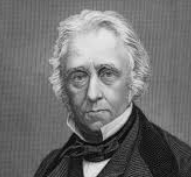
Your Constitution is all sail and no anchor.
▼
Source
source
Letter to H.S. Randall, author of a Life of Thomas Jefferson
1 month 1 week ago
Government exists but to maintain special privilege and property rights; it coerces man into submission and therefore robs him of dignity, self-respect, and life.
3 weeks ago
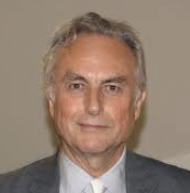
You could give Aristotle a tutorial. And you could thrill him to the core of his being. Aristotle was an encyclopedic polymath, an all time intellect. Yet not only can you know more than him about the world, you also can have a deeper understanding of how everything works. Such is the privilege of living after Newton, Darwin, Einstein, Planck, Watson, Crick and their colleagues.
3 months 1 week ago
In each separate thing that you do consider the matters which come first, and those which follow after, and only then approach the thing itself.
▼
Source
source
Book III, ch. 15, 1 (= Enchiridion 29, 1).
1 month 2 days ago
To me, believing that some correspondence intrinsically just is reference (not as a result of our operational and theoretical constraints, or our intentions, but as an ultimate metaphysical fact) amounts to a magical theory of reference. Reference itself becomes what Locke called a 'substantial form' (an entity which intrinsically belongs with a certain name) on such a view. Even if one is willing to contemplate such unexplainable metaphysical facts, the epistemological problems that accompany such a metaphysical view seem insuperable. For, assuming a world of mind- independent, discourse-independent entities (this is the presupposition of the view we are discussing), there are, as we have seen, many different 'correspondences' which represent possible or candidate reference relations (infinitely many, in fact, if there are infinitely many things in the universe).
▼
Source
source
Chap. 2 : A problem about reference
2 months 4 weeks ago
The mind intent upon resolving as well as compounding the concept of a composite demands and presumes boundaries in which it may acquiesce in the former as well as in the latter direction.

1 month 3 weeks ago
It cannot be denied that the early Indians possessed knowledge of God. All their writings are replete with sentiments and expressions, noble, clear, severely grand, as deeply conceived in any human language in which men have spoken of their God.
▼
Source
source
quoted in Knapp, Stephen Proof of Vedic Culture s Global Existence. Published byThe World Relief Network Detroit 2000. p. vii as quoted in Londhe, S. (2008)
1 month 3 weeks ago
He who carries self-regard far enough to keep himself in good health and high spirits, in the first place thereby becomes an immediate source of happiness to those around, and in the second place maintains the ability to increase their happiness by altruistic actions. But one whose bodily vigour and mental health are undermined by self-sacrifice carried too far, in the first place becomes to those around a cause of depression, and in the second place renders himself incapable, or less capable, of actively furthering their welfare. In estimating conduct we must remember that there are those who by their joyousness beget joy in others, and that there are those who by their melancholy cast a gloom on every circle they enter.
▼
Source
source
Ethics (New York:1915), § 72, pp. 193-194
2 months 2 weeks ago
You get tragedy where the tree, instead of bending, breaks.
4 weeks ago
The other part of the true religion is our duty to man. We must love our neighbour as our selves, we must be charitable to all men for charity is the greatest of graces, greater then even faith or hope & covers a multitude of sins. We must be righteous & do to all men as we would they should do to us.
▼
Source
source
Of Humanity
1 month 3 weeks ago
A distant enemy is always preferable to one at the gate.
1 month 1 week ago
It cannot be sufficiently emphasized that revolution is in vain unless inspired by its ultimate ideal. Revolutionary methods must be in tune with revolutionary aims. The means used to further the revolution must harmonize with its purposes. In short, the ethical values which the revolution is to establish in the new society must be initiated with the revolutionary activities of the so-called transitional period. The latter can serve as a real and dependable bridge to the better life only if built of the same material as the life to be achieved.
3 months 1 week ago
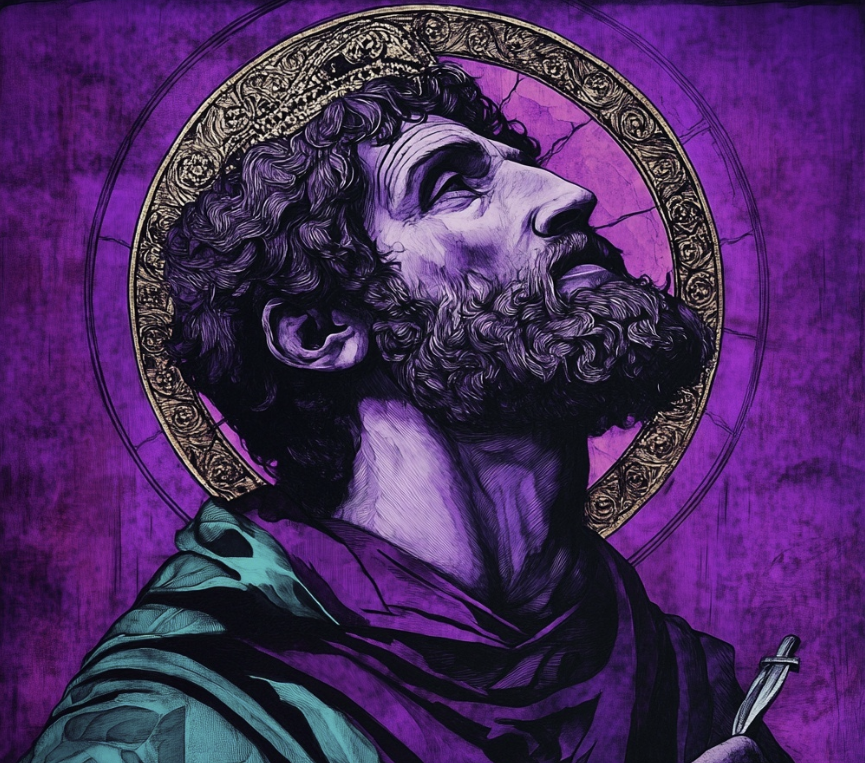
The Word takes to Himself one man, for He takes unity. He does not take schisms to Himself, nor does He take heresies. So it is one man who is taken, and his Head is Christ. This is that "blessed man who hath not walked in the council of the ungodly" (Ps. 1:1); this is he that is assumed. He is not outside of us. Let us be in Him, and we shall be assumed; let us be in Him, and we shall be chosen. Therefore this one man that is taken to become the temple of God, is at once many and one.
▼
Source
source
p.430
1 month 2 weeks ago
... Nietzsche's ideas and plans: for example, the idea of giving up the whole wretched academic world to form a secular monastic community.
1 month 2 weeks ago
There is no original truth, only original error.
▼
Source
source
A Retrospective Glance at the Lifework of a Master of Books
1 month 4 weeks ago
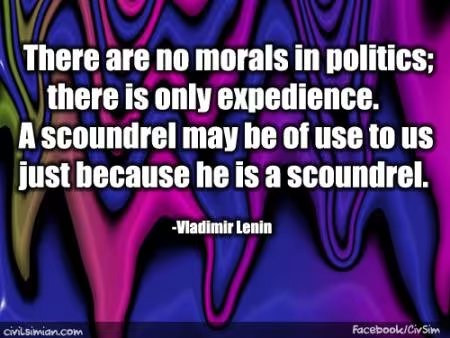
Morals are in all countries the result of legislation and government; they are not African or Asian or European: they are good or bad.
2 months 2 weeks ago
To abjure the notion of the "truly human" is to abjure the attempt to divinize the self as a replacement for a divinized world.
▼
Source
source
Contingency, Irony, and Solidarity (1989), p. 35
2 months 3 weeks ago
The finest workers in stone are not copper or steel tools, but the gentle touches of air and water working at their leisure with a liberal allowance of time.
2 weeks 4 days ago
A writer who says that there are no truths, or that all truth is 'merely relative,' is asking you not to believe him. So don't.
▼
Source
source
"The Nature of Philosophy" (p. 6)
1 month 1 week ago
The progressive world is necessarily divided into two classes - those who take the best of what there is and enjoy it - those who wish for something better and try to create it. Without these two classes the world would be badly off. They are the very conditions of progress, both the one and the other. Were there none who were discontented with what they have, the world would never reach anything better.
3 months 3 weeks ago
No man of sense can put himself and his soul under the control of names... You must consider courageously and thoroughly and not accept anything carelessly.

2 months 3 weeks ago
This body which called itself and which still calls itself the Holy Roman Empire was in no way holy, nor Roman, nor an empire.
▼
Source
source
Essai sur l'histoire générale et sur les mœurs et l'esprit des nations, Chapter 70, 1756
3 months 3 weeks ago
We may assume the superiority ceteris paribus [all things being equal] of the demonstration which derives from fewer postulates or hypotheses—in short from fewer premisses; for... given that all these are equally well known, where they are fewer knowledge will be more speedily acquired, and that is a desideratum. The argument implied in our contention that demonstration from fewer assumptions is superior may be set out in universal form...
3 months 3 weeks ago
[I]t's gravity is the cause; and that which is heavy abides in the middle, and the earth is in the middle: in like manner also, the infinite will abide in itself, through some other cause... and will itself support itself. ...[T]he places of the whole and the part are of the same species; as of the whole earth and a clod, the place is downward; and of the whole of fire, and a spark, the place is upward. So that if the place of the infinite is in itself, there will be the same place also of a part of the infinite.
2 months 3 weeks ago
Plato was synthesis of Europe and Asia, and a decidedly Oriental element pervades his philosophy, giving it a sunrise color.
▼
Source
source
Quoted in Swami Abhedananda, India and Her People, 6th ed., Calcutta: Ramakrishna Vedanta Math, 1945
2 months 3 weeks ago
Titles of property, for instance railway shares, may change hands every day, and their owner may make a profit by their sale even in foreign countries, so that titles to property are exportable, although the railway itself is not.
▼
Source
source
Vol. II, Ch. X, p. 215.
2 months 4 weeks ago
Psychologists have hitherto failed to realize that imagination is a necessary ingredient of perception itself.
▼
Source
source
A 120
3 months 3 weeks ago
The Dantean conceptions of Inferno were childish and unworthy of the Divine imagination: fire and torture. Boredom is much more subtle. The inner torture of a mind unable to escape itself in any way, condemned to fester in its own exuding mental pus for all time, is much more fitting. Oh, yes, my friend, we have been judged, and condemned, too, and this is not Heaven, but hell.
2 months 2 weeks ago
Form no covetous desire, so that the demon of greediness may not deceive thee, and the treasure of the world may not be tasteless to thee.
3 months 3 weeks ago
The machine is only a tool after all, which can help humanity progress faster by taking some of the burdens of calculations and interpretations off its back. The task of the human brain remains what it has always been; that of discovering new data to be analyzed, and of devising new concepts to be tested.
1 month 1 week ago
Every human being is the natural guardian of his own importance.
▼
Source
source
Ch. 9: "Science and Philosophy", p. 195
2 months 3 weeks ago
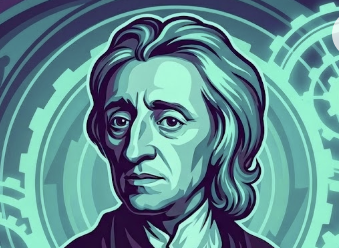
No man's knowledge here can go beyond his experience.
▼
Source
source
Book II, Ch. 1, sec. 19
2 months 2 weeks ago
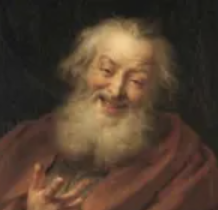
Men have made an idol of luck as an excuse for their own thoughtlessness. Luck seldom measures swords with wisdom. Most things in life quick wit and sharp vision can set right.
3 weeks ago
You see, if you say something positive like the whole of life - all living things - is descended from a single common ancestor which lived about 4,000 million years ago and that we are all cousins, well that is an exceedingly important and true thing to say and that is what I want to say. Somebody who is religious sees that as threatening and so I am represented as attacking religion, and I am forced into responding to their reaction. But you do not have to see my main purpose as attacking religion. Certainly I see the scientific view of the world as incompatible with religion, but that is not what is interesting about it. It is also incompatible with magic, but that also is not worth stressing. What is interesting about the scientific world view is that it is true, inspiring, remarkable and that it unites a whole lot of phenomena under a single heading. And that is what is so exciting for me.
▼
Source
source
Kam Patel (28 April 1995) . "Going the whole hog". Times Higher Education.
1 month 3 weeks ago
Religion is the dream of the human mind. But even in dreams we do not find ourselves in emptiness or in heaven, but on earth, in the realm of reality; we only see real things in the entrancing splendor of imagination and caprice, instead of in the simple daylight of reality and necessity.
▼
Source
source
Preface to Second Edition
1 month 3 weeks ago
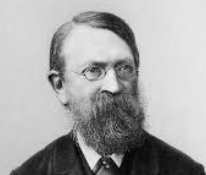
In the philosophy of Mach a world without matter is unthinkable. Matter in Mach's philosophy is not merely required as a test body to display properties of something already there ...it is an essential feature in causing those properties which it able to display, Inertia, for example, would not appear by the insertion of one test body in the world; in some way the presence of other matter is a necessary condition. It will be seen how welcome to such a philosophy is the theory that space and the inertial frame come into being with matter, and grow as it grows.
▼
Source
source
Arthur Eddington, Space, Time and Gravitation
2 months 3 weeks ago
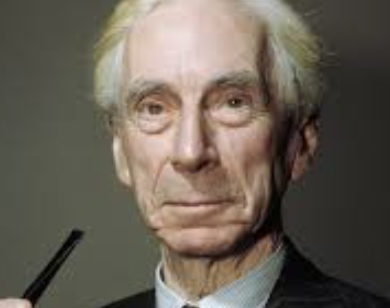
Some modern philosophers have gone so far as to say that words should never be confronted with facts but should live in a pure, autonomous world where they are compared only with other words. When you say, 'the cat is a carnivorous animal,' you do not mean that actual cats eat actual meat, but only that in zoology books the cat is classified among carnivora. These authors tell us that the attempt to confront language with fact is 'metaphysics' and is on this ground to be condemned. This is one of those views which are so absurd that only very learned men could possibly adopt them.
▼
Source
source
p. 110
2 months 3 weeks ago
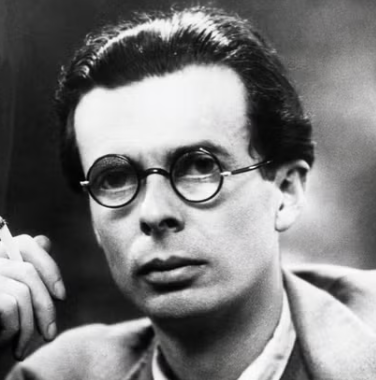
Technological progress has merely provided us with more efficient means for going backwards.
▼
Source
source
Ch. 1, p. 9 [2012 reprint]. Also in "Tomorrow and Tomorrow and Tomorrow" in Adonis and the Alphabet (1956); later in Collected Essays (1959), p. 293
2 months 3 weeks ago
It costs a beautiful person no exertion to paint her image on our eyes; yet how splendid is that benefit! It costs no more for a wise soul to convey his quality to other men.
▼
Source
source
Uses of Great Men

2 months 3 weeks ago
Of course God knew what would happen if they used their freedom the wrong way: apparently He thought it worth the risk.
▼
Source
source
Book II, Chapter 3, "The Shocking Alternative"
3 months 4 days ago
Hope is a good breakfast, but it is a bad supper.
▼
Source
source
No. 36
CivilSimian.com created by AxiomaticPanic, CivilSimian, Kalokagathia