

10 months 2 weeks ago
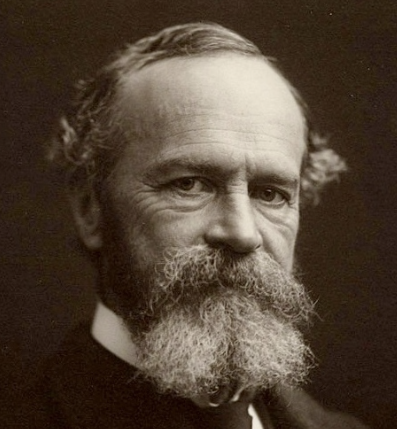
Pragmatism, on the other hand, asks its usual question. "Grant an idea or belief to be true," it says, "what concrete difference will its being true make in anyone's actual life? How will the truth be realized? What experiences will be different from those which would obtain if the belief were false? What, in short, is the truth's cash-value in experiential terms?"
▼
Source
source
Lecture VI, Pragmatism's Conception of Truth
9 months 1 day ago
There is nothing in the real world which is merely an inert fact. Every reality is there for feeling: it promotes feeling; and it is felt.
▼
Source
source
Chapter IV, p. 310.


7 months 3 weeks ago
Genes and culture have co-evolved. But crudely, natural selection "designed" male human primates to hunt nonhumans and build coalitions of other male human primates in order to wage territorial wars of aggression. Nature didn't design us to become a scientific community and collaborate to overcome aging. It's difficult to imagine that any human enemy could inflict such gruesome damage on the victims as growing old. The ravages of aging strike down combatants and civilians alike. So the trillions of dollars that humans currently spend on ways to harm and kill each other ("defence") would be more fruitfully spent on defeating our common enemy. We should work together to build a "Triple S" civilisation of superlongevity, superhappiness and superintelligence.
▼
Source
source
Transhumanism 2017: Towards a 'Triple S' civilisation of Superlongevity, Superintelligence and Superhappiness, Timeship Buddha
10 months 2 weeks ago
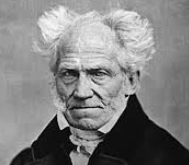
My basis is supported by the authority of the greatest moralist of modern times; for such, undoubtedly, J. J. Rousseau is,-that profound reader of the human heart, who drew his wisdom not from books, but from life, and intended his doctrine not for the professorial chair, but for humanity; he, the foe of all prejudice, the foster-child of nature, whom alone she endowed with the gift of being able to moralise without tediousness, because he hit the truth and stirred the heart.
▼
Source
source
Part III, Ch. VIII, 9, p. 230

8 months 4 weeks ago
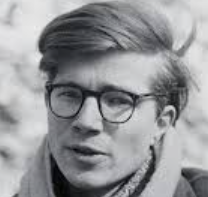
Crowley wanted to be a magician because he wanted power -- power over other people.
▼
Source
source
p. 157
9 months 1 week ago
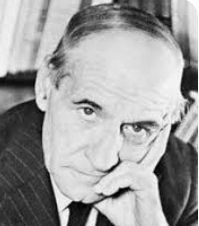
I have always thought that clarity is a form of courtesy that the philosopher owes; moreover, this discipline of ours considers it more truly a matter of honor today than ever before to be open to all minds ... This is different from the individual sciences which increasingly [interpose] between the treasure of their discoveries and the curiosity of the profane the tremendous dragon of their closed terminology.
▼
Source
source
p. 19
6 months 2 weeks ago
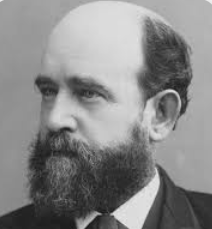
The progress of civilization necessitates the giving of greater and greater attention and intelligence to public affairs. And for this reason I am convinced that we make a great mistake in depriving one sex of voice in public matters, and that we could in no way so increase the attention, the intelligence and the devotion which may be brought to the solution of social problems as by enfranchising our women.
▼
Source
source
Ch. 21 : Conclusion
10 months 2 weeks ago
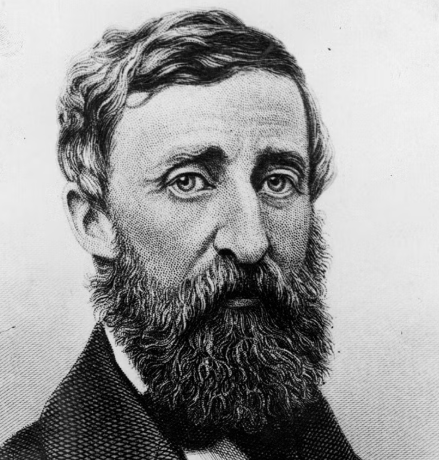
To speak impartially, the best men that I know are not serene, a world in themselves. For the most part, they dwell in forms, and flatter and study effect only more finely than the rest. We select granite for the underpinning of our houses and barns; we build fences of stone; but we do not ourselves rest on an underpinning of granitic truth, the lowest primitive rock. Our sills are rotten.
▼
Source
source
p. 490
7 months 1 week ago
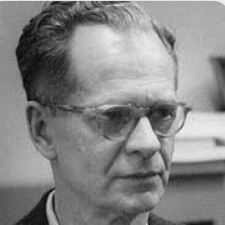
We shouldn't teach great books; we should teach a love of reading. Knowing the contents of a few works of literature is a trivial achievement. Being inclined to go on reading is a great achievement.
▼
Source
source
As quoted in B. F. Skinner : The Man and His Ideas (1968) by Richard Isadore Evans, p. 73
7 months 2 days ago
That the individual is of himself a world's history, and possesses his property in the rest of the world's history, goes beyond what is Christian. To the Christian the world's history is the higher thing, because it is the history of Christ or 'man'; to the egoist only his history has value, because he wants to develop only himself not the mankind-idea, not God's plan, not the purposes of Providence, not liberty, and the like. He does not look upon himself as a tool of the idea or a vessel of God, he recognizes no calling, he does not fancy that he exists for the further development of mankind and that he must contribute his mite to it, but he lives himself out, careless of how well or ill humanity may fare thereby.
▼
Source
source
Cambridge 1995, p. 323
6 months 2 weeks ago
A person needs a little madness, or else they never dare cut the rope and be free.
▼
Source
source
As quoted in Wisdom for the Soul : Five Millennia of Prescriptions for Spiritual Healing (2006) by Larry Chang, p. 412
11 months 2 days ago
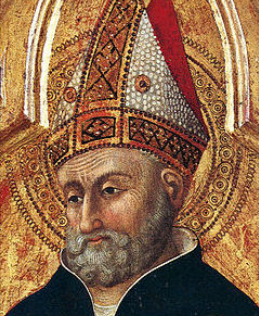
I became evil for no reason. I had no motive for my wickedness except wickedness itself. It was foul, and I loved it. I loved the self-destruction, I loved my fall, not the object for which I had fallen but my fall itself. My depraved soul leaped down from your firmament to ruin. I was seeking not to gain anything by shameful means, but shame for its own sake.
▼
Source
source
II, 4
11 months 1 day ago
It is difficulties that show what men are.
▼
Source
source
Book I, ch. 24, 1.
6 months 6 days ago
I believe in intuitions and inspirations. I sometimes feel that I am right. I do not know that I am. When two expeditions of scientists, financed by the Royal Academy, went forth to test my theory of relativity, I was convinced that their conclusions would tally with my hypothesis. I was not surprised when the eclipse of May 29, 1919, confirmed my intuitions. I would have been surprised if I had been wrong.

7 months 1 week ago
With his sharp power of vision, resolute power of action, I doubt not he could have learned to write Books withal, and speak fluently enough;-he did harder things than writing of Books. This kind of man is precisely he who is fit for doing manfully all things you will set him on doing.

7 months 1 day ago
A trifling debt makes a man your debtor; a large one makes him an enemy.
▼
Source
source
Line 11.
11 months 2 days ago
If you believe what you like in the gospels, and reject what you don't like, it is not the gospel you believe, but yourself.
▼
Source
source
Earliest attribution found in Who Said That?: More than 2,500 Usable Quotes and Illustrations (1995) by George Sweeting. Online sources always attribute the quote to Augustine, but never specify in which of his works it is to be found.


9 months 1 week ago
He who has never envied the vegetable has missed the human drama.
▼
Source
source
p. 178, first American edition
10 months 3 weeks ago
Never any good came out of female domination. God created Adam master and lord of living creatures, but Eve spoiled it all.
▼
Source
source
-- Table Talk, quoted in Luther On "Woman"
8 months 5 days ago
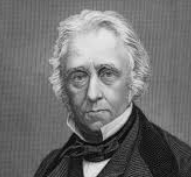
Hence it may be concluded that the happiest state of society is that in which supreme power resides in the whole body of a well-informed people. This is an imaginary, perhaps an unattainable, state of things. Yet, in some measure, we may approximate to it; and he alone deserves the name of a great statesman, whose principle it is to extend the power of the people in proportion to the extent of their knowledge, and to give them every facility for obtaining such a degree of knowledge as may render it safe to trust them with absolute power. In the mean time, it is dangerous to praise or condemn constitutions in the abstract; since, from the despotism of St. Petersburg to the democracy of Washington, there is scarcely a form of government which might not, at least in some hypothetical case, be the best possible.
▼
Source
source
pp. 161-162
6 months 2 weeks ago
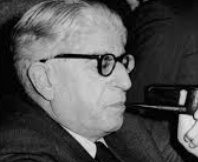
In death too, there is always something of the rich cat that lets the mouse run before devouring it.
▼
Source
source
Traces (1930), p. 30
6 months 2 weeks ago
God is imperiled. He is not almighty, that we may cross our hands, waiting for certain victory. He is not all-holy, that we may wait trustingly for him to pity and to save us. Within the province of our ephemeral flesh all of God is imperiled. He cannot be saved unless we save him with our own struggles; nor can we be saved unless he is saved. We are one. From the blind worm in the depths of the ocean to the endless arena of the Galaxy, only one person struggles and is imperiled: You. And within your small and earthen breast only one thing struggles and is imperiled: the Universe.
9 months 2 days ago
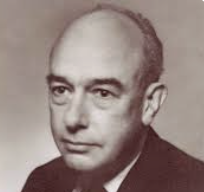
As an empiricist I continue to think of the conceptual scheme of science as a tool, ultimately, for predicting future experience in the light of past experience. Physical objects are conceptually imported into the situation as convenient intermediaries-not by definition in terms of experience, but simply as irreducible posits comparable, epistemologically, to the gods of Homer. For my part I do, qua lay physicist, believe in physical objects and not in Homer's gods; and I consider it a scientific error to believe otherwise. But in point of epistemological footing the physical objects and the gods differ only in degree and not in kind. Both sorts of entities enter our conception only as cultural posits. The myth of physical objects is epistemologically superior to most in that it has proved more efficacious than other myths as a device for working a manageable structure into the flux of experience.
▼
Source
source
"Two Dogmas of Empiricism"
11 months 2 weeks ago
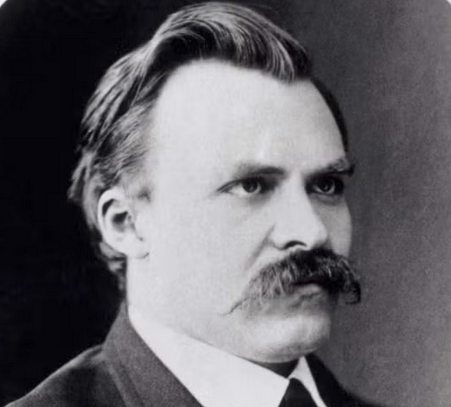
For those who need consolation no means of consolation is so effective as the assertion that in their case no consolation is possible: it implies so great a degree of distinction that they at once hold up their heads again.
10 months 2 weeks ago
I have no knowledge of myself as I am, but merely as I appear to myself.
▼
Source
source
B 158
6 months 2 weeks ago
It is necessary that every man be surpassingly temperate. That person would most of all be a man of this sort if he were superior to money, which is what corrupts all men, and if, without caring about his life, he bestowed his pains on things that are just and pursued virtue.
▼
Source
source
p. 149
8 months 3 weeks ago
People nowadays have such high hopes of America and the political conditions obtaining there that one might say the desires, at least the secret desires, of all enlightened Europeans are deflected to the west, like our magnetic needles.
▼
Source
source
G 2
6 months 2 weeks ago
I hold the brimming wineglass and relive the toils of my grandfathers and great-grandfathers. The sweat of my labor runs down like a fountain from my tall, intoxicated brow. I am a sack filled with meat and bones, blood, sweat, and tears, desires and visions.
8 months 4 weeks ago
When one learns something one first performs an act of will, because only by willing to learn can one learn.
▼
Source
source
"Vico: Autodidact and Humanist," The Centennial Review, Vol. 11, No. 3 (Summer 1967), p. 340

10 months 2 weeks ago
Christianity taught only what the whole of Asia knew already long before and even better.
▼
Source
source
quoted in Londhe, S. (2008). A tribute to Hinduism: Thoughts and wisdom spanning continents and time about India and her culture. New Delhi: Pragun Publication.
9 months 1 week ago
The concept of guilt is found most powerfully developed even in the most primitive communal forms which we know: ... the man is guilty who violates one of the original laws which dominate the society and which are mostly derived from a divine founder; the boy who is accepted into the tribal community and learns its laws, which bind him thenceforth, learns to promise; this promise is often given under the sign of death, which is symbolically carried out on the boy, with a symbolical rebirth.
▼
Source
source
p. 178
6 months 2 weeks ago
We cannot hope to be secure when our government has declared, by its readiness "to act alone," its willingness to be everybody's enemy.
6 months 2 weeks ago
Why should charity be offered the unemployed? It is not alms they ask. They are insulted and embittered and degraded by being forced to accept as paupers what they would gladly earn as workers. What they ask is not charity, but the opportunity to use their own labor in satisfying their own wants. Why can they not have that? It is their natural right. He who made food and clothing and shelter necessary to man's life has also given to man, in the power of labor, the means of maintaining that life; and when, without fault of their own, men cannot exert that power, there is somewhere a wrong of the same kind as denial of the right of property and denial of the right of life - a wrong equivalent to robbery and murder on the grandest scale. Charity can only palliate present suffering a little at the risk of fatal disease. For charity cannot right a wrong; only justice can do that. Charity is false, futile, and poisonous when offered as a substitute for justice.
▼
Source
source
p. 179
6 months 3 weeks ago
Psychotherapists ... are dealing with people whose distress arises from what may be termed maya, to use the Hindu-Buddhist word whose exact meaning is not merely 'illusion' but the entire world-conception of a culture, considered as illusion in the strict etymological sense of a play (Latin, ludere). The aim of a way of liberation is not the destruction of maya but seeing it for what it is, or seeing through it. Play is not to be taken seriously, or, in other words, ideas of the world and of oneself which are social conventions and institutions are not to be confused with reality.
▼
Source
source
p. 9
8 months 2 weeks ago
During the Vietnam War, which lasted longer than any war we've ever been in -- and which we lost -- every respectable artist in this country was against the war. It was like a laser beam. We were all aimed in the same direction. The power of this weapon turns out to be that of a custard pie dropped from a stepladder six feet high.
▼
Source
source
Vonnegut at 80 Interview with David Hoppe Alternet
10 months 1 week ago
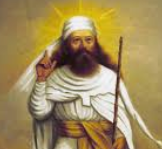
May we be those who shall heal this world.
▼
Source
source
Yasna 30,9
9 months 1 week ago
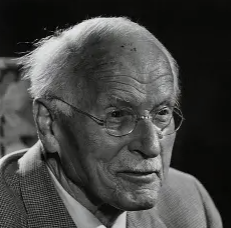
For his the artist's life is, of necessity, full of conflicts, since two forces fight in him: the ordinary man with his justified claim for happiness, contentment, and guarantees for living on the one hand, and the ruthless creative passion on the other, which under certain conditions crushes all personal desires into the dust.
7 months 1 day ago
We are weak, watery beings standing in the midst of unrealities; therefore let us turn our minds to the things that are everlasting.
10 months 4 weeks ago
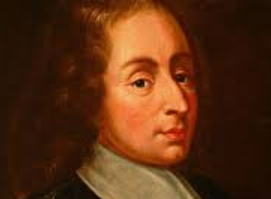
I do not speak here of divine truths... because they are infinitely superior to nature: God alone can place them in the soul... I know that he has desired that they should enter from the heart into the mind, and not from the mind into the heart, to humiliate that proud power of reasoning that pretends to the right to be the judge of the things that the will chooses; and to cure this infirm will which is wholly corrupted by its filthy attachments.

8 months 2 weeks ago
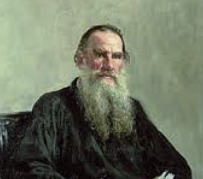
Love hinders death. Love is life. All, everything that I understand, I understand only because I love. Everything is, everything exists, only because I love. Everything is united by it alone. Love is God, and to die means that I, a particle of love, shall return to the general and eternal source.
▼
Source
source
Thoughts of Prince Andrew Bk XII, Ch. 16

10 months 2 weeks ago
Monopoly of one kind or another, indeed, seems to be the sole engine of the mercantile system.
▼
Source
source
Chapter VII, Part Third, p. 684.

10 months 1 week ago
The public execution is to be understood not only as a judicial, but also as a political ritual. It belongs, even in minor cases, to the ceremonies by which power is manifested.
▼
Source
source
Chapter One, The body of the condemned
9 months 1 week ago
Man, if he is to remain man, must advance by way of consciousness. There is no road leading backward. ... We can no longer veil reality from ourselves by renouncing self-consciousness without simultaneously excluding ourselves from the historical course of human existence.
CivilSimian.com created by AxiomaticPanic, CivilSimian, Kalokagathia