

2 months 6 days ago
Incorporeal hypostases, in descending, are distributed into parts, and multiplied about individuals with a diminution of power; but when they ascend by their energies beyond bodies, they become united, and proceed into a simultaneous subsistence, through exuberance of power.
3 months 3 weeks ago
If there is some end of the things we do, which we desire for its own sake, clearly this must be the good. Will not knowledge of it, then, have a great influence on life? Shall we not, like archers who have a mark to aim at, be more likely to hit upon what we should? If so, we must try, in outline at least, to determine what it is.
1 month 1 week ago
In order to be able to go on living it is possible that the bankrupt peoples will have to enter on a new path of self-denial, by curbing their covetousness and putting a check on the indefinite expansion of their wants, and by having smaller families.
▼
Source
source
p. 94
1 month 1 week ago
There is nothing truly real, save that which feels, suffers, pities, loves and desires, save consciousness. And we need God in order to save consciousness; not in order to think existence, but in order to live it; not in order to know the why and how of it, but in order to feel the wherefore of it.
2 months 3 weeks ago
Of all the ways whereby children are to be instructed, and their manners formed, the plainest, easiest, and most efficacious, is, to set before their eyes the examples of those things you would have them do, or avoid; which, when they are pointed out to them, in the practice of persons within their knowledge, with some reflections on their beauty and unbecomingness, are of more force to draw or deter their imitation, than any discourses which can be made to them.
▼
Source
source
Sec. 82

2 months 3 weeks ago
The universal propensity to believe in invisible, intelligent power, if not an original instinct, being at least a general attendant of human nature, may be considered as a kind of mark or stamp, which the divine workman has set upon his work; and nothing surely can more dignify mankind, than to be thus selected from all other parts of the creation, and to bear the image or impression of the universal Creator. But consult this image, as it appears in the popular religions of the world. How is the deity disfigured in our representations of him! What caprice, absurdity, and immorality are attributed to him! How much is he degraded even below the character, which we should naturally, in common life, ascribe to a man of sense and virtue!
▼
Source
source
Part XV - General corollary

3 months ago
Lying and guile need only to be revealed and recognized to be undone. When once lying is recognized as such, it needs no second stroke; it falls of itself and vanishes in shame.
▼
Source
source
p. 60

1 month 2 weeks ago
We always love . . . despite; and that "despite" covers an infinity.

3 months 2 weeks ago
Nothing can discourage the appetite for divinity in the heart of man.
2 weeks 6 days ago
If your parent is just, revere him; if not, bear with him.
▼
Source
source
Maxim 27

2 weeks ago
While the intellectual space does contain universal ideas, definitions, those definitions are detailed a posteriori. Truth corresponds with reality at a minimum.
1 month 2 weeks ago
As in the presence of the Master, the Servants are equall, and without any honour at all; So are the Subjects, in the presence of the Soveraign. And though they shine some more, some lesse, when they are out of his sight; yet in his presence, they shine no more than the Starres in presence of the Sun.
▼
Source
source
The Second Part, Chapter 18, p. 93

1 month 2 weeks ago
Ask, and it will be given to you; seek, and you will find; knock, and it will be opened to you. For everyone who asks receives, and he who seeks finds, and to him who knocks it will be opened.
▼
Source
source
Matthew 7:7-8 (NKJV) (Also Luke 11:9-13)

2 months 3 weeks ago
Either we must have war against Russia, before she has the atom bomb, or we will have to lie down and let them govern us. ... Anything is better than submission.
▼
Source
source
Speech quoted in The Observer (21 November 1948), quoted in Robert Skildesky, Oswald Mosley (1981), p. 542 and Martin Ceadel, Thinking about Peace and War (1987), p. 52

3 months 1 day ago
I need not repeat, that the most savage of the savage tribes in the forest, live among each other in amity. Lions show no fierceness to the lion race. The boar does not brandish his deadly tooth against his brother boar. The lynx lives in peace with the lynx. The serpent shews no venom in his intercourse with his fellow serpent; and the loving kindness of wolf to wolf is proverbial.

2 months 3 weeks ago
In Mohammedanism the narrow principle of the Jews is expanded into universality and thereby overcome. Here, God is no longer, as in the Far East, regarded as existent in an immediately sensory way but is conceived as the one infinite power elevated above all the multiplicity of the world. Mohammedanism is, therefore, in the strictest sense of the word, the religion of sublimity.
▼
Source
source
Hegel, Philosophy of Mind (quoted by W. Wallace & A. V. Miller in Philosophy of Mind, Oxford 2010; also quoted in other words by Slavoj Žižek in A Glance into the Archives of Islam, Lacan dot com, 1997).
1 month 3 weeks ago
An infirmity which affects the whole race, is no proper object for the scorn of an individual who belongs to that race, and who, before he could expose it, must himself have been its slave.
▼
Source
source
p. 12

3 weeks 3 days ago
Although it is commonly supposed that war making is the specific activity of nations, the blind rage that motivates war destroys the very social bonds that make nations possible. Of course, it can fortify the nationalism of a nation, producing a provisional coherence bolstered by war and enmity, but it also erodes the social relations that make politics possible. The power of destruction unleashed by war breaks social ties and produces anger, revenge, and distrust ("embitterment") such that it becomes unclear whether reparation is possible, undermining not only those relations that may have been built in the past, but also the future possibility of peaceful coexistence.
▼
Source
source
p. 154
1 month 1 week ago
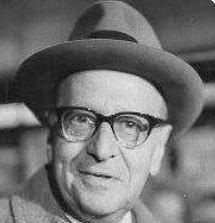
Answers determined by the social division of labor become truth as such.
▼
Source
source
p. 50: Describing the pragmatist view
1 month 2 days ago
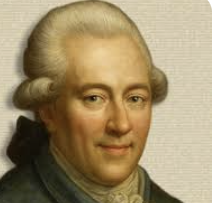
There is no more important rule of conduct in the world than this: attach yourself as much as you can to people who are abler than you and yet not so very different that you cannot understand them.
▼
Source
source
F 81
2 weeks 6 days ago
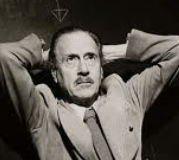
The name of a man is a numbing blow from which he never recovers.
2 months 3 weeks ago
A philosophy without heart and a faith without intellect are abstractions from the true life of knowledge and faith. The man whom philosophy leaves cold, and the man whom real faith does not illuminate, may be assured that the fault lies in them, not in knowledge and faith. The former is still an alien to philosophy, the latter an alien to faith.
2 weeks 6 days ago
Psychic communal integration, made possible at last by the electronic media, could create the universality of consciousness foreseen by Dante when he predicted that men would continue as no more than broken fragments until they were unified into an inclusive consciousness...This is a new interpretation of the mystical body of Christ; and Christ, after all, is the ultimate extension of man.
2 months 3 weeks ago
We assert then that nothing has been accomplished without interest on the part of the actors; and - if interest be called passion, inasmuch as the whole individuality, to the neglect of all other actual or possible interests and claims, is devoted to an object with every fibre of volition, concentrating all its desires and powers upon it - we may affirm absolutely that nothing great in the World has been accomplished without passion. Often abbreviated to: Nothing great in the World has been accomplished without passion. Variant translation: We may affirm absolutely that nothing great in the world has ever been accomplished without enthusiasm.
1 month 3 weeks ago
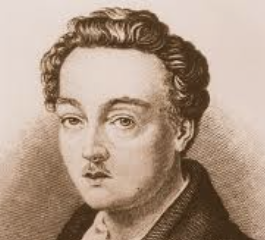
We are always on stage, even when we are stabbed in earnest at the end.
▼
Source
source
Act II.

2 months 2 weeks ago
It is so characteristic, that just when the mechanics of reproduction are so vastly improved, there are fewer and fewer people who know how the music should be played.
▼
Source
source
p. 96

1 month 5 days ago
Since the war began, miles of paper and oceans of ink have been used to prove the barbarity, the cruelty, the oppression of Prussian militarism. Conservatives and radicals alike are giving their support to the Allies for no other reason than to help crush that militarism, in the presence of which, they say, there can be no peace or progress in Europe. But though America grows fat on the manufacture of munitions and war loans to the Allies to help crush Prussians the same cry is now being raised in America which, if carried into national action, would build up an American militarism far more terrible than German or Prussian militarism could ever be, and that because nowhere in the world has capitalism become so brazen in its greed and nowhere is the state so ready to kneel at the feet of capital.
1 day ago
Negative-utilitarianism is only one particular denomination of a broad church to which the reader may well in any case not subscribe. Fortunately, the program can be defended on grounds that utilitarians of all stripes can agree on. So a defence will be mounted against critics of the theory and application of a utilitarian ethic in general. For in practice the most potent and effective means of curing unpleasantness is to ensure that a defining aspect of future states of mind is their permeation with the molecular chemistry of ecstasy: both genetically precoded and pharmacologically fine-tuned. Orthodox utilitarians will doubtless find the cornucopian abundance of bliss this strategy delivers is itself an extra source of moral value. Future generations of native ecstatics are unlikely to disagree.
▼
Source
source
2.7 Why Be Negative?
2 months 3 weeks ago
The teaching of my philosophy... that our whole existence is something which had better not have been, and that to disown and disclaim it is the highest wisdom.
▼
Source
source
Ch 1
1 month 3 weeks ago
A common monetary standard will be established, with the consent of the various governments, by which industrial transactions will be greatly facilitated. Three spheres made respectively of gold, silver, and platinum, and each weighing fifty grammes, would differ sufficiently in value for the purpose. The sphere should have a small flattened base, and on the great circle parallel to it the Positivist motto would be inscribed. At the pole would be the image of the immortal Charlemagne, the founder of the Western Republic, and round the image his name would be engraved, in its Latin form, Carolus; that name, respected as it is by all nations of Europe alike, would be the common appellation of the universal monetary standard.
▼
Source
source
p. 430
1 month 3 weeks ago
The principal means of realizing it will be the formation of an alliance between philosophers and the working classes, for which both are alike prepared by the negative and positive progress of the last five centuries. The direct object of their combined action will be to set in motion the force of Public Opinion.
▼
Source
source
p. 153

1 month 1 week ago
A Pharisee is someone who is virtuous out of obedience to the Great Beast.
▼
Source
source
p. 125
2 months 3 weeks ago
Power, like vanity, is insatiable. Nothing short of omnipotence could satisfy it completely. And as it is especially the vice of energetic men, the causal efficacy of love of power is out of all proportion to its frequency. It is, indeed, by far the strongest motive in the lives of important men. Love of power is greatly increased by the experience of power, and this applies to petty power as well as to that of potentates.
1 month 2 weeks ago
Of escape there are but three methods - two chimerical and a third real. The first two are the dram-shop and the church, debauchery of the body or debauchery of the mind; the third is social revolution.
2 months 3 weeks ago
In our monogamous part of the world, to marry means to halve one's rights and double one's duties.
▼
Source
source
Vol. 2, Ch. 27, § 370 Variant translation: To marry is to halve your rights and double your duties.
2 months 3 weeks ago
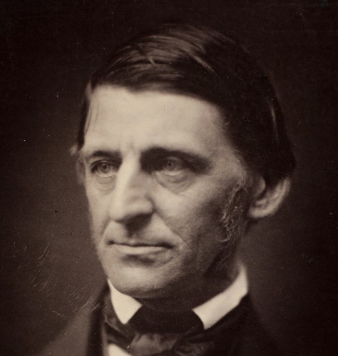
I trust a good deal to common fame, as we all must. If a man has good corn, or wood, or boards, or pigs, to sell, or can make better chairs or knives, crucibles or church organs, than anybody else, you will find a broad hard-beaten road to his house, though it be in the woods.
▼
Source
source
February 1855
2 months 3 weeks ago
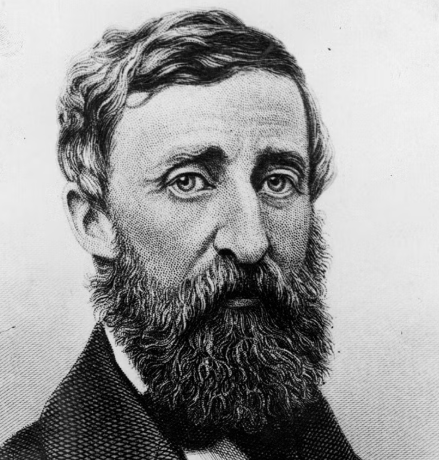
I am here to plead his cause with you. I plead not for his life, but for his character - his immortal life; and so it becomes your cause wholly, and is not his in the least. Some eighteen hundred years ago Christ was crucified; this morning, perchance, Captain Brown was hung. These are the two ends of a chain which is not without its links. He is not Old Brown any longer; he is an angel of light.
2 months 3 weeks ago
Avarice, the spur of industry, is so obstinate a passion, and works its way through so many real dangers and difficulties, that it is not likely to be scared by an imaginary danger, which is so small, that it scarcely admits of calculation. Commerce, therefore, in my opinion, is apt to decay in absolute governments, not because it is there less secure, but because it is less honourable.
▼
Source
source
Part I, Essay 12: Of Civil Liberty
1 month 4 days ago
Chronic boredom - compensated or uncompensated - constitutes one of the major psychopathological phenomena in contemporary technotronic society, although it is only recently that it has found some recognition.
▼
Source
source
p. 273
1 month 4 days ago
Optimism is an alienated form of faith, pessimism an alienated form of despair. If one truly responds to man and his future, ie, concernedly and "responsibly." one can respond only by faith or by despair. Rational faith as well as rational despair are based on the most thorough, critical knowledge of all the factors that are relevant for the survival of man.
▼
Source
source
p. 483
2 months 3 weeks ago
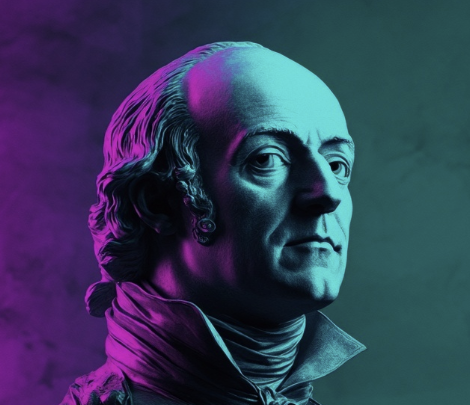
POLITICAL economy, considered as a branch of the science of a statesman or legislator, proposes two distinct objects: first, to provide a plentiful revenue or subsistence for the people, or more properly to enable them to provide such a revenue or subsistence for themselves; and secondly, to supply the state or commonwealth with a revenue sufficient for the public services. It proposes to enrich both the people and the sovereign.
▼
Source
source
Introduction, p. 459.
1 month 2 days ago
If people should ever start to do only what is necessary millions would die of hunger.
▼
Source
source
C 54 Variant translation: If all mankind were suddenly to practice honesty, many thousands of people would be sure to starve.
1 month 3 weeks ago
There is but one law for all, namely, that law which governs all law, the law of our Creator, the law of humanity, justice, equity - the law of nature, and of nations.
▼
Source
source
28 May 1794
3 months ago
There is no more lovely, friendly and charming relationship, communion or company than a good marriage.
▼
Source
source
292
1 month 2 weeks ago
To get to know a truth properly, one must polemicize it.
▼
Source
source
Quoted in The Viking Book of Aphorisms by Wystan Hugh Auden (1962) p. 323

1 month 5 days ago
All men are stuck in a kind of fog. They're surrounded by a wall of fog. They think this is perfectly normal, but it's not. It means that since they can't see much beyond their own little situation, they tend to vegetate. They need some immediate stimulus to keep them alert.
▼
Source
source
p. 20
2 months 3 weeks ago
A habit of basing convictions upon evidence, and of giving to them only that degree of certainty which the evidence warrants, would, if it became general, cure most of the ills from which the world is suffering. But at present, in most countries, education aims at preventing the growth of such a habit, and men who refuse to profess belief in some system of unfounded dogmas are not considered suitable as teachers of the young.
▼
Source
source
preface xxiii-xxiv
1 month 2 weeks ago
We must suffer to the end, to the moment when we stop believing in suffering.

2 months 3 weeks ago
The chief pleasure of his life in these days was to go down the road and look through the window in the wall in the hope of seeing the beautiful Island. ... the sight of the Island and the sounds became very rare ... and the yearning for the sight ... became so terrible that John thought he would die if he did not have them again soon. ... it came into his head that he might perhaps get the old feeling-for what, he thought, had the Island ever given him but a feeling?-by imagining. He shut his eyes and set his teeth again and made a picture of the Island in his mind.
▼
Source
source
Pilgrim's Regress 12-13
2 months 3 weeks ago
A great stock, though with small profits, generally increases faster than a small stock with great profits. Money, says the proverb, makes money. When you have a little, it is often easier to get more. The great difficulty is to get that little.
▼
Source
source
Chapter IX, p. 111.
CivilSimian.com created by AxiomaticPanic, CivilSimian, Kalokagathia