

3 months ago
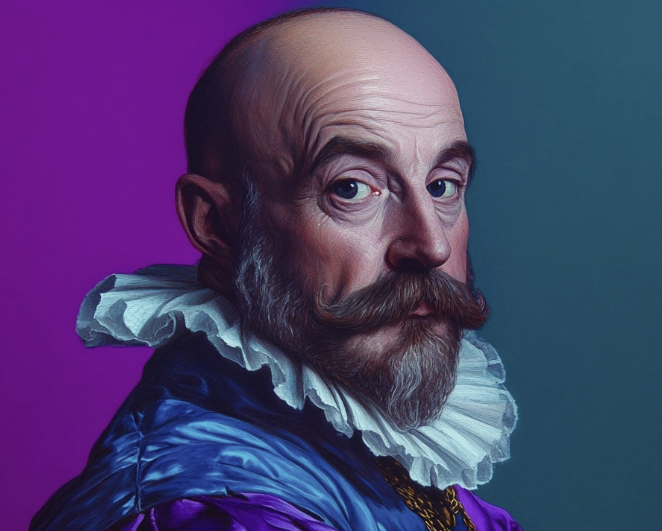
Why may not a goose say thus: "All the parts of the universe I have an interest in: the earth serves me to walk upon, the sun to light me; the stars have their influence upon me; I have such an advantage by the winds and such by the waters; there is nothing that yon heavenly roof looks upon so favourably as me. I am the darling of Nature! Is it not man that keeps and serves me?"
▼
Source
source
Book II, Ch. 12. Apology for Raimond Sebond
2 months 3 weeks ago
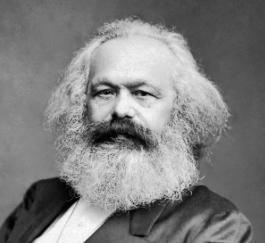
The career a young man should choose should be] one that is most consonant with our dignity, one that is based on ideas of whose truth we are wholly convinced, one that offers us largest scope in working for humanity and approaching that general goal towards which each profession offers only one of the means: the goal of perfection ... If he works only for himself he can become a famous scholar, a great sage, an excellent imaginative writer [Dichter], but never a perfected, a truly great man.
▼
Source
source
in Karl Marx and World Literature (1976) by S. S. Prawer, p. 2.
2 weeks 1 day ago
There's something that remains barbarous in educated people, and lately I've more and more had the feeling that we are nonwondering primitives. And why is it that we no longer marvel at these technological miracles? They've become the external facts of every life. We've all been to the university, we've had introductory courses in everything, and therefore we have persuaded ourselves that if we had the time to apply ourselves to these scientific marvels, we would understand them. But of course that's an illusion. It couldn't happen. Even among people who have had careers in science. They know no more about how it all works than we do. So we are in the position of savage men who, however, have been educated into believing that they are capable of understanding everything. Not that we actually do understand, but that we have the capacity.
▼
Source
source
"A Half Life" (1990), pp. 302-303
6 months 4 weeks ago
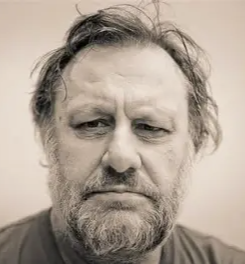
The source of totalitarianism is a dogmatic attachment to the official word: the lack of laughter, of ironic detachment. An excessive commitment to Good may in itself become the greatest Evil: real Evil is any kind of fanatical dogmatism, especially exerted in the name of supreme Good... Consider only Mozart's Don Giovanni at the end of the opera, when he is confronted with the following choice: if he confesses his sins, he can still achieve salvation; if he persists, he will be damned forever. From this viewpoint of the pleasure principle, the proper thing to do would be to renounce his past, but he does not, he persists in his Evil, although he knows that by persisting he will be damned forever. Paradoxically, with his final choice of Evil, he acquires the status of an ethical hero - that is, of someone who is guided by fundamental principles beyond the pleasure principle and not just by the search for pleasure or material gain.
3 months ago
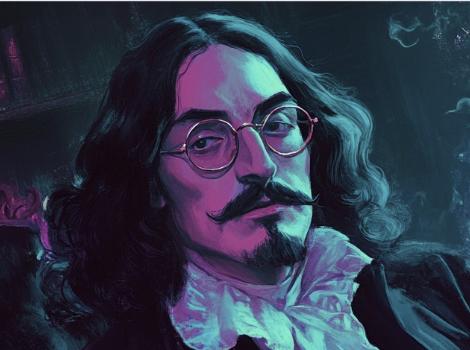
The entire method consists in the order and arrangement of the things to which the mind's eye must turn so that we can discover some truth.
▼
Source
source
Rules for the Direction of the Mind: X.379 As quoted in Clarke, Desmond M. (2006). Descartes : a Biography. Cambridge Press. p. 67. ISBN 978-0-521-82301-2.

1 month 2 weeks ago
At the classical origins of philosophic thought, the transcending concepts remained committed to the prevailing separation between intellectual and manual labor to the established society of enslavement. ... Those who bore the brunt of the untrue reality and who, therefore, seemed to be most in need of attaining its subversion were not the concern of philosophy. It abstracted from them and continued to abstract from them.
▼
Source
source
pp. 134-135
1 month 3 weeks ago
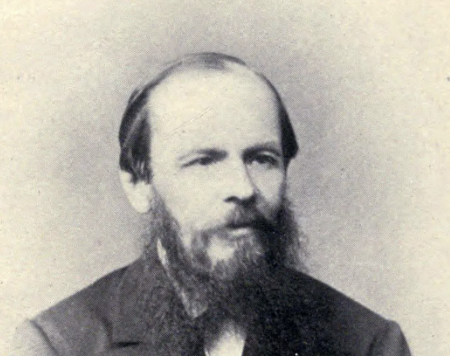
First of all, this prince is an idiot, and, secondly, he is a fool--knows nothing of the world, and has no place in it.
▼
Source
source
Part 4, Chapter 5
1 month 1 week ago
The philosophy of the soul of my people appears to me as an expression of an inward tragedy analogous to the tragedy of the soul of Don Quixote, as the expression of conflict between what the world is as scientific reason shows it to be and what we wish that it might be, as our religious faith affirms it to be. And in this philosophy is to be found the explanation of what is usually said about us - namely, that we are fundamentally irreducible to Kultur - or in other words, that we refuse to submit to it. No, Don Quixote does not resign himself either to the world, or to science or logic, or to art or esthetics, or to morality or ethics.
2 months 3 weeks ago
In the United States of North America, every independent movement of the workers was paralysed so long as slavery disfigured a part of the Republic. Labour cannot emancipate itself in the white skin where in the black it is branded.
▼
Source
source
Vol. I, Ch. 10, Section 7, pg. 329.
2 months 3 weeks ago
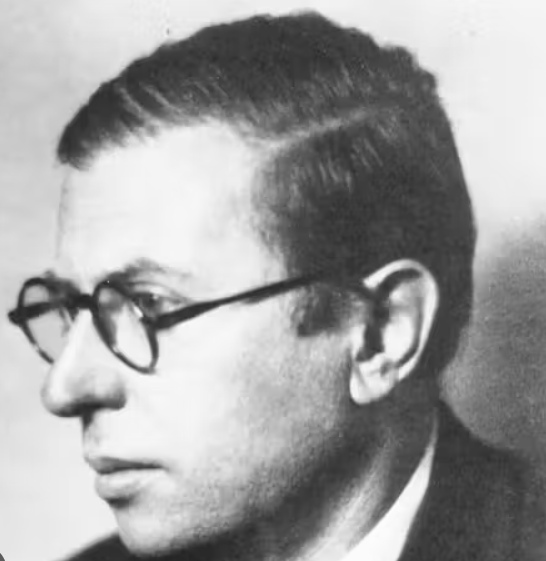
Fascism is not defined by the number of its victims, but by the way it kills them.
▼
Source
source
On the Execution of Julius and Ethel Rosenberg, Libération
2 months 1 week ago
Living virtuously is equal to living in accordance with one's experience of the actual course of nature.
▼
Source
source
As quoted by Diogenes Laërtius, vii. 182.
2 months 3 weeks ago
When the profits of trade happen to be greater than ordinary, over-trading becomes a general error both among great and small dealers.
▼
Source
source
Chapter I, p. 469.
3 months 1 week ago
The many are mean; only the few are noble.
3 months 1 day ago
In the same manner as we are cautioned by religion to show our faith by our works we may very properly apply the principle to philosophy, and judge of it by its works; accounting that to be futile which is unproductive, and still more so, if instead of grapes and olives it yield but the thistle and thorns of dispute and contention.
▼
Source
source
Aphorism 73

2 months 3 weeks ago
Poetry teaches the enormous force of a few words, and, in proportion to the inspiration, checks loquacity.
▼
Source
source
Parnassus (1874) Preface

1 month 2 weeks ago
How many disappointments are conducive to bitterness? One or a thousand, depending on the subject.
3 months 5 days ago
I make no doubt... that these rules are simple, artless, and natural.
2 months 3 weeks ago
Thought is all light, and publishes itself to the universe. It will speak, though you were dumb, by its own miraculous organ. It will flow out of your actions, your manners, and your face. It will bring you friendships. It will impledge you to truth by the love and expectation of generous minds. By virtue of the laws of that Nature, which is one and perfect, it shall yield every sincere good that is in the soul, to the scholar beloved of earth and heaven.
1 month 2 weeks ago
Self-conscious rejection of the absolute is the best way to resist God; thus illusion, the substance of life, is saved.

2 months 3 weeks ago
All styles are good except the boring kind.
▼
Source
source
L'Enfant prodigue: comédie en vers dissillabes (1736), Preface
2 months 3 weeks ago
The practical consequence of such a[n individualistic] philosophy is the well-known democratic respect for the sacredness of individuality,-is, at any rate, the outward tolerance of whatever is not itself intolerant. These phrases are so familiar that they sound now rather dead in our ears. Once they had a passionate inner meaning. Such a passionate inner meaning they may easily acquire again if the pretension of our nation to inflict its own inner ideals and institutions vi et armis upon Orientals should meet with a resistance as obdurate as so far it has been gallant and spirited. Religiously and philosophically, our ancient national doctrine of live and let live may prove to have a far deeper meaning than our people now seem to imagine it to possess.
▼
Source
source
"Preface"
2 months 3 weeks ago
"...the church of England, when she baptizes any one, makes him not a Christian [...] the church of England is mistaken, and makes none but socinians Christians"
▼
Source
source
279
1 month 5 days ago
It is characteristic of theistic "tolerance" that no one really cares what the people believe in, just so they believe or pretend to believe.
2 months 3 weeks ago
No man who believes that all is for the best in this suffering world can keep his ethical values unimpaired, since he is always having to find excuses for pain and misery.
▼
Source
source
The Collected Papers of Bertrand Russell: A fresh look at empiricism, 1927-42 (G. Allen & Unwin, 1996), p. 217

2 months 4 days ago
Use examples; that such as thou teachest may understand thee the better!
2 months 1 week ago
The measure of a man's life is the well spending of it, and not the length.
1 month 2 weeks ago
Consciousness is nature's nightmare.

6 days ago
Being a planetary citizen does not need space travel. It means being conscious that we are part of the universe and of the earth. The most fundamental law is to recognise that we share the planet with other beings, and that we have a duty to care for our common home.
2 months 3 weeks ago
Olympian bards who sung Divine ideas below, Which always find us young And always keep us so.
▼
Source
source
Ode to Beauty, st. 2
1 month 5 days ago
Sadism is plainly connected with the need for self-assertion. At the same time it cannot be separated from the idea of defeat. A sadist is a man, who, in some sense, has his back to the wall. Nothing is further from sadism, for example, than the cheerful, optimistic mentality of a Shaw or Wells.
▼
Source
source
p. 158
1 month 2 days ago
A on his lips and not-A in his heart.
▼
Source
source
E 95

1 month 3 weeks ago
If I seem happy to you . . . You could never say anything that would please me more. For men are made for happiness, and anyone who is completely happy has a right to say to himself, 'I am doing God's will on earth.' All the righteous, all the saints, all the holy martyrs were happy.
▼
Source
source
Book II, Chapter 4 (trans. Constance Garnett)
3 months 2 weeks ago
Truth, like light, blinds. Falsehood, on the contrary, is a beautiful twilight that enhances every object.

3 months 3 weeks ago
I see again what I thought I saw the first time, when I sent forth the little book that was compared to and in fact could best be compared to a humble little flower under the cover of the great forest.
1 week 4 days ago
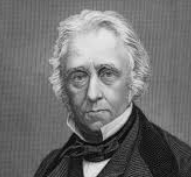
At last I have attained true glory. As I walked through Fleet Street the day before yesterday, I saw a copy of Hume at a bookseller's window with the following label: "Only 2l. 2s. Hume's History of England in eight volumes, highly valuable as an introduction to Macaulay." I laughed so convulsively that the other people who were staring at the books took me for a poor demented gentleman.
▼
Source
source
Alas for poor David! Journal entry (8 March 1849), quoted in George Otto Trevelyan, The Life and Letters of Lord Macaulay, Volume II (1876), p. 253
3 months 3 weeks ago
Man is a synthesis of psyche and body, but he is also a synthesis of the temporal and the eternal. In the former, the two factors are psyche and body, and spirit is the third, yet in such a way that one can speak of a synthesis only when the spirit is posited. The latter synthesis has only two factors, the temporal and the eternal. Where is the third factor? And if there is no third factor, there really is no synthesis, for a synthesis that is a contradiction cannot be completed as a synthesis without a third factor, because the fact that the synthesis is a contradiction asserts that it is not. What, then, is the temporal?
2 months 3 weeks ago
These effects of mescalin are the sort of effects you could expect to follow the administration of a drug having the power to impair the efficiency of the cerebral reducing valve. When the brain runs out of sugar, the undernourished ego grows weak, can't be bothered to undertake the necessary chores, and loses all interest in those spatial and temporal relationships which mean so much to an organism bent on getting on in the world. As Mind at Large seeps past the no longer watertight valve, all kinds of biologically useless things start to happen. ... Other persons discover a world of visionary beauty. To others again is revealed the glory, the infinite value and meaningfulness of naked existence, of the given, unconceptualized event.
▼
Source
source
describing his experiment with mescaline, p. 26
3 weeks 3 days ago
Nothing in this book is true.
2 weeks 6 days ago
Success makes some crimes honorable.
▼
Source
source
Maxim 326

2 months 1 week ago
To flee vice is the beginning of virtue, and to have got rid of folly is the beginning of wisdom.
▼
Source
source
Book I, epistle i, line 41
2 months 3 weeks ago
In looking over the catalogue of human actions (says a partizan of this principle) in order to determine which of them are to be marked with the seal of disapprobation, you need but to take counsel of your own feelings: whatever you find in yourself a propensity to condemn, is wrong for that very reason. For the same reason it is also meet for punishment: in what proportion it is adverse to utility, or whether it be adverse to utility at all, is a matter that makes no difference. In that same proportion also is it meet for punishment: if you hate much, punish much: if you hate little, punish little: punish as you hate. If you hate not at all, punish not at all: the fine feelings of the soul are not to be overborne and tyrannized by the harsh and rugged dictates of political utility.
▼
Source
source
Ch. 2: Of Principles Adverse to That of Utility
2 months 4 days ago
There is geometry in the humming of the strings, there is music in the spacing of the spheres.
▼
Source
source
As quoted in The Mystery of Matter (1965) edited by Louise B. Young, p. 113
1 month 1 week ago
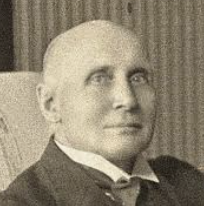
Philosophy finds religion, and modifies it; and conversely religion is among the data of experience which philosophy must weave into its own scheme. Religion is an ultimate craving to infuse into the insistent particularity of emotion that non-temporal generality which primarily belongs to conceptual thought alone. In the higher organisms the differences of tempo between the mere emotions and the conceptual experiences produce a life-tedium, unless this supreme fusion has been effected. The two sides of the organism require a reconciliation in which emotional experiences illustrate a conceptual justification, and conceptual experiences find an emotional illustration.
▼
Source
source
Pt. I, ch. 1, sec. 6.
1 month 1 week ago
No member of a crew is praised for the rugged individuality of his rowing.
▼
Source
source
"Harvard: The Future," The Atlantic Monthly, September 1936
2 months 2 weeks ago
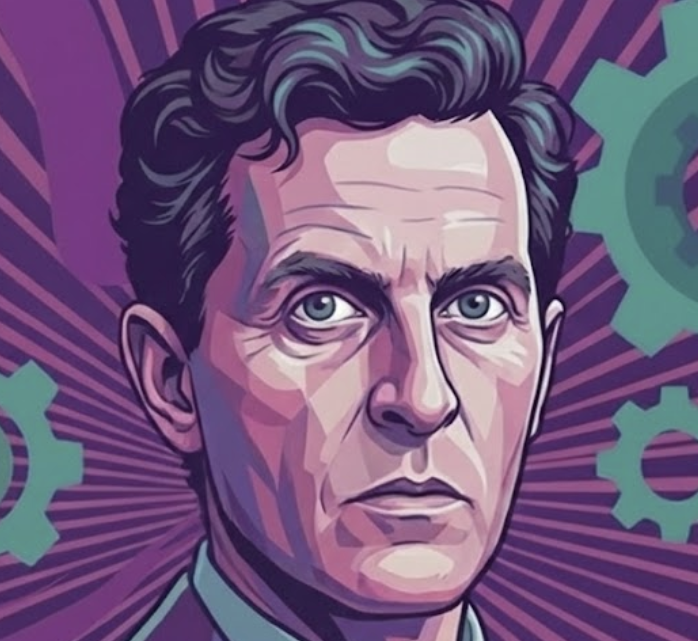
Philosophy is like trying to open a safe with a combination lock: each little adjustment of the dials seems to achieve nothing, only when everything is in place does the door open.
▼
Source
source
Philosophical Occasions 1912-1951 (1993) edited by James Carl Klagge and Alfred Nordmann
2 weeks 6 days ago
All media of communications are cliches serving to enlarge man's scope of action, his patterns of associations and awareness. These media create environments that numb our powers of attention by sheer pervasiveness.
2 months 3 weeks ago
I doubt not, but from self-evident Propositions, by necessary Consequences, as incontestable as those in Mathematics, the measures of right and wrong might be made out.
▼
Source
source
Book IV, Ch. 3, sec. 18
2 months 3 weeks ago
The institution of religion exists only to keep mankind in order, and to make men merit the goodness of God by their virtue. Everything in a religion which does not tend towards this goal must be considered foreign or dangerous.
▼
Source
source
"The Ecclesiastical Ministry"
CivilSimian.com created by AxiomaticPanic, CivilSimian, Kalokagathia