

1 month 4 weeks ago
One has only as much morality as one has philosophy and poetry.
▼
Source
source
"Selected Ideas (1799-1800)", Dialogue on Poetry and Literary Aphorisms, Ernst Behler and Roman Struc, trans. (Pennsylvania University Press:1968) #62

3 months 5 days ago
I want to be seen here in my simple, natural, ordinary fashion, without straining or artifice; for it is myself that I portray...I am myself the matter of my book. To the Reader
▼
Source
source
tr. Donald M. Frame, 1957
2 weeks 6 days ago
Any artist should be grateful for a naïve grace which puts him beyond the need to reason elaborately.
▼
Source
source
Foreword to The Closing of the American Mind by Allan Bloom

2 months 3 days ago
Darkness and light divide the course of time, and oblivion shares with memory, a great part even of our living beings; we slightly remember our felicities, and the smartest strokes of affliction leave but short smart upon us. Sense endureth no extremities, and sorrows destroy us or themselves. To weep into stones are fables.
▼
Source
source
Chapter V
3 months 2 weeks ago
Although the Law of Reason is common, the majority of people live as though they had an understanding of their own.
1 month 3 weeks ago
What, then, is the animal? First of all, a system of plant-souls. The unity of those plant-souls, which unity nature itself produces, is the soul of the animal. Its world is therefore partly that of the plants - its nourishment, for instance, it receives partly through synthesis from vegetable, and through analysis from animal nature - and partly that of the animals, whereof we shall speak directly. Each product of nature is an organically in-itself completed totality in space, like the plant. Hence, the unknown x which we are looking for must also be such a whole or totality, and in so far it must also have a principle of organization, a sphere and central point of this organization ; in short, the same which we have called the soul of the plant, which thus remains common to both. ... The animal is a system of plant-souls, and the plant is a separated, isolated part of an animal. Both reciprocally affect each other.
▼
Source
source
P. 502, 503, 504
1 month 3 weeks ago
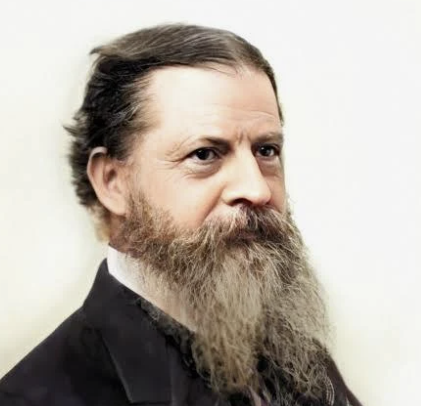
I define a Sign as anything which is so determined by something else, called its Object, and so determines an effect upon a person, which effect I call its Interpretant, that the latter is thereby mediately determined by the former.
▼
Source
source
Letter to Victoria, Lady Welby (1908) SS 80-81
2 months 2 weeks ago
To a wise man, the whole earth is open; for the native land of a good soul is the whole earth.
▼
Source
source
Freeman (1948), p. 166 \

1 month 3 weeks ago
The more intense a spiritual leader's appetite for power, the more he is concerned to limit it to others.

3 months 3 weeks ago
To have time was at once the most magnificent and the most dangerous of experiments. Idleness is fatal only to the mediocre.

2 months 4 weeks ago
It was the excess to which imaginary systems of religion had been carried, and the intolerance, persecutions, burnings, and massacres, they occasioned, that first induced certain persons to propagate infidelity; thinking, that upon the whole, that it was better not to believe at all, than to believe a multitude of things and complicated creeds, that occasioned so much mischief in the world. But those days are past, persecution has ceased, and the antidote then set up against it has no longer even the shadow of apology. We profess, and we proclaim in peace, the pure, unmixed, comfortable, and rational belief of a God, as manifested to us in the universe. We do this without any apprehension of that belief being made a cause of persecution as other beliefs have been, or of suffering persecution ourselves. To God, and not to man, are all men to account for their belief.
▼
Source
source
A Discourse, &c. &c.
3 weeks 4 days ago
Environments are invisible. Their groundrules, pervasive structure, and overall patterns elude easy perception.
1 month 3 weeks ago
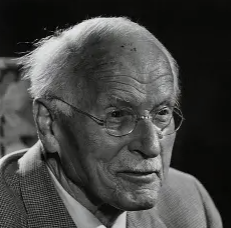
If one does not understand a person, one tends to regard him as a fool.
▼
Source
source
Mysterium Coniunctionis, from The Collected Works of C. G. Jung
1 month 1 week ago
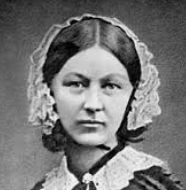
I have lived and slept in the same bed with English countesses and Prussian farm women... no woman has excited passions among women more than I have.
▼
Source
source
As quoted in Parted Lips : Lesbian Love Quotes Through the Ages (2002) by Simone Rich
3 months 2 weeks ago
Corpses are more fit to be cast out than dung.
1 month 2 weeks ago
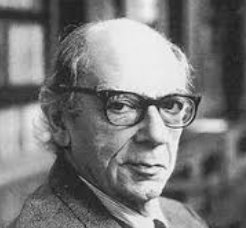
Those who have ever valued liberty for its own sake believed that to be free to choose, and not to be chosen for, is an inalienable ingredient in what makes human beings human.

1 month 2 weeks ago
Art can speak its own language only as long as the images are alive which refuse and refute the established order.
▼
Source
source
p. 62
3 months 1 week ago
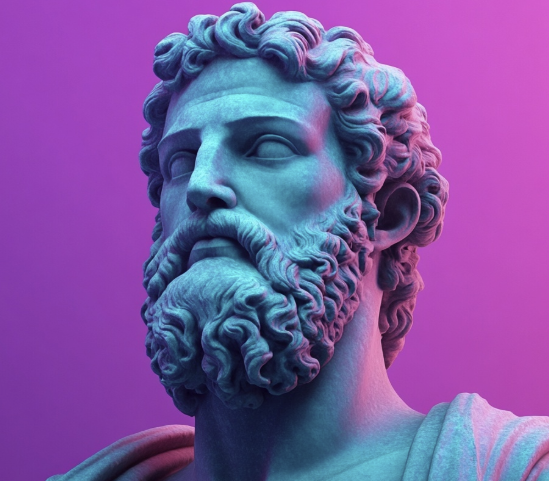
Those of our pleasures which come most rarely give the greatest delight.
▼
Source
source
Fragment 33 (Oldfather translation)
2 months 4 weeks ago
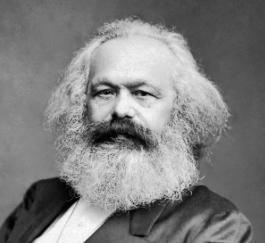
The product of labour is labour which has been congealed in an object, which has become material: it is the objectification of labour. Labour's realization is its objectification.
▼
Source
source
p. 71, The Marx-Engels Reader
2 months 4 weeks ago
For want of the apparatus of propositional functions, many logicians have been driven to the conclusion that there are unreal objects. It is argued, e.g., by Meinong, that we can speak about "the golden mountain," "the round square," and so on; we can make true propositions of which these are the subjects; hence they must have some kind of logical being, since otherwise the propositions in which they occur would be meaningless. In such theories, it seems to me, there is a failure of that feeling for reality which ought to be preserved even in the most abstract studies. Logic, I should maintain, must no more admit a unicorn than zoology can; for logic is concerned with the real world just as truly as zoology, though with its more abstract and general features.
▼
Source
source
Ch. 16: Descriptions
1 month 2 weeks ago
While they denounce as subversive anarchy signs of independent thought, of thinking for themselves on the part of others lest such thought disturb the conditions by which they profit, they think quite literally for themselves, that is of themselves.
▼
Source
source
Human Nature and Conduct (1921) Part 1 Section IV.

2 months 3 weeks ago
Aim at being loved without being admired.
▼
Source
source
p. 38e
2 months 3 weeks ago
Every man is a new method.
▼
Source
source
"The Natural History of Intellect", p. 28

3 weeks 6 days ago
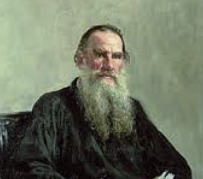
And see, a kind, refined lady will devour the carcasses of these animals with full assurance that she is doing right, at the same time asserting two contradictory propositions: First, that she is, as her doctor assures her, so delicate that she cannot be sustained by vegetable food alone, and that for her feeble organism flesh is indispensable; and, secondly, that she is so sensitive that she is unable, not only herself to inflict suffering on animals, but even to bear the sight of suffering. Whereas the poor lady is weak precisely because she has been taught to live upon food unnatural to man; and she cannot avoid causing suffering to animals - for she eats them.
▼
Source
source
Ch. IX
2 months 2 weeks ago
There are two forms of knowledge, one genuine, one obscure. To the obscure belong all of the following: sight, hearing, smell, taste, feeling. The other form is the genuine, and is quite distinct from this. [And then distinguishing the genuine from the obscure, he continues:] Whenever the obscure [way of knowing] has reached the minimum sensibile of hearing, smell, taste, and touch, and when the investigation must be carried farther into that which is still finer, then arises the genuine way of knowing, which has a finer organ of thought.
2 weeks 2 days ago
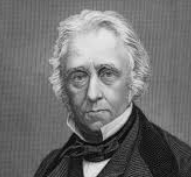
I finished the Iliad to-day... I never admired the old fellow so much, or was so strongly moved by him. What a privilege genius like his enjoys! I could not tear myself away. I read the last five books at a stretch during my walk to-day, and was at last forced to turn into a bypath, lest the parties of walkers should see me blubbering for imaginary beings, the creations of a ballad-maker who has been dead two thousand seven hundred years. What is the power and glory of Caesar and Alexander to that? Think what it would be to be assured that the inhabitants of Monomotapa would weep over one's writings.
▼
Source
source
Anno Domini 4551! Letter to his niece Margaret (August 1851), quoted in George Otto Trevelyan, The Life and Letters of Lord Macaulay, Volume II (1876), pp. 186-187
3 months 5 days ago
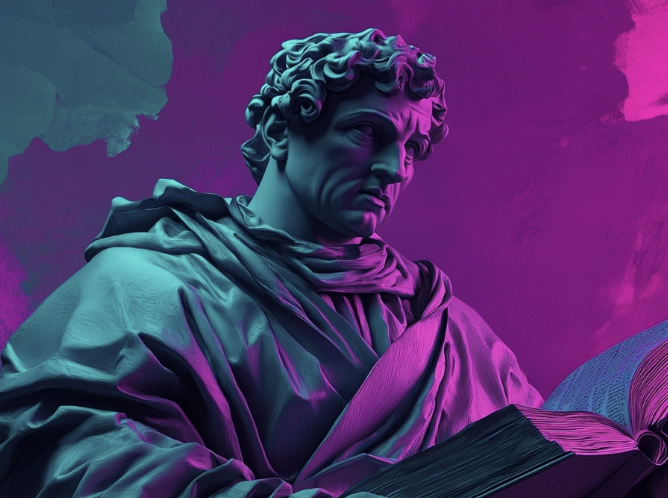
Faith is born and preserved in us by preaching why Christ came, what he brought and gave to us, and the benefits we obtain when we receive him. This happens when Christian liberty - which he gives to us - is rightly taught and we are told in what way as Christians we are all kings and priests and therefore lords of all.
▼
Source
source
p. 70
3 months ago
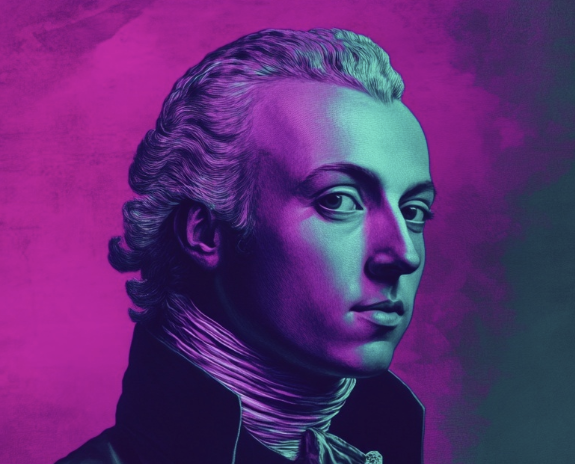
Religion should be .... successively freed from all statutes based on history, and one purely moral religion rule over all, in order that God might be all in all. The veil must fall. The leading-string of sacred tradition with all its appendices becomes by degrees useless, and at last a fetter ... The humiliating difference between laymen and clergymen must disappear, and equality spring from true liberty. All this, however, must not be expected from an exterior revolution, which acts violently, and depends upon fortune In the principle of pure moral religion, which is a sort of divine revelation constantly taking place in the soul of man, must be sought the ground for a passage to the new order of things, which will be accomplished by slow and successive reforms.
▼
Source
source
As quoted in German Thought, From The Seven Years' War To Goethe's Death : Six Lectures (1880) by Karl Hillebrand, p. 208

3 months 1 week ago
Of how much more passion than reason has Jupiter composed us? putting in, as one would say, "scarce half an ounce to a pound."
2 weeks 2 days ago
Our liberty is neither Greek nor Roman; but essentially English. It has a character of its own,-a character which has taken a tinge from the sentiments of the chivalrous ages, and which accords with the peculiarities of our manners and of our insular situation. It has a language, too, of its own, and a language singularly idiomatic, full of meaning to ourselves, scarcely intelligible to strangers.
▼
Source
source
History', The Edinburgh Review (May 1828), quoted in The Miscellaneous Writings of Lord Macaulay, Vol. I (1860), pp. 252-253
3 months 3 weeks ago
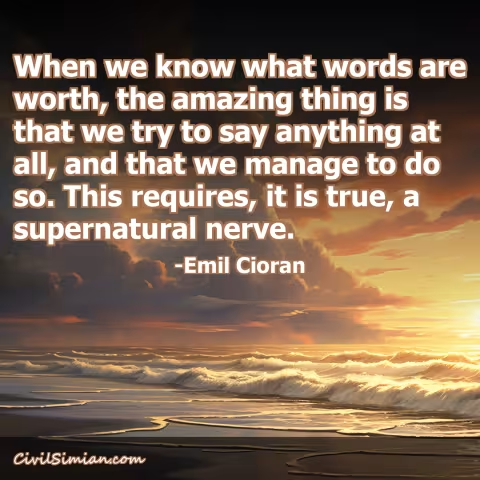
Of all the schools of patience and lucidity, creation is the most effective. It is also the staggering evidence of man's sole dignity: the dogged revolt against his condition, perseverance in an effort considered sterile. It calls for a daily effort, self-mastery, a precise estimate of the limits of truth, measure, and strength. It constitutes an ascesis. All that "for nothing," in order to repeat and mark time. But perhaps the great work of art has less importance in itself than in the ordeal it demands of a man and the opportunity it provides him of overcoming his phantoms and approaching a little closer to his naked reality.
3 months 3 weeks ago
Ironic philosophies produce passionate works. Any thought that abandons unity glorifies diversity! And diversity is the home of art. The only thought to liberate the mind is that which leaves it alone, certain of its limits and of its impending end. No doctrine tempts it. It awaits the ripening of the work and of life.
1 month 4 weeks ago
And now I ask, whether, with this map of misgovernment before me, I can suppose myself bound by my vote to continue, upon any principles of pretended public faith, the management of these countries in those hands? If I kept such a faith (which in reality is no better than a fides latronum) with what is called the Company, I must break the faith, the covenant, the solemn, original, indispensable oath, in which I am bound, by the eternal frame and constitution of things, to the whole human race.
▼
Source
source
Speech in the House of Commons on India (1 December 1783), quoted in The Parliamentary Register: Or, History of the Proceedings and Debates of the House of Commons, Volume XII (1782), p. 247

2 months 3 weeks ago
I don't really know what they mean by "intellectuals," all the people who describe, denounce, or scold them. I do know, on the other hand, what I have committed myself to, as an intellectual, which is to say, after all, a cerebro-spinal individual: to having a brain as supple as possible and a spinal column that's as straight as necessary.
1 month 4 weeks ago
If the State, modeled after the universe, is split into two spheres or classes of beings - wherein the free represent the ideas and the unfree the concrete and sensate things - then the ultimate and uppermost order remains unrealized by both. By using sensate things as tools or organs, the ideas obtain a direct relationship to the apparitions and enter into them as souls. God, however, as identity of the highest order, remains above all reality and eternally has merely an indirect relationship. If then in the higher moral order the State represents a second nature, then the divine can never have anything other than an indirect relationship to it, never can it bear any real relationship to it, and religion, if it seeks to preserve itself in unscathed pure ideality, can therefore never exist - even in the most perfect State - other than esoterically in the form of mystery cults.
▼
Source
source
P. 51
1 week 6 days ago
I now propose briefly to... set forth, in a form intelligible to those who possess no special acquaintance with anatomical science, the chief facts upon which all conclusions respecting the nature and the extent of the bonds which connect man with the brute world must be based: I shall then indicate the one immediate conclusion which, in my judgment, is justified by those facts, and I shall finally discuss the bearing of that conclusion upon the hypotheses which have been entertained respecting the Origin of Man.
▼
Source
source
Ch.2, p. 74
1 month 3 weeks ago
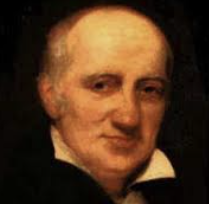
No man must encroach upon my province nor I upon his. He may advise me, moderately and without perniciousness, but he must not expect to dictate to me. He may censure me freely and without reserve but he should remember that I am to act by my deliberation and not his. He may exercise a republican boldness in judging, but he must not be peremptory and imperious in prescribing. Force may never be resorted to but, in the most extraordinary and imperious emergency.
▼
Source
source
Book II, "Of Rights"

2 months 3 weeks ago
He [the child] does not despise real woods because he has read of enchanted woods: the reading makes all real woods a little enchanted.
▼
Source
source
"On Three Ways of Writing for Children", 1952

1 month 1 week ago
The Americans have always been more open to my ideas. In fact, I could earn a living in America just by lecturing. One of my brightest audiences, incidentally, were the prisoners in a Philadelphia gaol - brighter than my students at university.
▼
Source
source
Interview with Paul Newman in Abraxas Unbound #7
6 days ago
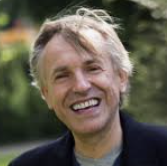
If we want eternal life, then we'll need to rewrite our bug-ridden genetic code and become god-like. "May all that have life be delivered from suffering", said Gautama Buddha. It's a wonderful sentiment. Sadly, only hi-tech solutions can ever eradicate suffering from the living world. Compassion alone is not enough.
▼
Source
source
Interview with Nick Bostrom and David Pearce, Dec. 2007
2 weeks 2 days ago
To the Whigs of the seventeenth century we owe it that we have a House of Commons. To the Whigs of the nineteenth century we owe it that the House of Commons has been purified. The abolition of the slave trade, the abolition of colonial slavery, the extension of popular education, the mitigation of the rigour of the penal code, all, all were effected by that party; and of that party, I repeat, I am a member. I look with pride on all that the Whigs have done for the cause of human freedom and of human happiness. I see them now hard pressed, struggling with difficulties, but still fighting the good fight. At their head I see men who have inherited the spirit and the virtues, as well as the blood, of old champions and martyrs of freedom... While one shred of the old banner is flying, by that banner will I at least be found.
▼
Source
source
Speech in Edinburgh (29 May 1839), quoted in Speeches of the Right Honourable T. B. Macaulay, M.P. (1854), pp. 183-184
2 months 4 weeks ago
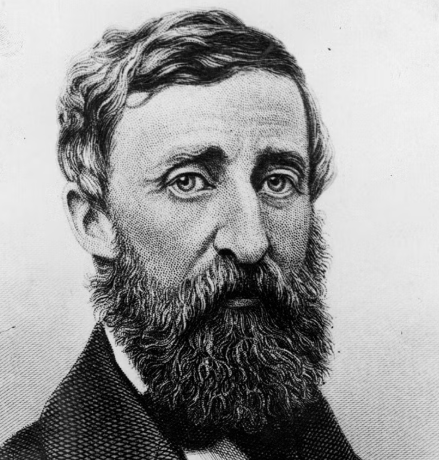
You ask particularly after my health. I suppose that I have not many months to live; but, of course, I know nothing about it. I may add that I am enjoying existence as much as ever, and regret nothing.
▼
Source
source
Last letter, to Myron Benton, March 31, 1862
1 week 6 days ago
The whole analogy of natural operations furnishes so complete and crushing an argument against the intervention of any but what are termed secondary causes, in the production of all the phenomena of the universe; that, in view of the intimate relations between Man and the rest of the living world; and between the forces exerted by the latter and all other forces, I can see no excuse for doubting that all are co-ordinated terms of Nature's great progression, from the formless to the formed-from the inorganic to the organic-from blind force to conscious intellect and will.
▼
Source
source
Ch.2, p. 128
2 months 3 weeks ago
It is so characteristic, that just when the mechanics of reproduction are so vastly improved, there are fewer and fewer people who know how the music should be played.
▼
Source
source
p. 96
2 months 4 weeks ago
It is the nature and intention of a constitution to prevent governing by party, by establishing a common principle that shall limit and control the power and impulse of party, and that says to all parties, thus far shalt thou go and no further. But in the absence of a constitution, men look entirely to party; and instead of principle governing party, party governs principle.
2 months 3 weeks ago
For what are they all in their high conceit, When man in the bush with God may meet?
▼
Source
source
Good-bye, st. 4
1 month 2 weeks ago
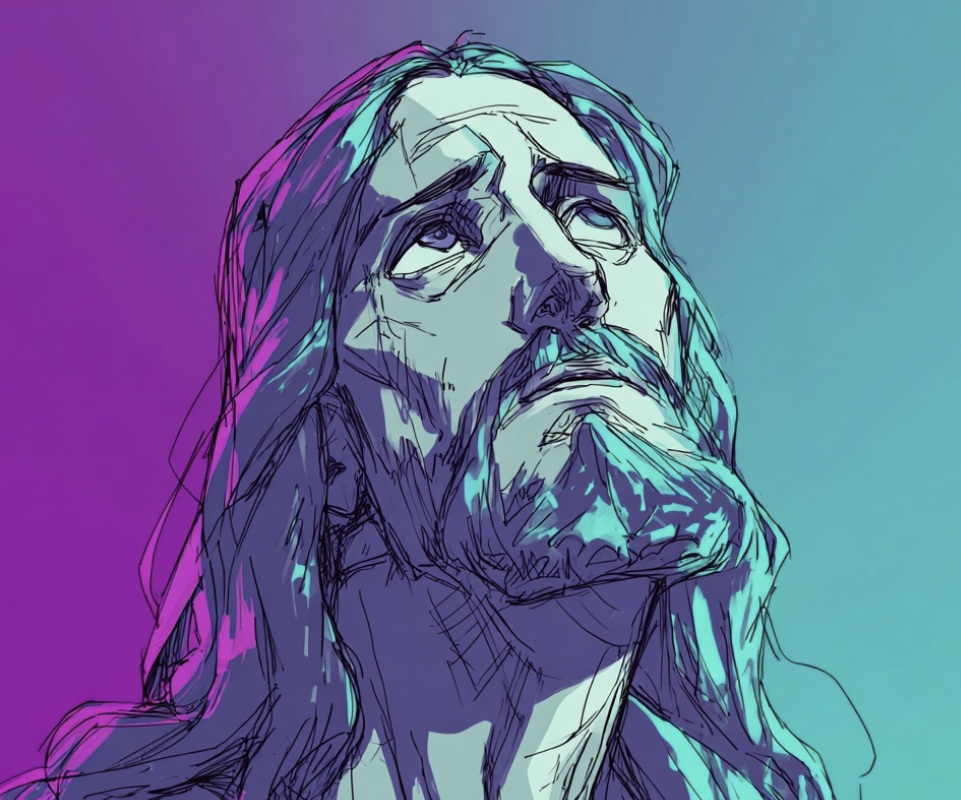
People will become faint out of fear and expectation of the things coming upon the inhabited earth, for the powers of the heavens will be shaken. And then they will see the Son of man coming in a cloud with power and great glory.
▼
Source
source
21:26-27, NWT
2 months 3 weeks ago
Make sure that your religion is a matter between you and God only.
▼
Source
source
Comment to Maurice O'Connor Drury, as quoted in Wittgenstein Reads Freud : The Myth of the Unconscious (1996) by Jacques Bouveresse, as translated by Carol Cosman, p. 14
CivilSimian.com created by AxiomaticPanic, CivilSimian, Kalokagathia