

2 months 3 weeks ago
In justice as fairness society is interpreted as a cooperative venture for mutual advantage.
▼
Source
source
Chapter II, Section 14, pg. 84

2 months 3 weeks ago
The charming landscape which I saw this morning, is indubitably made up of some twenty or thirty farms. Miller owns this field, Locke that, and Manning the woodland beyond. But none of them owns the landscape. There is a property in the horizon which no man has but he whose eye can integrate all the parts, that is, the poet. This is the best part of these men's farms, yet to this their warranty-deeds give no title. To speak truly, few adult persons can see nature. Most persons do not see the sun. At least they have a very superficial seeing. The sun illuminates only the eye of the man, but shines into the eye and the heart of the child. The lover of nature is he whose inward and outward senses are still truly adjusted to each other; who has retained the spirit of infancy even into the era of manhood. His intercourse with heaven and earth, becomes part of his daily food.
▼
Source
source
Nature
1 month 2 weeks ago
The office of the sovereign, be it a monarch or an assembly, consisteth in the end for which he was trusted with the sovereign power, namely the procuration of the safety of the people, to which he is obliged by the law of nature, and to render an account thereof to God, the Author of that law, and to none but Him. But by safety here is not meant a bare preservation, but also all other contentments of life, which every man by lawful industry, without danger or hurt to the Commonwealth, shall acquire to himself. And this is intended should be done, not by care applied to individuals, further than their protection from injuries when they shall complain; but by a general providence, contained in public instruction, both of doctrine and example; and in the making and executing of good laws to which individual persons may apply their own cases.
▼
Source
source
The Second Part, Chapter 30: Of the Office of the Sovereign Representative
2 months 4 weeks ago
What are the earth and all its interests beside the deep surmise which pierces and scatters them?
2 months 4 weeks ago
We later learned that all the nineteen passengers in the non-smoking compartment had been killed. When the plane had hit the water a hole had been made in the plane and the water had rushed in. I had told a friend at Oslo who was finding me a place that he must find me a place where I could smoke, remarking jocularly, 'If I cannot smoke, I shall die'. Unexpectedly, this turned out to be true.
1 month 3 weeks ago
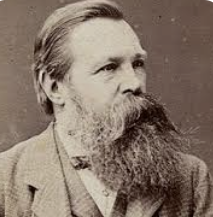
With this as its basic constitution, civilization achieved things of which gentile society was not even remotely capable. But it achieved them by setting in motion the lowest instincts and passions in man and developing them at the expense of all his other abilities. From its first day to this, sheer greed was the driving spirit of civilization; wealth and again wealth and once more wealth, wealth, not of society, but of the single scurvy individual-here was its one and final aim. If at the same time the progressive development of science and a repeated flowering of supreme art dropped into its lap, it was only because without them modern wealth could not have completely realized its achievements.
▼
Source
source
The Origin of the Family, Private Property and the State (1884) as translated by Ernest Untermann (1902)

3 months 1 week ago
The very elements themselves, though repugnant in their nature, yet, by a happy equilibrium, preserve eternal peace; and amid the discordancy of their constituent principles, cherish, by a friendly intercourse and coalition, an uninterrupted concord.

2 months 4 weeks ago
Doctors are men who prescribe medicine of which they know little, to human beings of whom they know less, to cure diseases of which they know nothing.
▼
Source
source
Note: This attribution to Voltaire appears in Strauss' Familiar Medical Quotations (1968), p. 394, and in publications as early as 1956
1 month 3 weeks ago
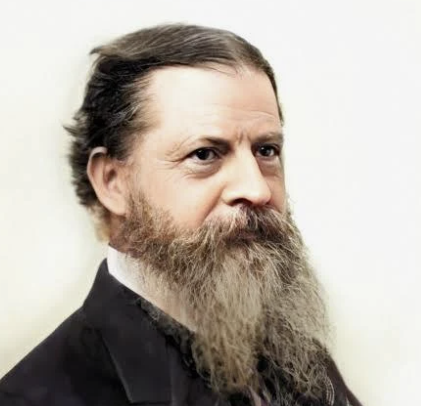
What distinct meaning can attach to saying that an idea in the past in any way affects an idea in the future, from which it is completely detached?
3 months 1 week ago
If they have entered into the spirit if these rules, and if the rules have made sufficient impression on them to become rooted and established in their minds, they will feel how much difference there is between what is said here and what a few logicians may perhaps have written by chance approximating to it in a few passages of their works.
1 month 2 weeks ago
Even the most inspired verse, which boasts not without a relative justification to be immortal, becomes in the course of ages a scarcely legible hieroglyphic; the language it was written in dies, a learned education and an imaginative effort are requisite to catch even a vestige of its original force. Nothing is so irrevocable as mind.
2 months 4 weeks ago
The facts of science, as they appeared to him [Heraclitus], fed the flame in his soul, and in its light, he saw into the depths of the world.
▼
Source
source
Ch. 1: Mysticism and Logic
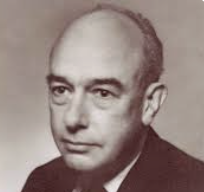
1 month 1 week ago
Tactically, conceptualism is no doubt the strongest position of the three; for the tired nominalist can lapse into conceptualism and still allay his puritanic conscience with the reflection that he has not quite taken to eating lotus with the Platonists.
▼
Source
source
"Logic and the Reification of Universals"

2 months 1 week ago
It is difficult to walk at one and the same time many paths of life.
▼
Source
source
Pythagorean Ethical Sentences From Stobæus

3 months 2 weeks ago
And what can be more divine than the exhalations of the earth, which affect the human soul so as to enable her to predict the future ? And could the hand of time evaporate such a virtue? Do you suppose you are talking of some kind of wine or salted meat ?
▼
Source
source
Book I, Chapter III
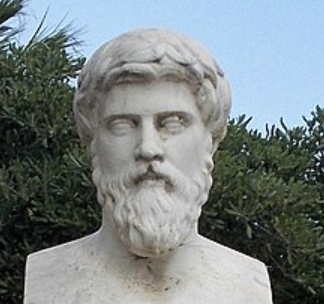
2 months 2 weeks ago
"These Macedonians," said he, "are a rude and clownish people, that call a spade a spade."
▼
Source
source
39 Philip
1 month 2 weeks ago
For the Lawes of Nature (as Justice, Equity, Modesty, Mercy, and (in summe)doing to others, as wee would be done to,) of themselves, without the terrour of some Power, to cause them to be observed, are contrary to our naturall Passions, that carry us to Partiality, Pride, Revenge, and the like. And Covenants, without the Sword, are but Words, and of no strength to secure a man at all.
▼
Source
source
The Second Part, Chapter 17, p. 85
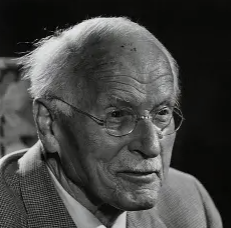
1 month 3 weeks ago
The woman is increasingly aware that love alone can give her full stature, just as the man begins to discern that spirit alone can endow his life with its highest meaning. Fundamentally, therefore, both seek a psychic relation to the other, because love needs the spirit, and the spirit love, for their fulfillment.
▼
Source
source
p. 185
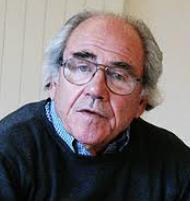
1 month ago
If every strategy today is that of mental terror and of deterrence tied to the suspension and the eternal simulation of catastrophe, then the only means of mitigating this scenario would be to make the catastrophe arrive, to produce or to reproduce a real catastrophe. To which Nature is at times given: in its inspired moments, it is God who through his cataclysms unknots the equilibrium of terror in which humans are imprisoned. Closer to us, this is what terrorism is occupied with as well: making real, palpable violence surface in opposition to the invisible violence of security. Besides, therein lies terrorism's ambiguity.
▼
Source
source
"The China Syndrome," p. 58
3 months 3 weeks ago
The machine is only a tool after all, which can help humanity progress faster by taking some of the burdens of calculations and interpretations off its back. The task of the human brain remains what it has always been; that of discovering new data to be analyzed, and of devising new concepts to be tested.

3 months 2 weeks ago
The world is divided into men who have wit and no religion and men who have religion and no wit.
2 months 4 weeks ago
My life is like a stroll upon the beach, As near the ocean's edge as I can go.
▼
Source
source
"The Fisher's Boy", in Edmund Clarence Stedman (ed.) An American Anthology, 1787-1900, Boston and New York: Houghton, Mifflin and Co., 1900
3 months 4 weeks ago
The life of money-making is one undertaken under compulsion, and wealth is evidently not the good we are seeking; for it is merely useful and for the sake of something else.
2 months 3 weeks ago
A paradise of inward tranquility seems to be faith's usual result.
▼
Source
source
Lectures XI, XII, and XIII, "Saintliness"
2 months 3 weeks ago
Most people live, whether physically, intellectually or morally, in a very restricted circle of their potential being. They make use of a very small portion of their possible consciousness, and of their soul's resources in general, much like a man who, out of his whole bodily organism, should get into a habit of using and moving only his little finger. Great emergencies and crises show us how much greater our vital resources are than we had supposed.
▼
Source
source
To W. Lutoslawski, 5/6/1906
3 months 3 weeks ago
They do not know the penalty of unrighteousness, which is the thing they most ought to know. For it is not what they think it is scourgings and death, which they sometimes escape entirely when they have done wrong but a penalty which it is impossible to escape. Two patterns, my friend, are set up in the world, the divine, which is most blessed, and the godless, which is most wretched, and their silliness and extreme foolishness blind them to the fact that through their unrighteous acts they are made like the one and unlike the other. They therefore pay the penalty for this by living a life that conforms to the pattern they resemble.
2 months 4 weeks ago
It is so hard to forget what it is worse than useless to remember! If I am to be a thoroughfare, I prefer that it be of the mountain-brooks, the Parnassian streams, and not the town-sewers. There is inspiration, that gossip which comes to the ear of the attentive mind from the courts of heaven. There is the profane and stale revelation of the bar-room and the police court. The same ear is fitted to receive both communications. Only the character of the hearer determines to which it shall be open, and to which closed. I believe that the mind can be permanently profaned by the habit of attending to trivial things, so that all our thoughts shall be tinged with triviality.
▼
Source
source
p. 492

3 months 1 week ago
Man, being the servant and interpreter of Nature, can do and understand so much and so much only as he has observed in fact or in thought of the course of nature. Beyond this he neither knows anything nor can do anything.
▼
Source
source
Aphorism 1
3 months 2 weeks ago
After death the sensation is either pleasant or there is none at all. But this should be thought on from our youth up, so that we may be indifferent to death, and without this thought no one can be in a tranquil state of mind. For it is certain that we must die, and, for aught we know, this very day. Therefore, since death threatens every hour, how can he who fears it have any steadfastness of soul?
▼
Source
source
section 74

3 months 2 weeks ago
The administration of government lies in getting proper men. Such men are to be got by means of the ruler's own character. That character is to be cultivated by his treading in the ways of duty. And the treading those ways of duty is to be cultivated by the cherishing of benevolence.
2 months 2 weeks ago
I am a utilitarian. I am also a vegetarian. I am a vegetarian because I am a utilitarian.
▼
Source
source
Utilitarianism and Vegetarianism, Philosophy & Public Affairs, 9(4): 325 (1980).
3 weeks ago
The idea that the citizen owes loyalty to a country, a territory, a jurisdiction and all those who reside within it - the root assumption of democratic politics, and one that depends upon the nation as its moral foundation - that idea has no place in the minds and hearts of many who now call themselves citizens of European states.
3 weeks 6 days ago
The Churches as Churches-as institutions affirming their own infallibility-are anti-Christian institutions. Between the Churches as such and Christianity, not only is there nothing in common except the name, but they are two quite opposite and opposing principles. The one represents pride, violence, self-assertion, immobility and death: the other humility, penitence, meekness, progress, and life.
▼
Source
source
Chapter III, Christianity Misunderstood by Believers
1 month 2 weeks ago
In all ranges of experience, externality of means defines the mechanical.
▼
Source
source
p. 206

2 months 2 weeks ago
Fortune is lavish with her favors, but not to be depended on. Nature on the other hand is self-sufficing, and therefore with her feebler but trustworthy [resources] she wins the greater [meed] of hope.
2 months 4 weeks ago
The auspices for philosophy are bad if, when proceeding ostensibly on the investigation of truth, we start saying farewell to all uprightness, honesty and sincerity, and are intent only on passing ourselves off for what we are not. We then assume, like those three sophists [Fichte, Schelling and Hegel], first a false pathos, then an affected and lofty earnestness, then an air of infinite superiority, in order to impose where we despair of ever being able to convince.
▼
Source
source
E. Payne, trans. (1974) Vol. 1, p. 22
1 month 2 weeks ago
As we shall see later, the most important factor in the training of good mental habits consists in acquiring the attitude of suspended conclusion, and in mastering the various methods of searching for new materials to corroborate or to refute the first suggestions that occur. To maintain the state of doubt and to carry on systematic and protracted inquiry ― these are the essentials of thinking.
▼
Source
source
Chapter 1: "What Is Thought?"
2 months 4 weeks ago
The world is full of conflicts; and, overshadowing all minor conflicts, the titanic struggle between Communism and anti-Communism. Almost everybody who is politically conscious has strong feelings about one or more of these issues; but we want you, if you can, to set aside such feelings and consider yourselves only as members of a biological species which has had a remarkable history, and whose disappearance none of us can desire. We shall try to say no single word which should appeal to one group rather than to another. All, equally, are in peril, and, if the peril is understood, there is hope that they may collectively avert it.

2 months 2 days ago
As the past has ceased to throw its light upon the future, the mind of man wanders in obscurity. Variant translation: When the past no longer illuminates the future, the spirit walks in darkness.
▼
Source
source
Book Four, Chapter VIII
3 months 5 days ago
All passions that suffer themselves to be relished and digested are but moderate.
▼
Source
source
Ch. 2. Of Sorrow, tr. Cotton, rev. W. Hazlitt, 1842
2 months 2 days ago
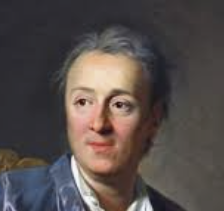
Man was born to live with his fellow human beings. Separate him, isolate him, his character will go bad, a thousand ridiculous affects will invade his heart, extravagant thoughts will germinate in his brain, like thorns in an uncultivated land.
▼
Source
source
The character Suzanne Simon, in La Religieuse [The Nun]
2 weeks 2 days ago
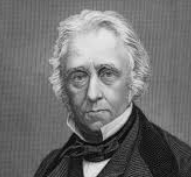
It is our deliberate opinion that the French Revolution, in spite of all its crimes and follies, was a great blessing to mankind.
▼
Source
source
'Sir James Mackintosh', The Edinburgh Review (July 1835), quoted in T. B. Macaulay, Critical and Historical Essays Contributed to The Edinburgh Review, Vol. II (1843), p. 215
1 month 1 week ago
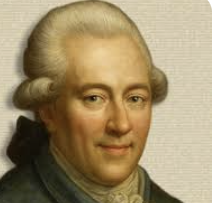
Man loves company - even if it is only that of a small burning candle.
▼
Source
source
K 40
2 months 2 days ago
In America a woman loses her independence for ever in the bonds of matrimony. While there is less constraint on girls there than anywhere else, a wife submits to stricter obligations. For the former, her father's house is a home of freedom and pleasure; for the latter, her husband's is almost a cloister.
▼
Source
source
Book Three, Chapter X.

1 month 3 weeks ago
Big industry, freed from the pressure of private property, will undergo such an expansion that what we now see will seem as petty in comparison as manufacture seems when put beside the big industry of our own day. This development of industry will make available to society a sufficient mass of products to satisfy the needs of everyone. The same will be true of agriculture, which also suffers from the pressure of private property and is held back by the division of privately owned land into small parcels. Here, existing improvements and scientific procedures will be put into practice, with a resulting leap forward which will assure to society all the products it needs. In this way, such an abundance of goods will be able to satisfy the needs of all its members.
2 months 3 weeks ago
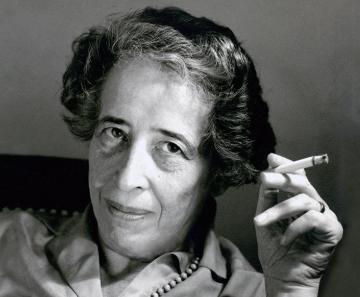
What will happen once the authentic mass man takes over, we do not know yet, although it may be a fair guess that he will have more in common with the meticulous, calculated correctness of Himmler than with the hysterical fanaticism of Hitler, will more resemble the stubborn dullness of Molotov than the sensual vindictive cruelty of Stalin.
▼
Source
source
Part 3, Ch. 10, § 2
1 month ago
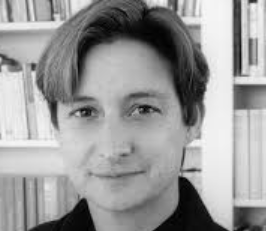
Quite apart from assiduous efforts to restrict the use of violence as means rather than an end, the actualization of violence as a means can inadvertently become its own end, producing new violence, producing violence anew, reiterating the license, and licensing further violence. Violence does not exhaust itself in the realization of a just end; rather, it renews itself in directions that exceed both deliberate intention and instrumental schemes. In other words, by acting as if the use of violence can be a means to achieve a nonviolent end, one imagines that the practice of violence does not in the act posit violence as its own end. The technē is undermined by the praxis, and the use of violence only makes the world into a more violent place, by bringing more violence into the world.
▼
Source
source
p. 20
2 months 4 weeks ago
It was in the reign of Charles II that they obtained the noble distinction of being exempted from giving their testimony on oath in a court of justice, and being believed on their bare affirmation. On this occasion the chancellor, who was a man of wit, spoke to them as follows: "Friends, Jupiter one day ordered that all the beasts of burden should repair to be shod. The asses represented that their laws would not allow them to submit to that operation. 'Very well,' said Jupiter; 'then you shall not be shod; but the first false step you make, you may depend upon being severely drubbed.'"
CivilSimian.com created by AxiomaticPanic, CivilSimian, Kalokagathia